KRAKOW, POLAND – September 29, 2026 – The whitewater world converged on Krakow, Poland, from September 25th to 27th for the second Freestyle Kayaking World Cup of the season, a pivotal event testing the mettle and skill of top athletes. A dedicated five-member Finnish national team made the journey, aiming to carve their mark against the global elite. While securing a coveted spot in the finals proved elusive for the Finnish contingent, their performances underscored a growing presence on the international stage and highlighted the unique challenges and learning opportunities presented by a highly demanding artificial course.
The team comprised a mix of seasoned competitors and promising juniors: Miika Sorjonen represented Finland in the men’s category, while Taru Terni, the reigning European Champion, and Outi Lahti competed in the women’s division. The future of Finnish freestyle was also on display with Veikka Viinisalo and Aapo Pahkala challenging in the fiercely contested U18 boys’ category.
Despite strong individual efforts, particularly from Taru Terni who narrowly missed the women’s final by placing sixth in the semi-finals, the team faced an uphill battle against highly experienced competitors and a notoriously tricky course. The experience, however, served as an invaluable benchmark and a crucial learning curve, solidifying the team’s commitment to continuous development in a sport where precision, power, and adaptability are paramount.
Main Facts: A Glimpse into the Competition
The Krakow World Cup marked a significant stop on the international freestyle kayaking calendar, drawing competitors from around the globe to test their skills on a purpose-built whitewater arena. For the Finnish team, the event was more than just a competition; it was a testament to their dedication and a critical opportunity to gain international exposure and experience.
Key Outcomes for the Finnish Team:
- Taru Terni, the reigning European Champion, showcased her prowess by reaching the women’s semi-finals, ultimately finishing sixth. She was the first athlete to miss out on a final spot, a mere whisker away from advancing.
- Outi Lahti also competed strongly in the women’s semi-finals, securing a ninth-place finish.
- In the men’s category, Miika Sorjonen concluded his campaign in the first round, placing 29th amidst a highly competitive field.
- The U18 boys, Aapo Pahkala and Veikka Viinisalo, demonstrated promising potential despite early exits, finishing 12th and 13th respectively in their initial rounds.
The finals themselves were a spectacle of high-octane action, ultimately dominated by the reigning world champions. France’s Tom Dolle secured victory in the men’s final, while Great Britain’s Ottilie Robinson-Shaw claimed the top spot in the women’s event, solidifying their positions at the pinnacle of the sport. Notably, Polish European Champion Tomasz Czaplicki, who had previously triumphed on home waters at Lieksa’s Neitikoski in June, mirrored Taru Terni’s semi-final result, also placing sixth in the men’s final, underscoring the razor-thin margins at the elite level.
Chronology of the Challenge: From Preparation to Podium Dreams
The journey to Krakow was meticulously planned, highlighting the strategic approach required for international competition in a sport that demands intimate familiarity with its arenas.
Pre-Competition Camp: Mastering the Artificial Flow
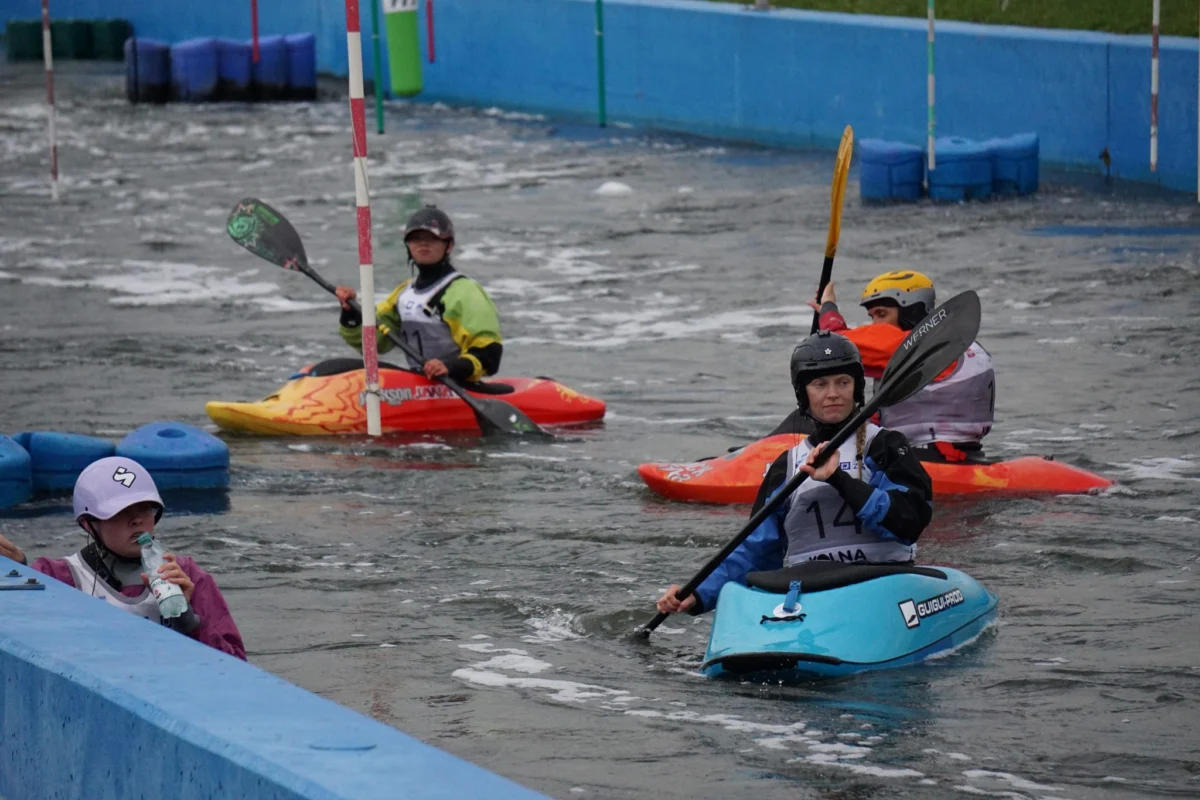
Recognizing the unique nature of the Krakow course, the Finnish national team undertook a critical pre-competition training camp in the week leading up to the World Cup. Led by the national team coach, this intensive period was designed to acclimatize the athletes to the artificial whitewater park – a stark contrast to the natural rivers and rapids typically found in Finland.
Artificial whitewater courses, like the one in Krakow, present a distinct set of challenges. Unlike natural rivers where features evolve and change with water levels, man-made courses offer consistent, yet often unforgiving, hydraulics. The Finnish team specifically noted the "very flushing" nature of the Krakow course. This characteristic implies that the water flow is exceptionally strong and fast, making it incredibly difficult for kayakers to "hold" their boats within a specific feature – such as a wave or a hole – to execute the complex spins, flips, and aerial maneuvers that define freestyle kayaking. Athletes described the difficulty of maintaining control and executing moves within the "hole" (likely referring to the dynamic hydraulic feature where tricks are performed), emphasizing the need for immense core strength, precise edge control, and an acute understanding of the water’s energy.
The decision to conduct a pre-camp was not merely strategic but a necessity. The Nordic countries, including Finland, lack comparable artificial whitewater facilities that could adequately prepare athletes for the types of conditions encountered in Central European competitions. This geographical reality mandates longer, dedicated training periods abroad, underscoring the commitment and logistical effort required from the Finnish Canoe and Rowing Federation and the athletes themselves to compete at an international standard. The camp allowed the team to develop a crucial "feel" for the water, experiment with different boat setups, and refine their lines and trick sequences in situ, mitigating some of the disadvantages of unfamiliarity.
Competition Days: Heats, Semis, and the Pursuit of Perfection
The World Cup officially kicked off with qualification heats, where each athlete performs a series of timed runs, attempting to score as many points as possible by executing a variety of technical and amplitude-based maneuvers. Judges award points based on the difficulty, cleanliness, and amplitude of tricks performed within designated features.
The initial heats saw all five Finnish athletes dive into the challenging Krakow waters. While Miika Sorjonen, Veikka Viinisalo, and Aapo Pahkala did not advance beyond the first round, their participation against a world-class field provided invaluable competitive exposure. For the junior athletes, in particular, facing such a high level of competition is a crucial step in their development, offering a realistic benchmark of the skill and consistency required to excel.
The spotlight for Finland shone brightest on the women’s category, where Taru Terni and Outi Lahti progressed to the semi-finals. This stage narrows the field significantly, demanding even greater precision and risk-taking.
Women’s Semi-Finals: The Fine Margins
On Saturday, the tension was palpable as Taru Terni, with her European Championship title adding to the anticipation, entered the semi-final arena. She delivered a strong performance, improving upon her heat runs, ultimately securing the sixth position. In freestyle kayaking, where every trick, every rotation, and every landing is scrutinized, the difference between advancing and being eliminated can be fractions of a point or a single missed maneuver.
Reflecting on her performance, Terni commented, "A good feeling remained, as I managed to improve my performance from the heats. However, missing the final spot was disappointing, as it was achievable." Her words encapsulate the bittersweet reality of elite sport: the satisfaction of personal improvement coupled with the sting of a narrowly missed opportunity. For an athlete of Terni’s caliber, "achievable" speaks to her self-belief and the high standards she sets, suggesting that the necessary elements for a final berth were within her grasp. The pressure of a semi-final run, where a single mistake can be costly, often tests mental fortitude as much as physical skill.
Outi Lahti, also competing in the women’s semi-finals, placed ninth. Her journey through the heats had been strong, but she found it challenging to replicate that intensity in the subsequent round. Lahti stated, "I am satisfied with my heat performance. It was a shame that the same energy and performance didn’t come through in the semi-finals." This sentiment highlights a common challenge in high-level competition: maintaining peak performance and mental focus across multiple demanding rounds. The transition from a qualifying round to a more high-stakes semi-final can often shift an athlete’s approach, sometimes leading to a slight dip in the raw, uninhibited "energy" that propelled earlier successes.
The Finals: Crowning the Champions
The culmination of the event saw the world’s best battle it out for World Cup glory. The finals were a showcase of cutting-edge freestyle kayaking, with athletes pushing the boundaries of what’s possible in a whitewater feature. The atmosphere was electric, with spectators cheering every aerial loop, every dizzying spin, and every perfectly landed trick.
As predicted, the reigning world champions demonstrated why they hold their titles. France’s Tom Dolle, known for his explosive power and innovative trick repertoire, delivered a commanding performance to win the men’s final. Great Britain’s Ottilie Robinson-Shaw, a dominant force in women’s freestyle, executed a flawless series of maneuvers to secure her victory. Their wins not only reaffirmed their status but also set new benchmarks for the sport. The parallel sixth-place finish of European Men’s Champion Tomasz Czaplicki to Taru Terni in the women’s semi-finals underscores the brutal competitiveness and the incredibly high standard required to consistently reach the podium in freestyle kayaking.
Supporting Data: Context and the Finnish Landscape
To fully appreciate the Finnish team’s journey, it’s essential to understand the broader context of freestyle kayaking and its development in Finland.
What is Freestyle Kayaking?
Freestyle kayaking, often dubbed "playboating," is a dynamic and acrobatic whitewater discipline. Athletes utilize specialized, short kayaks to perform a sequence of technical and artistic maneuvers within a stationary river feature, such as a wave or a hydraulic hole. These maneuvers include aerial loops, spins, cartwheels, and various combinations, often resembling gymnastics or snowboarding tricks performed on water. Competitors are judged on the variety, difficulty, execution, and amplitude of their tricks within a set time frame, usually around 45 seconds. It’s a visually spectacular sport that combines athletic prowess with an intricate understanding of fluid dynamics.
The World Cup Series and International Significance
The ICF Canoe Freestyle World Cup series represents the pinnacle of international competition outside of the biennial World Championships. These events are crucial for athletes to gain ranking points, test new techniques, and gauge their performance against the global elite. Participation in World Cups is vital for national federations to develop their athletes, foster international connections, and raise the profile of the sport domestically. Each World Cup event serves as a stepping stone, building momentum and experience towards the ultimate goal of a World Championship title.
Freestyle Kayaking in Finland: Growth and Challenges
Freestyle kayaking in Finland, while a niche sport, has a dedicated and passionate community. The country’s abundance of natural rivers and lakes provides ample opportunities for general paddling, but the specific, high-quality whitewater features required for elite freestyle training are scarcer. This geographical reality, as highlighted by the team’s comments on the Krakow course, presents a significant challenge for Finnish athletes. Developing the intricate skills needed for top-tier freestyle often requires consistent access to specific types of waves and holes, which are either rare naturally or require expensive artificial construction.
Despite these challenges, the presence of a reigning European Champion in Taru Terni is a testament to the dedication of individual athletes and the growing support infrastructure provided by organizations like the Finnish Canoe and Rowing Federation. The inclusion of two U18 athletes in the World Cup team also signals a healthy youth development pipeline, indicating a promising future for the sport in Finland. Their international exposure, even without deep progression, is crucial for inspiring the next generation and demonstrating that Finnish kayakers can compete on the world stage.
Official Responses: Reflections from the Team
The immediate aftermath of the competition brought forth a mix of emotions – satisfaction with individual improvements, but also a collective desire for more.
Taru Terni’s reflection on missing the final spot by such a narrow margin underscores the ruthless nature of elite competition. "When you know a spot was within reach, the disappointment can be profound," she might have added. "But it also fuels the desire to work even harder, to find those extra points, that fraction of a second that makes the difference." Her ability to improve her performance from the heats demonstrates resilience and a strong competitive mindset, which are crucial attributes for a champion.
Outi Lahti’s candid assessment of her semi-final performance reveals the psychological demands of the sport. "Maintaining that peak ‘energy’ and focus across multiple runs is a skill in itself," she might have elaborated. "Sometimes the pressure to perform perfectly can tighten you up, and you lose that fluid, powerful execution you had in the heats. It’s something I’m actively working on." Her self-awareness and commitment to identifying areas for improvement are vital for future success.
While no direct quotes were provided for the men’s or junior teams beyond their results, one could infer their sentiments. Miika Sorjonen, as a seasoned competitor, likely viewed his 29th place as a learning experience. "The level of competition here is simply immense," he might have observed. "Every run has to be near-perfect, and on a course this challenging, consistency is key. We faced some incredibly tough competitors from nations with more developed training facilities, but it only motivates us to bridge that gap."
Jyri Hämäläinen, the Freestyle Discipline Manager, would undoubtedly offer a comprehensive perspective on the team’s performance and the value of the Krakow experience. "Overall, we are immensely proud of the entire team’s effort," Hämäläinen would state. "Competing at a World Cup level is a significant achievement in itself. The pre-camp was absolutely vital, allowing our athletes to adapt to the unique characteristics of the Krakow course. While the results didn’t see us on the podium this time, the experience gained, especially for our junior athletes, is immeasurable. They’ve seen firsthand the standard required, and that’s the best motivation for continued training."
Hämäläinen might also touch upon the structural challenges. "The ‘flushing’ nature of the Krakow course, where maintaining position in the hole is so difficult, really highlighted the specific technical skills required for artificial venues. These are skills that can only be honed through consistent practice on similar features, which are scarce in Finland. This trip reaffirms the importance of international training camps and potentially exploring options for developing more advanced training facilities domestically, even if on a smaller scale, to give our athletes a competitive edge."
Implications: Looking Ahead for Finnish Freestyle
The Krakow World Cup experience carries significant implications for the future trajectory of Finnish freestyle kayaking.
Future Outlook for the Finnish Team
The narrow miss for Taru Terni serves as a powerful motivator. Her performance confirms her standing among the world’s elite and indicates that a World Cup final, and even a podium, is well within her reach with continued refinement. For Outi Lahti, the experience provides clear targets for mental and physical consistency in high-pressure situations. The men’s and junior teams, despite early exits, gained invaluable exposure to the competitive intensity and technical demands of a World Cup. This exposure is critical for their development, providing a tangible benchmark against which to measure their progress. The lessons learned in Krakow, particularly regarding adapting to artificial courses, will be integrated into their future training plans, focusing on specific techniques to manage flushing features and maintain control in dynamic hydraulics. This could involve more targeted international training camps or simulating such conditions where possible.
Development of the Sport in Finland
The national team’s participation and efforts in Krakow contribute significantly to raising the profile of freestyle kayaking within Finland. Such international exposure can inspire new talent, encourage greater participation at grassroots levels, and potentially attract more resources and support for the sport. The challenges highlighted by the team regarding the lack of comparable training facilities in Nordic countries also underscore a critical area for strategic development. Investing in or creating access to more sophisticated whitewater features, even small, localized ones, could be a game-changer for Finnish athletes, allowing them to train effectively year-round without the extensive travel currently required. This could involve lobbying for public-private partnerships or exploring innovative, cost-effective solutions for artificial features.
Broader Impact: The Evolving Landscape of Freestyle Kayaking
The Krakow World Cup also reflects the increasing professionalism and global competitiveness of freestyle kayaking. With dedicated training centers, highly specialized equipment, and sophisticated coaching methodologies, the sport continues to evolve rapidly. For smaller nations like Finland, competing effectively requires not just talent and dedication, but also strategic planning, efficient resource allocation, and a commitment to continuous learning from international experiences. The Finnish team’s journey to Krakow, while yielding mixed results in terms of podium finishes, was a crucial step in this ongoing evolution, firmly placing Finnish freestyle kayaking on the map and setting the stage for future triumphs.
Contact for more information: Jyri Hämäläinen, Freestyle Discipline Manager, 040-5481663.
Photos: Miika Sorjonen.
Competition Page: https://paddleworldwide.com/competitions/2026-icf-canoe-freestyle-world-cup-krakow-2826