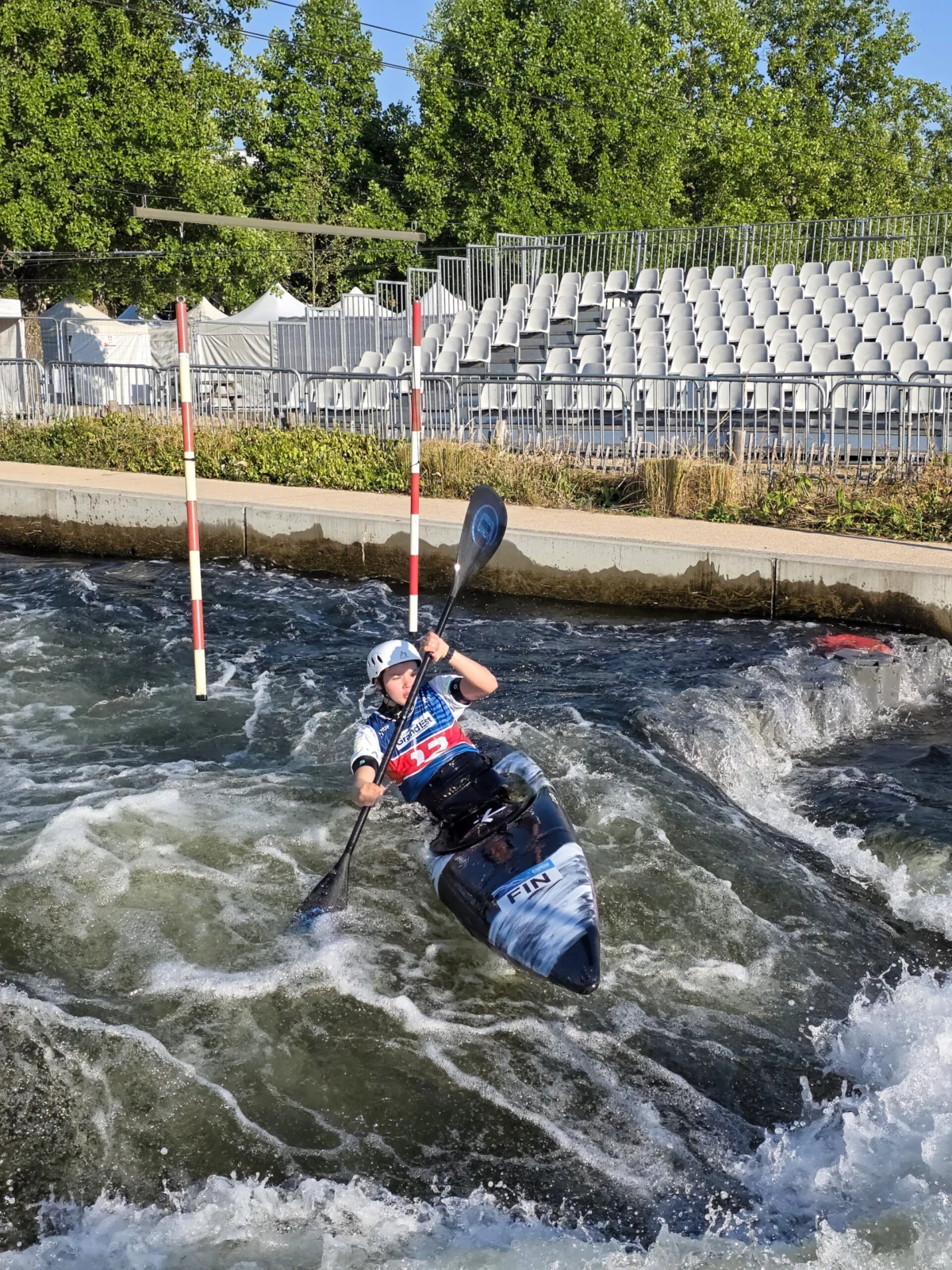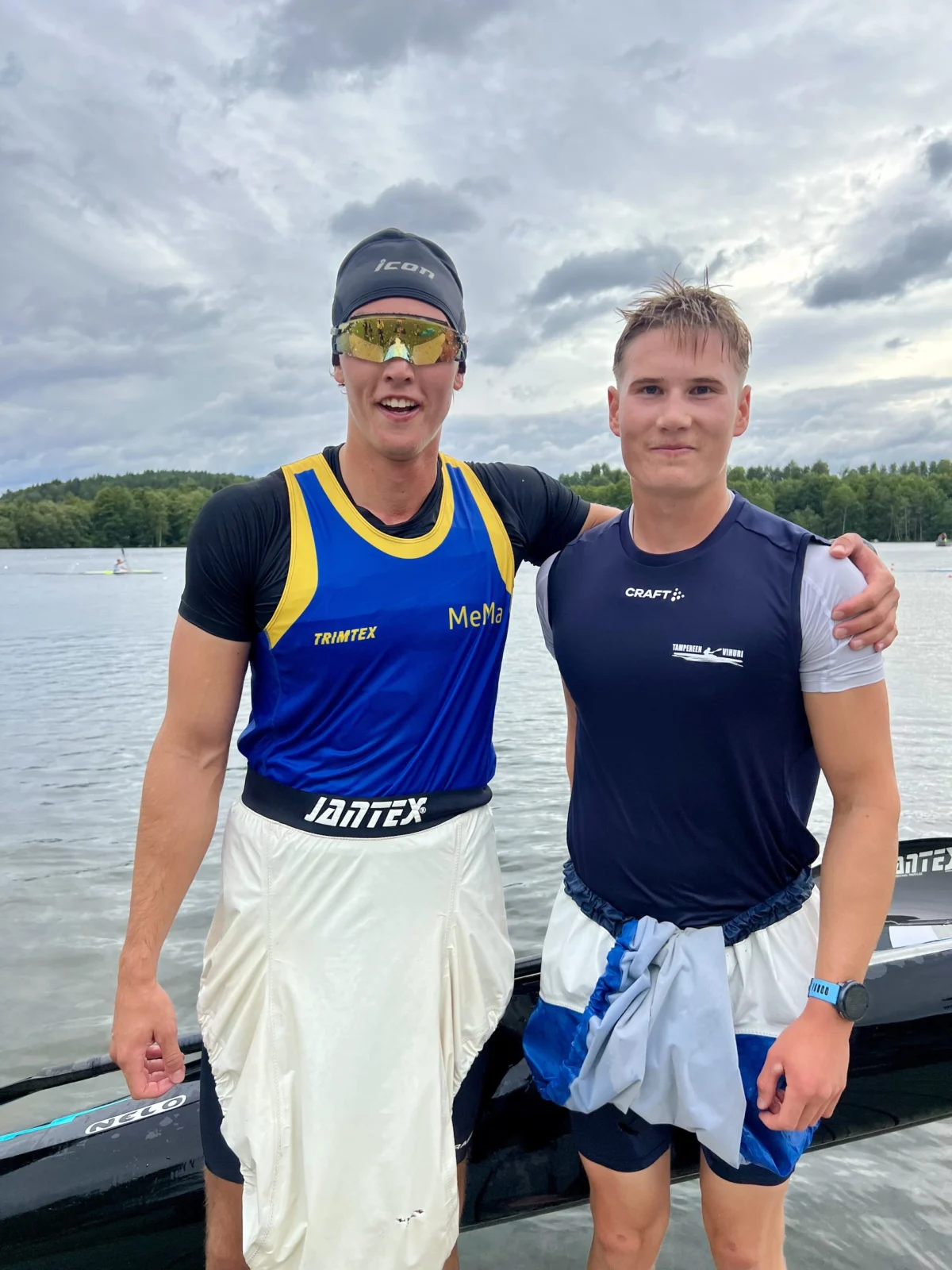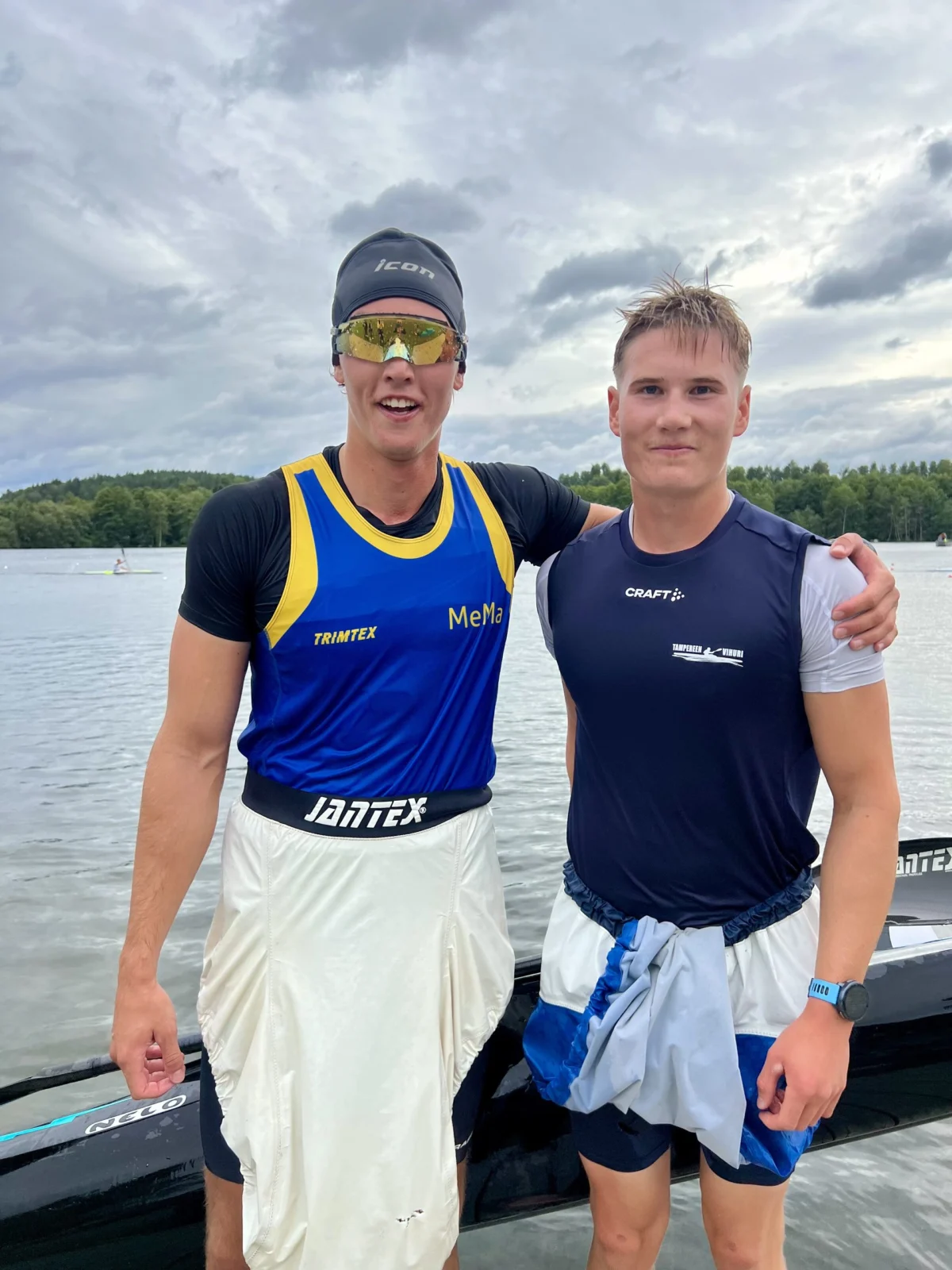
[GENERIC EUROPEAN REGATTA COURSE NAME/LOCATION, DATE] – The European Junior and U23 Canoe Sprint Championships drew to a close for the Finnish national team, marking a significant milestone for its emerging talent. Despite challenging conditions on the final day, particularly a formidable headwind, the young Finnish contingent delivered commendable performances, with Aapo Rosenström standing out in the U18 Men’s K1 500m B-final. The championships, held on a demanding European regatta course, provided invaluable international experience and underscored the potential within Finland’s burgeoning sprint canoeing program.
The overall sentiment from the Finnish camp is one of cautious optimism, acknowledging the high level of competition while celebrating the individual improvements made by each athlete. The team’s collective effort in achieving numerous personal bests against Europe’s elite junior paddlers has set a positive tone for future development.
Main Facts: Aapo Rosenström Leads the Charge
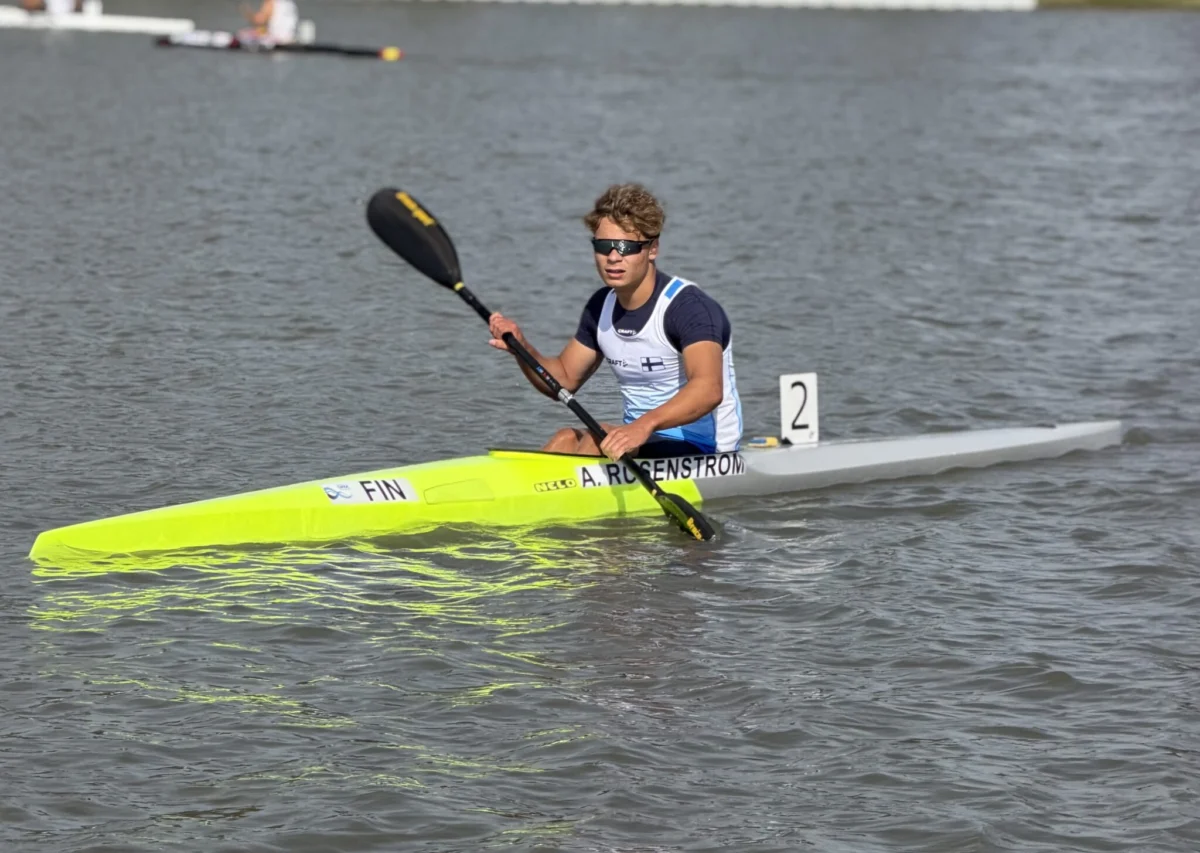
Aapo Rosenström, competing in his debut European Championship and his first year in the Under 18 category, was the sole Finnish representative in a final race on the concluding Sunday. Rosenström navigated a fiercely competitive field to secure an 8th place finish in the Men’s U18 K1 500m B-final, placing him 17th overall in Europe. This achievement is particularly noteworthy given his relative inexperience at this level and the adverse weather conditions that characterized the final day of racing.
Head coach Jeremy Hakala lauded the team’s overall performance, emphasizing the critical role of international exposure in athlete development. "Collectively, the Finnish team was able to perform at their best level in these European Championships," Hakala stated. "Every athlete who started in the competition succeeded in improving their personal bests for their respective distances, which is something we must be very satisfied with."
The championships, widely recognized for their escalating standards, presented a stern test. Hakala noted, "The general level of competition was clearly higher compared to last year or this year’s age-group World Championships. We still have a way to go and work to do to reach the A-final level, but positively, we are not light-years away. In comparison to other Nordic countries in the U18 category, we are very close."
Chronology of Competition: Navigating the Waters of Europe’s Elite
The European Junior and U23 Canoe Sprint Championships typically span several days, with a rigorous schedule of heats, semi-finals, and finals across various distances and boat classes. For the Finnish team, the journey began with initial heats, where athletes aimed to qualify for subsequent stages, often battling not just competitors but also the clock to meet qualifying times.
Early Stages and Initial Challenges:
The competition format is unforgiving, demanding peak performance from the very first stroke. For many of the Finnish athletes, these championships represented their first major international outing, a crucible where years of training are tested against the best in Europe. The opening days saw the Finnish boats taking to the water, pushing limits and gaining invaluable experience.
Aapo Rosenström’s Progression:
Aapo Rosenström’s path to the B-final in the M18 K1 500m event was a testament to his consistent performance and resilience. Having successfully navigated through the preliminary heats earlier in the week, where he showcased his emerging talent, Rosenström earned his spot in the semi-finals. His performance in the semi-final was strong enough to propel him into the B-final, a race reserved for those who narrowly missed the coveted A-final but demonstrated significant competitive prowess.
On Sunday, the final day of the competition, the weather took a decisive turn. A strong headwind swept across the regatta course, transforming the conditions and adding an extra layer of difficulty to an already demanding sport. For a 500m race, such headwinds can dramatically alter race dynamics, favoring those with superior power endurance and technical proficiency in choppy waters. Rosenström, competing in the M18 K1 500m B-final, faced these challenging elements head-on.
"Ahead of the B-final, based on the preliminary heat results, a very even and high-level race was expected," the team report indicated. "However, with the wind turning into a headwind on Sunday, the differences grew larger than anticipated. Aapo paddled a reasonably good race in the B-final, but in the strong headwind, he simply didn’t have enough strength left on the final competition day to fight for the top positions in the final." Despite this, his 8th place in the B-final and 17th overall position for a first-time participant and first-year U18 paddler was rightly considered an excellent placement and, crucially, a wealth of valuable experience for future international campaigns.
Other Finnish Performances:
Throughout the championships, other Finnish crews also showcased their dedication and competitive spirit. The N18 K4 500m crew of Netta Nieminen, Cecilia Hirvelä, Sonja Juvonen, and Iida Lindeman competed fiercely, ultimately finishing 9th in their heat and 15th overall. This event, requiring impeccable synchronization and teamwork, is a cornerstone of sprint canoeing, and their performance highlighted the depth of talent emerging in the women’s junior categories.
Cecilia Hirvelä, also competing in the N18 K1 500m, placed 7th in her heat, securing an overall 19th position. Iida Lindeman took on the demanding N18 K1 1000m, finishing 9th in her heat and 21st overall, demonstrating her endurance and determination. The M18 K2 500m saw Aapo Rosenström team up with Alex Autere, where they finished 8th in their heat, placing 25th overall. This partnership provided both athletes with crucial experience in a two-person boat, an event that demands intricate coordination. Finally, Alicia Lindqvist, in the N18 K1 200m preliminary heat, finished 8th, placing 26th overall in the lightning-fast sprint discipline.
Each of these performances, while not always leading to top-tier final positions, contributed significantly to the team’s overall experience and provided crucial benchmarks for future training and competition.
Supporting Data: A Deep Dive into the Results
The detailed results paint a picture of a team making strides in a highly competitive environment. While the overall rankings might appear modest, the context of the competition and the individual improvements achieved by the Finnish athletes are key indicators of progress.
-
M18 K1 500m (Men’s U18 Kayak Single 500m): Aapo Rosenström’s 8th place in the B-final, translating to a 17th overall finish, is particularly encouraging. In a field that typically sees upwards of 30-40 competitors from across Europe, finishing in the top half as a debutant is a strong statement. The 500m distance is a balance of explosive power and sustained speed, a demanding race that often separates the most versatile paddlers. His performance suggests a strong foundation for future success.
-
N18 K4 500m (Women’s U18 Kayak Four 500m): The crew of Netta Nieminen, Cecilia Hirvelä, Sonja Juvonen, and Iida Lindeman achieved a 9th place in their heat and 15th overall. The K4 event is a true test of a nation’s junior program, requiring not only individual talent but also strong squad depth and seamless teamwork. Their result demonstrates a cohesive unit capable of competing at the European level, with ample room for refinement and improvement in boat synergy.
-
N18 K1 500m (Women’s U18 Kayak Single 500m): Cecilia Hirvelä’s 7th in heat and 19th overall is a solid showing. The K1 500m is a benchmark event for individual paddlers, and her performance indicates a competitive individual capacity.
-
N18 K1 1000m (Women’s U18 Kayak Single 1000m): Iida Lindeman’s 9th in heat and 21st overall in the 1000m event highlights her endurance capabilities. The 1000m is a gruelling race demanding sustained power and mental fortitude, often considered a stepping stone to Olympic-distance aspirations.
-
M18 K2 500m (Men’s U18 Kayak Double 500m): Aapo Rosenström and Alex Autere’s 8th in heat and 25th overall in the K2 500m indicates the ongoing development of partnership boats. K2 requires specific training for synchronization and communication, and this experience will be vital for building stronger crew boats in the future.
-
N18 K1 200m (Women’s U18 Kayak Single 200m): Alicia Lindqvist’s 8th in preliminary heat and 26th overall in the K1 200m points to her involvement in the explosive sprint discipline. The 200m is a pure test of raw speed and start technique, and international exposure in this event is crucial for refining these critical skills.
The collective achievement of personal bests by all participating athletes is perhaps the most significant "supporting data." In high-pressure, elite environments, maintaining composure and executing performances that surpass previous personal benchmarks speaks volumes about the athletes’ mental strength and the effectiveness of their training programs. This indicates a positive trajectory for individual development, even if final placements are not always at the very top.
Official Responses: Coaching Perspective and Future Vision
Jeremy Hakala, a pivotal figure in Finnish canoeing development, provided a comprehensive assessment that balances realism with encouragement. His observations offer deep insight into the state of Finnish junior sprint canoeing relative to its European counterparts.
On Personal Bests and Athlete Satisfaction:
Hakala’s emphasis on every athlete achieving personal bests is crucial. It signifies that regardless of the final ranking, the athletes are improving, which is the primary goal at this developmental stage. "To this, we must be very satisfied," he reiterated, highlighting the importance of individual progress as a foundation for collective success. This also suggests that the training methods employed by the Finnish coaching staff are yielding tangible results in terms of fitness and technical execution under pressure.
On the Rising Standard of Competition:
Hakala’s comment on the "clearly higher" level of competition this year compared to previous years or even World Age Group Championships is a stark but important observation. It suggests that European junior canoeing is experiencing a surge in talent and program development across the continent. This upward trend means that Finnish athletes must continuously elevate their game to remain competitive. "The general level of competition was clearly higher compared to last year or this year’s age-group World Championships," he noted. This acknowledgment frames the Finnish results not in isolation, but within the context of a rapidly improving international landscape.
Bridging the Gap to A-Finals:
The coach’s candid assessment that "we still have a way to go and work to do to reach the final level" is a professional and realistic appraisal. It avoids hyperbole and grounds the team’s aspirations in the hard work required. This ‘gap’ typically involves marginal gains in power, technique, race strategy, and mental toughness that differentiate B-finalists from A-finalists. However, his follow-up, "positively, we are not light-years away," injects a crucial element of hope and tangible ambition. It implies that the necessary improvements are within reach with focused effort.
Nordic Comparison: A Measure of Regional Standing:
The comparison to other Nordic countries is a valuable benchmark. "In comparison to other Nordic countries in the U18 category, we are very close," Hakala stated. This suggests that Finland is holding its own within its immediate geographical and sporting context. Nordic countries often share similar challenges and resources in sports development, making this a relevant comparison. Being "very close" indicates that the regional rivalries are healthy and that Finland is a strong contender within this regional grouping, providing motivation and a clear target for competitive improvement. It also hints at a collective strength in the Nordic region that could potentially challenge more dominant canoeing nations in the future.
Implications: Building for the Future of Finnish Canoeing
The performances at these European Junior and U23 Championships carry significant implications for the future trajectory of Finnish sprint canoeing.
Experience as a Catalyst for Growth:
For young athletes like Aapo Rosenström, Cecilia Hirvelä, Iida Lindeman, Netta Nieminen, Sonja Juvonen, Alex Autere, and Alicia Lindqvist, the experience of competing on an international stage is invaluable. It exposes them to different racing styles, the pressure of major events, and the logistical demands of international travel and competition. This exposure is critical for their long-term development, helping them to mature as athletes and understand what it takes to succeed at the highest levels. The challenges posed by the headwind on the final day, for instance, offered a real-world lesson in adapting to adverse conditions – a skill crucial for any elite paddler.
Identifying Future Talent and Development Pathways:
These championships serve as a vital platform for talent identification. The results, coupled with the coaches’ observations, help to pinpoint athletes with the most potential and to tailor individualized development plans. For Aapo Rosenström, his strong debut suggests he is a key prospect for future senior teams. For the K4 crew, their cohesion and collective effort indicate the potential for developing strong team boats. The experience gained here will inform coaching strategies, training camp selections, and resource allocation in the coming seasons.
Benchmarking and Strategic Planning:
The detailed results and Jeremy Hakala’s assessment provide critical data for the Finnish Canoe Federation (Suomen Melonta- ja Soutuliitto, SMSL). Understanding where Finnish athletes stand relative to their European peers, and specifically to other Nordic nations, allows for strategic planning. It highlights areas where Finland is strong and areas that require more intensive focus—be it in specific distances, boat classes, or aspects of physical and technical preparation. The acknowledgment that "we still have a way to go" implies that national training programs will need to be continuously reviewed and enhanced to bridge the gap to the A-final level.
Long-Term Vision: Towards Senior Success and Olympic Aspirations:
Ultimately, the success of junior programs is measured by their ability to feed talent into senior national teams and, eventually, to produce athletes capable of competing at the Olympic Games. The current cohort of junior paddlers represents the future of Finnish canoeing. By providing them with early international exposure, fostering a culture of continuous improvement, and systematically addressing developmental needs, Finland aims to build a sustainable pipeline of talent. The "not light-years away" comment from Hakala is a beacon of hope, suggesting that with continued dedication and strategic investment, Finnish sprint paddlers can indeed contend for top honours on the global stage in the years to come.
The conclusion of the European Junior and U23 Canoe Sprint Championships for the Finnish team marks not an end, but a pivotal chapter in the journey of its young athletes. Armed with valuable experience, improved personal bests, and a clear understanding of the competitive landscape, they return home with renewed determination, ready to paddle harder and smarter towards their future aspirations. The focus now shifts to rigorous training, refining techniques, and building the physical and mental fortitude required to ascend the ranks of European and global sprint canoeing.
For additional information, please contact:
Jeremy Hakala
[Contact details from original text, if applicable, e.g., Head Coach]
Phone: 044 246 4030
Email: [email protected]