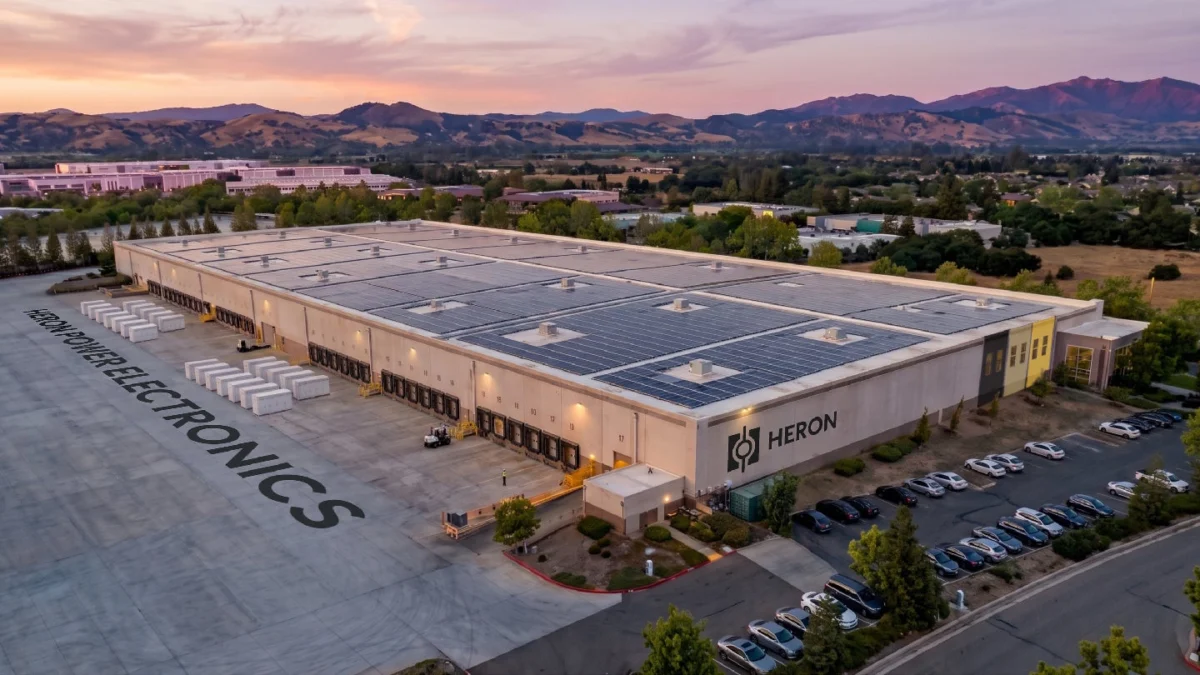
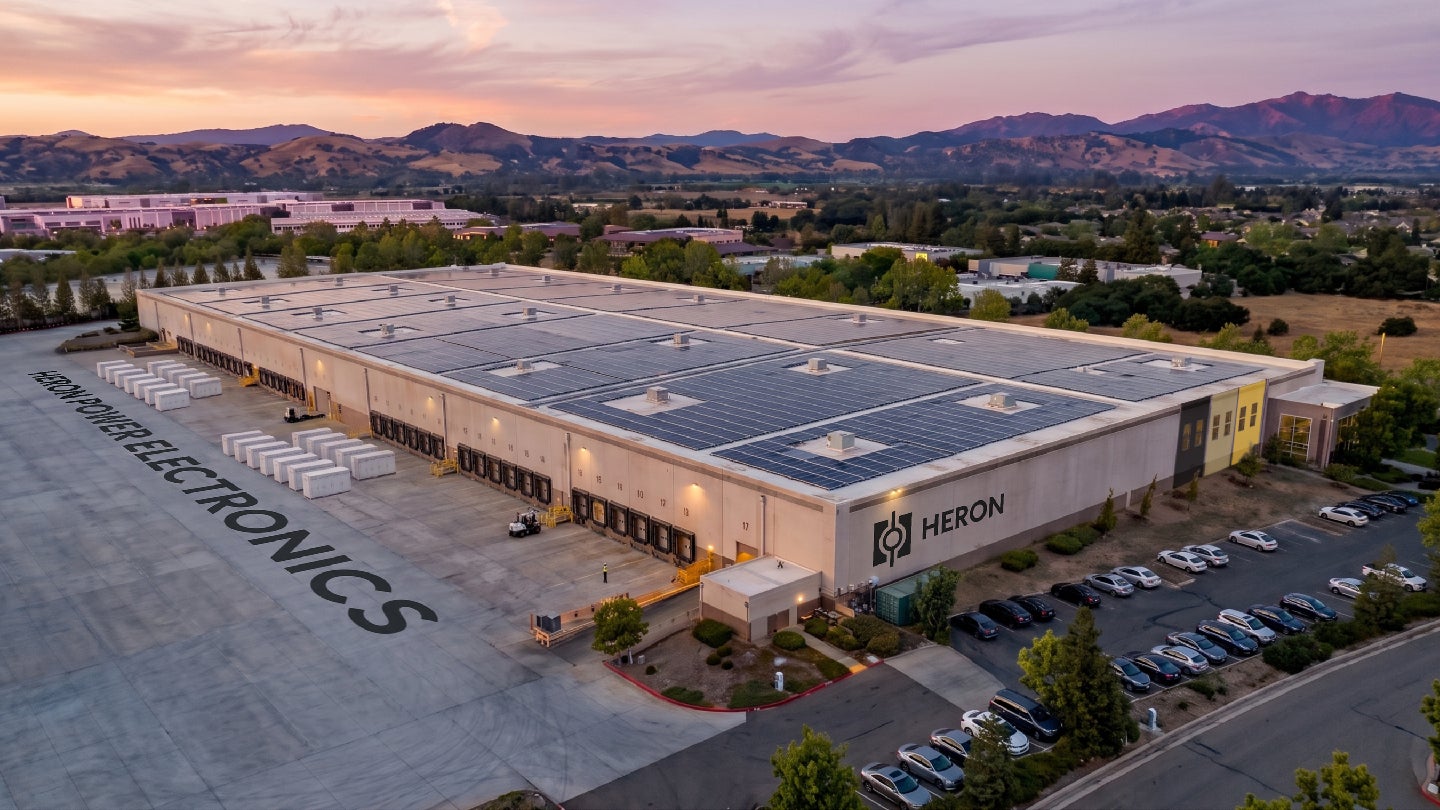
In a strategic move designed to reshape the domestic energy landscape, power electronics pioneer Heron Power has officially announced the site for its first large-scale manufacturing facility, dubbed "Heron Factory One." Located in Morgan Hill, California, the facility represents a pivotal shift in how the United States produces the essential hardware required to modernize its aging power grid. By transforming a 286,000-square-foot former distribution warehouse into a cutting-edge hub for power electronics, Heron Power is positioning itself at the epicenter of the nation’s energy transition.
The project, backed by an investment exceeding $100 million, arrives at a critical juncture. As the demand for electricity surges due to the rapid proliferation of artificial intelligence (AI) data centers and the widespread adoption of electric vehicles (EVs), the nation’s existing infrastructure is increasingly strained. Heron Factory One is designed to be the remedy, promising to output 40GW of equipment annually—a figure that matches approximately 75% of the total new generating capacity added to the US grid in 2025.
The Strategic Vision: Fixing a Fifty-Year Stagnation
The core of Heron Power’s mission is the production of the "Heron Link," a sophisticated 5MW medium-voltage power conversion system. Unlike traditional grid equipment that has seen little innovation in half a century, the Heron Link is a modular, all-in-one solution designed to increase efficiency and bolster system reliability.
Drew Baglino, CEO and founder of Heron Power, frames the initiative as a technological "leapfrog." According to Baglino, the grid is currently grappling with a dual pressure: the need to accommodate new, intermittent supply from solar and storage while simultaneously managing the massive, high-density load requirements of AI and industrial computing.
"America’s grid has to grow faster than it has in decades," Baglino stated during the announcement. "The equipment running the grid hasn’t changed in 50 years. Heron Factory One in Morgan Hill is how we fix that. We’re manufacturing the leapfrog technology our grid needs, at scale, in America first."
Chronology: From Concept to Commissioning
The path to Heron Factory One has been one of calculated deliberation. The selection of Morgan Hill, located roughly 30 minutes south of San Jose, followed an exhaustive, multi-state search for a location that could offer the perfect synergy between industrial space and high-tech human capital.
- Pre-2026 (Site Selection Phase): Heron Power conducted a comprehensive audit of potential manufacturing sites across the United States. Key criteria included proximity to the company’s engineering headquarters, access to the San Francisco Bay Area’s deep pool of electrical engineering talent, and logistical connectivity.
- Late 2026 (Facility Procurement): Heron Power secured the 286,000-square-foot distribution facility in Morgan Hill. This repurposing strategy allows the company to accelerate its timeline by utilizing existing industrial infrastructure rather than breaking ground on a greenfield site.
- Immediate Term (2026–2027): Site preparation is currently underway. This phase involves retrofitting the warehouse with the specialized heavy-duty electrical and assembly machinery required for high-precision power electronics manufacturing.
- Late 2027 (The Milestone): The company has slated the commencement of mass production for the final quarter of 2027. This timeline is aggressive, requiring precise execution in supply chain procurement and workforce training.
Economic and Industrial Implications
The economic footprint of Heron Factory One is substantial. The project is expected to generate over 600 high-skilled jobs, ranging from advanced manufacturing and robotic assembly to complex electrical engineering and site operations. This represents a significant boost for the Morgan Hill local economy, which is eager to pivot toward the high-growth green technology sector.
Reshoring and Supply Chain Resilience
One of the most pressing issues in the modern energy sector is the reliance on foreign supply chains. Currently, approximately 80% of critical grid components—including transformers, inverters, and switchgear—are imported. This reliance creates a vulnerability to geopolitical shifts and logistical bottlenecks.
By localizing production in California, Heron Power is not just manufacturing a product; it is attempting to insulate the domestic grid from the volatility of international trade. "We are building an American supply chain for the backbone of the American grid," notes an industry analyst familiar with the project. "By producing 40GW of capacity domestically, Heron is effectively reducing the ‘import risk’ associated with the energy transition."
Government Support and Fiscal Incentives
The project has received significant public backing, underscoring its importance to state and federal industrial policy. Heron Power was awarded a $26.4 million California Competes (CalCOMPETES) tax credit. Administered by the Governor’s Office of Business and Economic Development (GO-Biz), this credit is designed to incentivize companies that create high-quality jobs and invest heavily in California’s infrastructure. This public-private partnership highlights the state’s commitment to maintaining its leadership in the climate-tech sector.
The Heron Link: Technical Innovation in a Modular Package
The centerpiece of the factory’s output is the Heron Link. In traditional energy projects, grid connection requires a disjointed array of components sourced from multiple vendors, leading to integration challenges, inefficiencies, and long lead times.
The Heron Link simplifies this by consolidating multiple grid-interface functions into a single modular unit. Its 5MW capacity makes it ideally suited for the high-demand environments of hyperscale data centers—the very centers that are currently driving the explosion in electricity consumption. By streamlining the installation and connection process, Heron Power claims it can significantly reduce the "time-to-power" for new data center developments, allowing tech companies to bring their infrastructure online months or even years earlier than traditional grid-connection processes would allow.
Challenges and Future Outlook
Despite the optimism surrounding Heron Factory One, the company faces a complex road ahead. Scaling the manufacturing of high-voltage electronics requires a sophisticated supply chain of semiconductors, copper, and specialized cooling components. Ensuring the steady flow of these raw materials while maintaining the high quality-control standards required for grid-grade equipment will be the primary challenge for the management team in 2027.
Furthermore, the integration of such a high volume of new equipment (40GW) into existing utility frameworks will require close coordination with regional transmission organizations (RTOs) and utility providers. Heron Power must ensure that its modular units not only meet but exceed the varying regulatory standards of different states and grid operators.
However, the industry sentiment remains overwhelmingly positive. As the world pivots toward electrification, the bottleneck is no longer just the generation of power—it is the hardware that manages, converts, and distributes it. By choosing to build a factory of this magnitude, Heron Power is signaling that it believes the demand for this hardware is not a temporary spike, but a permanent, decades-long requirement of the modern economy.
Conclusion: A Blueprint for the Future
Heron Factory One is more than just a warehouse of electronics; it is a declaration of intent. It serves as a blueprint for how legacy industrial hubs can be repurposed to serve the needs of a 21st-century energy grid. By marrying American engineering, state-level economic incentives, and a modular product strategy, Heron Power is positioning itself as a vital architect of the energy future.
As 2027 approaches, all eyes will be on Morgan Hill. If the company can deliver on its promise to produce 40GW of capacity annually, it will have succeeded in turning the tide on grid stagnation, providing the hardware foundation necessary for the AI revolution and the transition to a carbon-neutral economy. In the high-stakes game of grid modernization, Heron Power has made its move—and it is a move that could power the next half-century of American progress.