As the global transition toward decarbonization accelerates, the focus of the energy sector has moved beyond the established reliability of wind and solar. While these intermittent renewables currently dominate the headlines, a vast, consistent, and largely untapped resource remains dormant across the world’s coastlines: the ocean. Wave and tidal energy represent the next frontier in the pursuit of a net-zero future, offering a degree of predictability that traditional renewables struggle to match.
Main Facts: The Promise of Marine Energy
Marine energy, encompassing wave, tidal, and ocean thermal energy conversion (OTEC), represents a massive, high-density power source. Unlike solar energy, which disappears at night, or wind energy, which fluctuates based on atmospheric pressure, the tides are governed by the gravitational pull of the moon and sun, making them fundamentally predictable decades into the future.
The fundamental appeal of marine energy lies in the density of seawater, which is roughly 800 times denser than air. This means that a tidal stream turbine can produce significant power at much lower velocities than an equivalent wind turbine. Wave energy, meanwhile, captures the kinetic energy generated by wind blowing across the ocean surface, concentrating it into a form of mechanical energy that can be converted into electricity with high efficiency.
However, the industry faces the "harsh environment" challenge. Deploying mechanical infrastructure in corrosive, high-pressure, and often stormy marine environments requires specialized materials and rigorous engineering standards, which has historically kept costs higher than onshore wind or utility-scale solar.
A Chronology of Marine Energy Development
The journey of marine energy has been one of slow, steady iteration, marked by bold experiments and pivots toward commercial viability.
- The Early Pioneers (1960s–1980s): The La Rance Tidal Power Station in France, commissioned in 1966, remains the world’s first major tidal barrage. It proved that large-scale electricity generation from the sea was technically possible, though environmental concerns regarding estuaries eventually slowed the momentum of tidal barrages.
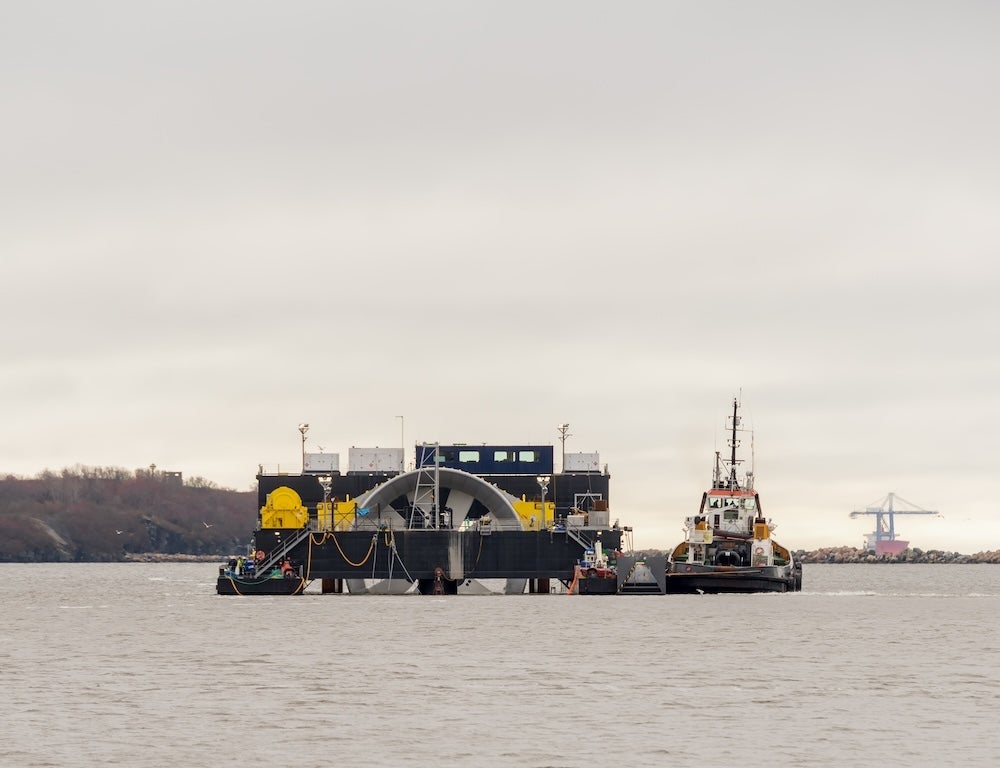
- The Pilot Era (1990s–2010s): This period saw a shift toward "stream" technologies—turbines placed underwater that function like submerged wind turbines. Notable projects like the SeaGen prototype in Northern Ireland’s Strangford Lough proved that tidal stream energy could be grid-connected reliably.
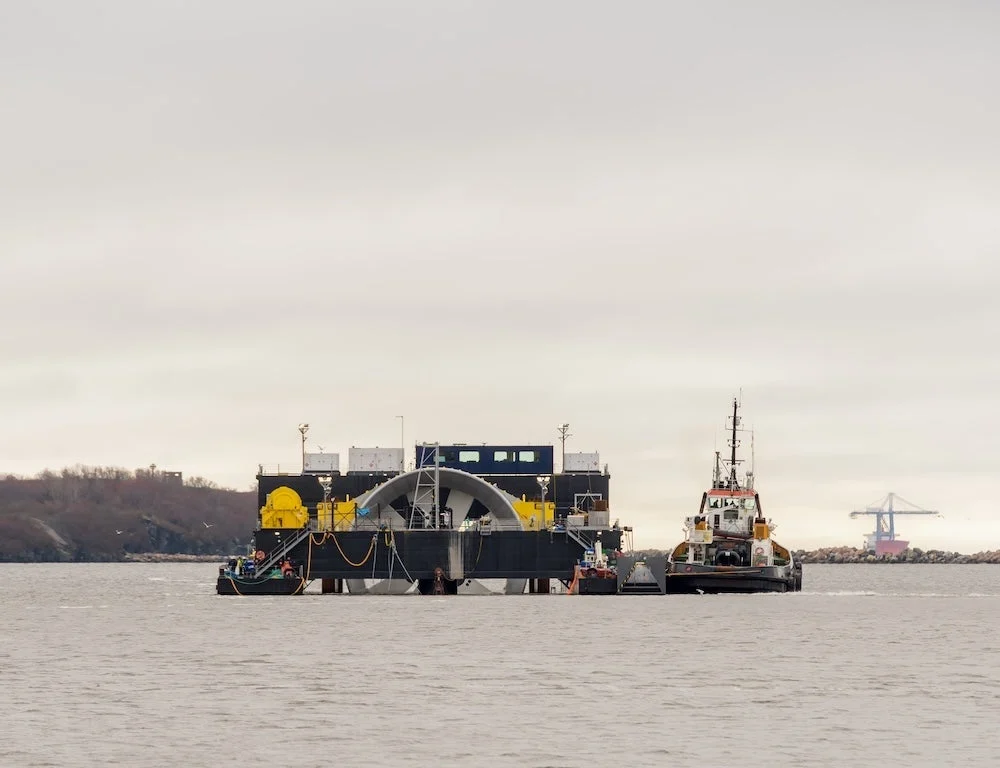
- The Convergence and Commercialization Phase (2015–Present): The industry has shifted its focus from experimental proof-of-concept to scaling. Companies like Orbital Marine Power and Simec Atlantis have successfully deployed multi-megawatt turbines. The focus has moved from "can it work?" to "how do we lower the Levelized Cost of Energy (LCOE)?"
Supporting Data: The Economic and Technical Landscape
To understand the trajectory of marine energy, one must analyze the current economic metrics. According to recent industry projections, the global marine energy market is expected to reach a valuation of several billion dollars by 2030, provided that current policy support remains consistent.
The Cost Factor
The LCOE for tidal energy has been falling steadily. In the early 2010s, costs were prohibitive, often exceeding $300/MWh. Today, through improved turbine design and the adoption of standardized components, leading tidal developers are targeting costs in the $100–$150/MWh range. While still higher than offshore wind, the "predictability premium"—the value added by knowing exactly when power will be generated—makes it highly attractive to grid operators who need to balance load without relying on natural gas peaker plants.
Resource Potential
The International Renewable Energy Agency (IRENA) estimates that the theoretical potential of ocean energy is vast, with the capacity to provide 10% of the world’s electricity needs by 2050 if investment scales accordingly. Wave energy alone is estimated to hold a global technical potential of approximately 29,500 TWh per year, significantly exceeding current global electricity consumption.
Policy Frameworks: The Catalyst for Growth
Technology alone cannot bridge the "valley of death" between prototype and commercial deployment. Policy plays an indispensable role.
Revenue Support Mechanisms
The European Union has been a global leader in this regard, utilizing "Contracts for Difference" (CfDs) and dedicated innovation funds like the European Maritime, Fisheries and Aquaculture Fund. By guaranteeing a fixed price for electricity produced by marine projects, governments provide the revenue certainty that private equity investors demand.
Permitting and Environmental Hurdles
One of the most significant barriers to growth is the bureaucratic complexity of marine spatial planning. Developers must navigate a web of environmental impact assessments (EIAs) that protect marine life and commercial fishing routes. Streamlined "one-stop-shop" permitting processes in regions like Scotland and Canada have demonstrated that when policy is clear, project lead times decrease significantly.
Official Responses and Industry Outlook
Industry leaders and policy bodies are increasingly vocal about the need for a dedicated "Marine Energy Strategy."
"The ocean is the world’s largest battery," says one leading industry analyst. "We are no longer discussing whether the technology works. We are discussing how we integrate it into a multi-source renewable grid. The official stance of major energy agencies is now shifting toward acknowledging that marine energy is not a niche technology, but a necessary component of a resilient, decarbonized grid."
However, there is caution. Critics and government observers note that the marine energy sector must avoid the "over-promise and under-deliver" trap. Public funding must be tied to performance milestones. The goal is to avoid subsidizing dead-end technologies while ensuring that breakthrough designs—such as flexible wave-energy converters—receive the necessary capital to reach the manufacturing stage.
Implications: The Future of the Blue Economy
The implications of a mature marine energy sector extend far beyond electricity generation.
Grid Stability and Decarbonization
The most immediate implication is grid stability. Marine energy’s predictability allows for better planning and reduces the need for expensive battery storage systems. By replacing fossil-fuel-based peaking plants, wave and tidal power can significantly lower the carbon intensity of coastal grids.
The Blue Economy Integration
Marine energy is set to become the backbone of the "Blue Economy." Offshore green hydrogen production, for example, is a natural pairing for marine energy. Excess power generated by tidal turbines during periods of low demand can be used to electrolyze seawater into hydrogen, creating a portable, high-value fuel source.
Global Geopolitics
Energy security is a primary driver of the current transition. Nations with vast coastlines—such as the United Kingdom, Canada, Chile, and Japan—stand to benefit from domestic energy production that is impervious to global fuel price shocks. By developing an indigenous marine energy supply chain, these nations can insulate their economies from the volatility of international oil and gas markets.
Conclusion: Bridging the Gap to Commerciality
The transition to a sustainable energy future requires a diversified portfolio. While the solar and wind industries have matured, they cannot be the sole pillars of the global energy architecture. Wave and tidal energy represent the essential "missing pieces" of the puzzle—offering high energy density, consistent predictability, and a significant contribution to the decarbonization of our planet.
As we look toward 2030 and beyond, the industry is at a critical juncture. Continued investment in R&D, coupled with stable, long-term policy support, will be the deciding factors. If these conditions are met, the ocean will cease to be merely a source of aesthetic beauty or a conduit for shipping, and will instead become the engine room of the global economy.
For those tracking the evolution of the power sector, the message is clear: monitor the coastlines. The most reliable power source on Earth has been moving with the tide for eons; we are finally learning how to harness it. Through dedicated analysis and a commitment to technological refinement, the marine energy sector is poised to emerge from the shadow of more established renewables, proving that the future of power is as deep and vast as the ocean itself.