While Crete is globally celebrated for its sun-drenched Mediterranean coastlines and the remnants of the ancient Minoan civilization, the island’s interior hides a secret of geological and cultural magnitude. Rising sharply from the Aegean Sea, the White Mountains—known locally as Lefka Ori—form a limestone citadel of over 30 summits exceeding 2,000 meters (6,562 ft). Nestled within this rugged, inaccessible wilderness lies the Samaria Gorge, a 16-kilometer (9.9-mile) chasm that serves as both a premier natural attraction and a profound symbol of Cretan identity.

Main Facts: The Grandeur of Samaria
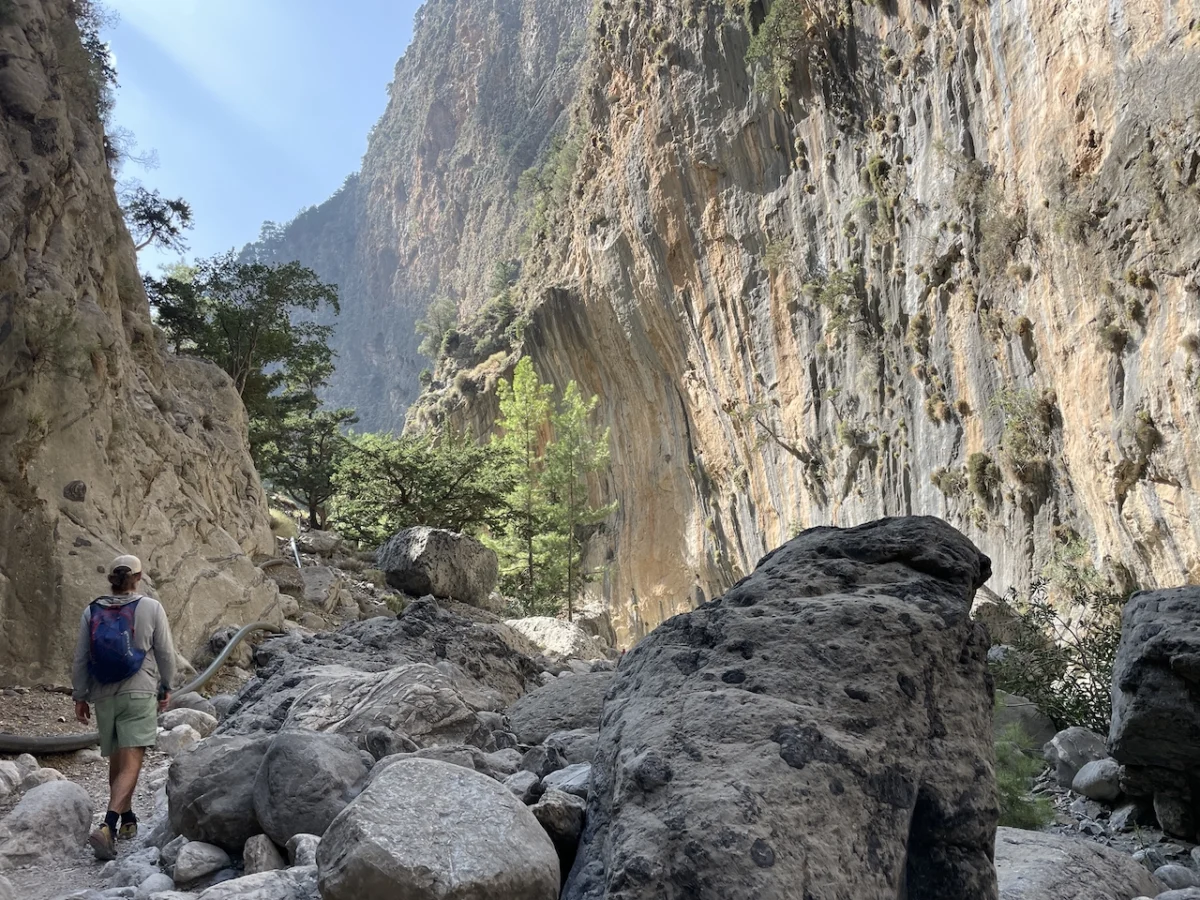
The Samaria Gorge is not merely a hiking trail; it is an ecosystem-spanning journey that transitions from high-altitude, pine-clad mountain forests to the pebble-strewn beaches of the Libyan Sea. Widely recognized as Europe’s second-longest gorge, it offers a dramatic descent through towering limestone walls that soar up to 300 meters (984 ft) high.

For the modern hiker, the trail is a feat of accessibility amidst raw wilderness. The trek requires a total descent of 2,327 meters (7,635 ft) and a total elevation gain of 1,099 meters (4,285 ft). While the physical demands are moderate—typically requiring 5 to 6 hours for a one-way crossing—the environmental conditions and the sheer scale of the landscape demand respect. The trail is well-maintained, with plentiful potable water sources, a testament to the region’s commitment to supporting the thousands of trekkers who traverse its path annually.

Chronology: A Journey Through Time
The history of Samaria is as deep as its canyon walls. Long before it became a National Park in 1962, the gorge was a sanctuary for those fleeing foreign oppression. During the Turkish occupation, the gorge’s treacherous terrain provided a natural fortress. Most notably, in 1770, the canyon became the stage for a historic stand of resistance. When 4,000 Cretan women and children sought refuge within the gorge, local hero Giannis Bonatos and a small force of 200 fighters successfully held the "Iron Gates"—the narrowest section of the gorge—against advancing Turkish forces.

This legacy of defiance transformed the village of Samaria, situated at the halfway point of the trail, into a hub of local culture. The village, which remained inhabited until the mid-20th century, stands as a collection of time-worn stone structures. Following the creation of the National Park, residents were resettled, and the village was repurposed to house medical facilities, forest staff, and environmental researchers, ensuring the area remains a protected bastion of history and biology.

Supporting Data: The Flora and Fauna
The biodiversity of the White Mountains is unique to the region, with the Kri-kri (Cretan Goat) serving as the most iconic resident. These elusive, sure-footed creatures are characterized by their brownish coats, distinctive dark dorsal stripes, and magnificent backward-curving horns.

Historical evidence suggests the Kri-kri were likely introduced to the island during the Minoan Civilization (3100 B.C.–1100 B.C.), as evidenced by their frequent depiction on ancient coins and pottery. By the early 1960s, the population had dwindled to a precarious 200 individuals. However, the establishment of the Samaria Gorge National Park—the only protected area of its kind on the island—has been a resounding conservation success. Current estimates place the population at over 2,500, with hikers frequently spotting them navigating near-vertical cliff faces with a grace that defies gravity.

The "Out-and-Back" Experience: A Test of Endurance
In the fall of 2023, the challenge of the Samaria Gorge was re-evaluated through the lens of a non-traditional "out-and-back" hike. While the standard route is a one-way descent from the Xyloskalo trailhead to the coastal village of Agia Roumeli, opting for a full round trip transforms the excursion into a high-intensity endurance test.

The journey begins at sunrise at the Xyloskalo ticket office. As the first light hits the bald limestone peaks of the White Mountains, the descent begins in earnest, winding through switchbacks that offer panoramic views of the changing mountain hues. After roughly 4 kilometers, hikers reach the rest area of Ayios Nikolaos, where a centuries-old chapel stands adjacent to a grove of ancient cypress trees and the site of a 1st-century B.C. temple to Apollo.

The trail continues through forest corridors, leading to the abandoned village of Samaria. After a brief respite, the path enters the most dramatic section of the gorge. The walls close in, the stream crossing becomes more frequent, and the trail eventually leads to the "Iron Gates"—a bottleneck less than three meters wide with walls that tower 300 meters into the sky.

Official Responses and Administrative Skepticism
Undertaking an out-and-back journey is rare, and it frequently triggers concern among park officials. During a 2023 expedition, the authors encountered a series of checkpoints where officials voiced significant skepticism regarding the ability to complete the return trip before the 6:00 PM park closure.

At the southern entrance in Agia Roumeli, a park official was notably adamant, insisting that a return trip was impossible and advising a ferry exit instead. A second ranger, encountered 45 minutes into the return climb, echoed these concerns, underscoring the protective nature of the park staff who prioritize visitor safety above all else. However, the mood shifted upon meeting a final official near the northern entrance, who recognized the hikers’ preparedness and pace, acknowledging their ability to finish well within the allotted time. The successful conclusion of the hike—marked by a nod of approval from the staff at the northern gate—served as a testament to the fact that while the terrain is unforgiving, proper preparation and respect for the park’s regulations allow for unique and rewarding adventures.

Implications for Future Visitors
The Samaria Gorge remains a vital pillar of Greek tourism, but its value transcends leisure. It serves as a living museum, a geological marvel, and an ecological sanctuary. For those planning to visit, the implications are clear:

- Preparation is Paramount: While the "Easy" difficulty rating is accurate for the standard one-way descent, any deviation or extended trekking requires significant physical conditioning and early starts.
- Cultural Sensitivity: Understanding the history of the gorge—from its role in the resistance to its status as a protected heritage site—is essential for a meaningful visit.
- Environmental Stewardship: The success of the Kri-kri population growth highlights the importance of respecting park boundaries and wildlife, which are integral to the gorge’s health.
For those inspired by the allure of the Mediterranean’s rugged interior, the Samaria Gorge offers a profound connection to the landscape. Whether one is a casual hiker seeking a bucket-list experience or an experienced trekker looking to challenge their endurance, the White Mountains offer an experience that is as enduring as the limestone that formed them.

Note: For readers looking to further explore the region, the Samaria Gorge is one of 25 featured routes in "Wanderlust Mediterranean," published by Gestalten. The book offers comprehensive insights into the diverse landscapes and hiking cultures of the Mediterranean basin.