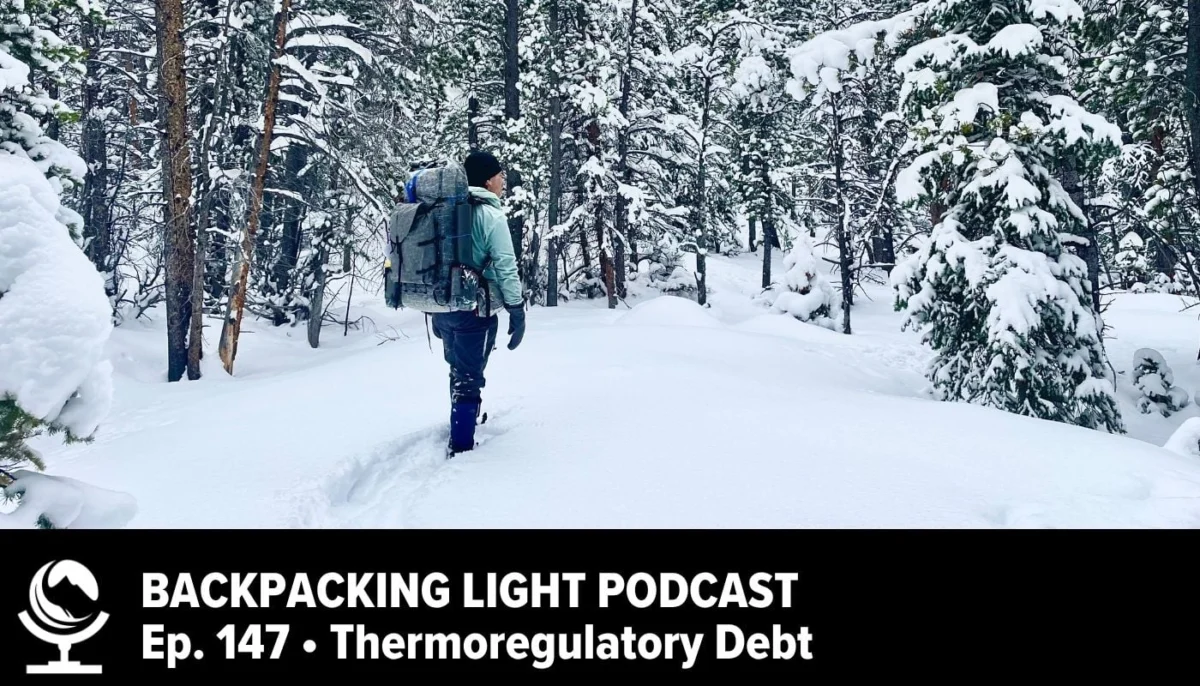
In the world of alpine trekking, mountaineering, and long-distance backpacking, the difference between a successful expedition and a life-threatening emergency often comes down to a series of micro-decisions made hours before the crisis actually unfolds. A recent episode of the Backpacking Light Podcast (Episode 147), hosted by Ryan Jordan, has sparked a significant conversation within the outdoor community by introducing a conceptual framework known as "Thermoregulatory Debt."
This model challenges the traditional focus on gear specifications—the weight of a jacket or the loft of a sleeping bag—and instead shifts the focus toward the timing and management of physiological heat. By treating body temperature as a financial account, the podcast offers a practical, albeit sobering, look at how small, neglected choices compound into systemic failure.
The Core Concept: The Economics of Heat Management
At its heart, the theory of Thermoregulatory Debt is a masterclass in behavioral physiology. Just as a credit card allows a consumer to spend money they do not yet have, the backcountry traveler can "spend" heat they cannot afford to lose. The debt accrues when a hiker fails to adjust their layers, ignore the early signs of moisture accumulation, or delay caloric intake.
The analogy is surprisingly robust. If you wait until you are shivering to add a layer, you have already spent your "reserve capital." Once you are in a state of debt, the interest rates—in the form of metabolic exhaustion and impaired dexterity—begin to accrue. By the time the hiker reaches camp, the "bank" (the body’s physiological reserves) is closed, and the cost of recovery becomes exponentially higher.
The Three Phases of Decline
The podcast outlines a predictable trajectory for how this debt manifests:
- The Decision Phase: This is the point of initial negligence. It might be the refusal to vent a pit zip during a steep climb or the choice to push through a "quick" break without adding a shell.
- The Physiological Imbalance: As the hiker continues, the body struggles to maintain equilibrium. Moisture trapped against the skin begins to conduct heat away from the body, and metabolic heat production begins to lag behind environmental heat loss.
- Delayed Impairment: This is the "default" state. When the hiker finally stops, the sudden cessation of movement causes core temperature to plummet, leading to acute discomfort or, in extreme cases, hypothermia.
Chronology: The Progressive Erosion of Safety
To understand how a hiker falls into debt, one must look at the timeline of a typical day on the trail. It is rarely a single, catastrophic event that leads to failure; rather, it is a cumulative process.
The Morning Start
The morning is often characterized by "cold starts." Many hikers begin their day with an insulation layer on to combat the morning chill. However, as the sun rises and the intensity of the hike increases, the failure to shed that layer immediately leads to the first installment of "Moisture Debt." Sweat begins to saturate base layers, which, if not managed, will become a liability once the sun dips or the wind picks up.
The Mid-Day Drift
During the mid-day, the risk shifts to "Performance Debt." As the body focuses on moving, small signals—cold fingers, slightly damp skin, a dull hunger—are often suppressed by adrenaline and the drive to reach a waypoint. This is when the "interest" begins to accumulate. If the hiker ignores these signals, the body begins to reroute blood flow away from the extremities to protect the core. This is where the physical damage occurs.
The Evening Collapse
The final act is the arrival at camp. This is when the debt is "called in." A hiker who has been sweating into their clothes all day will find that their skin is clammy and their layers are damp. Attempting to perform fine motor tasks—lighting a stove, tying tent guy-outs, or zipping a sleeping bag—becomes a trial of endurance. If the hiker has reached the point of "frost nip" or extreme peripheral cooling, these tasks may become impossible, leading to a dangerous cycle of continued exposure.
Supporting Data: The Physics of Exposure
The discussion on Backpacking Light is supported by the fundamental laws of thermodynamics. The body loses heat through four primary mechanisms: conduction, convection, radiation, and evaporation.
Moisture Debt and Thermal Conductivity
Water is a highly efficient conductor of heat—approximately 25 times more so than air. When a base layer becomes saturated with sweat, the body’s insulation is effectively neutralized. This is why proponents of moisture-wicking materials and "fishnet" base layers, such as those produced by the sponsor Brynje, advocate for structures that maximize the distance between the skin and the outer, wet layers. By keeping the skin dry, the hiker preserves the boundary layer of air that is essential for thermal regulation.
Peripheral Cooling and Nerve Damage
As noted by experienced hikers who have experienced the "white finger" phenomenon, persistent cold exposure is not merely an inconvenience—it is a physiological injury. When the body enters a state of thermal distress, the hypothalamus triggers vasoconstriction. While this preserves the heart and brain, it leaves the fingers and toes vulnerable. Prolonged ischemia in these areas can lead to permanent nerve sensitivity and increased susceptibility to cold in future outings. The lesson here is clear: once the fingers go numb, the "debt" is already high enough that immediate rewarming is required.
Official Perspectives and Industry Insights
The philosophy presented in the podcast aligns with modern trends in outdoor gear design. There is a marked shift away from "do-it-all" shells toward modular systems that prioritize breathability.
The Role of Fabric Technology
The discussion regarding Brynje’s mesh-based garments highlights a move toward active insulation. Traditional solid-knit base layers, while comfortable, often act as a sponge, holding moisture against the skin. Mesh layers, conversely, provide a stable, breathable interface that allows sweat vapor to pass through to the outer layers, where it can be managed or vented. This reduces the "Moisture Debt" by ensuring that the insulation layer remains as dry as possible for as long as possible.
Expert Consensus
Experts in wilderness medicine frequently echo the podcast’s sentiment: "Be bold, start cold." By intentionally beginning an activity slightly under-insulated, the hiker allows the body to generate heat through movement without immediately triggering the sweat response. This proactive strategy is the most effective way to prevent the accumulation of thermoregulatory debt.
Implications: Changing the Backcountry Mindset
The implications of the "Thermoregulatory Debt" model are far-reaching for both novice and seasoned backpackers. It fundamentally shifts the goal of outdoor preparation from "what to pack" to "how to regulate."
Proactive vs. Reactive Management
Most hikers are reactive; they change their behavior only when they feel the negative feedback of their environment (e.g., "I’m shivering, so I’ll put on a jacket"). The new standard must be proactive. This requires a heightened state of self-awareness:
- Venting: Open zips before you feel the heat of exertion.
- Layering: Add a mid-layer before you stop for a break.
- Fueling: Eat small, frequent amounts of caloric energy to keep the body’s furnace burning, rather than waiting for the "bonk."
The "Judgment" Factor
Perhaps the most dangerous aspect of thermoregulatory debt is the cognitive decline that accompanies cold stress. When the body is struggling, decision-making capabilities diminish. A hiker in debt is more likely to make poor route-finding decisions, forget to filter water, or underestimate the danger of a weather front. By managing the physical debt, the hiker essentially "buys back" the cognitive bandwidth required to make safe, rational choices in the field.
Conclusion: A New Language for Safety
The "Thermoregulatory Debt" framework provides a language that the outdoor community can use to standardize safety. It removes the guesswork from layering and replaces it with a tangible, measurable goal: keeping the "account" balanced. While the first third of the podcast episode covered various news items, the core discussion on thermoregulation stands as a vital resource for anyone venturing into cold or unpredictable environments.
The takeaway is simple but profound: the mountain does not care about your gear list, but it cares deeply about your timing. By mastering the art of the micro-adjustment, hikers can ensure that when they reach the end of a long day, they are doing so with their physical and mental reserves intact, rather than bankrupting their health to reach the finish line.