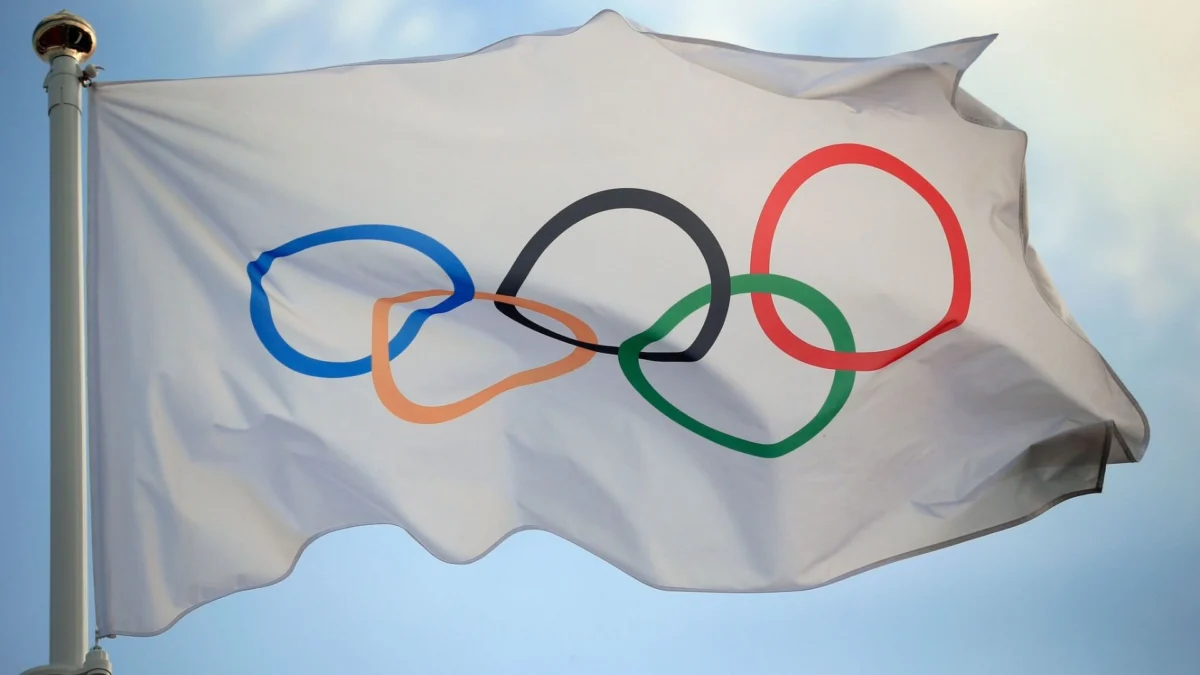
In a move that has sent shockwaves through the global sporting landscape, the International Olympic Committee (IOC) executive board announced on July 7 that it has provisionally lifted the suspension of the Russian Olympic Committee (ROC). This decision marks a significant pivot in the IOC’s stance, ending a period of formal exclusion that had been in place since October 2023. Alongside this reversal, the IOC has declared that its previous recommendations, which urged international sports federations to restrict the participation of Russian and Belarusian athletes, are no longer applicable.
While the decision provides a potential pathway for Russian athletes to return to the international stage, the IOC emphasized that this is not an automatic reinstatement of full participation rights. Instead, the power to define specific entry criteria and qualification standards now rests firmly with individual international sports federations. Furthermore, the IOC clarified that the question of whether Russian national symbols—such as the flag and anthem—will be permitted at the Los Angeles 2028 Olympic Games remains a separate matter that will be addressed in future deliberations.
A Chronology of Conflict and Compliance
The road to this decision is rooted in a complex timeline of geopolitical tension and institutional maneuvering. Following the escalation of the conflict in Ukraine in early 2022, the Olympic movement found itself at the epicenter of a global debate regarding the intersection of sports and state-sponsored violence.
- February 2022: Following the invasion of Ukraine, the IOC issued an urgent recommendation to all international sports federations to ban athletes from Russia and Belarus from all international competitions to "protect the integrity of global sports competitions."
- October 2023: The IOC suspended the Russian Olympic Committee, citing its decision to incorporate regional sports organizations from occupied Ukrainian territories as a breach of the Olympic Charter and an infringement on the territorial integrity of the National Olympic Committee of Ukraine.
- June 2025: The IOC held a landmark general assembly, which saw a pivotal amendment to the Olympic Charter. This amendment codified the necessity for the Olympic movement to maintain political neutrality under all circumstances.
- July 7, 2026: The IOC executive board officially lifted the suspension of the ROC, justifying the move by noting that the Russian body no longer claims jurisdiction over the disputed territories in Ukraine.
The Foundation of the Shift: The Olympic Charter Amendment
The intellectual and legal architecture supporting the IOC’s recent decision stems from the general assembly held on June 25, 2026. During this session, the Olympic Charter was formally updated to include a specific mandate requiring all Olympic organizations to remain strictly neutral in political matters.
The updated text of the Charter emphasizes that the global sports community has a moral and operational obligation to secure the right of athletes and their support teams to participate in international competition, regardless of the political climate or the internal governance of their home nations. The IOC maintains that this amendment is not a concession to any specific state, but rather a protective measure to ensure the universality of the Olympic movement.
By decoupling the individual athlete’s right to compete from the actions of their home government, the IOC claims it is upholding the core tenets of Olympism. The Committee argued that with the qualification cycles for the Los Angeles 2028 Summer Games and the Dolomiti Valtellina 2028 Winter Youth Olympics already underway, a standardized approach to athlete inclusion was necessary to ensure fairness and prevent irreparable damage to the careers of athletes who have no role in state military decisions.
Official Responses: Disappointment from Helsinki
The reaction to the IOC’s announcement has been swift and largely critical, particularly among National Olympic Committees in Northern and Eastern Europe. Riku Tapio, the CEO of the Finnish Olympic Committee, voiced his organization’s deep concern regarding the implications of the move.
"The decision did not come as a surprise, but we consider it highly regrettable," Tapio stated. "The IOC had already lifted restrictions regarding Belarus, and the Charter amendment approved in June essentially paved the way for this inevitable outcome. Nevertheless, we must remain vigilant. The war in Ukraine is ongoing, and the shadow it casts over international sports cannot simply be ignored."
Tapio underscored that the Finnish Olympic Committee’s support for Ukraine remains steadfast. He emphasized that while the IOC may have the authority to set international rules, individual federations and national bodies must prioritize the ethical dimensions of sport. "Our support for Ukrainian athletes and the entire Ukrainian sports community remains unwavering. Sport should build peace, mutual respect, and fair competition—it must never function as a tool for political influence or state propaganda."
Maintaining the Integrity of Antidoping Standards
A critical component of the IOC’s announcement was the reaffirmation of strict antidoping requirements. The IOC made it clear that the lifting of the suspension does not grant a "free pass" to Russian athletes. Any individual seeking to return to the international arena will face rigorous, independent scrutiny.
Athletes will be required to operate within the testing framework managed by the International Testing Agency (ITA). This includes a mandatory series of antidoping tests conducted well in advance of any international competition. The burden of proof for "clean" status remains entirely on the athlete, and international sports federations have been tasked with the direct oversight and implementation of these programs within their respective disciplines. The IOC reiterated that this rigorous testing is non-negotiable and that the failure to meet these standards would result in immediate disqualification, regardless of the athlete’s nationality.
Implications for the Future of Global Sport
The decision to reintegrate the ROC has profound implications for the future of international sports diplomacy. By distancing itself from the role of an arbiter of national morality, the IOC has opted for a "neutrality-first" strategy. However, this strategy risks alienating those who believe that the Olympic movement has a responsibility to take a stand against state-sponsored aggression.
The Role of International Federations
The onus now falls on organizations like World Athletics, FINA, and the International Gymnastics Federation to determine how, or if, they will welcome back Russian athletes. These organizations are now caught between the IOC’s new, more permissive guidelines and the strong pressure from their own member nations and sponsors to maintain bans.
The Problem of "Neutrality"
Critics argue that the concept of "political neutrality" is fundamentally flawed when dealing with nations that use their athletes as tools for soft power. The concern is that even if athletes compete under a neutral flag, their participation can be framed by state-controlled media as a victory for the regime. The IOC’s challenge will be to prove that it can effectively manage these optics while simultaneously maintaining its commitment to the Olympic Charter.
The 2028 Los Angeles Games
The most significant test of this new policy will occur in the lead-up to the 2028 Los Angeles Games. The US government and local organizers have already expressed concerns about the security and political implications of hosting Russian athletes. The IOC’s upcoming decision regarding the use of national symbols will be the next major flashpoint. If the IOC allows the Russian flag and anthem, it will likely trigger a new wave of boycotts and diplomatic tensions. If it maintains a ban on symbols, it may face legal challenges from the ROC.
Conclusion: A Delicate Balance
The IOC’s decision is a reflection of the intense pressure to keep the Olympic movement "universal." By invoking the amended Olympic Charter, the Committee has sought to insulate itself from the complexities of the Ukraine conflict, prioritizing the individual rights of athletes over the collective actions of their home states.
However, as Riku Tapio and others have highlighted, sport does not exist in a vacuum. The decision to lift the suspension of the Russian Olympic Committee is as much a political statement as it is a sporting one. As the world looks toward Los Angeles 2028, the sporting community remains deeply divided on whether the IOC has found a way to preserve the sanctity of the Games or if it has compromised the very values it claims to protect. For now, the global sports landscape enters a period of uncertainty, where the balance between institutional neutrality and moral responsibility will be tested at every qualifying event leading up to the next Olympiad.