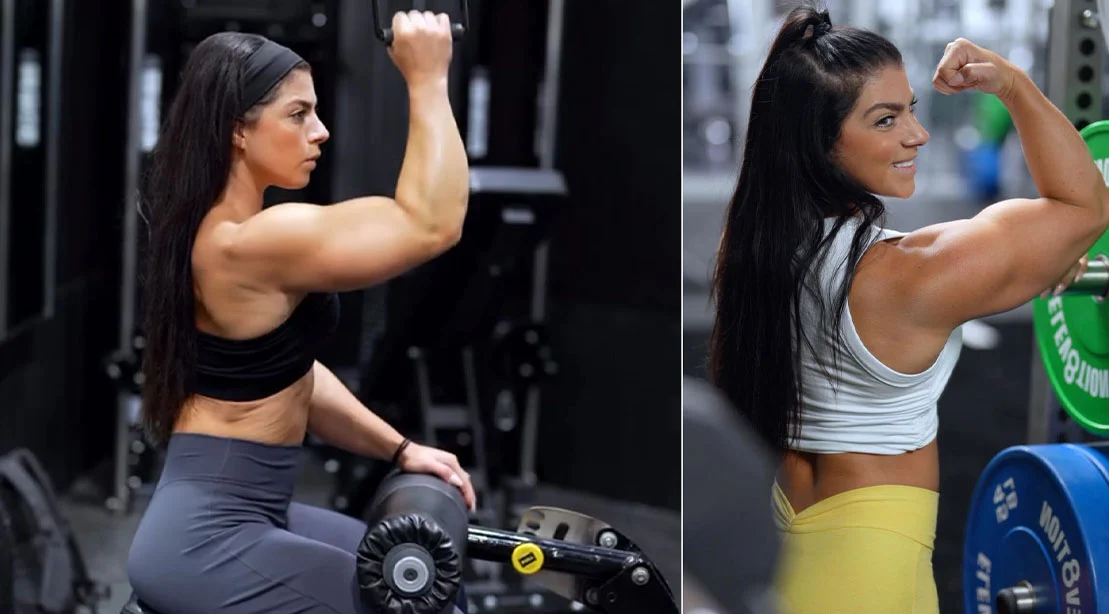
In the ever-evolving landscape of modern fitness, few figures have managed to bridge the gap between aesthetic inspiration and technical education as effectively as Swedish fitness coach and influencer Ida Bergfoth. With a massive, dedicated following on social media, Bergfoth has become a go-to source for individuals seeking not just "the look" of a transformed physique, but the biomechanical understanding required to build it safely and effectively.
Bergfoth’s philosophy centers on a fundamental truth often overlooked in the rush for heavy lifting: efficiency is not defined by the weight on the bar, but by the precision of the movement. By making subtle, calculated adjustments to traditional exercises, she ensures that the intended muscle groups—and not the auxiliary joints—bear the brunt of the work. For those looking to elevate their upper-body training, her latest routine offers a masterclass in anatomical optimization.
The Core Philosophy: Anatomy Over Ego
The primary issue facing many gym-goers is a misalignment between intent and execution. As Bergfoth frequently demonstrates, the human body is an expert at finding the path of least resistance. When a movement is performed with improper form, the body recruits secondary muscles or relies on joint leverage to complete the rep, robbing the target muscle of the necessary stimulus for hypertrophy.
Bergfoth’s methodology is rooted in "intentional tension." She argues that by limiting the range of motion to focus specifically on the target muscle’s line of pull, one can achieve better results with less systemic fatigue. This approach is particularly vital for the upper body, where complex joint structures like the shoulder girdle are frequently subjected to unnecessary strain due to poor technique.
The Four Pillars: A Chronological Breakdown of the Routine
To translate these concepts into practice, Bergfoth has curated a four-exercise circuit designed to maximize muscle engagement while prioritizing joint longevity. For optimal results, she recommends performing three sets of 8 to 12 repetitions for each movement, maintaining a controlled tempo throughout.
1. The Single-Arm Cable Lat Pulldown
The workout opens with the single-arm cable lat pulldown, an exercise often misunderstood by casual lifters. Many athletes make the mistake of sitting perfectly vertical or leaning back excessively, which forces the biceps and the anterior deltoids to dominate the movement.
- The Adjustment: Bergfoth advocates for a slight, controlled lean back with the chest held high. This position aligns the cable’s line of pull directly with the latissimus dorsi.
- The Execution: Instead of pulling straight down, the focus should be on driving the elbow toward the hip. By visualizing the elbow as a hook pulling a weighted cable, the lifter isolates the back muscles, effectively taking the arms out of the equation.
2. The Flat Bench Dumbbell Press
The dumbbell press is a staple of chest development, but it is also a common culprit for shoulder impingement.
- The Adjustment: Bergfoth emphasizes the "tucked elbow" position. Rather than allowing the elbows to flare out at a 90-degree angle—which puts significant shearing force on the rotator cuff—she suggests keeping them at a 45-degree angle relative to the torso.
- The Execution: By keeping the elbows tucked, the lifter maintains constant tension on the pectorals. This minor tweak ensures that the chest fibers are fully engaged throughout the eccentric and concentric phases of the lift, providing a superior stimulus for growth while sparing the shoulder joints.
3. Seated Overhead Triceps Extensions
When training the triceps, many lifters sacrifice stability for momentum, leading to "wild elbows" that shift the load away from the triceps and onto the elbow joint.
- The Adjustment: Bergfoth’s approach is strictly disciplined. By keeping the elbows tucked in and pointing forward, the lifter creates a fixed pivot point.
- The Execution: This stability ensures that the long head of the triceps is stretched and contracted fully. By eliminating lateral movement, the lifter prevents joint pressure and ensures that every ounce of effort is directed toward muscle fiber recruitment.
4. The Incline Dumbbell Press
The final movement in the sequence targets the upper chest, or the clavicular head of the pectoralis major.
- The Adjustment: The angle of the incline is the defining factor here. While a flat press distributes the load across the entire chest, the incline shifts the stress upward. Because this is a smaller muscle area, Bergfoth warns that it requires less weight than a flat press.
- The Execution: A common error is the "broken wrist," where the wrist bends backward under load. Bergfoth insists on keeping the wrists straight and solid. Her cue, "Punch your knuckles to the ceiling," helps the lifter maintain a vertical, powerful wrist position, which prevents injury and ensures the force is directed purely into the chest.
Supporting Data: Why "Next Level" Matters
The scientific consensus on muscle hypertrophy supports Bergfoth’s emphasis on "mind-muscle connection" and joint-sparing form. Research published in journals like the Journal of Strength and Conditioning Research indicates that increased activation of target muscles—often achieved through cues like those provided by Bergfoth—leads to higher rates of hypertrophy over time.
Furthermore, the longevity of an athlete is defined by their ability to train without injury. By reducing the load on the glenohumeral joint (the shoulder) and the elbow complex, Bergfoth’s techniques allow for higher frequency of training. When a trainee can lift consistently without needing time off for repetitive strain injuries, their long-term progress significantly outpaces those who prioritize heavy, ego-driven lifting.
Official Responses and Industry Context
Within the fitness community, experts have lauded Bergfoth’s ability to communicate complex biomechanical concepts in a digestible format. "The industry has long needed a pivot away from ‘more is better’ toward ‘smarter is better,’" says one industry analyst. "Bergfoth is tapping into a demographic that is tired of getting injured and wants to know the why behind their workouts."
Her emphasis on cues—such as "punching the knuckles to the ceiling"—is a hallmark of high-level athletic coaching. These cues act as cognitive anchors, helping the practitioner visualize the movement before and during execution, which has been shown to improve motor unit recruitment.
Implications for Your Fitness Journey
Adopting Bergfoth’s approach requires a shift in mindset. You must be willing to lower the weight, slow down your tempo, and potentially feel a greater "burn" than you are accustomed to. However, the implications of this shift are profound:
- Reduced Injury Risk: By prioritizing joint health and proper alignment, you ensure that your fitness journey is measured in years, not months.
- Superior Hypertrophy: By isolating the muscle group through precise lines of pull, you ensure that the muscle is doing the work, leading to more aesthetic and functional gains.
- Mental Discipline: The focus required to execute these movements with perfect form serves as a form of mental training, improving your focus and discipline inside and outside the gym.
As you look to your next upper-body session, consider the trajectory of your training. Are you lifting for the sake of the numbers, or are you lifting to sculpt your physique with the precision of a professional? By incorporating these four exercises and adopting Bergfoth’s brilliant, nuanced approach to form, you can move from a standard workout to a "next level" protocol that delivers real, measurable, and sustainable results.
For those who wish to continue learning from Ida Bergfoth, her ongoing contributions on social media provide a roadmap for those committed to the pursuit of physical excellence. Embracing her techniques isn’t just about changing how you lift; it’s about changing how you understand your body’s potential.