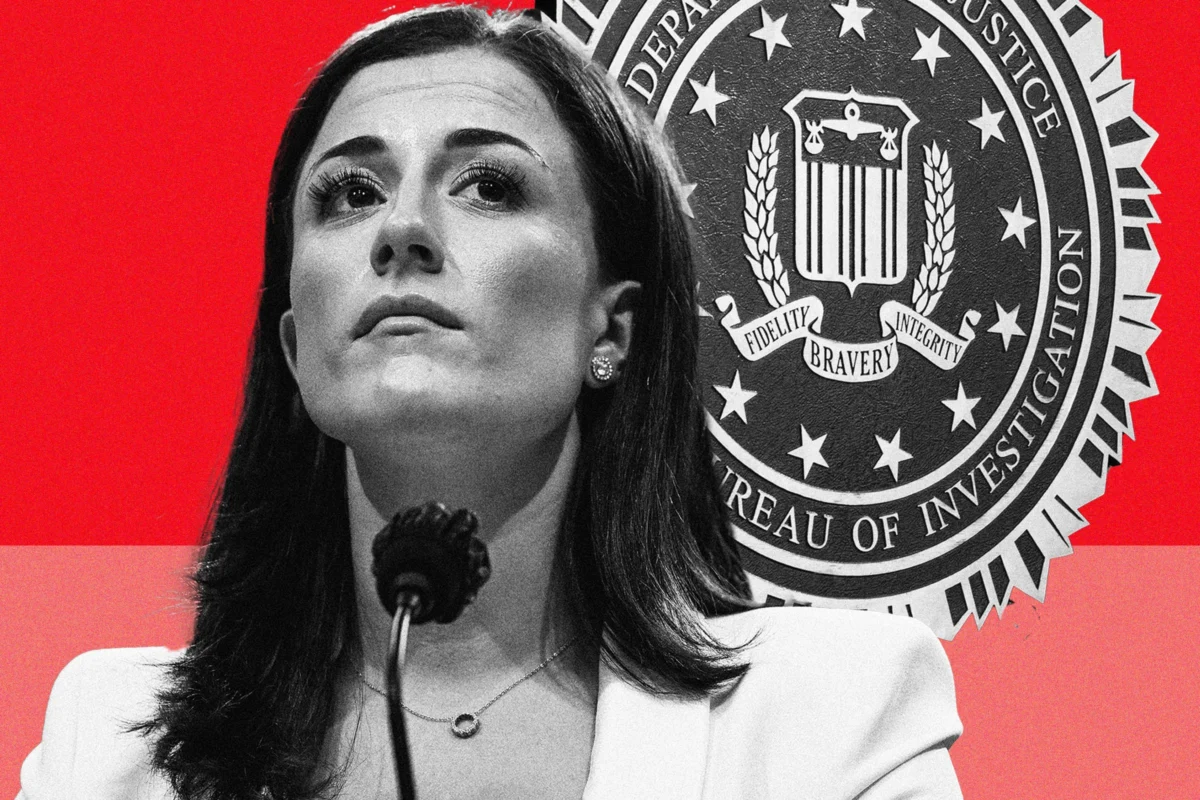
Federal prosecutors are currently evaluating a potential criminal case against Cassidy Hutchinson, the former top aide to White House Chief of Staff Mark Meadows who rose to national prominence as a pivotal witness during the House Select Committee’s investigation into the January 6, 2021, attack on the U.S. Capitol. According to two sources familiar with the matter, the Department of Justice (DOJ) is actively reviewing whether Hutchinson’s testimony to Congress—and her subsequent statements to federal investigators—constitute perjury or obstruction of justice.
While the investigation marks a significant escalation in the government’s scrutiny of those involved in the January 6 proceedings, sources indicate that prosecutors are unlikely to seek an indictment from a Washington, D.C.-based federal grand jury until after the upcoming midterm elections. The move represents a complex legal maneuver that has sparked internal debate within the Justice Department regarding both the strength of the evidence and the political optics surrounding the case.
A Star Witness Under Fire
Cassidy Hutchinson’s testimony in 2022 served as a cornerstone for the House Select Committee’s narrative regarding former President Donald Trump’s conduct on the day of the Capitol riot. During her public appearances, Hutchinson provided dramatic, firsthand accounts of the inner workings of the West Wing. Most notably, she recalled being told that President Trump had lunged at a Secret Service agent inside the presidential limousine after being informed that he could not travel to the Capitol to join his supporters.
Furthermore, Hutchinson testified that Trump was fully aware that many of his supporters were armed as he encouraged them to march to the Capitol. She also claimed to have personally penned a statement on a notecard for the president to release during the violence—a detail that has since become a focal point of contention. Former White House counsel Eric Herschmann has publicly disputed this assertion, claiming that he, not Hutchinson, authored the note in question.
The current investigation appears to be built on a comparative analysis of transcripts. Prosecutors are reportedly contrasting Hutchinson’s testimony provided to the House Select Committee with her subsequent statements given to the team of former Special Counsel Jack Smith. The primary objective is to determine if discrepancies in these accounts reach the threshold of criminal deception.
Chronology of a Shifting Narrative
The path to this investigation has been winding, marked by shifting political winds and evolving legal strategies.
- June 2022: Cassidy Hutchinson provides explosive testimony to the House Select Committee, alleging that President Trump physically confronted Secret Service agents and was aware of the potential for violence at the Capitol.
- Late 2022–2023: As the Select Committee concludes its work, questions emerge regarding the corroboration of specific details in Hutchinson’s account. Notably, the Secret Service denies the altercation in the presidential limousine, and the broader investigative team under Jack Smith finds difficulty in substantiating key segments of her narrative.
- 2023: Hutchinson publishes her memoir, Enough, keeping a relatively low profile as she shifts away from the political spotlight.
- 2025–2026: Representative Barry Loudermilk, a vocal critic of the original January 6 investigation, submits a formal criminal referral to the Department of Justice, urging them to investigate potential perjury by various witnesses, including Hutchinson.
- 2026: The Department of Justice assigns the investigation to the Civil Rights Division—an unconventional move that draws scrutiny from legal experts.
The Challenges of a Perjury Prosecution
Legal experts emphasize that pursuing perjury charges against a high-profile witness is an uphill battle. According to former U.S. Attorney Joyce Vance, the DOJ must meet an exceptionally high burden of proof to secure a conviction.
"To successfully prosecute a case like this, the government must prove beyond a reasonable doubt not only that the witness lied, but that the lie was intentional, knowingly made, and that it materially influenced the outcome of the investigation," Vance explained.
Within the Department of Justice, there remains significant skepticism among some career officials regarding the viability of a case against Hutchinson. Critics of the current strategy argue that the pressure to produce a conviction may outweigh the legal merits, potentially setting a dangerous precedent for future witnesses who might fear criminal retribution for discrepancies in testimony given under immense stress.
An Unorthodox Jurisdictional Move
One of the most notable aspects of this development is the assignment of the case to the Justice Department’s Civil Rights Division. Traditionally, cases involving public corruption or perjury before Congress are handled by the U.S. Attorney’s Office for the District of Columbia or the DOJ’s Criminal Division.
The Civil Rights Division is statutorily tasked with handling cases involving civil rights violations, such as hate crimes, human trafficking, or systemic discrimination. Its involvement in a perjury case regarding January 6 has raised eyebrows among legal observers. The division is currently headed by Harmeet Dhillon, a prominent conservative attorney and vocal supporter of the Trump administration’s legal agenda.
The assignment has led to concerns about the politicization of the department’s resources. Observers note that the referral itself originated from Representative Loudermilk, whose efforts to depose Hutchinson were previously blocked by House Speaker Mike Johnson due to internal concerns regarding sensitive, non-public information and potential personal scandals involving lawmakers.
Official Responses and the "Political Enemy" Narrative
The Department of Justice has declined to comment on the ongoing grand jury proceedings. Similarly, Cassidy Hutchinson and her legal counsel have not responded to repeated requests for comment.
The context surrounding this investigation is deeply tied to the broader battle over the legacy of the Trump administration. Sources familiar with the internal workings of the DOJ suggest that the current focus on witnesses like Hutchinson is part of a larger strategy to re-litigate the findings of the January 6 Committee. It is widely perceived as an effort to target individuals seen as key contributors to the legal and political challenges faced by the former president.
The recent firing of former Attorney General Pam Bondi—reportedly due to dissatisfaction with the pace of such prosecutions—further underscores the internal pressure within the executive branch to pursue these cases aggressively. For the Trump administration, these investigations are seen as a necessary correction to the perceived bias of the previous administration’s Justice Department. For critics, however, they represent a weaponization of federal power against private citizens who participated in congressional oversight.
Implications for Future Congressional Oversight
The potential prosecution of Hutchinson carries profound implications for the future of congressional testimony. If the DOJ successfully establishes that variations in testimony can lead to criminal charges, it may create a "chilling effect" on future whistleblowers and witnesses. The fear of being prosecuted for memory lapses or conflicting details—even if they do not fundamentally alter the truth of an event—could discourage individuals from coming forward in future inquiries.
Furthermore, the involvement of the Civil Rights Division sets a precedent for how the DOJ may reorganize its internal power structure to pursue specific political objectives. If the agency continues to bypass traditional divisions in favor of units led by political appointees, the institutional independence of the Department of Justice may face an unprecedented crisis of confidence.
As the midterm elections approach, the Hutchinson case will likely remain a flashpoint. Whether the Justice Department proceeds with a formal indictment or chooses to close the inquiry due to the high legal bar for perjury will serve as a bellwether for the department’s direction in the coming years. For now, the case remains a stark reminder of the volatile intersection between historical accountability and the shifting political landscape of American justice.