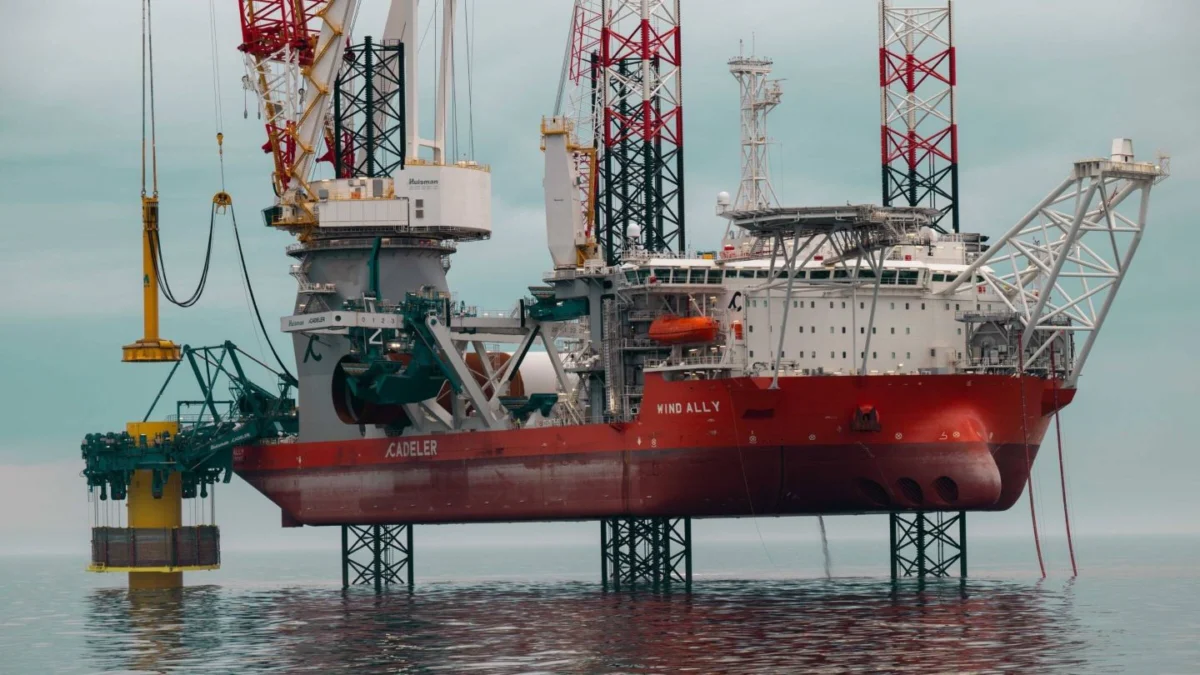
In a landmark move that signals the deepening vertical integration of the offshore wind sector, Danish offshore wind installation giant Cadeler has announced the successful acquisition of Menck, a premier German specialist in offshore foundation technology and equipment. Valued at €501m ($578.1m), the acquisition marks a significant consolidation of expertise, bringing together one of the world’s most advanced jack-up vessel fleets with one of the industry’s most respected providers of hydraulic impact hammers and foundation engineering services.
The transaction, which follows the receipt of all necessary regulatory approvals, sees Menck transition from the portfolio of UK-based offshore energy services firm Acteon to the Cadeler Group. Under the terms of the agreement, Menck will retain its operational independence and market identity, a decision that underscores Cadeler’s commitment to maintaining the specialized engineering culture that has defined the German firm for over 150 years.
The Financial Architecture of the Deal
The acquisition is underpinned by a robust financial strategy designed to provide long-term stability while maintaining operational flexibility. The €501m purchase price was funded through a combination of Cadeler’s existing liquidity and a substantial €380m acquisition facility. This debt component was jointly arranged by DNB Bank and Coöperatieve Rabobank, two institutions with extensive experience in the maritime and renewable energy sectors.
Cadeler’s leadership has indicated a clear roadmap for the post-acquisition financial structure. The company intends to replace the initial acquisition facility with longer-term financing arrangements, leveraging the future operational cash flows generated by the combined entity. This move is intended to de-risk the balance sheet while ensuring that Cadeler retains the capital necessary to pursue its ambitious fleet expansion program.
A Legacy of Engineering Excellence: The Role of Menck
To understand the strategic value of this acquisition, one must look at the technical pedigree of Menck. With a history spanning more than a century and a half, Menck has evolved into a global benchmark for the installation of fixed-bottom offshore foundations. Their portfolio is comprehensive, covering the critical lifecycle stages of foundation deployment:
- Hydraulic Impact Hammers: The company is renowned for its high-energy hammers, essential for driving monopiles into the seabed.
- Noise Mitigation Solutions: As environmental regulations tighten, Menck’s proprietary technology in noise dampening is becoming a critical asset for project developers.
- Specialized Drilling and Grouting: The firm provides the technical interface required for complex soil conditions.
- Lifting Services: Their engineering team provides bespoke solutions for the heavy-lift requirements of modern, large-scale turbine foundations.
The synergy between the two firms is already evident in active projects. Most notably, Menck is currently supplying a 4,400kJ impact hammer for Cadeler’s operations at the Hornsea 3 offshore wind project. This existing working relationship provides a proven baseline for the seamless integration of their respective operational workflows.
Chronology of Consolidation: From Acteon to Cadeler
The acquisition did not occur in a vacuum but is the result of a deliberate shift toward "all-in-one" service models within the offshore wind industry.
- Pre-2026: Both companies operated as complementary entities, with Cadeler acting as the primary vessel operator and Menck serving as a key technology subcontractor to Cadeler and other industry players.
- Mid-2026: As project scales grew—exemplified by Cadeler’s successful installation of 100 Siemens Gamesa turbines at the 1.4GW Sofia offshore wind farm in June 2026—the strategic benefit of closer integration became clear. The logistical complexity of modern projects necessitated a tighter alignment between the installation vessel and the sub-sea foundation equipment.
- Q3 2026: Formal negotiations with Acteon concluded, culminating in the official acquisition announcement. The deal was finalized following rigorous regulatory scrutiny, ensuring that competition in the foundation technology market remains healthy.
- Post-Closing: The transition phase is currently underway, focusing on the alignment of administrative systems while preserving Menck’s operational autonomy.
Industry Implications: The Shift Toward Vertical Integration
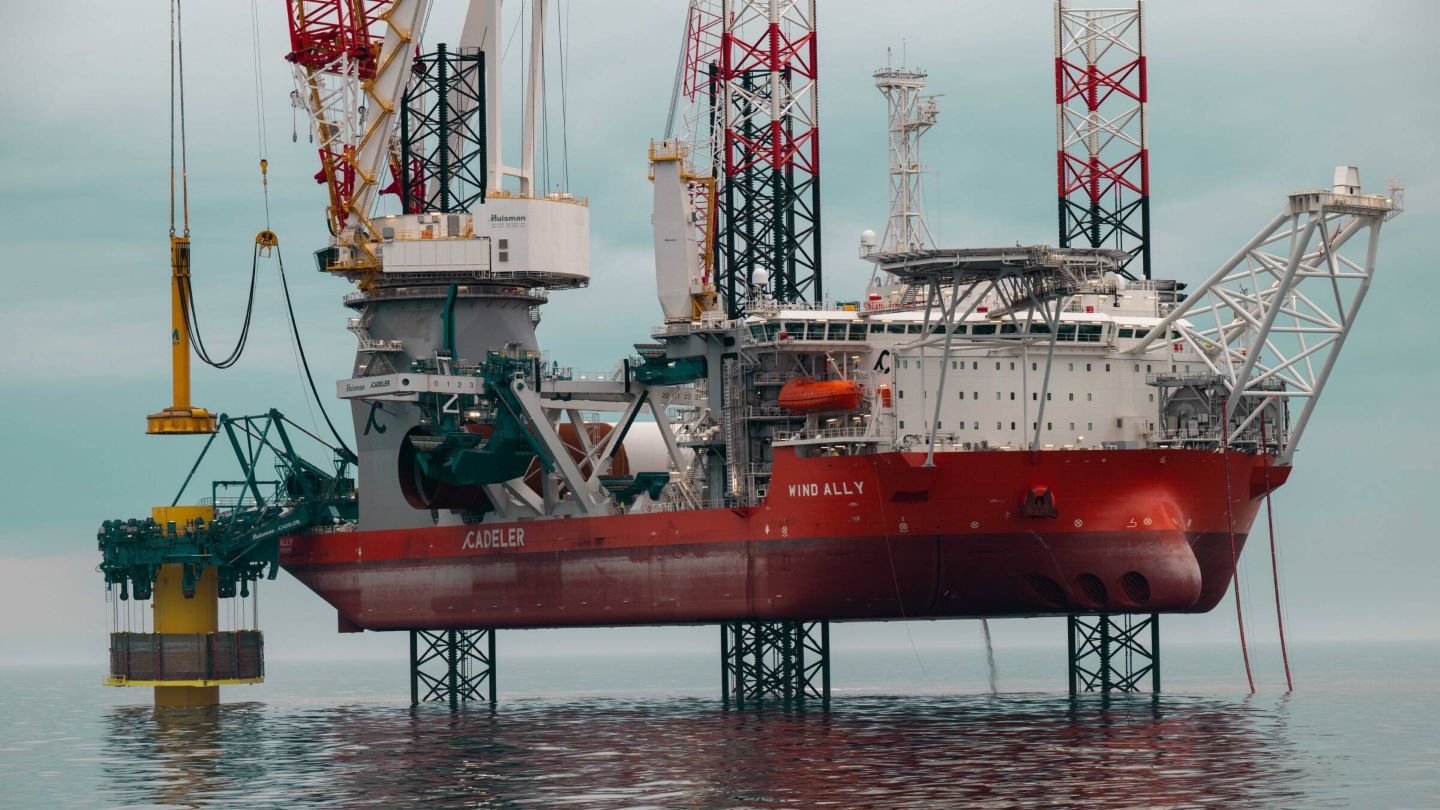
The primary implication of this deal is the shift away from the traditional, fragmented contracting model. Previously, developers would often manage multiple interfaces: one for the installation vessel, another for the piling hammer, and a third for the grouting and drilling services. By bringing Menck under its umbrella, Cadeler can now offer an integrated Transport and Installation (T&I) solution.
Enhancing Project Delivery
Cadeler expects this acquisition to significantly reduce project risks associated with the "interface management" of subcontractors. When the vessel operator and the hammer manufacturer are part of the same organization, communication regarding technical specifications, scheduling, and emergency troubleshooting becomes instantaneous. This is expected to lead to shorter installation cycles and higher vessel utilization rates.
Operational Flexibility and Independence
Despite the acquisition, Cadeler has emphasized that Menck will continue to supply its equipment and services to other contractors in the offshore wind sector. By maintaining Menck as a standalone business, Cadeler avoids alienating the wider market, ensuring that Menck remains a "neutral" supplier of essential technology while benefiting from the financial and logistical backing of a parent company with a global footprint.
Official Perspectives: Building the Future of Offshore Energy
Mikkel Gleerup, CEO of Cadeler, articulated the vision behind the deal during the announcement. "Offshore wind projects continue to increase in scale and technical complexity, making reliable execution more important than ever," Gleerup stated. "Menck has built an outstanding reputation over more than 150 years as a trusted provider of mission-critical foundation installation equipment and engineering expertise."
He further emphasized the cultural and operational alignment of the two firms: "Bringing together Menck’s specialist engineering capabilities with Cadeler’s offshore installation proficiency, we are combining highly complementary strengths that will enhance our support to customers across the full installation value chain."
Industry analysts view this as a proactive defensive move. As turbine sizes grow and project locations move into deeper waters with more challenging seabed conditions, the barrier to entry is rising. Firms that control both the heavy-lift capacity and the precision sub-sea technology are increasingly the preferred partners for major utility developers who prioritize project certainty above all else.
Conclusion: A New Era for Cadeler
The acquisition of Menck is more than a simple asset purchase; it is a strategic repositioning of Cadeler within the value chain. By absorbing one of the world’s leading names in foundation installation technology, Cadeler has insulated itself against potential supply chain bottlenecks and gained a deeper level of technical control over the most critical phase of offshore wind farm construction.
As the industry looks toward the massive offshore wind targets set for 2030 and beyond, the ability to deploy, drive, and secure foundations with unmatched efficiency will be a decisive competitive advantage. With this €501m investment, Cadeler has not only secured its position as an industry leader but has also set a new standard for what it means to be a "full-service" provider in the rapidly evolving landscape of global renewable energy.
For the immediate future, the focus will remain on the successful integration of teams and the continued delivery of excellence on active projects like Hornsea 3. However, the broader market will be watching closely to see if other major players follow suit, potentially triggering a new wave of consolidation in the offshore wind support services sector.