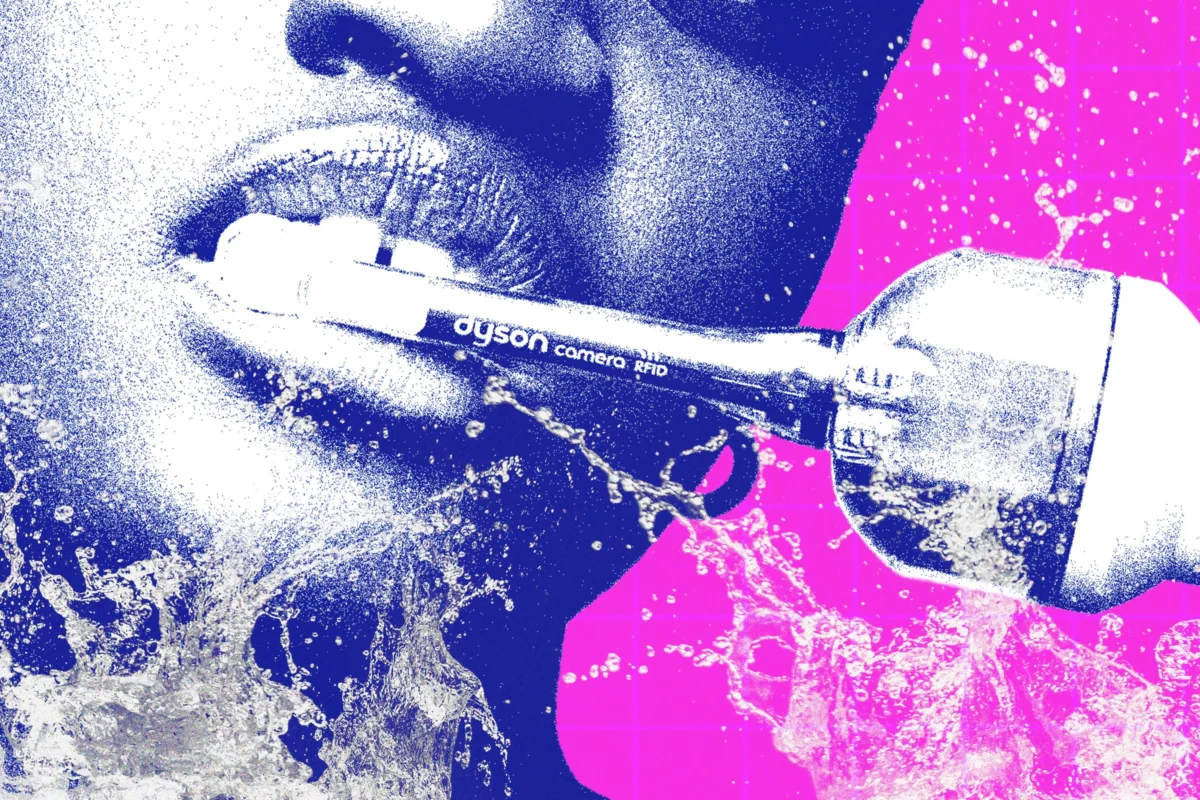
There is a perennial danger in the world of high-end consumer electronics: the tendency to over-engineer a solution to a problem that arguably never existed. Simplicity is often the hallmark of brilliance, a philosophy best illustrated by the classic—if apocryphal—tale of NASA’s multimillion-dollar space pen versus the Soviet cosmonaut’s simple graphite pencil. It is a lesson in minimalism that Dyson, a company defined by its relentless pursuit of complex mechanical innovation, seems to have ignored with the launch of its latest, and arguably most controversial, personal care device: the $499 Dyson CameraJet.
While Dyson has achieved global acclaim by reimagining stale categories like cordless vacuums and premium hair dryers, the CameraJet suggests a shift from "functional innovation" to "technological overreach." With its built-in macro-lens camera and an AI-driven "Gap Optical Targeting" system, the device promised to revolutionize oral hygiene. Instead, it has sparked a global controversy, raising fundamental questions about manufacturing quality, corporate transparency, and the limits of the "smart" home revolution.
The Evolution of the Toothbrush
To understand the audacity of the CameraJet, one must look at the humble history of the toothbrush. While the modern bristled toothbrush traces its lineage back to the Tang dynasty, the category remained relatively stagnant for centuries until 1937, when Tomlinson Moseley filed the patent for the Motodent, the world’s first electric toothbrush.
For nearly a century, the industry focused on oscillation and sonic vibrations. Even in recent years, when companies like Waterpik began integrating water-flossing features into brush heads, the focus remained on utility. Dyson, however, decided to inject machine learning into the equation. Boasting six years of development and 38 patents, the CameraJet utilizes a macro-lens camera trained on a database of 470,000 dental images to identify, within 100 milliseconds, precisely where to discharge 12.5 milliliters of mouth rinse from its integrated reservoir. It was designed to be the ultimate precision tool for oral care, yet within days of its arrival in consumer hands, the "next leap forward" became a cautionary tale of engineering failure.
A Chronology of a Failed Launch
The rollout of the CameraJet was meticulously orchestrated, featuring a high-profile global launch event in Paris headlined by James Dyson himself. However, the veneer of perfection vanished almost as quickly as the product hit the shelves.
- September 8: The CameraJet officially launches in US retail stores.
- September 9: Just 24 hours after launch, social media platforms and consumer forums begin to flood with reports of critical hardware failures. Users report water seeping into the battery compartment, and devices ceasing to function within 30 seconds of their first use.
- September 10: Consumer Reports confirms that its own test unit has failed less than 24 hours after unboxing, citing systemic internal hardware issues.
- September 11: The French publication Numerama reports that Dyson has abruptly pulled the device from its French online store and physical retail locations.
- September 15: The withdrawal goes global. Reports confirm that retailers in the UK, Singapore, and the US have cleared their shelves of the device, effectively ending the product’s commercial availability just one week after its debut.
Technical Autopsy: Why is the CameraJet Failing?
The abrupt removal of a premium product from the market is rarely a good sign, and industry experts believe the root cause is a fundamental failure in basic engineering: waterproofing.
Kyle Wiens, CEO of the repair advocacy group iFixit, points to the complexities of sealing electronic components in a device that is inherently exposed to high-pressure fluids. "Making products at scale with the tolerances required to waterproof are hard," Wiens explains. "My guess is that we are looking at either a tolerance issue, where parts aren’t mating perfectly, or a failure in the adhesive curing process during manufacturing or shipping."
This diagnosis is supported by Adam Toner, founder of Ripcord Designs, an electronic design consultancy. Toner notes that the design of the battery compartment appears to be the primary point of failure. "Once you pull the battery off—which is where people say they are seeing water—it looks like there is likely access from that battery compartment into all of the internals of the device," Toner says. For a device specifically designed to "dunk" and handle pressurized liquid, such an oversight is, according to industry standards, an inexcusable design flaw. Whether it is a faulty gasket, a compromised O-ring, or an ineffective adhesive seal, the result is the same: the device’s internal circuitry is being compromised by the very fluid it is designed to manage.

Corporate Silence and the "ScameraJet" Backlash
Despite the widespread reports of failure and the disappearance of the product from retail shelves, Dyson’s official stance remains one of denial regarding a formal recall. Liv Thomas, Dyson’s head of Beauty Communications, maintains that the product is simply experiencing "strong demand globally" and "shortages of supply."
When pushed on the reports of broken, leaking, and non-functional units, the company’s response has been carefully curated. "We have identified a single component issue affecting a small number of early batches," Thomas stated. "We have isolated those batches and are supporting affected customers."
However, Dyson has refused to answer a series of critical questions: Where exactly is the product still for sale? When did the company stop shipments? What is the "single component" at fault? And most importantly, why has no formal recall been issued for a device that costs $500?
This lack of transparency has fueled a growing fire on platforms like Reddit, where early adopters have taken to calling the device the "ScameraJet." One disgruntled buyer summed up the frustration of the early-adopter community: "Bought two of these and both of them have stopped working… Disappointed that they scammed so good. Unbelievable that it lasted just two weeks."
Implications for the Future of Dyson
The CameraJet debacle represents more than just a bad product launch; it is a potential turning point for the Dyson brand. For years, the company has operated with a reputation for uncompromising quality and "premium" status. When a $500 device fails to perform its primary function—staying dry—the brand’s credibility suffers a significant blow.
Moreover, the situation has ignited a debate about the "right to repair." Kyle Wiens argues that this crisis should serve as a wake-up call for Dyson to shift its strategy. "They should take this opportunity to invest in repairability," Wiens says. "Making products easier to fix also makes them easier to rework when manufacturing defects occur. Dyson is way behind the industry on making repair parts and information available. This should be a wake-up call for them to step up."
As the dust settles, the CameraJet serves as a stark reminder of the risks associated with "feature creep." By adding cameras, artificial intelligence, and liquid reservoirs to a device as simple as a toothbrush, Dyson created a product with a massive surface area for potential failure. In their quest to reinvent the wheel—or in this case, the toothbrush—the company may have forgotten the basic engineering tenets that made them a global leader in the first place.
Whether the CameraJet will eventually return to the market in a refined, waterproof iteration remains to be seen. But for now, the $499 device stands as a monument to the dangers of over-complication, proving that in the world of product design, no amount of AI or high-tech marketing can replace the necessity of a sound, reliable seal. For Dyson, the path forward requires more than just scaling up production; it requires a return to the fundamentals of engineering, transparency, and a renewed commitment to the consumer experience.