In the high-stakes environment of global oil and gas production, margins are increasingly dictated by operational efficiency and the ability to minimize downtime. As operators navigate a landscape of aging infrastructure and the rising demand for digital transformation, the industry has turned its gaze toward private 5G networks. While the technological prowess of 5G is well-documented, the conversation in the boardroom has shifted from technical specifications to a more fundamental inquiry: Can this investment truly pay for itself?
The transition to private 5G represents more than just an upgrade in wireless bandwidth; it is a fundamental reconfiguration of how industrial data flows. For many, the value proposition lies not in the network infrastructure itself, but in the operational agility it enables—the ability to move from reactive, analog-based maintenance to a predictive, data-driven ecosystem.
The Operational Cost of Connectivity Gaps: The Case for Transformation
For decades, oil and gas facilities have been built using an incremental, fragmented approach to connectivity. As new operational requirements arose, operators layered on disparate wireless systems and wired connections, leading to a patchwork infrastructure. Today, this "Frankenstein" network architecture has created significant blind spots in operational data and physical coverage.
The human cost of these gaps is profound. Maintenance teams are frequently shackled by antiquated, pen-and-paper workflows. A technician tasked with a repair often finds themselves operating in an information vacuum, cut off from real-time asset history, digital technical specifications, and remote engineering support. This "analog inertia" forces workers to make repetitive, time-consuming trips between the field and the control room to retrieve documentation or consult with subject matter experts.
This inefficient "wrench time"—the actual duration spent on a task versus the time spent navigating the logistics of the job—is a silent killer of productivity. When field data fails to synchronize with central control systems, the result is more than just minor delays; it manifests as extended maintenance cycles, heightened safety risks, and the persistent threat of unplanned downtime. In an industry where a single day of halted production can cost millions, the inability to connect the field to the control room is an operational liability that private 5G is uniquely positioned to solve.
Technical Superiority: Navigating the Industrial Maze
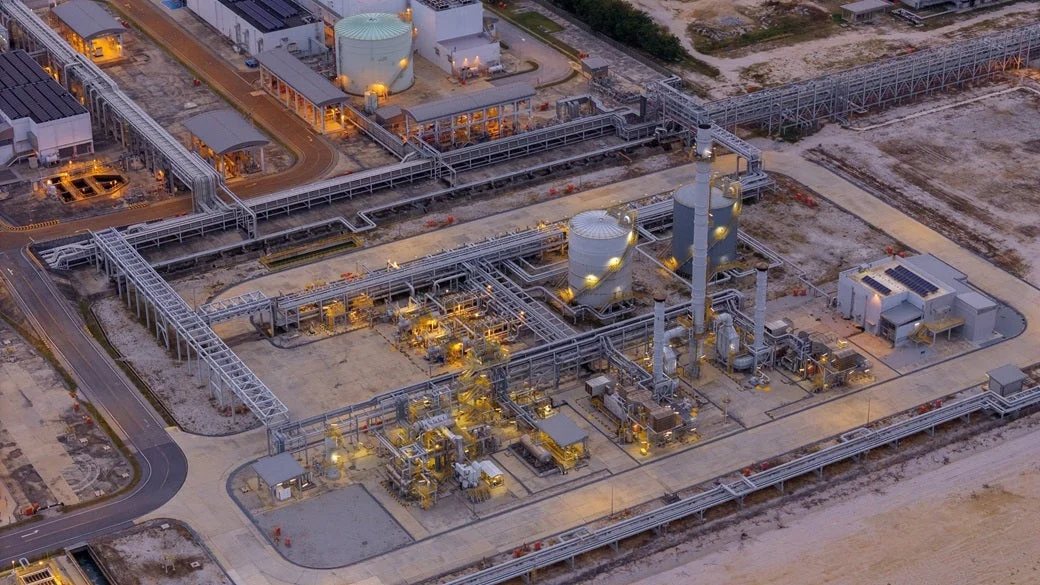
Oil and gas facilities are notoriously hostile environments for radio frequency (RF) signals. Dense steel structures, towering pressure vessels, complex pipe racks, and heavy machinery create a landscape of "shadows" where traditional Wi-Fi signals wither.
Private 5G addresses these challenges through advanced signal management technologies. Beamforming and beam steering act as the primary tools in this effort, allowing the network to dynamically concentrate signals toward specific devices or zones, effectively "bending" connectivity around physical obstacles. This ensures that even in the deepest, most obstructed corners of a refinery or processing plant, the connection remains robust.
Furthermore, private 5G utilizes a "make-before-break" cellular handover process. Unlike consumer-grade wireless, which often drops the connection when a device transitions between access points, the 5G protocol ensures a seamless handover. This is critical for mobile assets, such as autonomous drones or robotic inspection vehicles, which must maintain a constant, high-speed link to central control as they traverse expansive outdoor yards and complex indoor units.
Building the Business Case: The ROI Calculator
For leadership teams, the barrier to adoption has rarely been a lack of interest, but rather the difficulty of quantifying the return on investment (ROI). Because no two facilities share the same layout or operational challenges, executives have struggled to model the financial impact of a technology they have yet to deploy.
To bridge this analytical gap, industry experts—including consultants from Ericsson—have developed specialized Oil and Gas Value Calculators. These tools allow operators to move beyond theoretical benefits and ground their business cases in hard data. By inputting site-specific variables such as total area, number of employees, average daily throughput, and current hourly labor costs, operators can generate a comprehensive forecast.
The Five-Year Economic Model
Consider a mid-size refinery processing 175,000 barrels per day with a workforce of 450. In this model, even a conservative reduction in engineering labor costs (calculated at an average of $50 per hour) can show a significant five-year Net Present Value (NPV). The calculator allows users to toggle between different adoption paths:
- The Phased Approach: Deploying connectivity in high-risk or high-value zones first, allowing the team to gain experience and optimize workflows before a facility-wide rollout.
- The Greenfield Approach: A comprehensive initial deployment that prioritizes universal coverage for maximum, immediate data availability.
By providing a clear projection of the payback year, the tool transforms private 5G from an abstract "IT expense" into a transparent "operational investment."
Implications for Industry Operations
The integration of private 5G triggers a cascade of operational improvements that fundamentally change the bottom line.
- The Connected Worker: By equipping field staff with 5G-enabled tablets or AR (augmented reality) helmets, companies can bring the control room to the field. Real-time access to digital permits, 3D schematics, and remote expert support reduces rework and speeds up complex maintenance tasks.
- Wireless Condition Monitoring: With high-density, low-latency connectivity, operators can deploy sensors on assets that were previously "dark." This enables granular, real-time monitoring of vibration, temperature, and pressure, allowing for predictive maintenance that stops failures before they occur.
- Robotic Inspection: The use of drones and autonomous crawlers becomes a practical reality rather than a pilot project. These machines can conduct hazardous inspections—detecting gas leaks or flare issues—without exposing human personnel to dangerous conditions.
- Dynamic Digital Twins: With the bandwidth provided by 5G, facilities can maintain a high-fidelity, real-time digital twin. This allows for simulation and testing of operational changes in a virtual environment before they are executed in the physical plant, minimizing the risk of operational disruption.
The Strategic Path Forward
The argument for private 5G is not found in the technical specifications of the network, but in the measurable business outcomes it enables. Each capability must be tied to a specific Key Performance Indicator (KPI): engineering hours saved, cabling costs avoided, maintenance cycles shortened, and production value protected through superior asset visibility.
For the modern oil and gas operator, the question is no longer whether to adopt 5G, but how quickly they can integrate it into their specific operational profile. By shifting the focus from the cost of the network to the value of the insights it unlocks, organizations can turn a digital upgrade into a durable competitive advantage. The future of energy is connected; those who calculate their ROI early will be the ones defining the efficiency standards of the next decade.
For operators looking to model their own transition, exploring custom value analysis is the first step toward moving beyond the analog limitations of the past.