In the world of alpine trekking and winter backpacking, the difference between a successful expedition and a life-threatening emergency often boils down to a single, overlooked variable: timing. While much of the outdoor industry focuses on the "what"—the latest waterproof membranes, high-loft down jackets, and technical fabrics—a recent episode of the Backpacking Light Podcast shifts the focus toward the "when."
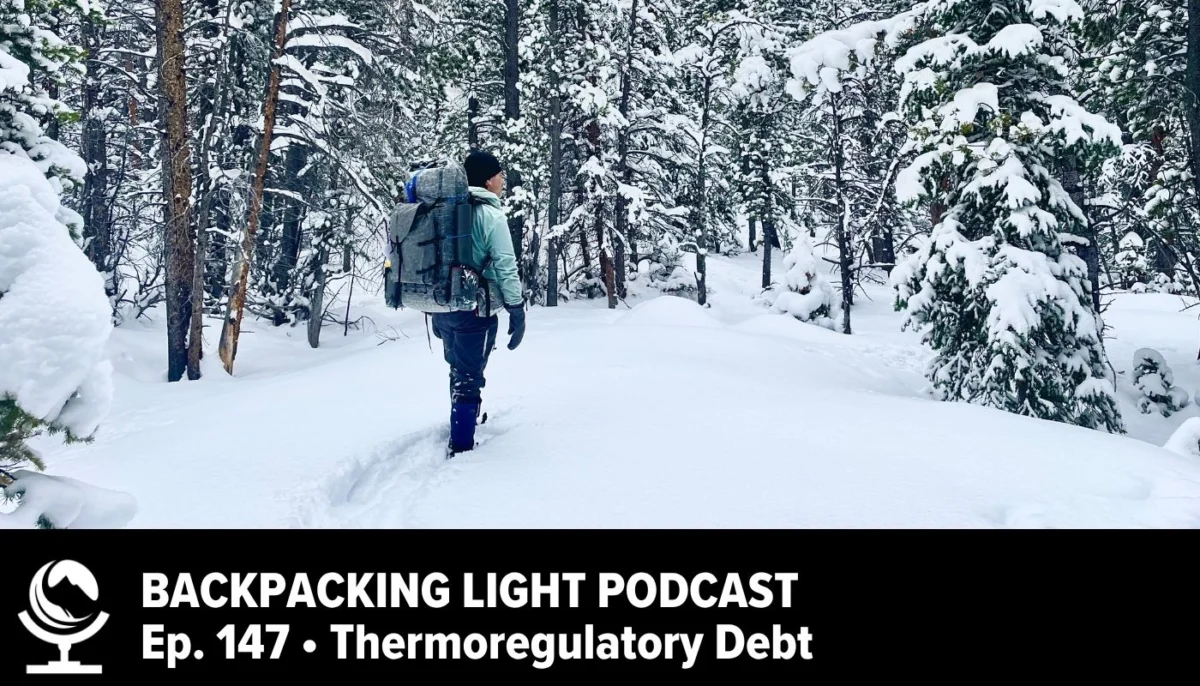
In Episode 147, host Ryan Jordan introduces a compelling conceptual framework known as "Thermoregulatory Debt." By borrowing the vocabulary of personal finance, Jordan provides a mental model for understanding how small, incremental failures in moisture and heat management compound into systemic physiological crises.
The Core Concept: The Debt Analogy
For many, the physical science of heat transfer—conduction, convection, radiation, and evaporation—is abstract and difficult to apply in the heat of a strenuous climb. Jordan argues that the "debt" analogy bridges this gap.
Much like credit card debt, thermoregulatory failure rarely happens in a sudden, isolated explosion. Instead, it is the result of compounding interest. A hiker fails to vent a jacket during a steep ascent, allowing a small amount of perspiration to accumulate. They decide to push through the discomfort, promising to address it "at the next break." By the time they stop, the moisture has migrated into their base layers. The "debt" has grown.
When the hiker finally pauses to rest, the body’s metabolic furnace slows down. The moisture trapped against the skin begins to draw heat away at an accelerated rate, and the hiker finds themselves shivering, with cold-stiffened fingers that make it impossible to operate zippers or reach for a dry layer. At this point, the debt has become "high interest," and the cost of repayment—re-warming a chilled body in a wet, windy environment—is exponentially higher than the initial cost of simply opening a vent earlier in the hike.
Chronology of a Physiological Crisis
To understand how an experienced hiker can find themselves in a precarious position, one must look at the progression of thermoregulatory failure. The podcast outlines a three-phase descent into impairment:
Phase I: The Decision Phase
This is the most critical window. It begins the moment conditions change—a shift in wind speed, a transition from sun to shadow, or the start of a vertical climb. Failure to act here is the "missed payment." Whether it is failing to open pit zips, neglecting to stow a shell, or failing to consume calories before energy levels drop, this is where the debt begins to accrue.
Phase II: Physiological Imbalance
Once the decision window closes, the body attempts to compensate. If a hiker is overdressed for the output level, the body sweats to cool down. If they are underdressed, the body reroutes blood flow away from the extremities to protect the core. This is the stage where the internal environment deviates from homeostasis. The body is still functioning, but it is operating on borrowed time.
Phase III: Delayed Impairment
This is the "default" phase. The hiker stops moving, or the environmental conditions deteriorate further, and the body’s compensatory mechanisms fail. The debt is called in. Symptoms include shivering, the "frost nip" phenomenon (blanching of the fingers due to vasoconstriction), and, most dangerously, cognitive decline. When an individual reaches this stage, the ability to make rational, survival-oriented decisions evaporates.
Supporting Data: The Anatomy of Debt
The Backpacking Light framework categorizes this debt into three distinct, interlocking types, each with its own set of consequences.
1. Moisture Debt
Moisture is the silent killer in the backcountry. When insulation becomes damp, its thermal efficiency plummets. Water conducts heat away from the body 25 times faster than air. Once moisture migrates through a layering system, it changes the physical properties of the garments. A synthetic or down jacket that is designed to trap warm air becomes a "heat sink" once saturated.
2. Heat Debt
Heat debt is the result of an imbalance between metabolic heat production and environmental heat loss. While we often think of this as "being cold," it is more accurately described as a caloric deficit. The body burns through its glycogen stores to generate heat. If the hiker has not fueled adequately, they lose the ability to generate the "furnace" required to reverse the cooling process.
3. Performance Debt
Perhaps the most overlooked element is the impact on fine motor skills. When the core temperature drops, the body prioritizes the heart, lungs, and brain, shunting blood away from the fingers and toes. This results in a loss of dexterity. A hiker who can no longer operate a stove, light a match, or zip up a jacket is effectively incapacitated. This creates a feedback loop: because they cannot perform the tasks required to improve their condition, their condition worsens.
Practical Interventions: Proactive vs. Reactive
The consensus among experts, echoed in the podcast, is that the backcountry traveler must shift from a reactive mindset to a proactive one.
- Vent Early and Often: The goal is to avoid the accumulation of moisture before it happens. Do not wait to feel "hot." If you are starting a climb, strip the layer before you start sweating.
- Anticipate the Change: If you know a stop is coming, put on an insulation layer before your core temperature begins to drop. If you are approaching a windy ridgeline, pull out your shell before the convection begins.
- Protect Dry Insulation: Never allow your "camp" insulation to become part of your "active" layering system. Your down jacket is a precious resource meant to be saved for when you are stationary.
- Fuel the Furnace: View food not just as energy for walking, but as fuel for heat production. Consistent caloric intake prevents the depletion of the body’s internal heater.
Expert Perspectives and Community Feedback
The reception to the "Thermoregulatory Debt" framework has been overwhelmingly positive, particularly among veteran thru-hikers and mountain guides. Many in the community have noted that the analogy helps demystify the "miserable" experiences that often define the learning curve of outdoor adventure.
One long-term user noted the dangers of ignoring early warning signs: "I used to just continue using my fingers when they became numb and turned white—what I now recognize as frost nip. I didn’t realize that I was likely causing permanent sensitivity. Now, the moment I feel that loss of dexterity, I stop. I rewarm. I add insulation. If my body is cold, it reroutes blood from my fingers to my core. It’s a biological signal that I’ve already incurred too much debt."
The podcast also highlights the role of modern technical apparel in mitigating these risks. The sponsorship of the episode by companies like Brynje emphasizes the efficacy of "fishnet" or mesh-based base layers. Unlike traditional solid knits, these structures facilitate extreme breathability and moisture transport, essentially preventing the "Moisture Debt" from ever forming in the first place by keeping the skin surface dry even during high-output activity.
Implications for Future Expedition Planning
The implications of this framework are significant for anyone venturing into cold or wet environments. By viewing gear management as a financial transaction, the hiker can develop a "budget."
When planning a trip, one must calculate the potential for debt. Are you prepared to pay back the heat loss required to navigate a river crossing? Do you have the "liquidity" (spare dry clothes, extra calories) to cover the cost if the weather turns?
Ultimately, Thermoregulatory Debt serves as a powerful reminder that safety in the wilderness is not merely about the equipment one carries, but the discipline with which that equipment is used. It encourages a shift in focus from the gear itself to the rhythm of the hike. By mastering the timing of our adjustments, we move away from a cycle of crisis management and toward a more sustainable, and ultimately safer, experience in the wild.
In a field where the consequences of failure can be fatal, the ability to accurately assess one’s physiological "balance sheet" may be the most valuable tool in any backpacker’s kit.