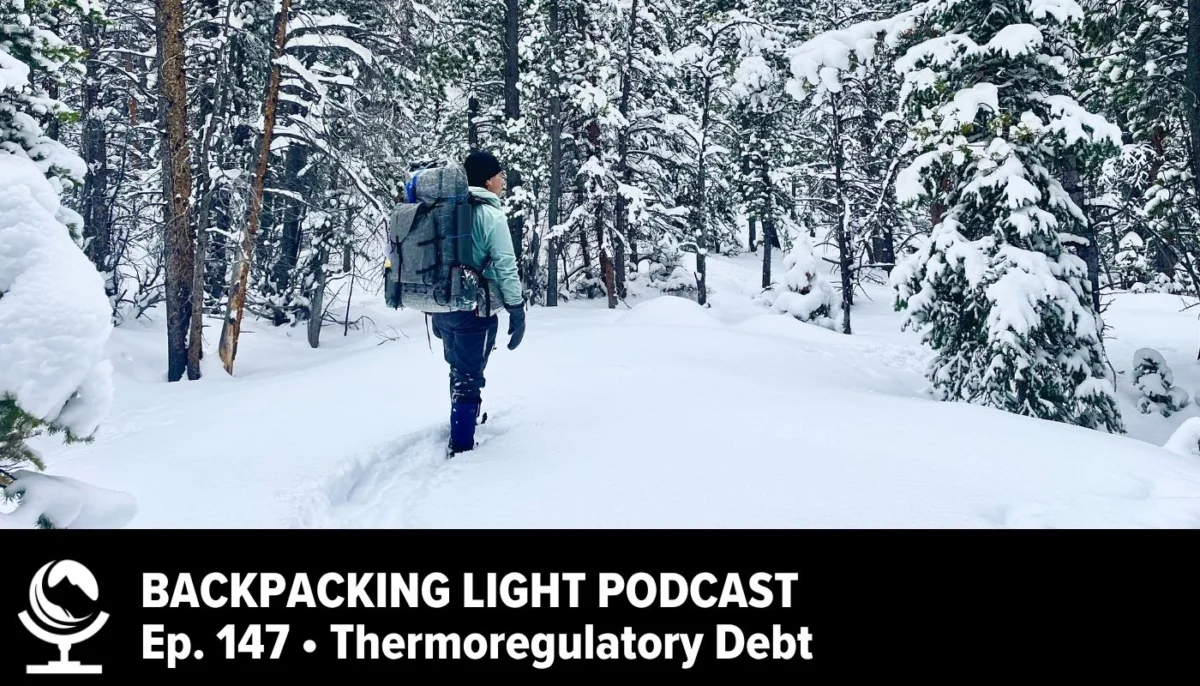
In the world of backcountry exploration, safety is often discussed in terms of gear specifications: the fill power of a down jacket, the hydrostatic head of a rain shell, or the R-value of a sleeping pad. However, a recent episode of the Backpacking Light Podcast (Episode 147) challenges the industry’s product-centric narrative. Host Ryan Jordan introduces a conceptual framework that shifts the focus from equipment to timing: "Thermoregulatory Debt."
This article explores the core tenets of this theory, the physiological implications of poor layering, and the paradigm shift required for those operating in cold, wet, and windy conditions.
Main Facts: The Concept of Thermoregulatory Debt
At its core, thermoregulatory debt is a field model for understanding the delayed physiological costs of poor layering decisions. The framework draws a sharp, highly effective analogy to personal finance: just as small, ignored expenses can compound into unmanageable financial debt, minor delays in adjusting clothing or managing moisture during a hike accumulate into a physiological deficit.
By the time a backpacker experiences acute shivering or misery, they have already accumulated a massive "debt." In the backcountry, this debt is notoriously difficult to repay because the body’s ability to generate heat—its metabolic furnace—is often compromised by the very conditions that caused the debt in the first place.
The Three Phases of Debt Accumulation
The progression into thermoregulatory danger typically follows a three-stage trajectory:
- The Decision Phase: This is the point of failure. It occurs when a hiker neglects to vent, adjust layers, or address moisture management the moment environmental conditions shift.
- The Physiological Imbalance: Once the decision is missed, the body begins losing heat or trapping moisture faster than it can compensate through thermogenesis.
- Delayed Impairment: This is the "interest payment" on the debt. It manifests as sudden discomfort, loss of fine motor skills, or mental fatigue when the hiker stops moving or attempts to set up camp.
Chronology of Failure: Why Timing Matters
The failure to manage thermal regulation is rarely a sudden event; it is a cumulative process. Understanding the chronology of this breakdown is essential for survival in high-alpine or shoulder-season environments.
Phase 1: The Active Onset
Most backpackers begin their day with high energy levels. As they start moving, metabolic heat production increases. If the hiker fails to shed layers before they begin to sweat, they are essentially trapping moisture against their skin. This is the initiation of Moisture Debt.
Phase 2: The Latent Period
As the hiker continues through the day, the moisture accumulation remains hidden. The hiker feels warm, perhaps even comfortable, but the internal microclimate of their clothing system is becoming saturated. During this phase, the hiker may fail to notice that their fingers are becoming cold. As the body’s core temperature becomes the priority, peripheral blood flow is rerouted away from the extremities—a process that can lead to frost nip, a precursor to more severe cold-weather injuries.
Phase 3: The Critical Threshold
The "crash" usually happens during a transition: reaching a mountain pass, stopping for lunch, or arriving at camp. Once movement stops, metabolic heat production drops instantly. If the base layers are wet and the hiker is already experiencing Performance Debt—a state where dexterity is impaired—the simple tasks of pitching a tent or lighting a stove become monumental, sometimes impossible, challenges.
Supporting Data: The Mechanics of Heat Loss
To understand why thermoregulatory debt is so dangerous, one must look at the physics of the human body in the cold. The body loses heat through four primary mechanisms: conduction, convection, radiation, and evaporation.
Moisture Debt and Thermal Efficiency
When clothing becomes damp from perspiration, its thermal efficiency plummets. Water conducts heat away from the body roughly 25 times faster than air. When insulation—such as down or synthetic loft—becomes saturated with moisture, it loses its ability to trap stagnant air, the primary insulator.
Performance Debt and Cognition
The most insidious aspect of thermoregulatory debt is the degradation of cognitive function. As the body struggles to maintain its core temperature, it prioritizes vital organs, leaving the brain and extremities vulnerable. Research into cold-weather survival consistently shows that decision-making skills decline long before the body reaches a state of hypothermia. This creates a dangerous feedback loop: the hiker becomes too cold to think clearly, and because they cannot think clearly, they fail to take the steps necessary to warm up.
Practical Interventions: Managing the Debt
The Backpacking Light podcast emphasizes that proactive, rather than reactive, behavior is the only way to stay solvent in the backcountry.
1. Vent Early and Often
Many hikers wait until they are physically uncomfortable to open pit zips or remove a shell. By that time, the moisture is already trapped. The "vent early" philosophy suggests that one should open ventilation points at the first sign of exertion, not when heat becomes excessive.
2. Anticipate the Change
The most experienced mountaineers adjust their clothing before a change in intensity. If a steep, sustained climb is ahead, shed layers before starting. If a lunch break is approaching in the wind, put on an insulation layer before stopping. Anticipating the need for heat preservation prevents the initial drop in temperature that triggers the debt cycle.
3. Protecting "Camp Dry" Insulation
One of the most critical rules discussed is the total isolation of camp insulation. A down jacket used for sleeping or sitting in camp must remain bone-dry. If it is used during high-exertion periods, it will inevitably absorb sweat, rendering it useless when the hiker actually needs it to prevent heat loss at night.
4. Fueling the Furnace
The body requires calories to generate heat. When a hiker enters a state of caloric deficit, their ability to regulate temperature drops significantly. Eating small, consistent amounts—rather than waiting for a massive lunch break—keeps the "furnace" burning and provides the energy required to maintain thermoregulation.
Implications for Gear and Strategy
The episode highlights that modern gear, while advanced, cannot compensate for poor strategy. However, specific innovations are designed to mitigate these risks.
The discussion of sponsors like Brynje provides a case study in alternative fabric structures. Unlike traditional base layers that sit flat against the skin, fishnet-style base layers (often made of polypropylene or merino wool) create a "stand-off" distance. This allows moisture to move away from the skin more effectively, significantly reducing the risk of moisture debt.
The Shift in Mentality
The broader implication of this podcast is a move away from "buying safety." Many consumers believe that purchasing a more expensive, technical, or heavier jacket will keep them safe. The thermoregulatory debt model proves that no amount of gear can save a hiker who manages their microclimate poorly.
This philosophy promotes a leaner, more intentional style of backpacking. It encourages hikers to understand their own metabolic rate and the specific environmental conditions of their route. By treating thermoregulation as a managed account—monitoring the "inputs" (food, movement) and "expenditures" (heat loss, moisture accumulation)—backpackers can ensure they remain within a safe margin of operation.
Conclusion: A New Standard for Backcountry Safety
The Backpacking Light Podcast has provided a much-needed mental framework for backcountry travelers. While the analogy of debt is simple, its application is profound. It forces the hiker to be hyper-aware of their internal state and the consequences of inaction.
The transition from a reactive mindset—where one adds a layer only when shivering—to a proactive mindset—where one manages moisture and heat as a continuous, dynamic process—is the hallmark of a skilled backcountry traveler. Whether you are a weekend warrior or an experienced thru-hiker, the concept of thermoregulatory debt serves as a vital reminder: the most important piece of survival equipment in your kit is your own judgment. By managing your thermal budget, you can prevent the small, compounding errors that turn a challenging day in the wild into a life-threatening crisis.