For most professional athletes, the trajectory of a career is linear: climb the rankings, secure the sponsorships, hoist the trophy, and repeat. But for seven-time AVP champion Betsi Flint, the traditional blueprint for excellence has been rewritten. Following the birth of her son, Odin, and while raising her five-year-old daughter, Cora, Flint has returned to the professional circuit with the Dallas Dream, competing across the country in Miami, Las Vegas, and Long Beach.
Her comeback is not merely a story of athletic recovery; it is a profound exploration of what it means to be an elite competitor in the modern era. Today, Flint’s most prized title isn’t found on a scoreboard or a record book—it is the one announced over the stadium speakers: "Mom of two."
The Reality of the Postpartum Comeback
While social media often portrays the return to elite sports as an effortless transition, Flint is committed to transparency regarding the grit required to step back onto the sand. The journey back to the AVP League was far from a simple physical rehabilitation; it was a total reconstruction of her daily life, priorities, and physiological capacity.
Her second pregnancy proved significantly more taxing than her first. Flint battled severe iron deficiency—a condition that left her so exhausted that even basic daily tasks felt insurmountable. "I had no energy," she recalls. "I would sit down and fall asleep. Some doctors told me it was just a normal part of pregnancy, but it didn’t feel normal."
The physiological toll necessitated a longer, more measured return to the court. For an athlete used to explosive jumps and high-velocity spikes, the realization that her body was not immediately capable of its former output was a difficult pill to swallow. "I want to do things that I used to do, but I’m not doing them yet," she admits. "I’m not jumping as high, running as fast, or hitting as hard. But that’s okay."
Chronology of a Transformation
The timeline of Flint’s return was dictated by the needs of her family rather than the demands of the sport.
- The Sabbatical: Flint made the strategic decision to step away from the 2025 AVP season to focus on the birth and early months of her son, Odin.
- The Logistical Marathon: Upon her return, the challenges were immediate. During the early stages of the season, Flint navigated the complex requirements of professional travel while breastfeeding. This involved pumping before matches, managing cold storage between games, and coordinating the logistics of infant care alongside pre-match warmups.
- The Rebuilding Phase: Unlike her previous training blocks, this phase required a complete integration of pelvic floor physical therapy. This was not a minor adjustment; it was a fundamental shift in how she approached musculoskeletal integrity, hormonal balance, and joint stability.
- The Competitive Return: By the time she stepped onto the sand for the AVP League, the "Flint 2.0" model was in place. She arrived with a refined focus, prioritizing sustainable, weekly incremental gains over the desire for an immediate return to "peak" status.
Data-Driven Support: Beyond the Weight Room
Flint’s success is anchored by a support team that recognizes the unique physiology of the postpartum athlete. While she has always worked with world-class strength and conditioning coaches, the addition of a specialized pelvic floor physical therapist was the "missing link" in her recovery.
"I had some of the best strength trainers in the world," Flint says, "but finding a pelvic floor physical therapist who understands the nuances of the postpartum body made all the difference." This expertise helped her navigate the hormonal shifts and structural changes that are often ignored in traditional, male-centric performance training.
This support system provided more than just clinical guidance; it offered psychological reassurance. When Flint experienced persistent aches while breastfeeding—a common but often dismissed symptom of postpartum hormone fluctuations—her team helped her distinguish between "bad pain" and the natural signals of a body undergoing a significant recovery process. This allowed her to push through the discomfort with confidence, rather than fear.
Adaptability as a Competitive Advantage
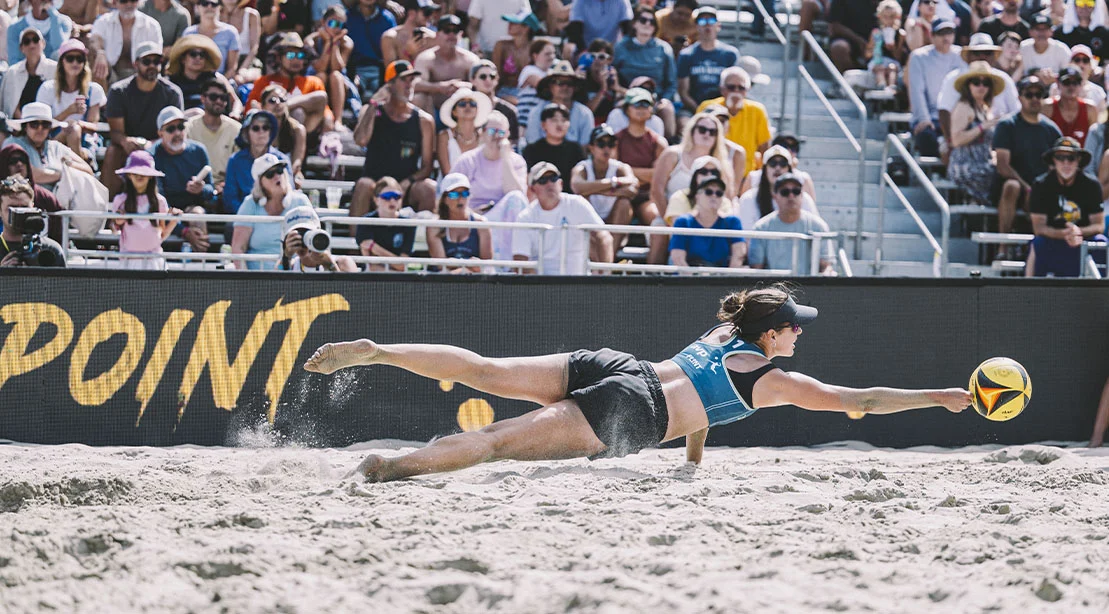
Beach volleyball is a sport defined by chaos. Unlike indoor volleyball, where the environment is climate-controlled and static, the beach is a variable landscape of wind, shifting sand, humidity, and extreme heat.
During the 2026 AVP League season, Flint encountered a wide spectrum of conditions: the sweltering heat of blacktop courts in Las Vegas, the thick humidity of Miami, and the unpredictable gusts of Long Beach. Rather than viewing these variables as obstacles to her game plan, Flint has mastered the art of the "on-the-fly" adjustment.
"You never try to dwell on what’s going wrong," she explains. "If we’ve got 30-mile-an-hour winds, let’s go." In Las Vegas, for instance, rather than clinging to a standard 50-minute warm-up, she and her teammates abbreviated their preparation to conserve precious energy in the extreme heat. This ability to decouple her ego from a "perfect" routine and prioritize the demands of the current environment is what has allowed her to maintain her competitive edge.
Implications for the Future of the Sport
Flint’s career trajectory serves as a template for the next generation of athletes who hope to balance elite professional longevity with motherhood. She is a vocal critic of early specialization, which she identifies as a primary cause of career-shortening overuse injuries.
Her own background—a hybrid of indoor volleyball, basketball, and softball—provided the diverse movement patterns that protected her joints and fueled her longevity. She encourages young players to move away from the "all-in" specialization model that leads to burnout and instead embrace a more holistic, cross-trained approach.
"Experience goes a long way," she notes. "I’m working smarter, not harder. When I was younger, I thought I had to do it all. Now, it’s about maximizing the time I do have."
The New Metric of Success
Perhaps the most profound change in Flint’s life is the redefinition of success. For a seven-time champion, it would be easy to be consumed by the pursuit of an eighth, ninth, or tenth title. Instead, she finds herself measuring success in percentages of effort.
"Some days I’m feeling 60 percent," she says. "Success is bringing all of that 60 percent."
This mindset has allowed her to navigate the unpredictable pressures of professional sports with a level of grace that only a mother balancing two worlds could possess. Whether it’s chasing her five-year-old on a bike as a form of conditioning or preparing her own healthy meals to streamline a chaotic schedule, Flint’s life is an exercise in efficiency and intent.
As she looks toward the final chapters of her professional career, her goals are less about the trophy cabinet and more about the legacy she leaves behind. She wants to be remembered not just for her serves, digs, and championships, but as a teammate who elevated those around her and as a woman who defied the traditional limitations placed on mothers in sports.
"I love when they introduce me as a mom of two," Flint says. "That holds a lot more weight to me than any other accolade."
For the fans watching in the stands—including a young girl in a miniature Dallas Dream jersey staging her own matches—the message is clear: the path to greatness is not a straight line. It is a series of adjustments, a reliance on a dedicated support team, and the courage to redefine what winning looks like when the stakes include not just a match, but a life built around family. Betsi Flint isn’t just playing volleyball; she is proving that motherhood is not the end of an athletic career, but a powerful catalyst for a more resilient, adaptive, and meaningful kind of success.