In the high-stakes world of professional bodybuilding, stagnation is the enemy. For 2019 Mr. Olympia Brandon "The Prodigy" Curry, the pursuit of a physique forged from granite is not merely a hobby—it is a relentless scientific experiment. As the bodybuilding community turns its collective gaze toward the 2026 Mr. Olympia finals in Las Vegas, Curry is once again challenging the conventional wisdom of hypertrophy training. His latest innovation? A torturous "mechanical dropset" that defies the traditional "heavy-to-light" philosophy, prioritizing intensity and mechanical disadvantage over pure load.
The Core Philosophy: Redefining the Dropset
Traditionally, a dropset is a staple of bodybuilding volume training. Athletes perform a set to failure with a specific weight, immediately strip a percentage of that weight, and continue the set. The goal is to push past neuromuscular failure by allowing the muscles to work in a fatigued state with a lighter load.
Brandon Curry, however, has flipped this script. Instead of manipulating the external load (the plates on the bar), Curry manipulates the mechanical leverage of his body. By moving from the most biomechanically difficult position to the most advantageous, he maintains an excruciating level of intensity without the need for ego-lifting or excessive weight.
"In the goal of making things harder, I have used, basically, a mechanical dropset," Curry explained to his 1.1 million followers on Instagram. "Going from the hardest exercise to the easiest exercise." This approach keeps the quads under constant, punishing tension for roughly three minutes of continuous work, forcing the muscle fibers to recruit every available motor unit to survive the session.
Chronology of a Leg Day Massacre
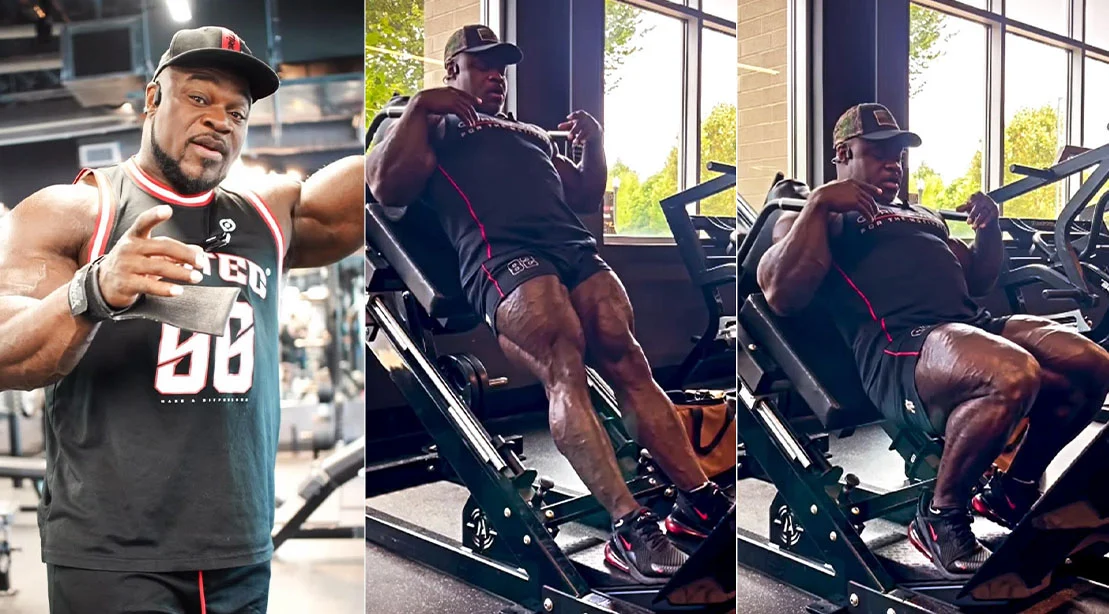
Curry’s session is a masterclass in controlled agony. By utilizing a hack squat machine equipped with a wedge and a foam roller, he creates a specific environment that isolates the quadriceps while minimizing the involvement of the posterior chain.
Phase 1: The Full Stretch Sissy Squat
The routine begins with the most demanding movement: the full stretch sissy squat. Curry utilizes a floor-based wedge to elevate his heels, which forces the knees forward and places the quads in a deep, precarious stretch. He emphasizes a distinct pause at the bottom of the movement. "That pause hits you," Curry notes, his breathing heavy as the lactic acid begins to flood his legs. By shifting the knees down and forward into the deepest possible stretch, he maximizes the eccentric load on the quadriceps, which is a primary driver of muscle hypertrophy.
Phase 2: The Partial Sissy Squat
Immediately transitioning without rest, Curry moves into the partial sissy squat. In this phase, he limits the range of motion, descending only until his thighs are parallel to the floor. While this might sound like a reprieve, it is intentionally designed to be more punishing. By keeping the tension constant and stopping at the parallel point, he minimizes hip involvement and forces the muscles—and even the calves—to stabilize the load. The pause at the end of each rep ensures that the muscles never get a moment to recover, keeping the quads in a state of perpetual metabolic stress.
Phase 3: The Modified Hack Squat
The final act of this mechanical trilogy is the hack squat. Curry maintains the foam roller behind his shoulders to ensure a consistent forward lean, which keeps the hips back and shifts the focus entirely onto the quads. He performs the movement with a tight stance, descending deep and pausing once again at the bottom. By the time he reaches this phase, oxygen is a luxury he can barely afford. His vertical posture on the ascent completes the cycle, culminating in a three-minute onslaught that leaves even a former Mr. Olympia gasping for air.
Supporting Data: Why "Mechanical" Beats "Heavy"
The efficacy of Curry’s routine is backed by the principles of Time Under Tension (TUT). When a muscle is placed under tension for an extended period—in this case, three minutes—the metabolic byproduct accumulation (such as lactate and hydrogen ions) increases significantly. This "metabolic stress" is one of the three primary mechanisms of muscle growth, alongside mechanical tension and muscle damage.
By refusing to reduce the weight, Curry avoids the "easy exit" that often comes with standard dropsets. When a lifter drops the weight, the nervous system often relaxes slightly. By keeping the load consistent but making the movement harder through mechanical manipulation, Curry keeps his central nervous system (CNS) on high alert. This method effectively tricks the muscle into believing it is handling a much heavier load than it actually is, resulting in a more profound stimulus for growth without the high risk of joint injury associated with maximal-effort heavy lifting.
Official Commentary: The Prodigy’s Perspective
Curry is adamant that his approach is not about ego. In an era where social media is flooded with influencers pushing heavy, poorly performed lifts, Curry stands as a proponent of "smart lifting."
"Does it have to be heavier? No," Curry insists. He argues that the mechanical dropset allows him to reach a level of fatigue that traditional training would require significantly more weight to achieve. By avoiding the heavy "grind" that often leads to torn tendons or joint inflammation, Curry is able to sustain his training volume year-round, a crucial factor for a professional athlete aiming for the 2026 Olympia stage. His focus remains on the "feel" of the muscle, ensuring that the quadriceps are doing the work rather than the joints or the lower back.
Implications for the Bodybuilding Community
For the average gym-goer, Curry’s workout offers a blueprint for breaking through plateaus. Most lifters hit a wall because they rely on the same rep ranges and weight progressions. The "mechanical dropset" provides a new variable to introduce into one’s programming.
1. Safety and Longevity
By emphasizing form over weight, this routine is inherently safer for the knees and lower back, provided the lifter maintains the correct posture. The use of a wedge and foam roller serves as an external constraint that forces the body into the correct alignment, reducing the margin for error.
2. Time Efficiency
For those with limited time in the gym, this three-minute, high-intensity set is far more productive than five sets of standard squats with long rest periods. It provides a massive stimulus for growth in a compressed timeframe.
3. Psychological Toughness
Perhaps the most significant implication is the mental barrier. Most athletes stop when the burning sensation becomes unbearable. Curry’s method trains the body to operate within that "pain cave," a necessary skill for anyone looking to compete at the professional level.
Conclusion: A New Standard for Leg Day
Brandon Curry’s mechanical dropset is more than just a trend; it is a refined tool for a high-performance athlete. By prioritizing mechanical disadvantage, he has created a system that forces the quads to grow while preserving the longevity of his joints. As he prepares to battle for the top spot in Las Vegas in 2026, the rest of the world can take a page out of his book.
If you are looking to revitalize your leg training, don’t reach for another plate on the rack. Instead, look for ways to make your current weight feel impossible. As "The Prodigy" says, "Give it a try." Just be prepared to walk out of the gym with legs that feel like they have been forged in the very fires that made Curry a champion. Whether you are an aspiring Olympia competitor or a weekend warrior, the message is clear: when it comes to growth, intensity is not just about how much you lift, but how you choose to lift it.