For watch enthusiasts who grew up in the neon-soaked, high-octane 1980s, the name "TAG Heuer Formula 1" evokes a specific kind of nostalgia. It was a watch that defied the stuffy conventions of traditional Swiss horology, favoring vibrant plastics, bold aesthetics, and a rebellious spirit that targeted the beach-going youth rather than the boardroom elite. Following last year’s successful reimagining of the series, TAG Heuer has finally unveiled the most anticipated iteration yet: the return of the iconic bright orange model, now rebranded for the modern era as the Solargraph “Zandvoort.”
This limited-edition release serves as more than just a nod to the past; it is a bridge between the humble, surf-inspired origins of the 1986 collection and the high-tech, solar-powered reality of 2025.
The Main Facts: A Modern Tribute to a Retro Legend
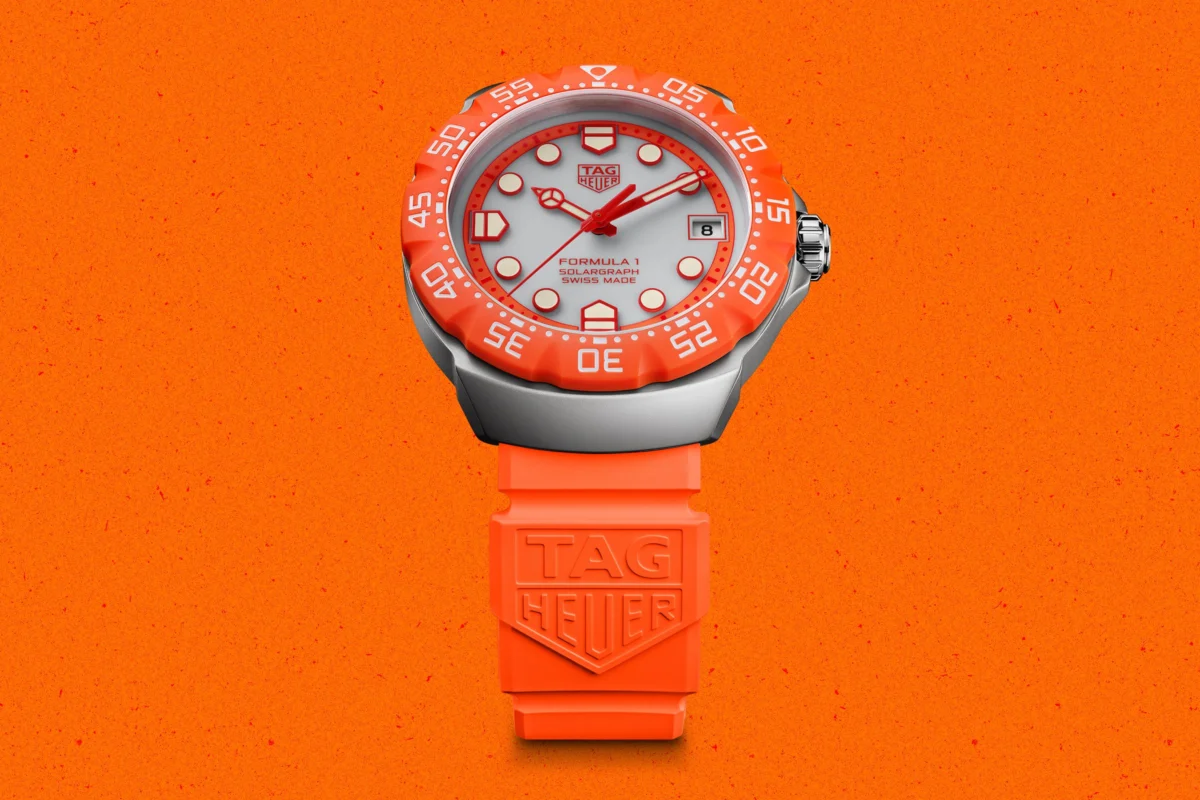
The new 38-mm Solargraph “Zandvoort” is a masterclass in faithful recreation. Available on either a signature orange rubber strap ($2,150) or a refined steel bracelet ($2,250), the watch honors the visual language of the 1980s while integrating modern solar technology.
Unlike the original 28-mm and 35-mm quartz iterations that defined the 1980s, this new model leans into a more contemporary 38-mm diameter. While the case size has evolved to suit modern tastes, the aesthetic remains remarkably consistent. The gray opalin dial is a direct stylistic descendant of the original, capturing the exact hue that made the early models pop against their synthetic cases. Perhaps most notably, the design of the rubber strap—which wraps around the sides of the metal case to mirror the TAG Heuer logo—has been meticulously preserved, serving as a tactile reminder of the watch’s storied heritage.

The watch is strictly limited in availability. TAG Heuer has capped production at 1,500 pieces for the rubber strap version and a mere 1,000 for the steel bracelet model—the latter being an online exclusive, effectively bypassing physical retail boutiques to create a direct-to-consumer digital experience.
A Chronology of the Formula 1 Series
The 1986 Genesis: Surfers, Not Racers
When the Formula 1 series first hit the market in 1986, the prevailing narrative was that TAG Heuer was aiming squarely at the burgeoning motorsport enthusiast. However, the true history is far more nuanced. As Eddy Burgener, the visionary designer behind the original collection, has frequently noted, the initial brief was not focused on the racetrack at all.
Instead, the design team was tasked with creating a "fun, colorful, and young" timepiece for American surfers and divers. The inspiration was drawn from the neon aesthetics of surfboards and the vibrant beach fashion of the mid-80s. The challenge, however, was in the execution. To achieve those vivid colors, the case required synthetic materials, which were notoriously difficult to engineer for a dive-rated watch. After significant experimentation, the team landed on a blend of fiberglass and plastic, providing the necessary hardness and stability to withstand the ocean’s depths.
The Pivot to Motorsport
By the time the watches were ready for mass production, TAG had firmly established its footprint in professional racing. The corporate decision was made to leverage this momentum, and the "Formula 1" moniker was applied to the collection. It was a marketing masterstroke. The vibrant colors and durable, lightweight construction—originally designed for the sand and surf—resonated perfectly with the high-speed, adrenaline-fueled world of Grand Prix racing.

The Evolution of the "Zandvoort"
The specific model being revived—the 373.513 (later the WA1213)—was not part of the initial 1986 trio. It followed shortly after, representing the first time the F1 collection utilized a metal case alongside its signature bright color palette. Now, decades later, the watch is being unofficially dubbed the “Zandvoort” by collectors and enthusiasts. The nickname is a poignant tribute to the historic Dutch circuit, which is slated to leave the Formula 1 calendar after 2026. This release acts as a temporal marker, commemorating the end of an era at one of the sport’s most celebrated venues.
Supporting Data: Technical Specifications and Materiality
The transition from the original "Arnite" thermoplastic to the modern "TH-Polylight" is the most significant technological upgrade in the collection’s history.
From Arnite to TH-Polylight
The original 80s watches relied on Arnite, a thermoplastic that was revolutionary for its time but susceptible to wear. The new Solargraph models utilize a sophisticated, eco-friendly, castor-based polyamide. This bioplastic is molded over a steel inner core, ensuring the watch remains remarkably robust—exceeding the durability of standard plastic-cased watches.
The Bracelet Transition
While the 1980s bracelets were characterized by a distinctive five-row design, the 2026 version opts for a three-row sand-blasted steel construction. This change reflects a broader shift in industrial design toward cleaner, more minimalist lines, even while maintaining the rugged, sporty intent of the original.

The "Missing" V-Groove
Observers of the original series will notice one deliberate omission: the V-shaped grooves on the underside of the rubber straps. In the 1980s, these were functional, allowing surfers to cut their straps to length so they could wear the watch over a wetsuit. Their absence in the new collection is a silent statement from TAG Heuer: the modern F1 is intended to stay on the wrist, not to be customized or trimmed by the wearer.
Official Perspective and Design Philosophy
In various interviews, TAG Heuer representatives have emphasized that the goal of this relaunch is not just to sell a product, but to curate a legacy. The brand has been careful to balance the "fun" ethos of the original designers with the high-performance expectations of a modern consumer.
By integrating solar-powered technology (the Solargraph movement), TAG Heuer has eliminated the need for frequent battery changes, effectively solving the primary pain point of the original quartz models. This fusion of 1980s aesthetic "soul" with 21st-century utility is the core value proposition of the new series. The brand acknowledges that while the original F1 was an entry-level gateway into the world of luxury watches—surpassing 3 million units sold before being retired—this new iteration occupies a more premium, limited-edition space, appealing to both seasoned collectors and the next generation of enthusiasts.
Implications: The Future of the Formula 1 Line
The release of the "Zandvoort" has several implications for the future of TAG Heuer’s portfolio.

- The Power of Heritage: The success of this launch proves that the "Formula 1" name carries significant brand equity. By selectively reviving specific historical references, TAG Heuer is effectively managing a "cult" following that values provenance over pure technical complexity.
- The Exclusivity Strategy: By making the steel-bracelet model an online-only exclusive, TAG Heuer is testing the viability of a direct-to-consumer model for its most heritage-focused releases. This limits the "gray market" potential and ensures that the watches reach dedicated fans rather than mass-market retailers.
- The "Solar" Shift: The commitment to the Solargraph movement indicates that TAG Heuer views light-powered technology as a cornerstone of its entry-level and mid-tier sport watches. It positions the brand as a leader in sustainable, long-lasting luxury.
Ultimately, the “Zandvoort” is more than a watch; it is a time capsule. Whether it is being worn by a fan at the Dutch Grand Prix or a collector in an office, it serves as a reminder of a time when watch design was allowed to be playful, vibrant, and unabashedly colorful. As the F1 calendar prepares to bid farewell to Zandvoort, this timepiece ensures that the spirit of the circuit—and the spirit of the 1980s surf-meets-race culture—will continue to tick on wrists for decades to come.
Orders for these limited pieces open next week, with early interest indicating that the 2,500-unit production run will likely be spoken for within hours of the launch. For those who have spent years hunting for an original, the wait for a new, reliable, and perfectly modernized classic is finally over.