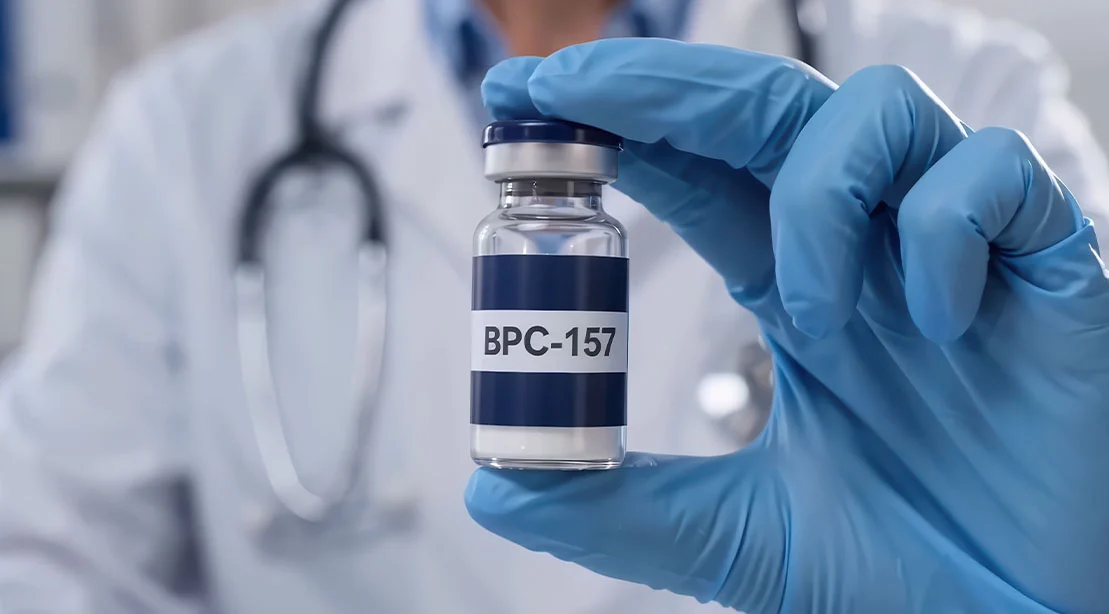
In the shadowy corners of the fitness world—the dimly lit powerlifting gyms, the high-intensity CrossFit boxes, and the sprawling digital threads of Reddit and niche forums—a substance known as BPC-157 has attained near-mythical status. Often dubbed the "Wolverine peptide" for its purported ability to rapidly accelerate the healing of tendons, ligaments, and gastrointestinal tissues, it has become the ultimate "hush-hush" recovery tool for athletes and weekend warriors alike.
However, BPC-157 (Body Protective Compound 157) occupies a strange, precarious space in modern medicine: it is simultaneously one of the most sought-after performance-related substances on the market and a compound that has never received approval from the U.S. Food and Drug Administration (FDA). As its popularity surges, it has transitioned from a fringe experiment for bodybuilders to a topic of serious, albeit cautious, inquiry within the medical establishment.
The Main Facts: What is BPC-157?
BPC-157 is a synthetic peptide, a chain of amino acids derived from a protein naturally found in the human gastric juice. Proponents claim that it acts as a systemic healing agent, capable of mitigating inflammation, promoting angiogenesis (the formation of new blood vessels), and accelerating the repair of connective tissue.
Its reputation is bolstered by a "supernatural" billing among its adherents. If you are a gym-goer with a torn rotator cuff, a chronic case of tennis elbow, or an intractable gut issue, you are likely to encounter a recommendation for BPC-157. It is frequently paired with another peptide, TB-500, in a combination often referred to by the dramatic moniker, the "Wolverine Stack."
Yet, the chasm between the anecdotal "miracle" stories and clinical reality is vast. While preclinical research—largely performed on rodents—has shown promise, there is a profound lack of rigorous, large-scale, randomized human clinical trials. We are currently witnessing a phenomenon where thousands of individuals are essentially acting as their own human subjects, bypassing the traditional regulatory safeguards that usually dictate the adoption of new therapeutics.
A Chronology of a Viral Trend
The trajectory of BPC-157 from obscure research molecule to household name in the fitness community has been rapid and largely decentralized.
- Pre-2015: BPC-157 exists primarily in the domain of specialized laboratory research, with studies focusing on gastric ulcer healing and tendon-to-bone repair in animal models.
- 2015–2019: The peptide begins to permeate the "biohacking" community. Internet forums and bodybuilding message boards become the primary hubs for dissemination, with users sharing protocols for administration, dosage, and sourcing.
- 2020–2023: The COVID-19 pandemic, coupled with the rise of telehealth and online supplement trends, accelerates interest in home-based recovery tools. The "peptide-geek" underground begins to fracture as mainstream fitness influencers start discussing their experiences with the compound.
- 2024–2026: Medical records suggest a tipping point. Usage trends show a sharp, 33-fold increase in documented cases where physicians have noted the use of BPC-157 in patient charts, indicating that the compound is now being discussed in clinical settings, even if it remains outside the scope of FDA approval.
Supporting Data: The nference Analysis
For years, the prevalence of BPC-157 usage was purely speculative. We knew it was popular because the anecdotal chatter was deafening, but we had no hard data. That changed recently when researchers at the health-data analytics firm nference conducted an expansive review of over 15 million de-identified medical records.
The findings were striking. The researchers identified 1,039 patients whose doctors had explicitly documented the use of BPC-157. While 1,039 might seem small in a pool of 15 million, the rate of growth is what warrants attention: new documented users increased roughly 33-fold between 2020 and 2026.
This data provides the first empirical evidence that BPC-157 has effectively "crossed the Rubicon." It is no longer just a substance bought in a back-alley transaction; it is now part of the patient-doctor dialogue. The demographic profile of these users is also shifting: they are increasingly younger and predominantly male, citing sports-related injuries, chronic pain, and gastrointestinal distress as their primary motivations.
It is critical to note that this research is preliminary and has not yet undergone peer review. Furthermore, because the data is observational, it cannot account for confounding variables. If a patient reports improved shoulder mobility after BPC-157 use, the data cannot distinguish between the effects of the peptide, the efficacy of physical therapy, the natural passage of time, or simply the cessation of the aggravating movement.
Official Responses and the Regulatory Standoff
The regulatory landscape regarding BPC-157 is as volatile as the market itself. The FDA has historically maintained a strict stance on unapproved substances, particularly those sold via the "gray market"—a collection of online peptide sellers and compounding pharmacies that occupy a legal gray area.
In the summer of 2024, the situation took a complex turn. An FDA advisory committee voted to recommend the allowance of BPC-157 for certain types of pharmacy compounding. It is essential to emphasize that an advisory committee vote is not the same as FDA approval. It does not signify that the drug is safe, effective, or ready for mass consumption. Rather, it represents an acknowledgment by regulators that the demand is so high that they are considering a framework to at least bring the production of the substance into a regulated, pharmaceutical-grade environment.
This puts the FDA in a bind: by allowing it to be compounded, they provide a safer path for consumers, but they also inadvertently legitimize a substance that has yet to pass the "gold standard" of safety and efficacy testing.
The Hidden Dangers: Quality Control and the "Fake" Market
For those who believe the promise of BPC-157 outweighs the lack of clinical trials, there is an even more immediate danger: the supply chain.
The internet is rife with websites offering vials of "BPC-157" for a relatively low cost. However, because these products are not regulated as drugs, there is zero oversight regarding what is actually inside those vials. A recent investigation by WIRED highlighted this peril: they purchased several injectable peptides from various shops and subjected them to independent laboratory testing. The results were alarming. Products labeled as BPC-157, as well as other popular peptides like PT-141 and NAD+, failed to contain the advertised active ingredients.
In some cases, the vials contained substances completely different from what was listed on the label. When a user injects an unknown substance into their body, the risk of infection, adverse immune response, or chemical toxicity is immense. You cannot debate the efficacy of a molecule if the molecule isn’t even present in the bottle.
Implications for Modern Medicine
The rise of BPC-157 is a symptom of a broader breakdown in the trust between the public and the traditional pharmaceutical/regulatory pipeline. When patients feel that the medical establishment is not providing solutions for chronic, nagging injuries, they turn to the "underground" out of desperation.
The implications are twofold:
- The Clinical Catch-Up: The medical community is now forced to play catch-up. Researchers must decide whether to invest the massive capital required for phase-three clinical trials for a substance that is already widely used. If the trials show no efficacy, the backlash from a community of thousands of "believers" will be significant. If they show success, the regulatory framework must pivot rapidly to accommodate a new class of regenerative medicine.
- The Patient Risk: We are currently in a "Wild West" era of regenerative medicine. Patients are trading long-term safety for the hope of a quick fix. As long as the demand persists, the gray market will continue to thrive, exposing people to products of dubious origin and unknown purity.
Ultimately, BPC-157 may indeed turn out to be a breakthrough in sports medicine. It may possess the healing properties that thousands of anecdotal reports suggest. But until the science is settled—until we have the robust, randomized, and peer-reviewed trials that distinguish between a placebo effect and actual physiological repair—BPC-157 remains a high-stakes gamble. For now, the most important takeaway is not the promise of the peptide, but the reality of the behavior: thousands of people have decided they simply cannot wait for science to validate their recovery. And in that impatience, they have invited a new set of risks that medicine is only just beginning to map.