Beyond the sun-bleached antiquities and the sapphire allure of the Mediterranean coastline, the island of Crete holds a secret carved from limestone and time. Rising above the Aegean Sea, the "Lefka Ori"—or White Mountains—form a jagged, formidable spine across the island. Within this labyrinth of over 30 summits exceeding 2,000 meters lies the Samaria Gorge, an ecosystem-spanning marvel that serves as both a premier hiking destination and a profound historical monument to the Cretan spirit of resistance.

Main Facts: A Geological and Cultural Icon
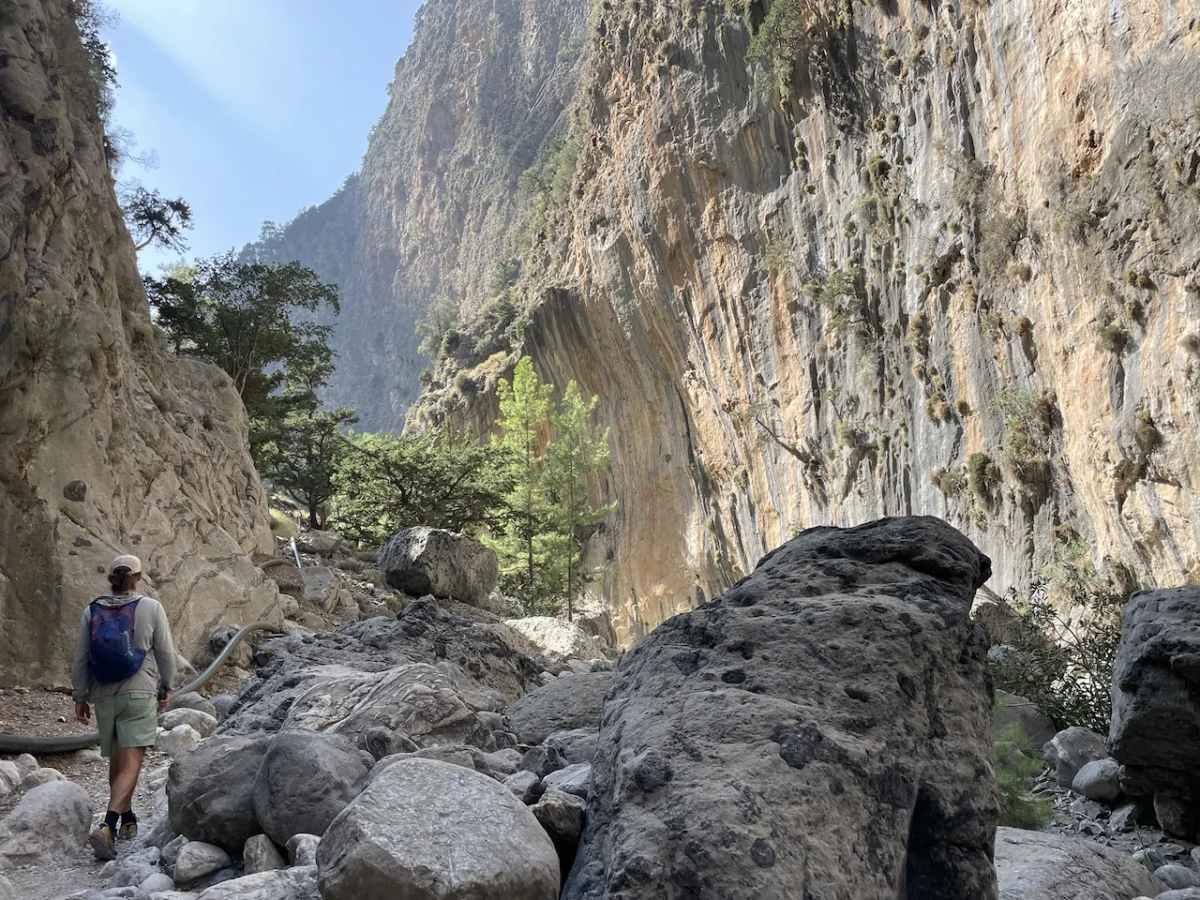
The Samaria Gorge is a masterpiece of geological erosion. Stretching 16 kilometers (9.9 miles) from the Xyloskalo trailhead in the Omalos Plateau down to the coastal village of Agia Roumeli, it is widely recognized as Europe’s second-longest gorge. Its sheer scale is defined by walls that soar vertically to nearly 300 meters, creating a dramatic corridor that feels simultaneously claustrophobic and infinite.

More than a mere geographical feature, the gorge is a living symbol of freedom. Throughout the centuries of foreign occupation—most notably under Ottoman rule—the inaccessible depths of the gorge served as a natural fortress for the Cretan people. Today, it stands as the heart of the Samaria Gorge National Park, a protected sanctuary that fosters a unique biodiversity, including the elusive Kri-kri (Cretan goat).

Technical Specifications
- Total Distance: 14.5 km (8.9 miles)
- Average Duration: 5–6 hours
- Elevation Change: 1,099 meters (gain) / 2,327 meters (loss)
- Difficulty: Moderate (due to descent)
- Terrain: Rocky paths, riverbeds, and narrow limestone corridors.
Chronology of a Journey: The Out-and-Back Challenge
While the standard route through Samaria is a one-way, downhill trek followed by a ferry ride, a more strenuous "out-and-back" approach offers a profound understanding of the landscape. In the autumn of 2023, a return trek provided a unique lens through which to view the trail.

The Descent into Light
The journey begins at the Xyloskalo ticket office at dawn. The initial descent is a series of steep, well-maintained switchbacks that drop hikers from the mountain air into the depths of the canyon. Watching the sunrise over the White Mountains is a transformative experience; as the light hits the bald limestone summits, the range lives up to its name, glowing with an ethereal, blinding white reflection that stands in sharp contrast to the deep green forests below.

The Mid-Way Oasis
Four kilometers into the descent, hikers encounter the rest area of Ayios Nikolaos. This site is a microcosm of Cretan history. Home to a centuries-old chapel and a grove of towering cypress trees, it also rests upon the remains of a 1st-century B.C. temple dedicated to Apollo. The juxtaposition of ancient spiritualism and modern recreational infrastructure is a recurring theme throughout the gorge.

By the seven-kilometer mark, the trail opens into the abandoned village of Samaria. Once a bustling hub of mountain life, the settlement was vacated in 1962 upon the establishment of the National Park. Today, its stone structures are repurposed as medical stations and housing for environmental researchers, serving as a silent witness to the history of the families who once called this remote canyon home.

The Iron Gates
The final, most dramatic phase of the hike occurs after passing the Christos rest area. Here, the gorge undergoes a violent constriction, culminating in the "Iron Gates." At this point, the walls rise 300 meters high while the width of the canyon floor shrinks to less than three meters. Walking through this narrow aperture feels like walking through the very bedrock of the island. It is here that the tactical advantage of the gorge becomes clear; it is a natural chokepoint where a small force could, and historically did, repel large invading armies.

Supporting Data: The Biodiversity of Samaria
The success of the Samaria Gorge National Park is best measured by the resurgence of its most iconic inhabitant: the Kri-kri.

- Population Growth: In the early 1960s, the species was on the brink of extinction, with an estimated population of only 200. Following the establishment of protected status, the population has rebounded to over 2,500.
- Agility and Adaptation: The Kri-kri is uniquely adapted to vertical life. They are capable of leaping over six meters in a single bound, allowing them to navigate the precipitous cliffs of the White Mountains with impossible ease.
- Historical Significance: Contrary to popular belief, the Kri-kri is not indigenous; it is believed to have been introduced during the Minoan Civilization (3100 B.C.–1100 B.C.). Their image has been found on ancient vases and sealstones, indicating a 5,000-year relationship with the Cretan people.
Official Responses and Administrative Hurdles
Undertaking an out-and-back hike in a single day is a feat that draws scrutiny from park officials. The administrative culture of the park is one of caution, centered on the fact that the canyon must be fully cleared of hikers by 6:00 p.m.

During the 2023 attempt, the skepticism of local officials was palpable. At the southern entrance, the sentiment was clear: "You’re never going to make it." This skepticism was not merely a personal opinion but an administrative mandate intended to ensure safety. The trek involves significant physical strain; moving against the flow of the park’s operational logic—and against the fatigue of a long day—is discouraged.

However, the experience of the return journey highlights a spectrum of administrative personalities. While some officials were adamant that the hikers turn back and utilize the ferry, others, recognizing the pace and capability of the travelers, were more accommodating. This interaction serves as a reminder that the gorge is a managed environment where the "right to roam" is balanced against the necessity of strict, safety-first park management.

Implications: The Legacy of the Gorge
The Samaria Gorge serves as a profound reminder of the intersection between nature and human perseverance. It is not merely a path for tourists; it is a monument to the Cretan struggle against foreign oppression. The 1770 battle, in which local fighters and thousands of refugees held off Ottoman forces at the Iron Gates, is a cornerstone of regional identity.

Modern Stewardship
As the popularity of the Samaria Gorge continues to grow, the implications for management are significant. The trail must be maintained not just for hikers, but as a critical habitat for the Kri-kri and other endangered flora and fauna. The transition of the village of Samaria from a residential settlement to a research base illustrates the shift from human habitation to scientific stewardship.

Final Thoughts for the Prospective Hiker
For those planning to traverse the gorge, the experience requires more than just physical endurance; it requires an appreciation for the historical and ecological weight of the surroundings. Whether one chooses to complete the standard one-way descent or the more rigorous return trek, the Samaria Gorge offers a rare opportunity to connect with the raw, untamed essence of the Mediterranean.

As noted in Wanderlust Mediterranean, the gorge is a testament to the fact that beauty and resilience are often found in the most inaccessible of places. It stands as a sentinel of the White Mountains, inviting those who are willing to look up—and sometimes, to look back—at the history written into the limestone walls.