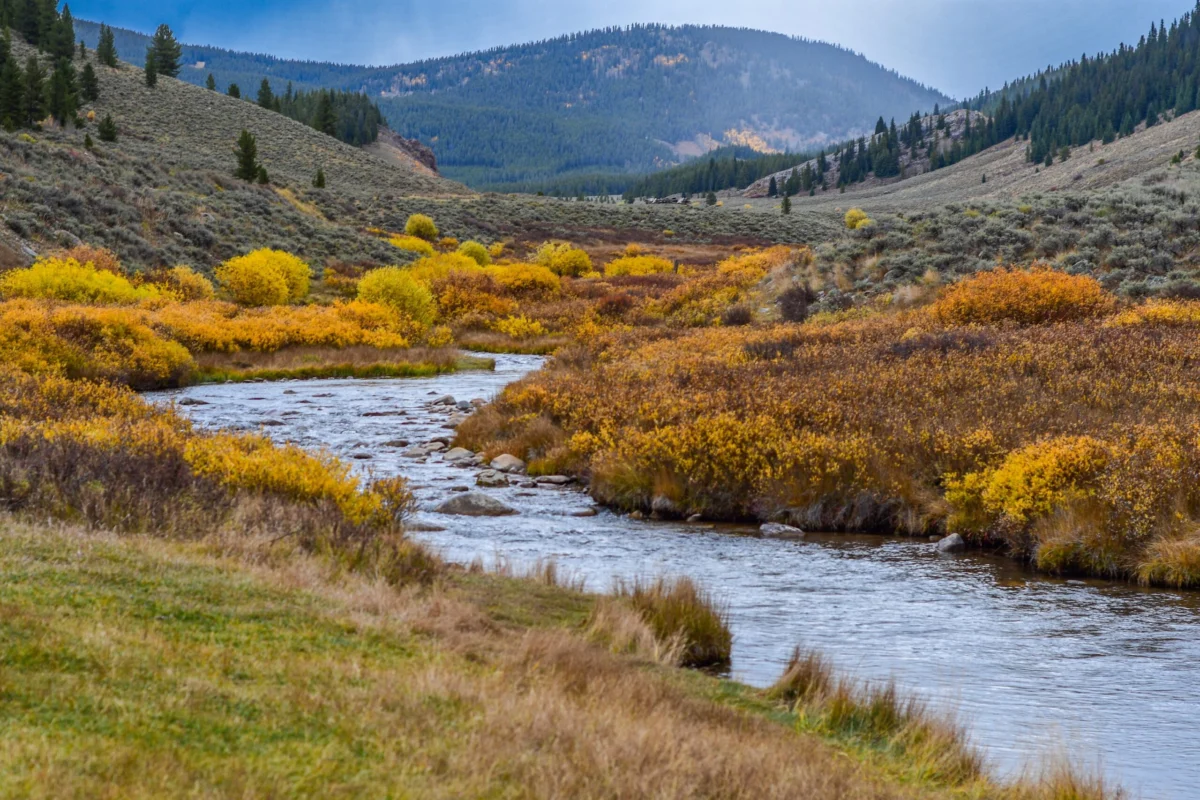
Every autumn, as the high-altitude air in the Southern Rockies turns crisp and the quaking aspens ignite the hillsides in shades of gold and amber, a secondary, more primal spectacle unfolds beneath the surface of Colorado’s waterways. While thousands of tourists flock to the Gunnison Valley for leaf-peeping and mountain biking, a dedicated contingent of anglers arrives with a different goal: witnessing and fishing the annual migration of nearly 20,000 kokanee salmon.
Often overlooked in favor of the state’s famous trout fisheries, the kokanee run on the East and Gunnison rivers represents one of the most accessible and exciting salmon experiences in the lower 48 states. It is a rare, landlocked phenomenon that transforms the riverbanks into a theater of natural instinct, offering fly fishers a challenge that rivals the legendary runs of the Pacific Northwest and Alaska.
The Main Facts: Understanding the Kokanee
Kokanee salmon (Oncorhynchus nerka) are not native to Colorado; they are a landlocked subspecies of the sockeye salmon. Unlike their sea-run cousins that migrate between the ocean and freshwater, kokanee complete their entire life cycle within freshwater systems. In Colorado, they have found a perfect surrogate for the open ocean in the depths of the Blue Mesa Reservoir.

The cycle is remarkably consistent: the fish spend three to four years maturing in the reservoir’s cool, oxygen-rich depths. As they reach maturity, their bodies undergo a radical transformation. They lose their silvery sheen, turning a brilliant, deep red, and the males develop the iconic hooked jaw—or "kype"—that characterizes spawning salmon. Driven by biological imperatives, they leave the safety of the reservoir to push upstream into the tributaries, specifically the East and Gunnison rivers, to spawn and complete their life cycle.
Chronology of the Run
For the visiting angler, timing is everything. The migration is highly temperature-dependent, usually triggered by the first significant cooling trends of late summer.
- Late August: The initial "scouts" begin to stage near the river mouths. Anglers will see increased activity in the lower reaches of the Gunnison.
- Mid-September: The run reaches its primary intensity. Water temperatures drop, signaling the fish that it is time to move. This is the "Goldilocks" period where fish are most active and the river conditions are generally ideal for wading.
- October: The peak of the spawn. The rivers become crowded with salmon, and the visual spectacle is at its highest. By late October, the run typically begins to taper off as the fish complete their spawning ritual.
This window coincides with what many locals consider the finest time of year in the Gunnison Basin. The notorious afternoon summer thunderstorms of the high country have dissipated, replaced by stable, clear, and cool days.

The Geography of the Fishery
The epicenter of this phenomenon is the Roaring Judy Fish Hatchery. Spanning 783 acres along the East River, this facility serves as the lifeblood of the local salmon population. The hatchery’s operations facilitate the growth of the salmon, and the surrounding river sections serve as the primary spawning grounds.
The Gunnison River, which was awarded prestigious Gold Medal status in 2023, is the crown jewel of this experience. Because the river is dam-controlled, it maintains a consistent, nutrient-rich environment. This regulation keeps water temperatures stable, which is critical for the salmon’s survival during the taxing upstream migration. Furthermore, this stability supports a diverse ecosystem, meaning that while you are targeting salmon, you are also sharing the water with trophy-sized rainbow, brown, and cutthroat trout, as well as mountain whitefish.
Supporting Data and Technical Considerations
For those planning a trip, the logistics require more than just a rod and a reel.

Wading and Access:
While the Gunnison Valley offers vast public access, it is a mosaic of public and private land. The "Gold Medal" designation applies to specific stretches of the river, and anglers must remain diligent. Many of the best spots are found by those who utilize drift boats or rafts to float through the canyon sections, effectively navigating around private property boundaries.
Gear Recommendations:
- Rods: A 5- or 6-weight fly rod is recommended. Kokanee are powerful fish, and the current in the Gunnison can be deceptively strong.
- Flies: During the run, salmon are not feeding in the traditional sense; they are striking out of aggression or instinct. Small, bright patterns—specifically egg patterns or attractor flies in orange, pink, and red—are the standard.
- Technique: Nymphing is the most productive method. Keeping your fly in the "zone"—near the bottom of the stream bed—is essential, as that is where the salmon hold during their upstream movement.
Official Perspectives: The Role of Conservation
The Gunnison Crested Butte Tourism Association (GCBTA) emphasizes that this fishery is a privilege, not a right. Because the kokanee are non-native, their management is handled with precision by Colorado Parks and Wildlife (CPW).

"The salmon run is a vital part of our outdoor identity," notes a spokesperson for the GCBTA. "However, it requires an educated angler. We encourage visitors to practice ‘Leave No Trace’ principles, respect the private land boundaries that protect our local ranchers, and always check the current CPW regulations for bag limits and seasonal closures, as these can change based on the health of the run in any given year."
Conservationists also note that the salmon run serves as a nutrient injection for the river ecosystem. The carcasses of the salmon post-spawn provide essential marine-derived nutrients to the riparian environment, fueling the growth of insects that sustain the trout population for the rest of the year.
Implications: A Model for Adventure Tourism
The success of the Gunnison salmon run highlights a broader trend in adventure tourism: the shift toward "niche" outdoor experiences. While skiing and mountain biking remain the primary economic drivers for the region, the fall salmon run provides a critical "shoulder season" boost.

For the traveler, the implications are clear: visiting in the fall offers a more tranquil, authentic experience. The crowds of summer have thinned, the logistics of booking are easier, and the landscape is arguably at its most photogenic. However, this shift toward eco-tourism places a higher responsibility on the visitor.
As more anglers learn about the "secret" run, the pressure on the river increases. Future management will likely focus on balancing angler access with the need to protect the sensitive spawning beds. For the time being, the Gunnison River remains a bastion of wild, accessible beauty—a place where, for a few weeks in autumn, the river truly comes alive.
Conclusion
To fish the Colorado kokanee run is to participate in one of the most dramatic life cycles in nature. It is a test of patience, a lesson in ecology, and an unforgettable immersion in the high-country wilderness. Whether you are an expert fly fisher or a curious enthusiast looking for a new challenge, the East and Gunnison rivers offer a world-class experience that proves you don’t need to head to the Pacific coast to find the "run of a lifetime."

Pack your waders, respect the water, and prepare to see the rivers of Colorado in a vibrant, crimson light.
For more information on planning your trip, including fishing guides, gear rentals, and local lodging, visit the Gunnison Crested Butte Tourism Association.