
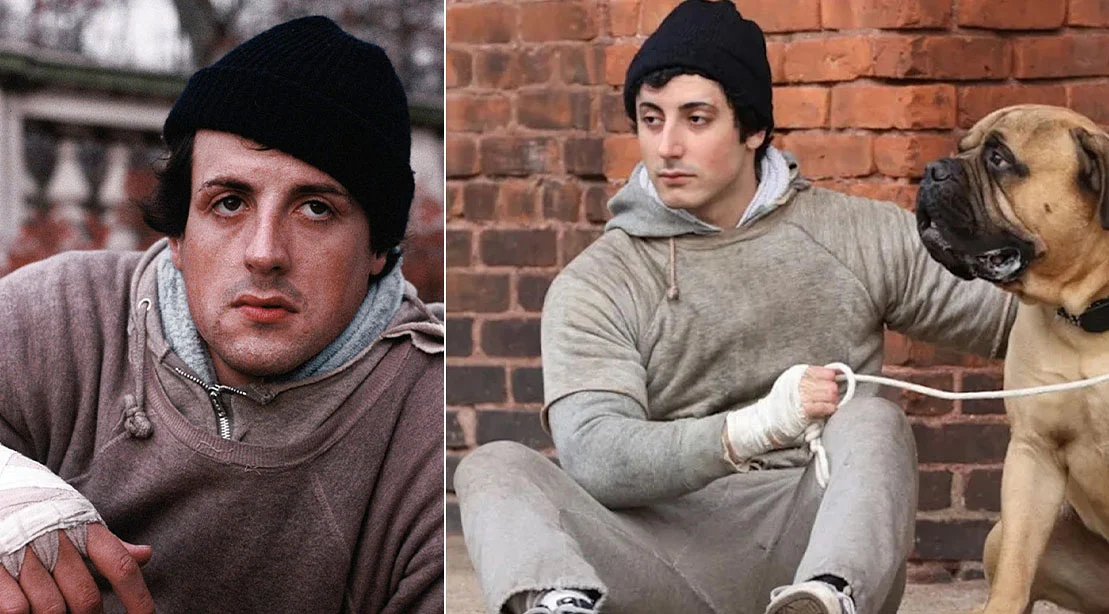
For nearly half a century, the Rocky franchise has stood as the quintessential American cinematic myth. It is a story of grit, poverty, and the pursuit of greatness that mirrors the very life of the man who created it. While audiences have spent decades following the fictional journey of the "Italian Stallion" through six Rocky films and three Creed spin-offs, the most compelling chapter of the saga has remained largely untold: the real-life struggle of a starving, unknown actor who refused to sell his soul—or his script—to reach the silver screen.
That is about to change with the highly anticipated biopic I Play Rocky. Directed by Peter Farrelly, the film promises to pull back the curtain on the chaotic, high-stakes environment of 1970s Hollywood, detailing how a desperate Sylvester Stallone defied the industry’s most powerful gatekeepers to cement his place in history.
The Genesis of an Icon: What is ‘I Play Rocky’ About?
To understand I Play Rocky, one must understand the stakes of 1975. Before he was an international superstar, Sylvester Stallone was a struggling actor living in a tiny apartment, often unable to afford heat or even food for his dog, Butkus. He was an outsider in an industry dominated by established stars and polished executives.
The film serves as a meta-narrative, functioning as both a period drama and a testament to artistic integrity. The plot centers on the grueling development process of the original Rocky. Producers were enamored with the script—a raw, emotional underdog story about a small-time Philadelphia club fighter—but they were adamant that the lead role should go to a bankable star. At various points, the studio dangled massive sums of money in front of Stallone, hoping he would walk away and let the likes of Burt Reynolds, James Caan, or Ryan O’Neal don the boxing gloves.
The tension in I Play Rocky stems from this singular, uncompromising demand: Stallone would not sell the screenplay unless he was cast as the lead. It was a million-to-one shot, a gamble that could have left him destitute, but it was a risk he was willing to take. The film explores the psychological toll of that defiance, depicting the pressure of being the "underdog" in a boardroom battle while writing the very script that would change the trajectory of his life forever.
A Legacy of Resilience: Chronology of the Struggle
The journey to the big screen for Rocky was not a linear path of success, but a series of near-misses and bold maneuvers.
1975: The Writing and the Rejection
Stallone, inspired by the heavyweight title fight between Muhammad Ali and Chuck Wepner, penned the Rocky screenplay in just three days. He began shopping it around, finding immediate interest from producers Irwin Winkler and Robert Chartoff. However, the initial euphoria was quickly dampened by the "star power" requirement of the studio system.
1976: The Ultimatum
The climax of the film’s narrative arc likely focuses on the pivotal moment where Stallone, faced with the offer of $300,000—a fortune for someone living in poverty at the time—refused to yield. He famously insisted that he was the only one who could authentically portray the character he had created. His persistence forced the producers to compromise on the budget, leading to the low-budget, high-grit aesthetic that would eventually define the film’s charm.
1977: The Oscar Validation
The culmination of this struggle was the 49th Academy Awards, where Rocky took home the Oscar for Best Picture, and Stallone received nominations for Best Actor and Best Original Screenplay. It was the ultimate vindication of his refusal to conform.
2024-2026: Bringing the Story to Life
The production of I Play Rocky began to gain serious momentum with the casting of Anthony Ippolito. Known for his transformative performance as a young Al Pacino in The Offer, Ippolito bears a striking, uncanny resemblance to the 1970s version of Stallone. Under the direction of Peter Farrelly, the project moved from a concept into a full-scale production, culminating in the recent trailer release that has ignited the internet.
The Casting Choice: Anthony Ippolito as the Stallion
The casting of Anthony Ippolito has been met with near-universal acclaim. Portraying a cultural icon is a daunting task, especially when that icon is as distinct and recognizable as Sylvester Stallone. However, Ippolito’s work in The Offer proved he has the nuance required to capture the internal restlessness of a young, ambitious artist.
Publicity shots released by the production team show Ippolito donning the iconic grey sweats and the fedora synonymous with the original character. More importantly, the footage in the newly released trailer highlights his mastery of Stallone’s distinct cadence and physical presence. Fans have taken to social media in droves, with many noting that the resemblance goes beyond mere physical appearance; Ippolito seems to have captured the "hunger" that defined Stallone during that volatile era.
Official Responses and Industry Support
Perhaps the most significant "stamp of approval" for the project came from the man himself. There was initial speculation regarding how Stallone would react to a biopic about his most formative years, particularly given his protective nature over the Rocky franchise.
Stallone’s response, however, has been one of gracious support. In an Instagram post that garnered thousands of interactions, the legend wrote: "Every story has a beginning, and I’m excited to see this one brought to life. Congratulations to the cast and crew of ‘I Play Rocky.’ Keep punching."
This endorsement is critical for the film’s marketing. It bridges the gap between the original fans of the 1976 classic and a new generation of viewers who may be familiar with the Creed films but are less acquainted with the origins of the series. By blessing the project, Stallone has effectively invited his fanbase to witness the "behind-the-scenes" truth of his career, lending the film an aura of authenticity that is rare in the crowded landscape of celebrity biopics.
Implications: Why This Story Matters Now
The success of the trailer—which has already amassed over 20 million views on YouTube—speaks to a broader trend in modern cinema: the appetite for "origin stories" that prioritize human struggle over spectacle. In an era dominated by CGI and franchise exhaustion, I Play Rocky offers something grounded.
The "Underdog" Archetype
The film is an "underdog story about an underdog story." This meta-layer adds a complexity that elevates it above a standard biography. It highlights the inherent irony of the Hollywood system: the very institutions that claim to look for "the next big thing" are often the ones most afraid of original, unproven talent. By documenting the barriers Stallone faced, the film serves as a critique of creative gatekeeping, a topic that remains as relevant today as it was in the mid-70s.
The Power of Persistence
Furthermore, the film reinforces the mythos of the "self-made" star. In a digital age where fame is often perceived as instantaneous, I Play Rocky serves as a stark reminder of the long, often grueling road to recognition. It frames failure not as an end, but as a prerequisite for success.
The Road Ahead: Release and Expectations
Directed by Peter Farrelly, who successfully navigated the transition from broad comedy to prestige drama with Green Book, the film is positioned as a major awards-season contender. The screenplay, penned by Peter Gamble, is reported to focus heavily on the script-writing process and the intense negotiations that took place between Stallone and the studio heads.
The current schedule for the film is as follows:
- September 2025: World premiere anticipated at the Toronto International Film Festival (TIFF), a traditional launching pad for prestige dramas.
- November 6, 2026: Wide theatrical release.
The release date, set for late 2026, suggests the studio is aiming for a strong box-office performance during the holiday season, capitalizing on the nostalgia and the enduring popularity of the Rocky brand.
As the production team moves into the final stages of post-production, the industry will be watching closely. I Play Rocky is not just another movie about a boxer; it is a cinematic portrait of the moment a legend was born. For those who have followed the journey from the steps of the Philadelphia Museum of Art to the heights of global fame, this film promises to be the final, essential piece of the puzzle. It reminds us that behind every champion, there is a person who had to fight, against all odds, just for the chance to show the world what they could do.