While Crete is globally renowned for its sun-drenched Mediterranean beaches and the labyrinthine ruins of Minoan palaces, the island’s interior hides a secret of geological majesty. Towering above the Aegean Sea, the White Mountains—or Lefka Ori in the local vernacular—form a formidable spine across western Crete. Within this rugged range lies the Samaria Gorge, a 16-kilometer (9.9-mile) chasm that represents not only one of Europe’s premier hiking experiences but also a enduring symbol of Cretan resilience.

Main Facts: The Anatomy of a Natural Wonder
The Samaria Gorge is a masterpiece of geological erosion. Stretching 16 kilometers from the Omalos Plateau down to the coastal village of Agia Roumeli, the gorge offers an ecosystem-spanning journey that transitions from high-altitude pine forests to the crystalline waters of the Libyan Sea.

- Distance: 14.5 km (8.9 miles) one way.
- Elevation Profile: The trail descends approximately 2,327 meters (7,635 ft) from the Xyloskalo trailhead, with a total elevation gain of 1,099 meters (4,285 ft).
- Difficulty: While technically categorized as an "easy" to "moderate" hike due to the well-maintained path, the sheer volume of descent requires significant knee stamina.
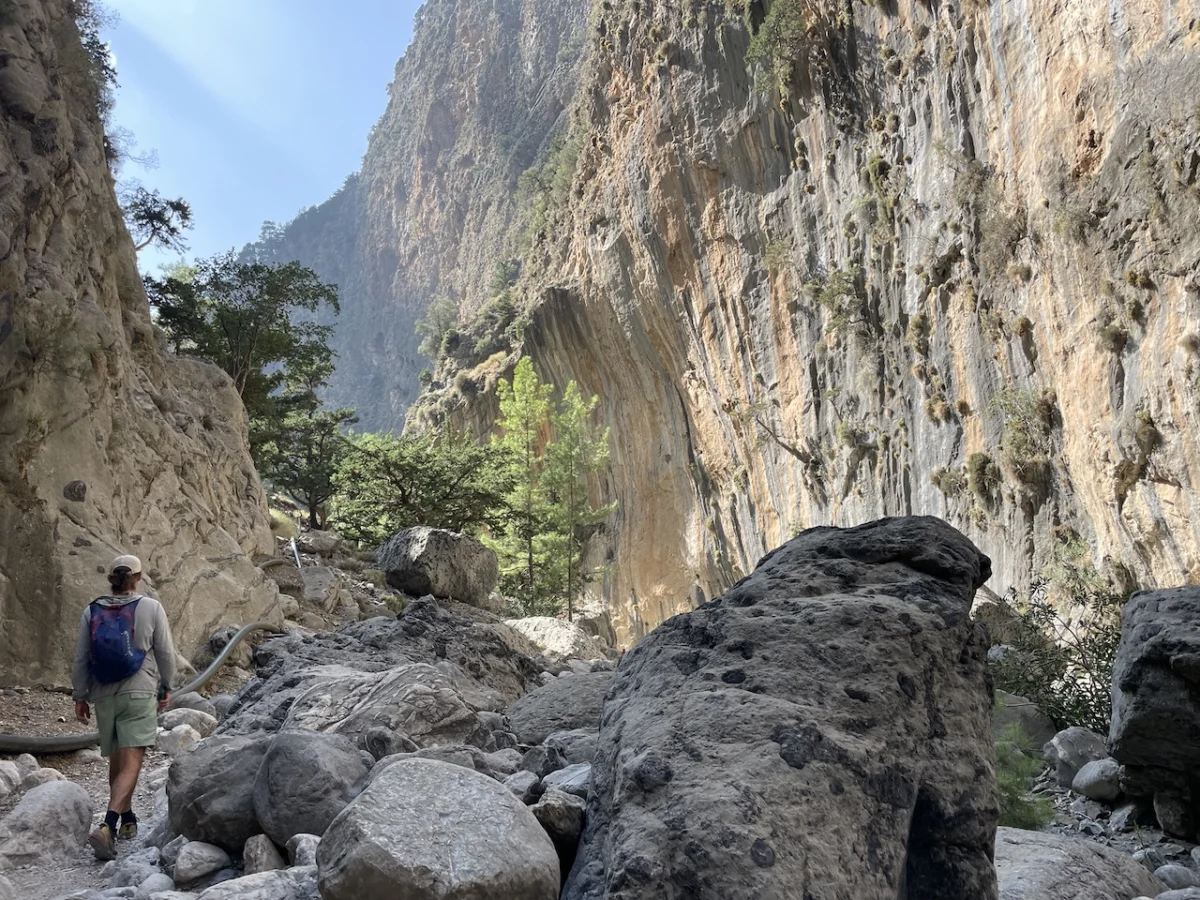
- Geological Significance: Known as the "Iron Gates," the narrowest section of the gorge is less than three meters wide, with limestone walls soaring 300 meters (984 ft) toward the sky.
The gorge is not merely a topographical feature; it is a protected National Park, established in 1962. This designation was crucial, as it halted the steady degradation of the area and provided a sanctuary for the Kri-kri, the iconic wild goat of Crete, which was once on the brink of extinction.

A Chronology of the Descent
A typical traverse of the Samaria Gorge begins at the Xyloskalo ticket office, situated at an elevation of roughly 1,200 meters.

The Dawn Descent (0–4 km):
As the sun crests the White Mountains, the path begins its steep, switchbacked descent. The limestone, which gives the mountains their name, glows with an ethereal, chalky light in the early morning. Within the first hour, hikers pass the rest area of Ayios Nikolaos, a site steeped in history. Here, a centuries-old chapel stands in the shade of colossal cypress trees, marking the location of an ancient temple dedicated to the god Apollo, dating back to the 1st Century B.C.

The Halfway Point: The Village of Samaria (7 km):
After two hours of trekking through alternating forest corridors and rocky clearings, one reaches the abandoned village of Samaria. Once a thriving settlement, the village was vacated in 1962 to clear the way for the National Park. Today, the stone structures—which once served as a refuge for freedom fighters during the Ottoman occupation—are repurposed as a medical station and base for environmental researchers. It remains the quintessential spot for a mid-hike respite.

The Iron Gates and the Final Push (10–14.5 km):
The final leg is the most dramatic. The trail dips into the riverbed, forcing hikers to cross the watercourse via stepping stones and wooden bridges. As the canyon walls close in, the "Iron Gates" emerge. This narrow corridor is the site of legendary military defenses, where, in 1770, a small force of 200 local fighters reportedly held off thousands of invaders. Emerging from the gates, the landscape opens up, leading toward the final two-kilometer trek to Agia Roumeli, where the reward is a dip in the Libyan Sea and a well-earned meal.

Supporting Data: The Kri-kri and Biodiversity
The Samaria Gorge is a biological success story. The Kri-kri (Capra aegagrus cretica), a subspecies of wild goat, has become the unofficial mascot of the gorge. These animals are famous for their remarkable agility, capable of navigating vertical cliff faces with ease.

Data provided by conservationists indicates that in the early 1960s, the population of Kri-kri had dwindled to roughly 200 individuals. Following the declaration of the Samaria Gorge as a protected National Park, strict anti-poaching measures and habitat preservation have allowed the population to rebound to over 2,500. While long considered "native," modern research suggests they may have been introduced to the island during the Minoan civilization, as evidenced by their recurring depictions on ancient coins and pottery.

Official Responses and Administrative Skepticism
Hiking the gorge as an out-and-back journey—covering roughly 30 kilometers in a single day—is an endeavor that often tests the patience of park officials. In a recent expedition, hikers opting for the return trip were met with varying levels of administrative caution.

Park rangers stationed at the southern exit often express skepticism regarding the feasibility of a return trip, citing the 6:00 PM closure time of the park gates. Officials are quick to advise against the return, often directing visitors toward the standard one-way ferry exit at Agia Roumeli.

Interviews with park staff suggest that these warnings are born of safety concerns rather than administrative gatekeeping. The descent is taxing, and the risk of injury increases as fatigue sets in during the late afternoon. However, for those with high physical fitness, the return journey offers a unique opportunity to experience the gorge in relative solitude as the afternoon shadows lengthen, turning the canyon into a theatre of shifting light and silence.

Implications for Future Tourism
The Samaria Gorge remains a vital component of Cretan tourism, yet it faces the dual challenge of environmental preservation and visitor management. As global interest in "slow travel" and rugged hiking increases, the gorge serves as a model for how a protected area can host thousands of visitors annually without compromising its ecological integrity.

Planning Recommendations:

- Timing: Start as early as possible to beat the heat and the peak crowds.
- Preparation: While the path is well-marked, sturdy footwear is mandatory due to the loose, rocky terrain.
- Water: The gorge is well-supplied with natural springs, making it unnecessary to carry excessive amounts of water, though hydration remains paramount.
- Logistics: For those wishing to stay in the region, the village of Omalos offers historic and hospitable accommodation, such as the Hotel Neos Omalos, which has served hikers for over seven decades.
The legacy of the Samaria Gorge is one of endurance—from the freedom fighters who used its narrow walls to defy empires, to the Kri-kri that have reclaimed these heights, and the modern hikers who traverse its length in search of a deeper connection to the Mediterranean landscape. It is a testament to the fact that, in a world of increasingly curated experiences, the wild, rugged heart of Crete remains beautifully, and stubbornly, untamed.

Note: The details provided here are adapted from "Wanderlust Mediterranean," published by Gestalten. For travelers planning their own trek through the White Mountains, ensure you check local park conditions and weather forecasts, as the gorge can be subject to seasonal closures due to rockfall or heavy rainfall.