While Crete is globally renowned for its cerulean coastlines and the remnants of the ancient Minoan civilization, the island’s interior hides a secret of tectonic proportions. Carved by the relentless passage of water through the heart of the White Mountains (Lefka Ori), the Samaria Gorge stands as one of the most significant natural wonders in the Mediterranean. Stretching 16 kilometers (9.9 miles) from the high-altitude plateaus of the north to the sun-drenched shores of the Libyan Sea, this geological masterpiece is more than a trail; it is a pilgrimage through time, nature, and the spirit of Cretan resistance.

Main Facts: A Geological and Historical Titan
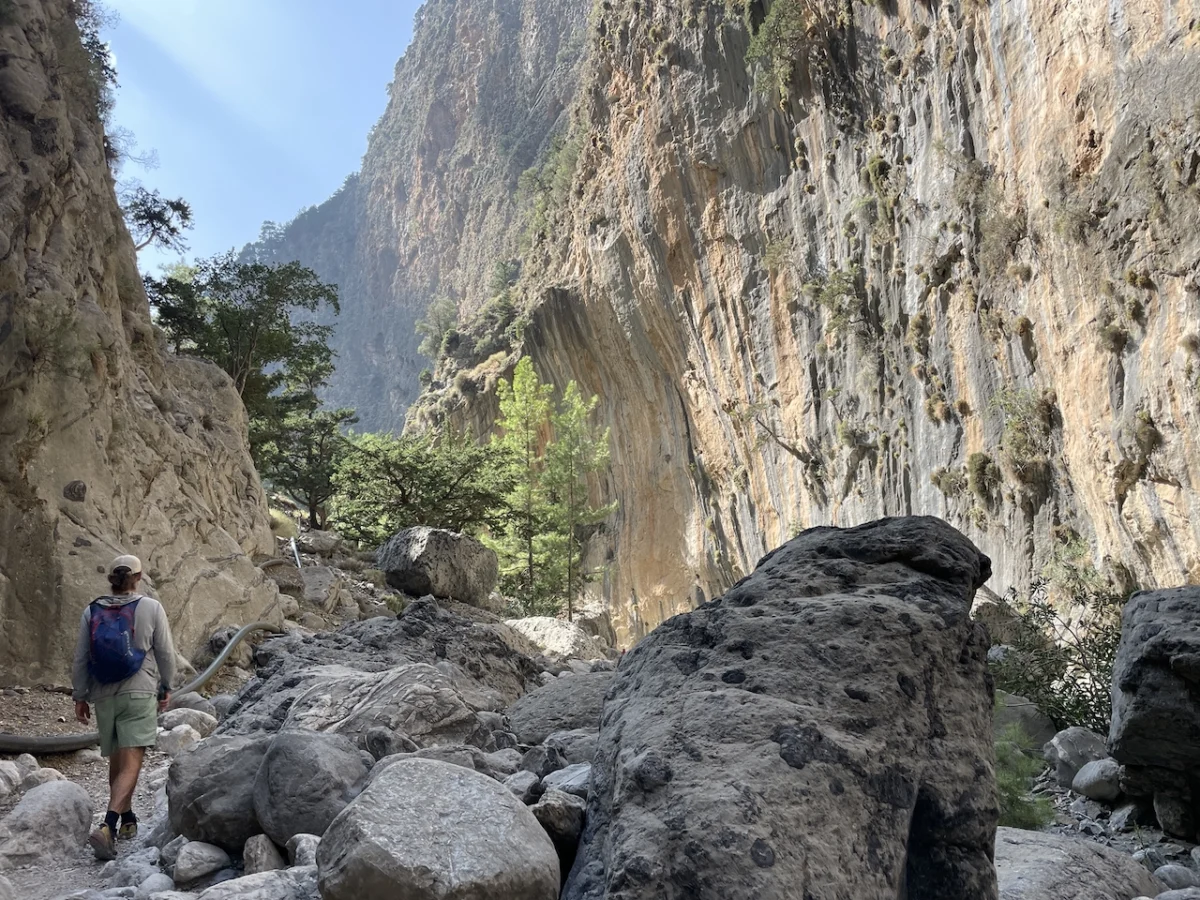
The Samaria Gorge is a testament to the power of erosion. With walls soaring up to 300 meters (984 feet) in height and narrowing to less than three meters at its most famous point—the "Iron Gates"—the canyon offers a visual experience that is both claustrophobic and awe-inspiring.

Geologically, the White Mountains are composed primarily of limestone, which takes on a ghostly, off-white hue under the Mediterranean sun, earning the range its name. The gorge itself is a designated National Park, acting as a crucial sanctuary for a diverse range of flora and fauna, most notably the Kri-kri (Cretan goat).

Beyond its biology, the gorge is steeped in human history. For centuries, its inaccessible topography provided a natural fortress for Cretan freedom fighters. During the Ottoman occupation, the canyon served as a refuge for thousands of civilians. In 1770, a pivotal moment in local lore occurred when 4,000 women and children sought safety within the gorge, successfully protected by a small band of 200 fighters who held the Iron Gates against invading forces. Today, the village of Samaria—once a thriving community—stands as a silent, stone-walled monument to this history, repurposed after the 1962 establishment of the National Park to house environmental researchers and park staff.

Chronology: Navigating the Descent
The hike typically begins at Xyloskalo, a trailhead perched high above the gorge floor. The descent is a study in transition; hikers start in cool, pine-scented mountain air and, over the course of five to six hours, descend over 1,000 meters into a landscape that shifts from lush, forested corridors to sun-baked riverbeds.

- The Descent (0–4 km): The trail begins with steep, well-maintained switchbacks. Hikers are treated to panoramic views of the White Mountains, which are often snow-capped until late spring.
- Ayios Nikolaos (4 km mark): A crucial waypoint, this area hosts a 1st-century B.C. temple site dedicated to Apollo, a historic chapel, and some of the tallest cypress trees in Crete. It is the primary spot for hydration, with reliable potable water available.
- The Halfway Point (7 km mark): Hikers reach the abandoned village of Samaria. This is the heart of the canyon, offering a reprieve to rest among the Byzantine-era stone structures.
- The Iron Gates (13 km mark): The most dramatic portion of the trek. Here, the gorge reaches its narrowest point. The sheer scale of the vertical rock faces creates a profound sense of isolation and geological wonder.
- The Final Stretch (14–16 km): After exiting the narrowest section, the landscape opens up. The final two kilometers involve a walk toward the coastal village of Agia Roumeli, where the reward is a swim in the Libyan Sea and a well-earned meal.
Supporting Data: The Logistics of the Trail
For those planning to traverse this natural wonder, understanding the technical specifications is essential for a safe and enjoyable experience:

- Distance: 14.5 km (approx. 8.9 miles) one way.
- Total Elevation Gain: 1,099 m (3,605 ft).
- Total Elevation Loss: 2,327 m (7,635 ft).
- Difficulty: Rated as "Easy" to "Moderate" due to the constant descent, which can be taxing on the knees.
- Wildlife Presence: The Kri-kri, a species of goat introduced during the Minoan era (3100 B.C.–1100 B.C.), has seen its population rebound from roughly 200 in the 1960s to over 2,500 today, thanks to the protection afforded by the National Park status.
Official Responses and Park Management
Managing a high-traffic natural corridor requires stringent oversight. Park officials are highly vigilant, particularly regarding the timing of hikers. Because the gorge is a dangerous environment—prone to rockfalls and rapid changes in weather—the park operates on a strict schedule.

During a recent out-and-back expedition, the interaction between hikers and park rangers highlighted the cautious approach taken by authorities. Officials at the southern entrance, aware of the punishing 1,000-meter climb required for a return journey, were initially skeptical of the feasibility of completing the trip before the 6:00 p.m. cutoff. The presence of multiple checkpoints throughout the day ensures that hikers are not left stranded as the sun drops behind the canyon walls, effectively managing risk in one of Greece’s most challenging environments.

Implications: A Balancing Act of Tourism and Conservation
The Samaria Gorge serves as a prime example of the modern struggle between mass tourism and ecological conservation. As one of Greece’s most popular hikes, it attracts thousands of visitors annually. The success of the park—measured by the recovery of the Kri-kri population and the preservation of its Byzantine architecture—hinges on the cooperation of the public.

The transition from a lived-in village to a protected area in 1962 was a pivotal moment. By relocating residents and limiting permanent structures to administrative and medical uses, the state ensured that the gorge would remain a sanctuary for nature rather than a site of over-development.

For the modern traveler, the implication is clear: this is a privilege, not a right. The trail requires a respectful approach, adequate physical preparation, and an adherence to the rules set forth by the park staff. Whether one is hiking for the physical challenge, the historical connection, or simply to witness the sheer scale of the White Mountains, the Samaria Gorge demands a high level of environmental stewardship.

A Note for the Aspiring Hiker
For those seeking deeper insights into the trails of the Mediterranean, the Samaria Gorge is featured as one of 25 premier hikes in the book Wanderlust Mediterranean (Gestalten Publications). The text serves as a guide for those looking to replicate the experience, providing detailed context on how to navigate the terrain safely and effectively.

Ultimately, the allure of the Samaria Gorge lies in its duality. It is a place of profound silence and historical tragedy, yet it is teeming with life and natural beauty. Whether you are navigating the steep switchbacks at sunrise or emerging into the heat of the afternoon at Agia Roumeli, the journey through the White Mountains is an indelible reminder of the raw, untamed beauty that remains within the European continent. For the prepared, it offers a rare opportunity to step out of the modern world and into a landscape that has been defined by its resistance, its resilience, and its sheer, vertical magnificence.