Introduction: The Challenge of the Current
In the high-stakes world of inland oil spill response, time is the single most critical factor. For professionals at Whitewater Rescue Institute (WRI), the objective is clear: contain the hazard, minimize environmental impact, and execute every maneuver with absolute safety. However, the geography of inland spills—often characterized by rugged riverbanks, uneven terrain, and volatile fastwater currents—presents a logistical nightmare.
Traditionally, the industry has relied on heavy, cumbersome containment booms that require significant manpower and strenuous physical labor to deploy. Recent field trials conducted by WRI on Montana’s Clark Fork River, however, suggest that a paradigm shift may be underway. By integrating emerging technologies like the HARBO boom system, responders are discovering that lightweight, rapid-deployment solutions can match, or even exceed, the performance of traditional heavy-duty equipment.
The Logistical Burden: Why Traditional Methods Fall Short
To understand the significance of this technological leap, one must first appreciate the physical demands of standard inland spill response. Deployment of traditional containment booms—often involving 50 to 100-foot lengths—is a labor-intensive operation.
The Physical Toll
Responders are frequently tasked with hauling heavy, unwieldy equipment over miles of uneven, debris-strewn riverbanks. Loading and unloading these booms from response trailers is not merely a logistical task; it is a high-exertion physical challenge that consumes valuable energy and time. In an emergency, every minute spent lugging equipment is a minute where a spill is actively migrating downstream.
The Complexity of Fastwater
Deploying boom in moving water introduces the "entrainment" risk—where the force of the current pulls oil beneath the curtain of the boom. Mastering the fluid dynamics of rivers requires constant, iterative training. Each deployment is, in essence, a high-stakes experiment in risk management. WRI has spent years refining these techniques, but the limitations of heavy, rigid equipment have long served as a ceiling for efficiency.
Chronology of the Clark Fork Field Trials
Last week, WRI conducted a series of drills on the Clark Fork River, designed to push the boundaries of current response strategies. The goal was twofold: to test advanced collection techniques in high-velocity currents and to evaluate the viability of next-generation, lightweight boom technology.
Phase I: High-Velocity Collection
The first drill focused on "boom vane" collection in the upper Clark Fork. This maneuver utilizes specialized equipment to angle the boom in relation to the current, funneling spilled contaminants toward a collection point. The trial demonstrated that even in extreme flow rates, proper geometry and tactical positioning are the bedrock of successful containment.
Phase II: The HARBO Evaluation
The second phase introduced the HARBO boom system. The team approached the equipment with professional skepticism. Given the boom’s lightweight construction and compact packaging, many senior responders doubted its structural integrity against the sheer kinetic energy of a fast-moving river. However, the presence of HARBO technical representatives allowed for an immediate, transparent dialogue regarding the engineering behind the product.
Technical Analysis: The Engineering Behind the Innovation
The HARBO system represents a departure from traditional, air-inflated or foam-filled booms. Its design relies on a unique, chemistry-based deployment mechanism.
Design and Portability
The HARBO system is housed in compact, dry-box containers (approximately 20” by 36”), each holding 80 feet of boom. This level of portability allows a single responder to easily transport and line out between 82 and 164 feet of boom along a shoreline, a task that would typically require a team of three to four people with traditional gear.
The Inflation Mechanism
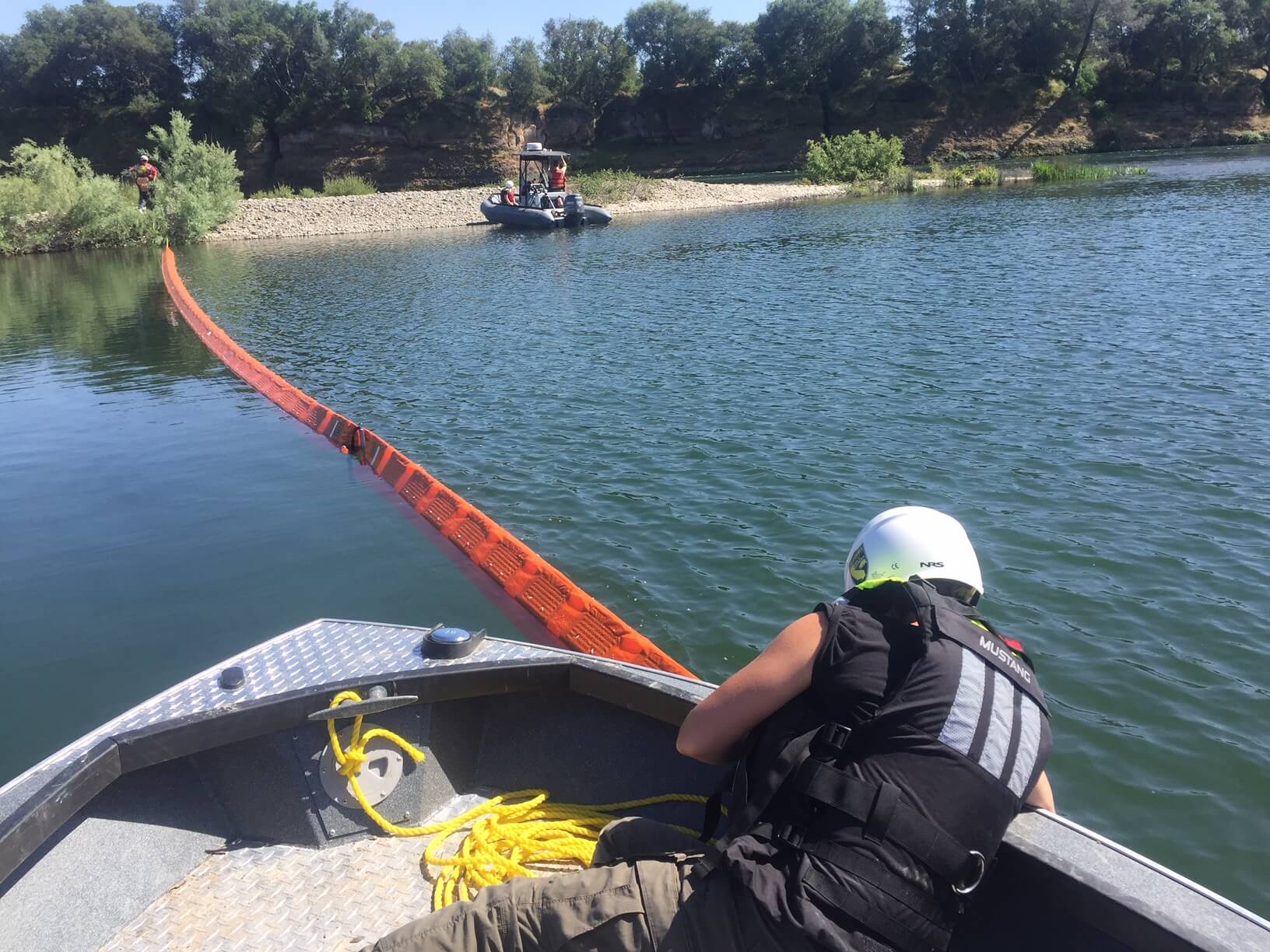
The innovation lies in its deployment state. The boom is stored flat and compact. Upon immersion, an array of interior sponges reacts with the water to inflate the structure into a rigid square configuration, featuring a dedicated float and a submerged curtain.
Performance in the Field
- Structural Integrity: Contrary to initial skepticism, the boom’s design utilizes water flow itself to stabilize the structure. As water passes through the hollow core, it increases the boom’s stability and maintains the vertical integrity of the curtain.
- Towing and Connectivity: The system features nylon webbing running the entire length, providing the necessary tensile strength for towing. Furthermore, the use of simple, universal single-pin connectors streamlines the assembly process, reducing the risk of mechanical failure in the field.
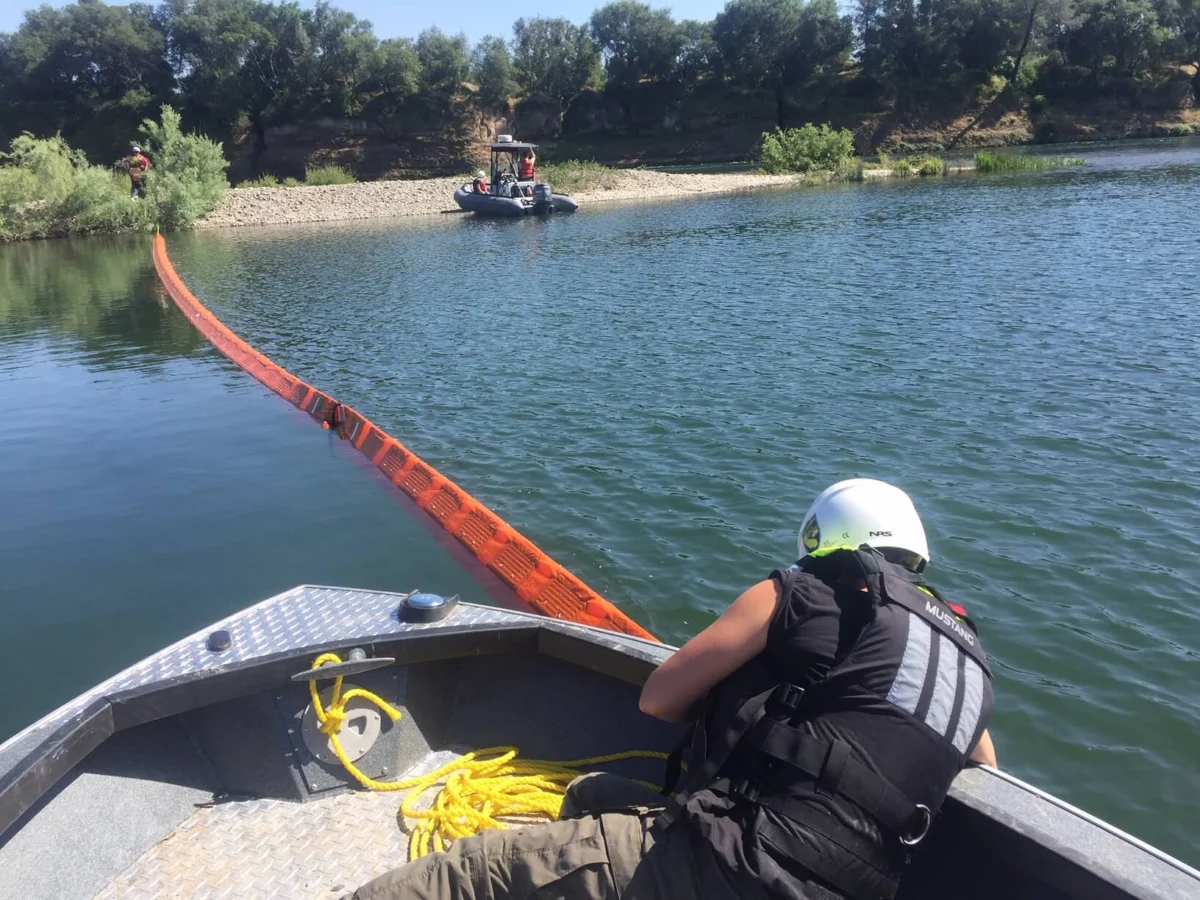
- Efficiency: During the Clark Fork trial, the team deployed the boom as shoreline protection and in conjunction with a Highline and a Boom Vane. The performance was, by all accounts, remarkable. There was zero evidence of entrainment, and the boom held its own against the river’s force with the same effectiveness as traditional 12-inch containment booms.
Official Perspectives and Implications
The WRI team’s assessment of the HARBO technology provides a glimpse into the future of emergency management.
The Response Community’s Take
"As responders, we really appreciated the lightweight nature and ease of deployment," noted the lead project coordinator. "We were surprised by both its strength and effectiveness." The consensus among the WRI staff is that this tool is not merely a replacement for old equipment, but a force multiplier. By reducing the number of personnel required for initial setup, facilities such as rail yards, refineries, and harbor authorities can drastically slash their response times.
Current Limitations and Future Development
Despite the successful trials, there are pragmatic considerations regarding the current iteration of the product:
- Single-Use Constraint: Currently, the HARBO boom is a single-use product. The internal sponges do not adequately support the structure once they have been used and allowed to dry, making it a cost-prohibitive option for routine training exercises.
- Shelf Life: The product currently carries a five-year shelf life, which requires strategic inventory management for emergency response agencies.
HARBO representatives have indicated that they are actively developing a "training version" of the boom that would be reusable, effectively solving the cost-barrier to widespread adoption.
Industry Implications: A New Standard?
The integration of this technology could fundamentally alter the "Initial Response" phase of the Incident Command System (ICS). If an agency can arrive at a site and deploy an effective containment perimeter in a fraction of the time, the total volume of oil recovered increases, and the ecological footprint of the spill is reduced.
The Shift Toward Modular Response
The success of these trials suggests that the future of spill response lies in modularity. By moving away from massive, trailer-dependent equipment caches and toward portable, high-tech solutions, the industry can improve its agility.
Final Assessment
The WRI drill on the Clark Fork River serves as a microcosm for the broader evolution of industrial safety. While the traditional 12-inch boom will likely remain a fixture of long-term cleanup operations, the introduction of lightweight, rapid-deployment technology provides an essential "first strike" capability.
As WRI continues to integrate the HARBO system into their standard operating procedures, the industry will be watching closely. If the promise of this technology holds, we may soon see a landscape where the logistical hurdles of inland spill response are significantly diminished, allowing for safer, faster, and more effective environmental protection.
For more information on fastwater spill response training and the latest in containment technologies, visit the Whitewater Rescue Institute’s official resources.