There is an old, time-honored adage that suggests, “Luck is when hard work meets opportunity.” For Dan Browne, a man whose life has been defined by the rhythmic cadence of a distance runner’s stride and the rigid discipline of a soldier, the formula is far more than a cliché. It is a blueprint. While Browne is quick to credit his faith and the grace of opportunity, his storied career—spanning from the tracks of Oregon to the hallowed halls of West Point and the global stage of the Olympic Games—serves as a testament to the power of deliberate, exhausting effort.
Browne’s trajectory was never accidental. It was a calculated, lifelong campaign to push past the boundaries of the "impossible." As he looks back on a career that saw him log over 100,000 miles of running, his perspective remains that of a man who understands that success is not a destination, but a state of mind. "I was always a driven person, even from a young age," Browne reflects. That drive, fueled by a curiosity to see how far he could push his biological limits, would eventually propel him to represent the United States on the world’s biggest stage.
The Formative Years: An Oregonian’s Foundation
Born and raised in Oregon, the cradle of American distance running, Browne’s introduction to the sport was humble and organic. It began with "fun-runs" alongside his father, outings that laid the bedrock for a lifelong love affair with endurance. While he dabbled in various athletic pursuits, the singular focus required by cross-country and track and field resonated with his internal drive.
"I always enjoyed the feeling I got from running," he says. That feeling was more than just the physiological "runner’s high"; it was a sense of agency. In running, the input—the hours of training, the discipline of diet, the mental fortitude—is directly proportional to the output. It was a fair game, and it was one that a young Browne was determined to win.
The Crucible: West Point and the Sub-4-Minute Milestone
As his talent matured, so did his ambition. Browne sought a path that would challenge him not just as an athlete, but as a man of character. He found his calling at the United States Military Academy at West Point.
"Because of my personality and desire to challenge myself to become a leader of character, West Point was going to be the natural fit for me," he explains. The Academy was a crucible, testing his limits across every facet of human performance: academic rigor, military leadership, and physical endurance.
It was at West Point that Browne etched his name into the history books. He shattered records in the 3,000, 5,000, and 10,000-meter events, but his crowning achievement remains his historic sub-4-minute mile. Clocking an official time of 3:59.37 during a rivalry clash against Navy, he became the first cadet in the Academy’s storied history to break the 4-minute barrier.
To put this in perspective, fewer than 2,500 individuals in recorded history have ever breached this elusive mark. As of 2026, his record stands as the fastest mile ever run by a cadet at West Point. "I believe God gives us certain gifts," Browne says, reflecting on that day, "and I believe that curiosity to explore my potential combined with a profound belief in myself spurred me on."
The Professional Ascent: From WCAP to the Olympics
By his junior year at West Point, Browne was competing at the U.S. Olympic trials. It was a watershed moment, the realization that the "North Star" of elite athletics was no longer a dream, but a tangible target. To get there, he joined the U.S. Army’s World Class Athlete Program (WCAP), a vital initiative that allows soldier-athletes to train for international competition while serving their country.
However, the final piece of the puzzle came when he was recruited by the legendary coach Alberto Salazar to join the Nike Oregon Project. For an athlete who grew up in the Beaver State, the opportunity to train with a world-class program backed by the athletic giant was the ultimate validation. "For me, it was definitely a full-circle moment for sure," Browne notes. "It was everything I could have dreamed it would be."
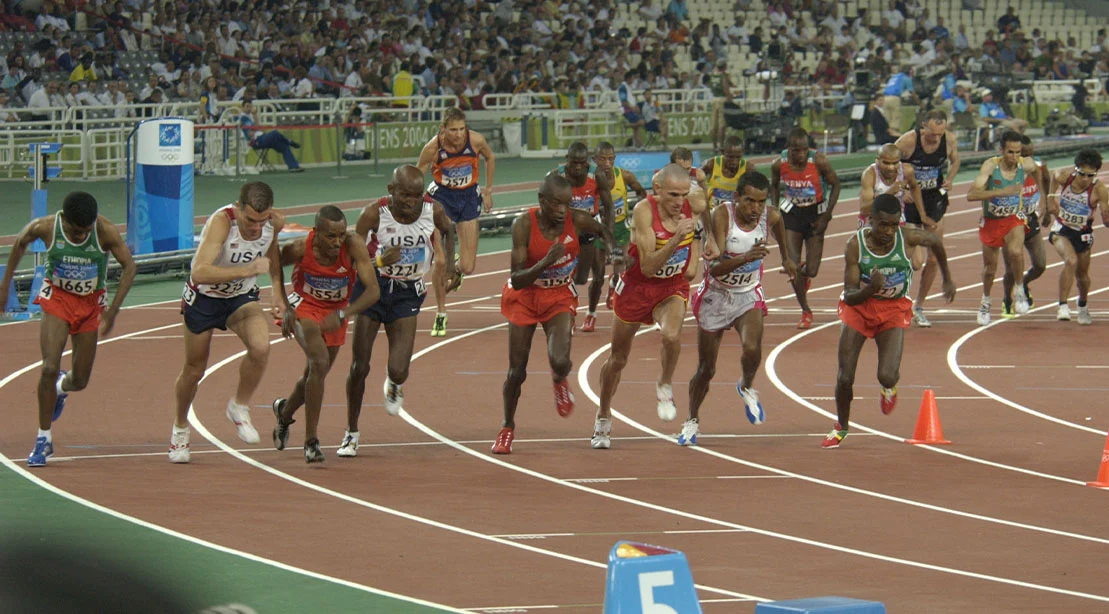
The hard work finally met the opportunity in 2004, when Browne qualified for the Olympic Games in Athens, Greece. Competing in the 10,000-meter run and the marathon, Browne wore the American flag with the weight of both his military duty and his personal legacy. Finishing 25th and 65th respectively, he realized that the Olympic experience was about more than the placement; it was about the journey of the "near-successes."
The Philosophy of "Near-Successes"
Perhaps the most compelling aspect of Browne’s narrative is his refusal to categorize setbacks as failures. Throughout his high school years, he often finished second to the same rival, a repeat occurrence that would have broken the spirit of a lesser athlete. Instead, Browne treated these as "near-successes."
"That constant learning process through the setbacks and striving for the next higher goal was what kept me going to all those achievements," he says. By reframing losses as data points rather than defeats, he maintained the psychological stamina necessary to compete at the elite level for two decades.
Paying It Forward: Coaching and Cultural Stewardship
Retirement from the professional circuit did not mean a departure from the track. Having logged over 100,000 miles, Browne pivoted his focus to coaching, specifically working with the WCAP to mentor the next generation of soldier-athletes. His success as a mentor was evident during the 2016 Rio de Janeiro Olympics, where he helped guide athletes to peak performances.
For Browne, coaching is not just about split times and recovery protocols; it is about "paying it forward." He believes that those who have reached the pinnacle of their craft have a moral obligation to cultivate the next generation. "I feel those who have achieved high levels in sports should give back. It’s very important," he insists.
The Broader Implications: Discipline as a National Virtue
Browne’s reflections extend beyond the track and into the heart of the American experience. He argues that the culture of excellence he experienced at West Point and within the Nike Oregon Project is exactly what the modern world lacks. He warns that as a society, if we shy away from the hard, uncomfortable paths that lead to growth, we risk significant decline.
"I believe my success was in part because of the culture that was instilled from my military experience and at Nike," he notes. He worries that by removing struggle from the lives of young Americans, we are failing to prepare them for the challenges of the 21st century.
His mantra remains rooted in the West Point creed: "Do the hard right over the easy wrong." Whether in athletics, military service, or civilian life, Browne believes that the choice to embrace difficulty is a patriotic act. "There are things you learn about yourself as you explore your potential, and if we as a country separate ourselves from that growth, there will be consequences."
A Legacy in Motion
Today, Dan Browne remains a man in motion, albeit at a different pace. He continues to pursue coaching opportunities, driven by the desire to instill that same "leader of character" mentality in young people. His journey from the Oregon tracks to the Olympic stadium serves as a reminder that the "luck" of success is rarely a matter of chance. It is the result of years of preparation, the ability to find meaning in failure, and an unwavering commitment to the "hard path."
For those seeking to follow in his footsteps—whether in the military or on the track—Browne’s advice is simple: be curious about your potential, be prepared to endure the struggle, and never fear the "near-success." In a world that often rewards the path of least resistance, Dan Browne stands as a reminder that true greatness is earned, one stride at a time.
For those interested in exploring the paths taken by athletes like Dan Browne, information regarding the U.S. Army’s World Class Athlete Program can be found at their official website. You can also follow Dan Browne’s ongoing professional journey via his LinkedIn profile.
M&F Senior Military Editor Rob Wilkins contributed to this report.