"A good lie can walk from Baghdad to Constantinople while the truth is still looking for its sandals."
~ Arab proverb
Myths in the great outdoors are like stubborn stains on a favorite white t-shirt; they are ingrained in our collective wilderness psyche, passed down from campfire to campfire, and perpetuated by outdated manuals and armchair adventurers. While some of these misconceptions are merely amusing, others are fundamentally dangerous.
In this investigation, we explore ten of the most pervasive myths that continue to circulate in the backpacking community. By separating folklore from hard-won experience and scientific reality, we can ensure that our time in the backcountry is defined by safety and informed decision-making rather than outdated urban legends.

The Anatomy of Wilderness Myths
Myths thrive in the backcountry because the environment is inherently unpredictable. When faced with the unknown, humans naturally gravitate toward "rules of thumb"—simplified heuristics that offer a sense of control. However, as the field of wilderness medicine and outdoor recreation science evolves, many of these "golden rules" have been revealed as either obsolete or flat-out wrong.
1. The "Naked Sleep" Fallacy
Perhaps the most common urban legend in backpacking is the claim that sleeping naked inside a sleeping bag keeps you warmer. The theory suggests that your body heat "transfers" more efficiently to the bag’s insulation if there is no layer of clothing in between.
The Reality: Physics dictates that insulation traps air, and dead air is what keeps you warm. Your clothing acts as an additional layer of insulation, creating a micro-climate of trapped heat between your skin and the ambient temperature of the bag. If you are shivering, the answer is to add layers—a beanie, thermal base layers, and perhaps an extra jacket. Sleeping naked is only advisable if your clothing is damp or if you are sharing a sleeping bag with another person to share body heat, but for the solo hiker, clothing is your best defense against the cold.

2. The Cult of the Heavy Boot
For decades, retailers and guidebooks have insisted that high-cut leather boots are essential to "protect your ankles."
The Evidence: There is little scientific data supporting the idea that heavy boots prevent ligament damage. In fact, many professional hikers have logged thousands of miles in low-cut trail runners, which offer superior agility, breathability, and reduced weight. Fatigue is a major contributor to tripping; by reducing the weight on your feet, you significantly lower the risk of the very stumbles that cause ankle injuries. While rigid, waterproof boots serve a purpose in deep snow or mountaineering, they are largely unnecessary for three-season trekking.
3. The Myth of "Waterproof" Gear
We often pay a premium for "waterproof and breathable" technology, under the impression that we will remain bone-dry during a torrential downpour.
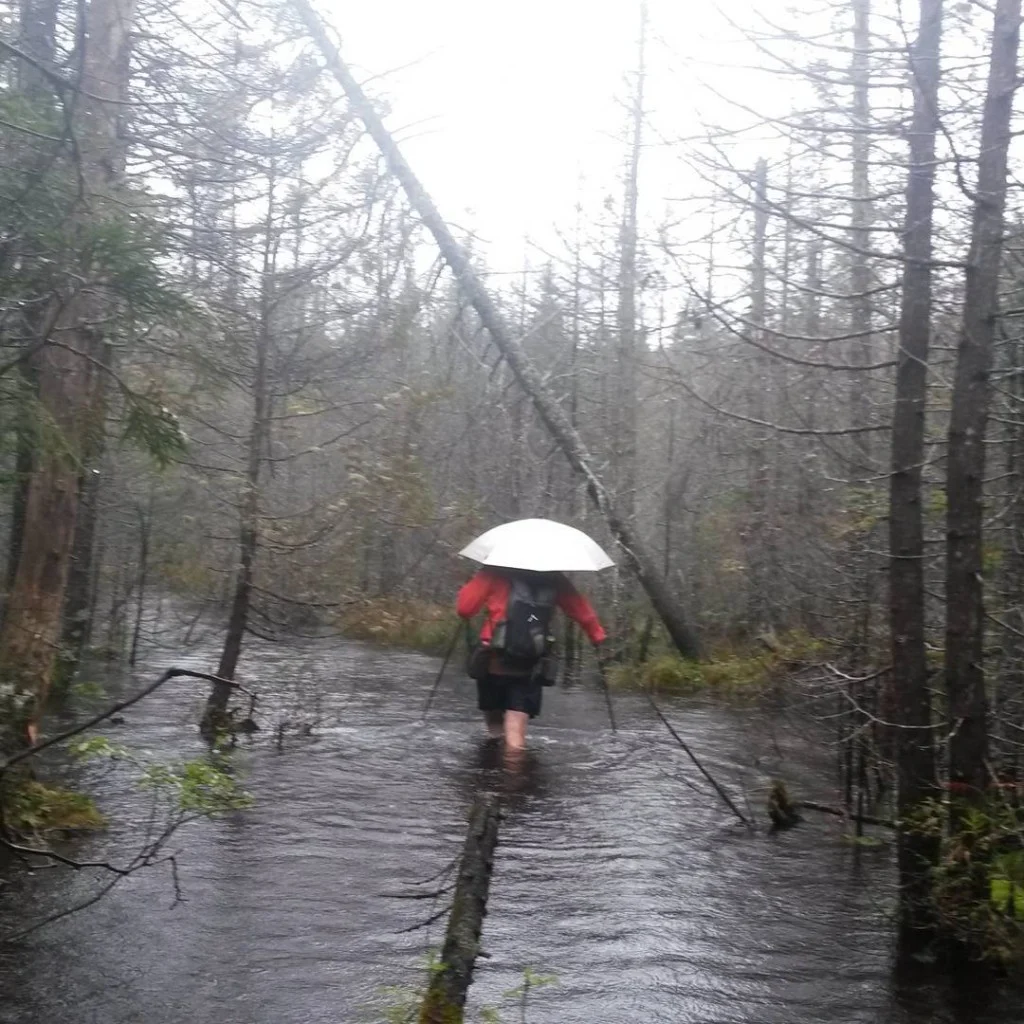
The Reality: No garment is truly impervious to nature. Given enough time, moisture will eventually penetrate the DWR (Durable Water Repellent) coating, or internal condensation will build up from sweat. The goal of high-end rain gear is not to keep you "dry"—it is to keep you warm. If you are out in a driving wind, prioritize heat retention. Accept that in the backcountry, you will eventually get wet; the key is managing your temperature so that moisture doesn’t become a safety hazard.
4. The "Biodegradable" Soap Misconception
Many hikers believe that if they use "biodegradable" soap, it is perfectly acceptable to wash dishes or bathe directly in a lake or stream.
The Implications: Biodegradable soap requires specific soil bacteria to break down effectively. When introduced directly into a water source, it can disrupt the nitrogen balance and harm aquatic life. Furthermore, you are potentially contaminating the drinking supply for those downstream. Always carry water at least 200 feet (61 meters) away from any source before using soap, and dispose of the greywater by scattering it over a wide area, allowing the earth to filter it naturally.

5. The "Never Hike Alone" Doctrine
Park rangers and concerned family members often preach against solo hiking. While beginners should certainly exercise caution, solo hiking is not inherently dangerous.
The Reality: The danger lies in being unprepared, not in being alone. A hiker who knows their limits, carries a satellite communication device, and understands the terrain is often safer than a group that overestimates its collective skill. If you choose to go solo, ensure your navigation skills are sharp and that someone reliable knows your itinerary.
6. The Illusion of Rapid Decomposition
There is a dangerous belief that toilet paper and fruit peels disappear almost instantly.

The Facts: Toilet paper can take one to three years to decompose, and in arid environments, this timeline stretches even further. Banana and orange peels, often discarded with a sense of "it’s organic" righteousness, can take up to two years to break down. Even worse, leaving food scraps habituates wildlife to human presence, turning once-wild animals into pests that lose their foraging skills. The mantra remains: Pack it in, pack it out.
7. The Lightning/Metal Magnet Theory
A common fear is that carrying trekking poles or wearing a backpack with a metal frame turns you into a lightning rod.
The Science: While metal is a conductor, lightning strikes are determined by the landscape’s topography, not the presence of a few ounces of aluminum. You aren’t being struck because you’re holding a pole; you’re being struck because you are the tallest object in a flat or exposed area. During a storm, avoid ridges and peaks, regardless of what gear you are carrying.

8. The Snakebite Suction Myth
Hollywood has done a disservice to wilderness first aid. The image of a hero sucking venom out of a wound or using a razor to slice it open is not only useless but actively harmful.
The Medical Reality: Venom moves through the lymphatic system almost instantly. By the time you attempt a "remedy," the toxin is already circulating. Furthermore, cutting the wound introduces bacteria and increases the risk of infection or tissue necrosis. The modern protocol is simple: stay calm, immobilize the limb, and get to a hospital.
9. The "Just One Person" Shortcut
Hikers often rationalize cutting a switchback or stepping off-trail to avoid a muddy patch by saying, "It’s just one person, it won’t matter."

The Impact: The problem is that every other hiker thinks the same thing. What starts as one footprint becomes a path, which then becomes a deep, eroded trench. This causes significant habitat destruction and alters drainage patterns. Even when the trail is muddy or unpleasant, stick to it. It is a small price to pay for the preservation of the environment.
10. The Bear-Tree Fallacy
If you encounter a bear, do not climb a tree.
The Reality: Black bears are exceptional climbers and will follow you up a tree with ease. Even grizzly bears, while heavier and less agile, are more than capable of scaling a tree if they feel threatened or possess a strong enough chase instinct. When you are up in a tree, you have effectively trapped yourself. Your best defense is to maintain distance, use bear spray, and understand the behavior of the specific bear species you are encountering.

Summary of Implications
The persistence of these myths points to a broader need for better outdoor education. As the popularity of hiking and backpacking continues to grow, the environmental and personal consequences of these misconceptions become more severe.
By debunking these myths, we move away from a "survivalist" mindset based on fear and towards a "stewardship" mindset based on ecological awareness and practical, evidence-based safety. The next time you head into the wilderness, remember: the best gear you can carry is an open, critical, and well-informed mind.
Note: This article is an excerpt from "Hiking & Backpacking For Dummies" by Cam Honan. Copyright © 2026 by John Wiley & Sons, Inc. For more in-depth guidance on wilderness safety and technique, consult your local outdoor retailer or professional training resources.