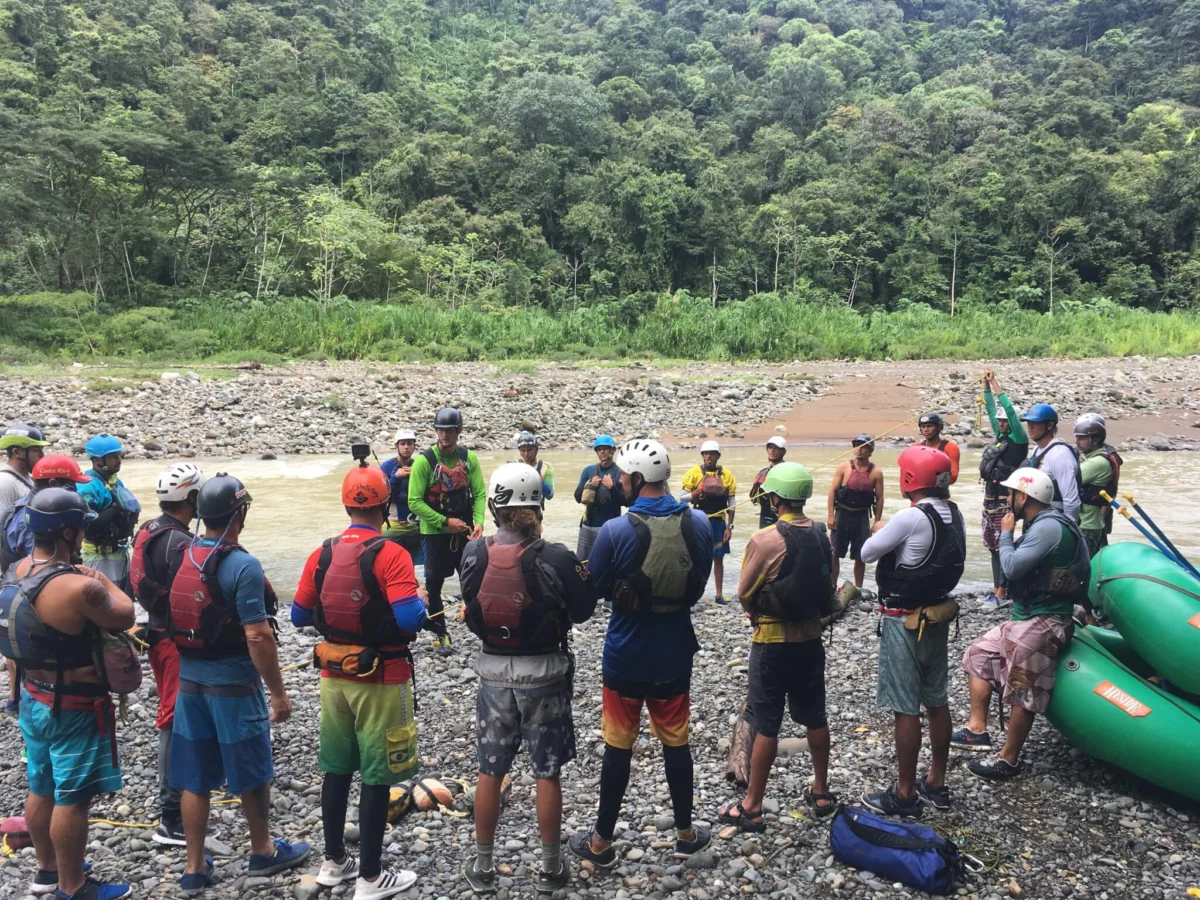
In the high-stakes environment of inland oil spill response, the difference between a contained incident and an environmental catastrophe often hinges on the meticulousness of operational protocols. While containment booms and skimmers capture the public’s attention, the internal mechanics of a spill site—specifically the decontamination (decon) process—is the unsung hero of safety and efficacy. Responders operating in fastwater environments, such as rivers and streams, face unique challenges. The kinetic energy of the water, the volatility of the contaminants, and the complexity of riverbank terrain demand a paradigm shift in how organizations approach personnel safety and site integrity.
Main Facts: The Criticality of Proactive Decontamination
Inland oil spill response teams must adopt a proactive and assertive posture regarding decontamination. Experience has shown that decon is frequently the most overlooked, delayed, or incomplete phase of a response effort. When a spill occurs, the pressure to "get boots on the ground" often results in a slipshod approach to setting up work zones.
The primary fact remains: decontamination is not merely a post-task formality; it is a vital operational control. Without a clearly defined and enforced decontamination strategy, the "Hot Zone" (or Exclusion Zone) effectively migrates with the responders, leading to cross-contamination of equipment, support vehicles, and the local community. Effective decon requires the establishment of rigorous work zones: the Exclusion Zone, the Contamination Reduction Zone (CRZ), and the Support Zone—commonly referred to as the Hot, Warm, and Cold zones. These zones must be mapped with site-specific details, identifying topography, water flow, and access points to ensure that no responder can bypass the decontamination checkpoint.
Chronology of a Spill Response Decontamination
The timeline of decontamination should mirror the advancement of the incident. In the initial "Golden Hour" of a spill, decon protocols are often sacrificed for speed. This is a strategic error.
Phase 1: Site Delineation and Zoning (0–4 Hours)
Upon arrival, the Incident Commander (IC) must immediately designate the Hot, Warm, and Cold zones. This involves physical marking using hazard tape, cones, and signage. A site map must be generated, documenting the flow of traffic to ensure that the entry point to the Hot Zone is geographically distinct from the exit point leading to the CRZ.
Phase 2: Implementation of Decon Stations (4–12 Hours)
Once the perimeter is set, the decontamination corridor must be constructed. This is not a static process; it must be scaled based on the volume of personnel entering the hot zone. If the incident is a major fastwater spill, the CRZ must be equipped with enough capacity to prevent a bottleneck, which would otherwise force responders to wait in contaminated gear.
Phase 3: Continuous Monitoring and "Dirty" Operations (Ongoing)
Throughout the operation, the Safety Officer must monitor the integrity of the decon stations. As gear becomes saturated or damaged, the decon process must evolve. Regular audits of the CRZ are required to ensure that rinsing agents are effective and that the runoff—the "rinsate"—is being captured and contained rather than returning to the water table.
Supporting Data: The Logistics of Safety
The effectiveness of decontamination is directly correlated to the level of Personal Protective Equipment (PPE) utilized. Responders utilizing Modified Level D or Level C protective equipment face distinct physiological and logistical hurdles.
Personnel Decontamination Standards
The decontamination corridor must, at a minimum, feature a three-station workflow for anyone exiting the Exclusion Zone:

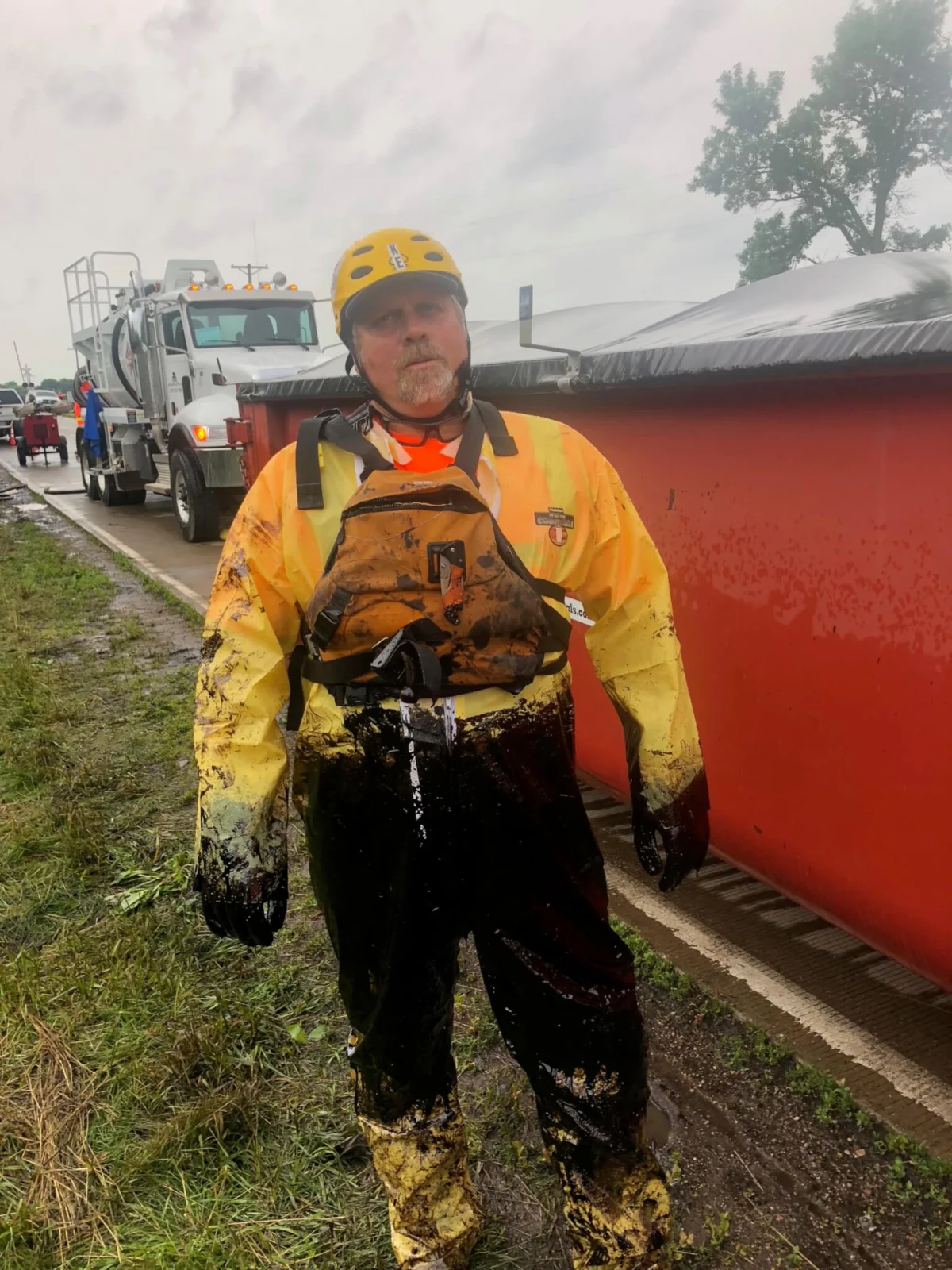
- Station 1 (Gross Decontamination): This is the first line of defense. Responders must remove the bulk of the oil from their outer garments and boots. In fastwater scenarios, this often requires the use of specialized absorbent pads and gentle, low-pressure water rinsing to avoid aerosolizing contaminants.
- Station 2 (Garment Removal): Outer layers and contaminated gloves are removed here. These must be treated as hazardous waste and placed in clearly labeled, leak-proof containers. Hard hats and boots are then sanitized with an aqueous detergent solution. These items are the only equipment permitted to travel from Station 2 to Station 3.
- Station 3 (Final Wash): Before moving into the Cold Zone, responders perform a thorough wash of the face and hands. Respirators, if used, are sanitized and stowed in clean, hermetically sealed plastic bags to prevent off-gassing or residual contact.
Equipment and Vehicle Decontamination
Vehicles are notorious carriers of secondary contamination. Any vehicle entering the Hot Zone must be decontaminated at a designated pad. For minor contamination, rinsing tires and wheel wells is sufficient. However, for significant exposure, high-pressure washing or steam cleaning is non-negotiable. This data-driven approach ensures that the vehicle fleet does not become a mobile vector for the contaminant.
Official Responses and Industry Standards
Regulatory bodies and industry leaders emphasize that decontamination is not a "one-size-fits-all" procedure. The Whitewater Rescue Institute (WRI) and other specialized training organizations highlight that decontamination in fastwater response is complicated by the environment itself. Unlike a spill on a level concrete floor, a riverbank is often unstable, muddy, and prone to rapid changes in water level.
Official response guidelines state that single-use external protective clothing is the gold standard for work within the Exclusion Zone. Where single-use gear is unavailable or impractical, reusable clothing must be rinsed on-site with high-efficiency surfactants. The official mandate is clear: the rinsate must be collected. Allowing detergent-mixed hydrocarbons to drain back into the river system effectively negates the environmental benefit of the cleanup.
Implications: The High Cost of Negligence
The implications of failing to implement a robust decontamination program are manifold, affecting legal, environmental, and human health outcomes.
Human Health Risks
The most immediate implication is the risk to the responder. Chronic exposure to crude oil or chemical dispersants can lead to severe dermatological issues, respiratory distress, and long-term toxicological damage. When decon is incomplete, responders carry these risks home, potentially exposing family members and support staff in the Cold Zone.
Environmental Re-contamination
In fastwater environments, the goal is to sequester the spill. If contaminated equipment or vehicles move from the Hot Zone into the Cold Zone, they can deposit contaminants in areas that were previously clean. This not only increases the scale of the cleanup but can also lead to regulatory fines and public relations crises.
Operational Efficiency
A spill site that is not well-decontaminated is a "dirty" site. A dirty site slows down every aspect of the response. Personnel become fatigued faster, equipment maintenance costs skyrocket, and the logistics of managing waste become chaotic. By contrast, a site that prioritizes decontamination establishes a rhythm of safety. It allows for the rotation of crews without the constant threat of cross-contamination, ensuring that the response effort can be sustained for the duration required to restore the environment.
The Economic Burden
Finally, the financial implications are significant. Improper decontamination often leads to the loss of expensive equipment that must be disposed of rather than cleaned. Furthermore, the legal costs associated with responders becoming ill, or the environmental damage caused by secondary spills, can dwarf the initial costs of setting up a comprehensive decontamination infrastructure.
In summary, Fastwater Spill Response is a complex, high-pressure operation. However, the rigor applied to the decontamination process serves as a benchmark for the entire response organization. By investing in clear zoning, well-staffed decon stations, and a culture of vigilance, responders can protect the most valuable asset on any site: the people working to protect our waters.