The River’s Long Shadow: A Deep Dive into a Grand Canyon Self-Support Expedition
Posted on by
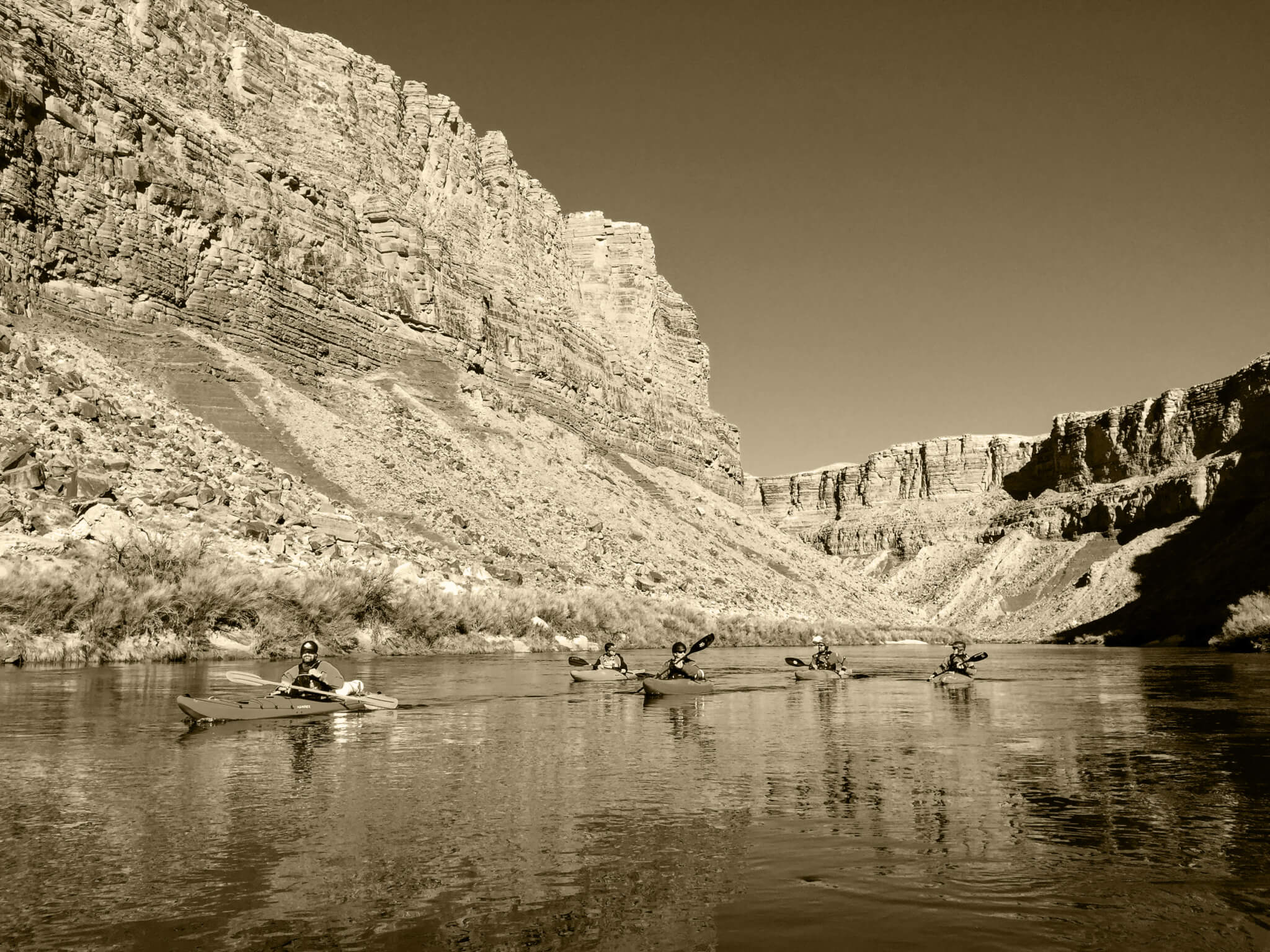
On January 26, a team of seasoned instructors from Whitewater Rescue Institute (WRI)—Paul Heffernan, Matt O’Reilly, Frank Preston, and Cody Harris—embarked on an ambitious 10-day self-supported kayak expedition through the Grand Canyon of the Colorado River. While the group successfully navigated the 280-mile stretch from Lees Ferry to Pearce Ferry, the most compelling documentation of the journey did not come from a formal logbook, but from a series of handwritten letters discovered inside a forgotten drybag at the end of the trip.
Authored by an anonymous member of the 10-person crew who signed off as "Little Spoon," these letters provide an intimate, raw, and highly technical look at the realities of modern self-supported paddling. They serve as a vital case study for the logistics, physical demands, and psychological fortitude required to navigate one of the world’s most iconic wilderness corridors.
The Logistical Anatomy of a Self-Support
The decision to run the Grand Canyon in a "self-support" format—where each paddler carries their own food, kitchen, and survival gear in their kayak—is a departure from the traditional commercial raft-supported trip. This method requires significant discipline, as boats must be packed to handle heavy, high-volume whitewater while remaining maneuverable.
The Gear Challenge
The expedition faced immediate hurdles during the launch at Lees Ferry. The group consisted of 10 paddlers, each utilizing different kayak models, leading to a complex "Tetris" puzzle of gear distribution. By the team’s own estimates, individual boats weighed between 175 and 200 pounds upon launch.
The strategy was one of total autonomy: each individual was responsible for their own nutrition and camp kit. The only shared group assets were a fire pan (notorious for its cumbersome, multi-piece design), a primary first-aid kit, and a technical repair kit. The anonymous author noted that the disparity in boat sizes led to a difficult learning curve, with the heavy, loaded kayaks initially feeling like "a hungry burro in sight of a barn."
Nutrition and Waste Management
One of the most valuable insights provided by the correspondence is the varying approach to expedition nutrition. The author, having opted for a strict freeze-dried diet, noted the benefits: weight reduction and, perhaps more importantly, a reduced impact on the mandatory human-waste management systems (the "groover"). Other members of the team experimented with vacuum-sealed pre-made meals and fresh vegetables, creating a diverse, if not occasionally contentious, camp kitchen culture.
Chronology: A River Journey
Days 1–3: The Roaring 20s and the Inner Gorge
The trip began with a "bluebird" 70-degree day, though the early start was delayed by the complexities of loading gear. The first leg covered 21 miles to North Canyon, testing the team’s ability to manage heavy boats through House Rock Rapid.
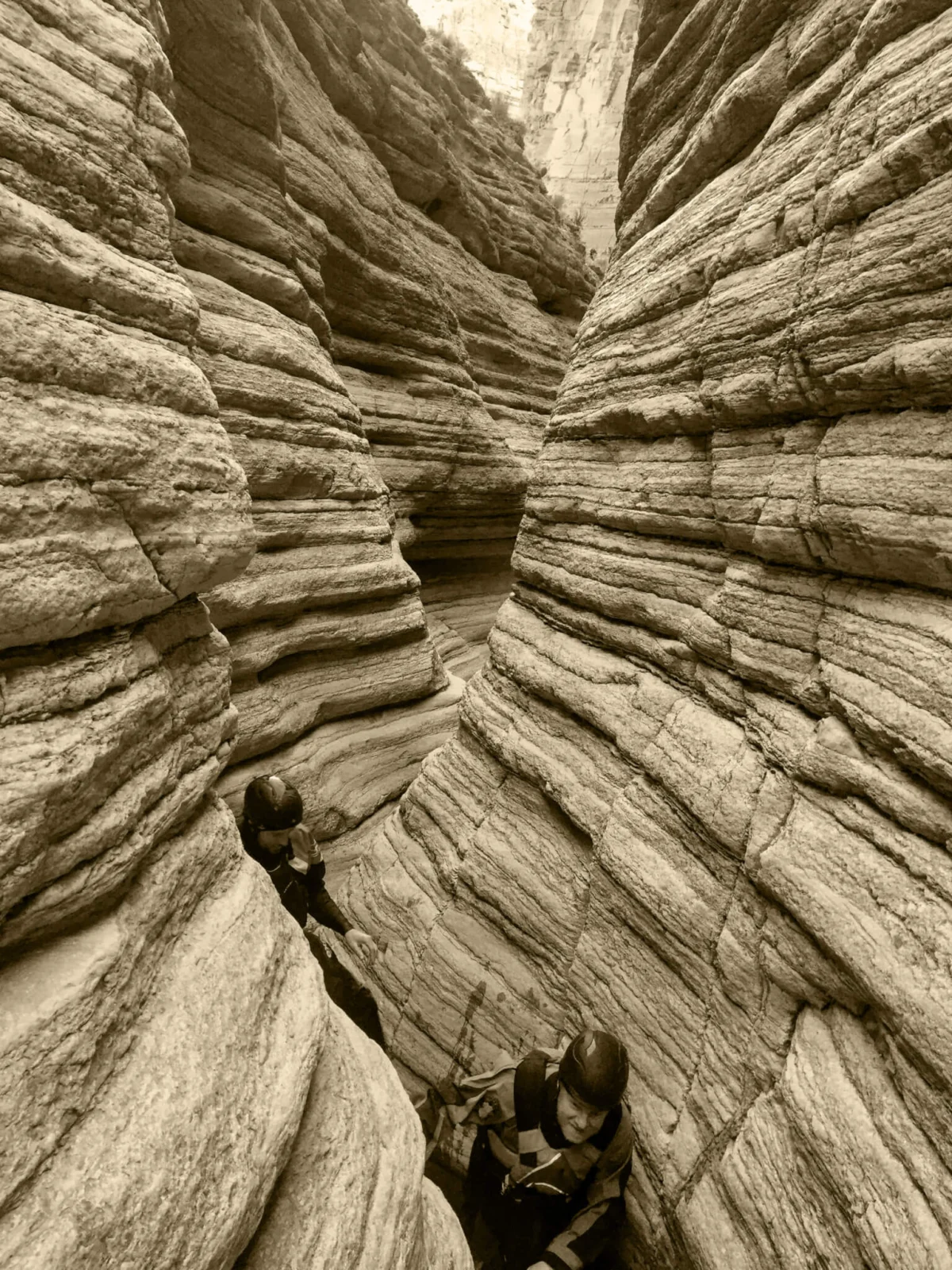
By Day 2, the team had settled into a rhythm, paddling 27 miles through the "Roaring 20s"—a stretch of whitewater followed by the serene, flat stretches of the Colorado. The team utilized this time for cultural and geological immersion, stopping at the Red Wall Cavern and the Silver Grotto at Shinumo Wash. The transition into the inner gorge on Day 3 marked a significant psychological shift, as the canyon walls grew taller, forcing a sense of humility upon the group.
Days 4–6: The Power of the Granite
Day 4 served as the trip’s crucible. As the river turned east, the team entered the narrow, ominous schist and granite layers. The author describes the experience of running legendary rapids—Hance, Sockdolager, Horn Creek, Granite, Hermit, and Crystal—as a "treat" that balanced fear with awe.
The letters highlight a recurring theme: the importance of leadership. The anonymous author frequently referenced the "dominance" and "fortitude" of their trip leader, who acted as a navigational and moral compass. During intense segments, such as the run through Horn Creek, the leader’s willingness to charge the "meat" of the rapids provided a benchmark for the rest of the group to follow, helping those who initially skirted the lines to find their confidence.
Days 7–10: The Legacy of Powell
The latter half of the journey moved from physical endurance to historical reflection. By Day 8, the team was averaging 34 miles a day, testing the physical limits of the paddlers. The author admitted to moments of doubt, struggling to keep pace with the more seasoned members of the team, a common experience for those pushing through the mid-trip fatigue wall.
The climax of the trip occurred at Separation Canyon on Day 9. This location holds historical gravity as the site where three members of John Wesley Powell’s 1869 expedition chose to abandon the river, fearing the rapids ahead more than the unknown desert wilderness. Reflecting on this, the author wrote: "Had it not been for the mentorship and daily coaching from our leader, I too would have climbed out of this canyon."
Implications for Modern Paddlers
The anonymous letters serve as more than just a diary; they are a manifesto for wilderness ethics and risk management.
The "Human" Factor: The correspondence underscores that equipment and physical training are secondary to team dynamics. The success of the WRI expedition was tied to the mentorship provided by the group’s leaders.
Environmental Stewardship: The discussion of the "groover" and the careful management of waste highlights the essential, yet rarely discussed, side of river conservation.
Climate and Geography: The team’s observations on the receding levels of Lake Mead and the "re-wilding" of the river as it cuts through former silt deposits suggest that the Colorado River remains a dynamic, living entity despite human engineering attempts at Hoover Dam.
Official Perspective and Reflection
While the Whitewater Rescue Institute instructors have not issued a formal report, the discovery of these letters provides a unique window into the pedagogy of the WRI approach: a focus on self-reliance, technical skill, and a deep, intellectual connection to the river environment.
The final entry, penned near Pearce Ferry, offers a profound conclusion:
"The river now cuts through the silt deposits, reclaiming its purpose and carries its load further south. It is still blocked by Hoover, but just for this moment, these 60 miles, it has been reborn and carries on, undaunted. It will always carry-on, we and our concrete dreams are merely a temporary distraction."
This sentiment encapsulates the broader lesson of the expedition. The Grand Canyon is not merely a place to be conquered; it is a landscape that demands a complete surrender of ego. By the time the crew reached the open plains at the end of their 280-mile journey, the distinction between the "leader" and the "anonymous paddler" had blurred into a shared experience of profound accomplishment.
The WRI expedition proves that when you strip away the support rafts and the creature comforts, you are left with the fundamental elements of adventure: a human being, a boat, a river, and the enduring, humbling presence of the canyon itself. For any paddler contemplating a similar endeavor, these letters stand as a testament to the fact that the greatest challenge of the Grand Canyon is not the whitewater, but the persistence of spirit required to navigate the miles in between.
In the high-stakes environment of whitewater rafting, the difference between a minor inconvenience and a life-threatening emergency often comes down to the contents of a […]
In the high-stakes world of inland spill response, time is the ultimate currency. When an oil or chemical spill breaches a fast-moving waterway, responders are […]
Introduction: A Journey into the Absolute For most professional river guides, the allure of the water is universal, but few waterways command the reverence—or the […]