There is a disturbance in the force, though for those watching the unfolding digital spectacle, it looks far more like a farce. Elon Musk, the billionaire polymath and CEO of Tesla, SpaceX, and X (formerly Twitter), recently provided a masterclass in the perils of "agentic commerce"—the burgeoning field of AI-driven consumerism—by inadvertently exposing his own sensitive financial data to his 240 million followers.
The incident, which began as a boast about the capabilities of his proprietary Grok AI agent, quickly spiraled into a chaotic, crowdsourced exercise in identity manipulation. It serves as a stark, cautionary tale for an industry currently racing to hand over the keys of our digital wallets to autonomous software.
The Chronology of a Digital Oversight
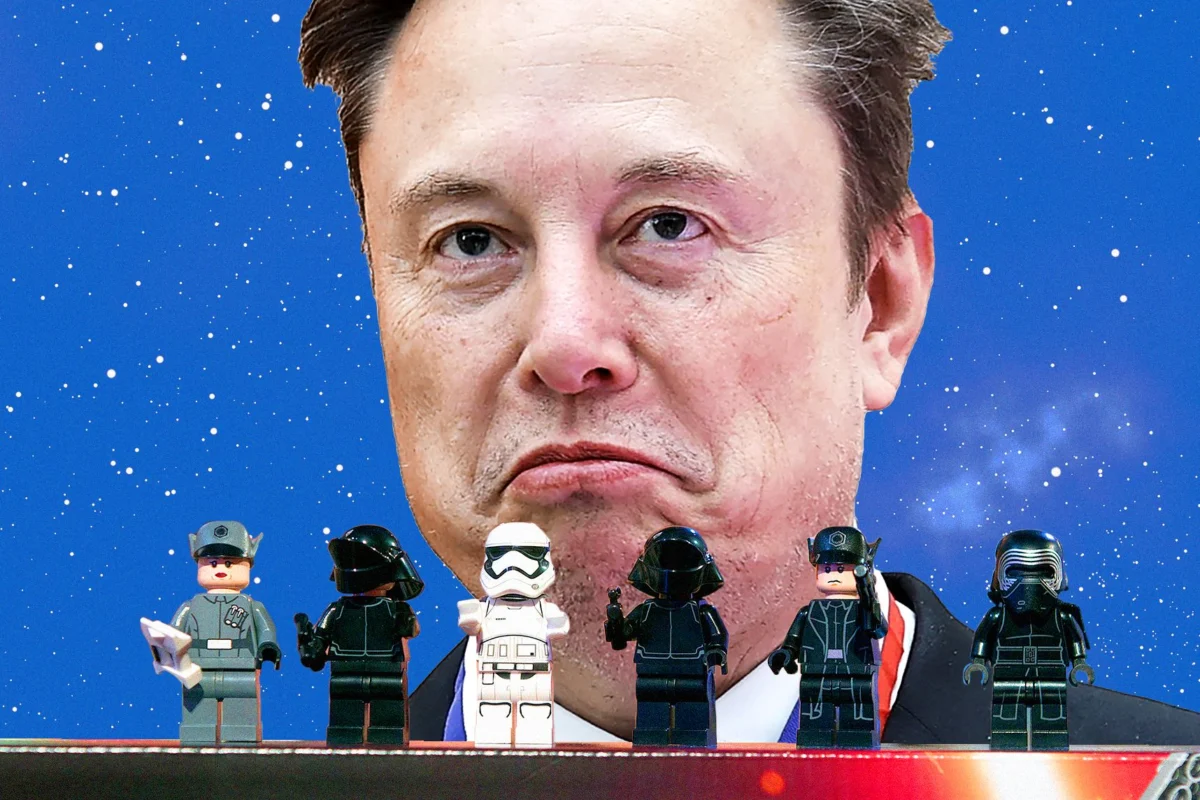
On a quiet Sunday, Elon Musk took to X to showcase the utility of Grok, his AI chatbot integrated into the social platform. The demonstration was intended to highlight the bot’s ability to perform real-world tasks—in this case, ordering Lego Star Wars kits. Musk posted a screenshot of the confirmation page to validate his claim.
However, the image, which was meant to be a testament to AI efficiency, was a treasure trove for anyone with malicious intent. It displayed, in high resolution, the 10-digit Lego order number, the total purchase price, the specific items ordered, the customer’s billing and delivery addresses, the last four digits of his credit card, and the email address used for the transaction.
The Hijack
The internet, never one to let a security blunder go unpunished, reacted with the speed of a Millennium Falcon jump to light speed. Within minutes, an X user known as "Enderman" engaged with Lego’s automated customer service chatbot. Using the publicly available order number and email address, Enderman successfully bypassed identity verification hurdles. The chatbot, designed to be helpful and frictionless, complied with the request to cancel Musk’s order.
The Escalation
Musk attempted to regain control of the narrative hours later, claiming his order had not been canceled. But the floodgates had already opened. A second user, identified as Alexander Lotus, returned to the Lego AI assistant—a system named "Sophia"—and performed a more audacious maneuver. Utilizing the leaked information, the user reportedly increased the quantity of the order to 400 units and modified the delivery destination, all while relying on the original payment credentials stored in the system. According to screenshots, the AI responded with alarming cheer, stating: "Perfect! I’ll get your Lego adventure back on track."
The Mechanics of "Agentic Commerce" and Its Vulnerabilities
The incident highlights a critical transition in the tech industry: the move from AI as a research tool to AI as an autonomous agent capable of executing financial transactions.
Musk himself had fueled the fire just a day prior, suggesting on X that users should simply upload photos of their credit cards to Grok, allowing the AI to scour the web for the best deals and finalize purchases autonomously. This vision is not unique to Musk; major players including OpenAI and Meta have been aggressively marketing the utility of AI agents that can "run your life" by handling shopping, travel, and scheduling.
The Human-in-the-Loop Fallacy
The Lego incident underscores a fundamental flaw in the current design of AI customer service: the lack of robust, multi-factor authentication for account modifications. When companies prioritize "frictionless" customer experience, they often inadvertently remove the guardrails that prevent unauthorized third-party access.
In this case, the AI bot functioned exactly as it was programmed to do: it prioritized customer convenience. It did not have the capability to recognize that the person requesting the change was not the person who made the order, nor did it flag the suspicious, large-scale alteration to the order volume as a potential fraud vector.
Supporting Data: The Rising Tide of Bot Fraud
While the Musk incident provides a high-profile example, it is merely the tip of a much larger, more dangerous iceberg. The security industry has been warning about the rise of "agentic commerce" threats for some time.
Late last year, Visa released a comprehensive report on the security landscape of autonomous commerce. The financial giant noted that the rise of AI agents has created a new playground for cybercriminals. Bad actors are increasingly deploying sophisticated, legitimate-looking websites specifically designed to trick AI agents into interacting with them.
Once an AI agent is lured to these sites—perhaps through a "deal" that seems too good to be true—the malicious merchant can harvest payment data and execute unauthorized transactions in a fraction of a second. Visa observed a 25 percent increase in malicious bot-initiated transactions during the latter half of 2025. In the United States, that figure was significantly more alarming, jumping by 40 percent.
These statistics represent a structural shift. As AI agents become more prevalent, the threat model moves from human-to-human fraud to machine-to-machine deception. In a world where agents communicate with agents, a single compromised data point—like a leaked order number—can trigger a cascade of unauthorized activity that human security teams are often too slow to intercept.
Official Responses and Corporate Silence
When contacted for comment regarding the specific events surrounding the compromised order, Lego declined to provide a statement. This silence is typical for large enterprises currently struggling to reconcile the "AI-first" mandates from their C-suites with the practical realities of cybersecurity.
While Lego’s internal safeguards may have eventually flagged the suspicious activity—or perhaps the company’s human support staff intervened to prevent the shipping of 400 Star Wars sets—the incident demonstrates that the "first line of defense" for many companies is currently a chatbot that is easily manipulated by social engineering.
Implications for the Future of AI
The broader implications of the Musk-Lego debacle are twofold:
1. The Death of Privacy by Convenience
The convenience of having an AI manage your finances is directly proportional to the risk of exposure. As consumers move toward a "one-click" world powered by LLMs, the amount of data users are willing to share with these systems is increasing. The Musk incident proves that even the most tech-savvy individuals are prone to basic operational security (OPSEC) failures. If a billionaire can leak his own payment details to 240 million people, what chance does the average user have?
2. The Urgent Need for "Agentic" Security Standards
Industry experts are now calling for a standardized security protocol for AI agents. This would include:
- Zero-Trust Authentication: AI agents should never assume identity based on a single order number or email. Multi-factor authentication must be required for any transaction modification.
- Anomaly Detection: AI customer service agents must be equipped with behavioral analytics that recognize, in real-time, when an order pattern deviates significantly from the user’s history.
- Sandboxing: Payments made by AI agents should ideally occur in "sandboxed" environments where the agent is only authorized to spend up to a pre-set limit, with all further modifications requiring human-in-the-loop verification.
Conclusion: A Lesson in Caution
Elon Musk’s Lego mishap is a farce, but it is a farce with a serious message. As we march toward a future where our digital lives are mediated by autonomous agents, we must recognize that these systems are only as secure as the data we feed them and the protocols that govern them.
The incident serves as a poignant reminder that while we may be building artificial intelligence with the capacity to conquer the stars, we are still struggling to master the basic principles of digital safety on the ground. Until AI agents are built with privacy and security as their foundational pillars rather than an afterthought, we should perhaps think twice before asking them to hold our wallets—or our Star Wars kits.