Executive Summary: A Unified Voice for Sustainable Travel
The International Ecotourism Society (TIES) has unveiled the results of its comprehensive global survey, marking a pivotal moment in the trajectory of the sustainable travel movement. With 971 viable responses spanning 91 countries across every continent, the data provides an unparalleled look at how industry professionals view the current state and future of ecotourism. The findings reveal a resounding consensus: the industry is not merely surviving; it is experiencing a period of rapid, global expansion.
As the travel industry grapples with the dual pressures of climate change and the rising phenomenon of "overtourism," this survey serves as a barometer for the professionals on the front lines. The overwhelming sentiment among respondents—a staggering 99.5%—is that ecotourism is growing at an accelerated rate. This data, which mirrors larger industry trends observed by entities like Booking.com, suggests that sustainability has shifted from a niche interest to a central pillar of global tourism strategy.
Chronology: The Journey of the Survey
The initiative began as an outreach effort in the society’s previous newsletter, designed to bridge the gap between institutional strategy and the lived experiences of members and friends in the field.
- Launch and Outreach: The survey was disseminated to a diverse global network, intentionally reaching beyond traditional Western tourism hubs.
- Data Collection: Over the course of several weeks, the society received a flood of feedback from regions as diverse as Sudan, the Palestinian territories, Bhutan, Montenegro, and Cote d’Ivoire. While the United States provided the highest volume of responses, the geographic breadth ensured that the findings were truly representative of a global industry.
- The Review Phase: Upon closing the survey, TIES analysts began the systematic process of cleaning and categorizing the 971 submissions.
- Synthesis and Strategy: The final phase involved mapping these insights against the society’s long-term goals, resulting in the current roadmap for education, language support, and policy advocacy.
Supporting Data: Mapping the Industry Landscape
The Diversity of the Respondents
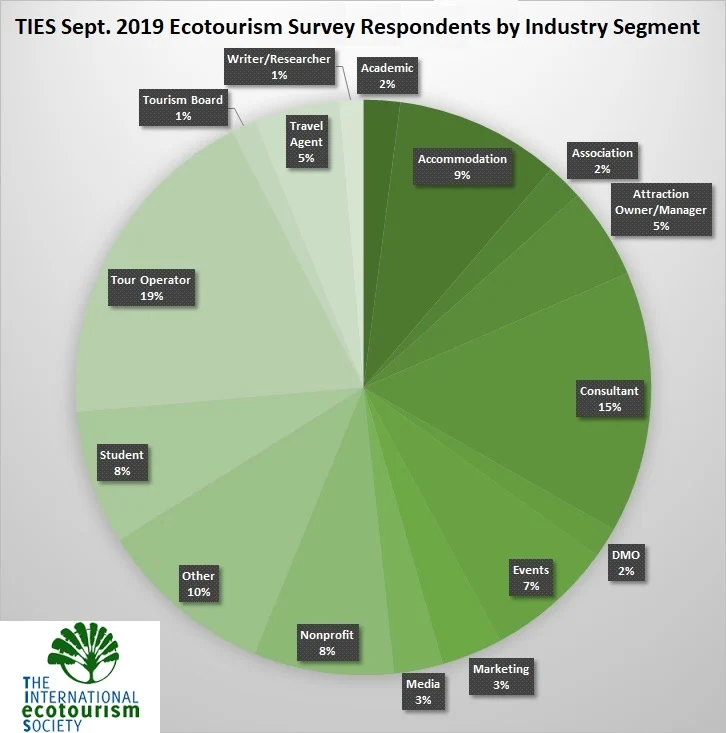
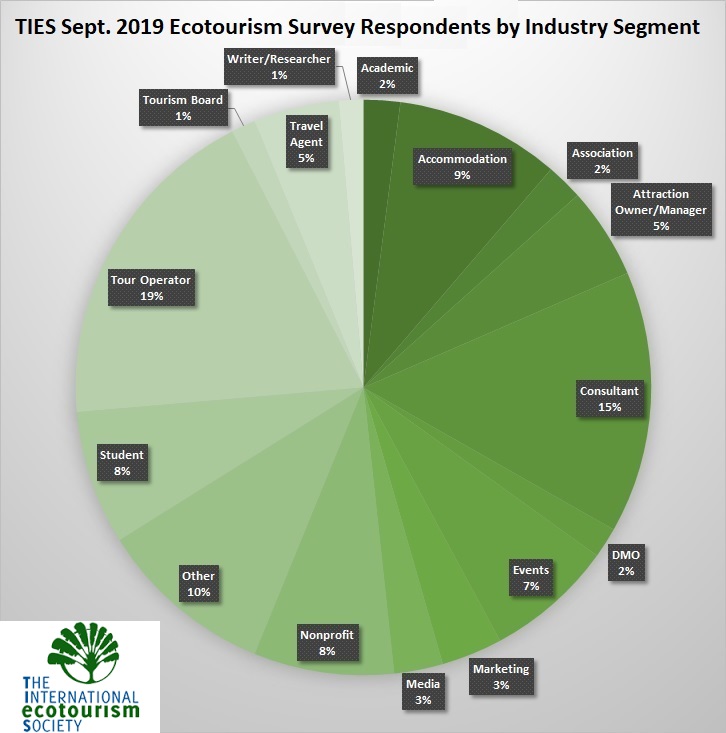
The survey aimed to segment the industry to better understand who is driving the ecotourism conversation. While 90% of respondents were able to classify themselves within the pre-defined categories, the feedback provided valuable lessons for future data collection. Many participants expressed a desire for a "multi-select" option, reflecting the increasingly hybrid nature of modern tourism roles—where a professional might function simultaneously as a tour operator, a consultant, and an educator.
The self-classification chart underscores a diverse ecosystem of stakeholders. While tour operators and consultants formed the backbone of the respondent group, the participation from academia was notably lower than expected. Given that academics represent a larger percentage of the TIES membership base, this discrepancy has prompted a review of how the society engages its research-focused members.
The Growth Trajectory
Perhaps the most striking metric to emerge is the industry’s outlook on growth. In an era of economic uncertainty, the optimism regarding ecotourism is an outlier. Less than 0.5% of respondents perceived the sector as slowing down. This near-unanimous optimism suggests that travelers are increasingly aligning their purchasing power with their values, prioritizing experiences that support conservation and local communities.

Official Responses and Strategic Implications
Bridging the Language Gap
One of the most actionable findings from the survey was the urgent call for multilingual support. A clear majority of respondents highlighted that the development of ecotourism in Spanish-speaking nations is both robust and vital to the global movement.
TIES has officially responded by prioritizing the integration of Spanish language content across its website and digital publications. This is not merely a linguistic upgrade but a strategic move to democratize access to industry resources. The society also acknowledged the importance of French and Mandarin. While responses from China were numerically low, the call for Mandarin content suggests an anticipation of growth in the Chinese outbound ecotourism market. By establishing a framework for Spanish, TIES aims to create a scalable model for introducing other languages in the near future.
Identifying the Bottlenecks: Industry Challenges
The survey provided a candid look at the systemic hurdles facing ecotourism. Respondents were asked to identify the most significant threats to their work, and the results paint a complex picture:
- Macro-Environmental Challenges: Climate change, overdevelopment, and the broader, negative impacts of "overtourism" remain the primary concerns for those on the ground.
- Structural Hurdles: Professionals cited the difficulty of navigating complex regulatory environments, obtaining permits, and securing long-term financing as major barriers to entry and expansion.
- Market Awareness: There is a palpable frustration regarding the "lack of traveler ability to book ecotourism fairly." This indicates a disconnect between consumer intent and the logistical reality of booking sustainable travel.
- The Ethics of Growth: Respondents frequently pointed to greed and a general lack of knowledge as threats that undermine the core philosophy of ecotourism.
TIES has committed to addressing these challenges by curating a series of resources and strategic partnerships, which will be detailed in upcoming bulletins.
Future Directives: Where Should TIES Focus?
Perhaps the most surprising aspect of the survey was the clear mandate provided by the membership regarding where TIES should focus its institutional energy.
The Hierarchy of Needs:
- Education (41%): By a wide margin, the community prioritized education as the most critical pillar for TIES. This includes training for operators, resources for travelers, and foundational research.
- Conservation and Climate Partnerships (18%): Respondents clearly want the society to act as a bridge between travel and environmental protection.
- Ecodestinations (14%): There is a demand for curated information regarding national ecotourism offerings, suggesting that travelers and professionals alike are looking for high-quality, vetted destinations.
- Publications and Social Media (20% combined): A significant segment of the membership continues to rely on TIES for industry-leading content and community engagement.
Notably, the membership showed less interest in the society focusing on high-level political lobbying, UN partnerships, or internal membership growth. This suggests a membership that is highly mission-driven and focused on practical, tangible impacts on the ground rather than administrative or purely bureaucratic goals.
Conclusion: A Path Forward
The 2019 TIES industry survey acts as more than just a data set; it is a clear directive from the global ecotourism community. The findings validate the industry’s rapid growth while highlighting a critical need for localized, accessible, and education-heavy support.
As the society moves forward, the commitment to rolling out multilingual support and focusing on educational partnerships marks a new chapter in its history. The optimism shared by the 971 respondents is contagious, reinforcing the belief that, despite the daunting challenges of climate change and economic pressure, ecotourism remains the most effective, ethical, and sustainable way to explore our world.
For the International Ecotourism Society, the mandate is clear: empower the practitioner, educate the traveler, and ensure that the growth of the industry is matched by the integrity of its mission. The future of travel is not just about moving from one place to another; it is about ensuring that the places we visit thrive because of our presence, not in spite of it.
For further information, full data reports, and updates on the upcoming educational initiatives, please visit The International Ecotourism Society (TIES).