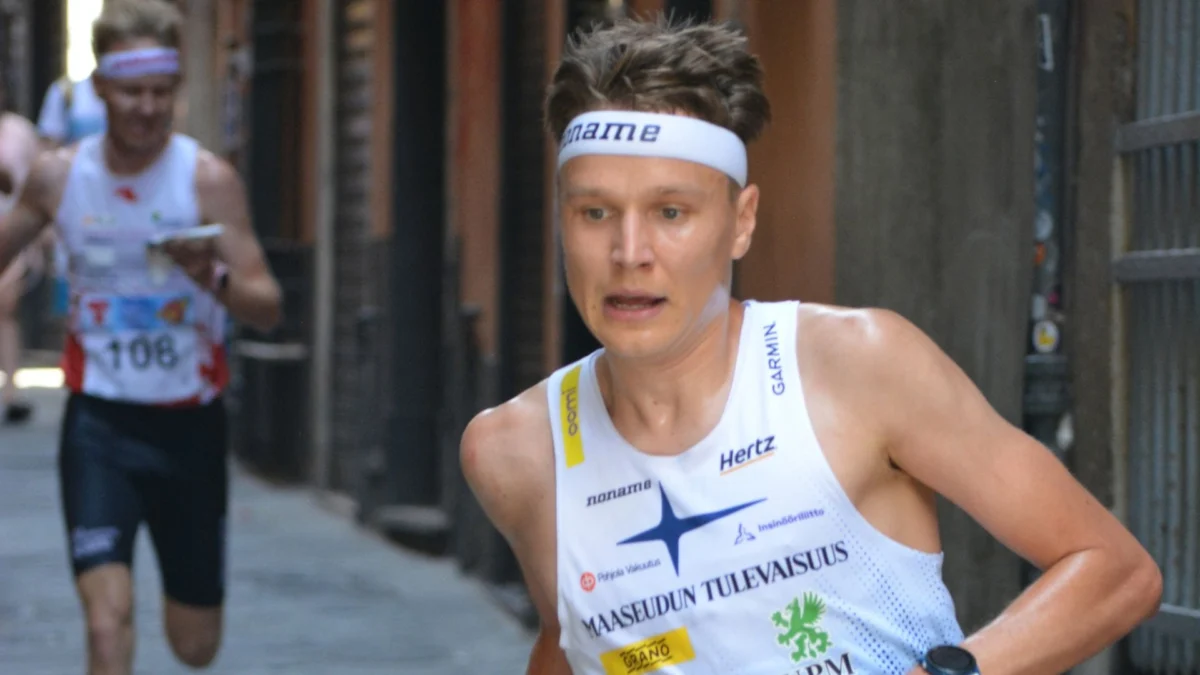
In a demonstration of the synergy between high-performance sport and rigorous academic pursuit, orienteering star Akseli Ruohola has been named the Finnish Student-Athlete of the Year for the 2025–26 academic cycle. The award, which recognizes the challenging feat of maintaining world-class athletic standards alongside university-level studies, highlights a transformative period in Ruohola’s career, punctuated by historic international success.
The selection, made by a committee representing the Finnish Olympic Committee, the Paralympic Committee, and the Foundation for the Advancement of Athletes’ Careers, includes a €1,500 scholarship. This recognition serves as a testament to the growing emphasis on "dual careers" within the Finnish sports ecosystem, proving that professional athletic longevity and intellectual development are not mutually exclusive.
The Path to Excellence: A Chronology of Success
Akseli Ruohola’s trajectory over the past year has been nothing short of remarkable. A medical student at the University of Turun, Ruohola has managed to balance the grueling demands of medical school with a high-intensity training regimen.
- July 2025: Ruohola secured a silver medal at the World Orienteering Championships (WOC) in the sprint discipline. This victory was monumental, marking the first time in 13 years that a Finnish orienteer had stood on the podium in an individual sprint event at the world level—a feat mirrored by his compatriot, Tuomas Heikkilä, who took the bronze in the same competition.
- August 2025: Building on his momentum from the WOC, Ruohola continued his success by capturing a bronze medal at the European Orienteering Championships.
- Academic Cycle 2025–26: Throughout this period of intense competition, Ruohola maintained his standing at the University of Turun, demonstrating strategic time management that included a deliberate academic "gap year" to focus on championship preparation, ensuring that his athletic peaks were not compromised by academic deadlines.
Supporting Data: The Anatomy of a Dual Career
The selection committee emphasized that Ruohola’s award was not merely a result of his medals, but of the methodology behind his success. The "Dual Career" model is a pillar of the Finnish sports policy, designed to ensure that athletes have a foundation for life after professional sports.
Strategic Planning
Ruohola’s approach involves a sophisticated integration of scheduling. By prioritizing his studies during the off-season and tapering his course load during peak competition months, he has avoided the common pitfalls of burnout. The committee noted that Ruohola’s ability to treat his medical studies as a cognitive exercise—and his training as a physical one—has allowed him to sustain high levels of performance in both domains.
The Financial and Structural Support
The €1,500 stipend provided by the Foundation for the Advancement of Athletes’ Careers is intended to alleviate the financial pressure that often forces student-athletes to choose between their education and their sport. Furthermore, the role of the Turku Region Sports Academy (Turun Seudun Urheiluakatemia) cannot be overstated; the institution provided the necessary flexibility in testing schedules, training facilities, and coaching coordination that enabled Ruohola’s success.
Official Responses and Reflections
Upon receiving the award, Akseli Ruohola was quick to deflect the focus from individual glory toward the collaborative nature of his achievement.
"It is a great honor to receive this recognition," Ruohola said. "During my studies, I have realized that the discipline required in medicine is identical to the discipline required in orienteering. You learn how to analyze variables, how to prepare for high-pressure situations, and how to maintain focus when fatigue sets in. I owe a great deal of gratitude to the University of Turku and the Turku Region Sports Academy. Without their willingness to accommodate my schedule, this dual path would have been impossible."
Ruohola also expressed a broader ambition for the future: "I hope that by sharing my story, I can encourage younger athletes to pursue their academic dreams without fear. It is possible to chase an Olympic-level career while earning a degree. Having an identity outside of sports is not a distraction; it is a strength."
Recognizing the Architects: Risto Keskitalo’s Lifetime Contribution
While Ruohola represents the success of the current generation, the event also honored the individuals who built the infrastructure that makes such success possible. Risto Keskitalo, a lecturer at the Kastelli Sports High School, was honored with a special recognition award for his lifelong commitment to the dual-career model.
A Legacy of System-Building
Keskitalo is widely considered one of the primary architects of the modern Finnish sports academy system. His foundational work with the Oulu Region Sports Academy set the blueprint for how schools could effectively support elite-level athletes.
His influence, however, extends well beyond Finland. Keskitalo was a pivotal figure in the creation of the European Athlete as Student (EAS) network. Serving as a founder and early coordinator, he helped bridge the gap between European academic institutions and athletic organizations. In 2008, he was named an honorary member of the EAS, a recognition of his role in ensuring that athletes across the continent have access to educational pathways that do not force them to sacrifice their sporting potential.
Implications: The Future of the Dual-Career Model
The events in Oulu—coinciding with the EAS network conference held between October 5th and 7th—served as a global stage for discussing the future of athlete development. With over 200 experts in attendance from 17 European countries, as well as delegates from Brazil and South Africa, the dialogue has shifted from "if" athletes should study, to "how" they can be better supported.
Shifting Cultural Paradigms
The recognition of Ruohola and Keskitalo signals a cultural shift in how high-performance sport is viewed. The "all-in" mentality—where an athlete does nothing but train—is being replaced by a more sustainable, holistic approach. Data suggests that athletes who engage in intellectual pursuits show higher levels of mental resilience and are more successful in transitioning to the workforce after retirement from competition.
Scaling the Model
The success of the Finnish model, exemplified by the cooperation between the Olympic Committee and regional academies, provides a roadmap for other nations. By integrating sports academies into the mainstream university system, the barriers to entry for professional athletes are significantly lowered.
As Akseli Ruohola continues his journey in medical school and on the orienteering course, his story remains a powerful symbol of human potential. It demonstrates that with the right structural support, the right attitude, and the right mentorship, the divide between the laboratory and the track is not as wide as it seems. The challenge for the future will be to ensure that this model of excellence is accessible to all athletes, regardless of their sport or their specific educational discipline.
In conclusion, the 2025–26 academic year has set a high bar. With Ruohola leading by example and visionaries like Keskitalo ensuring the framework remains robust, Finland continues to lead the way in fostering a generation of athletes who are as sharp in the classroom as they are fast on the field.