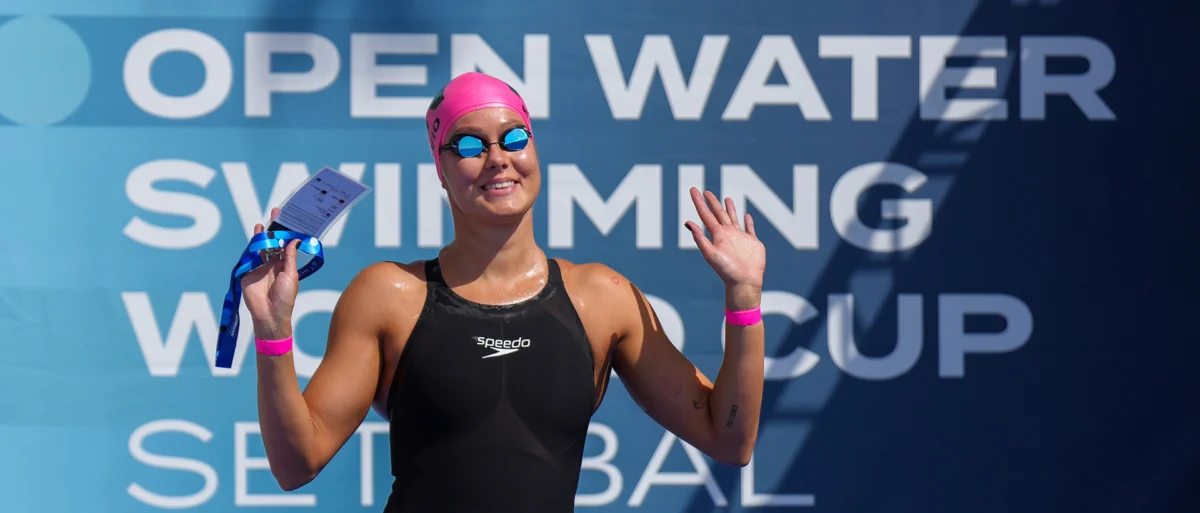
The morning mist clings to the surface of the Leppävaara outdoor pool, a chill in the air that would deter most, but for Louna Kasvio, it is merely the start of another day in the office. With a stroke that is both rhythmic and relentless, she slices through the water. She is a solitary star in the landscape of Finnish open water swimming, a sport that requires not just physical conditioning, but a psychological fortitude rarely found in athletes of her age.
As her hand strikes the tiles at the end of a two-hour session, she pauses, squinting at the wall clock. "Forgive me, but could you step aside for a moment? I need to check the time; I’m planning to put in a few more laps," she says with a light laugh. It is a signature Kasvio moment—a blend of polite humility and the unwavering, singular focus of an elite athlete.
The Anatomy of an Elite Athlete
For Louna Kasvio, this is not a hobby; it is a full-time profession. Her life is a meticulously calibrated machine designed for one purpose: performance. Her weekly workload is staggering, comprising 80 to 100 kilometers of swimming, supplemented by three strength training sessions and four bouts of dry-land aerobic work. In total, she dedicates 35 hours per week to her craft, with every remaining minute of her day optimized for recovery and preparation for the next session.
"Everything about sports is the best part—the training, the competitions, the entire lifestyle," Kasvio says. "It’s a natural choice for me. I’ve never questioned it. It comes from within, from my own desire."
This intensity is not a byproduct of external pressure, but an internal drive. As the latest scion of Finland’s most decorated swimming dynasty, Louna carries a name that is synonymous with excellence, yet she is determined to forge an identity defined by her own merit. "When I was younger, it was annoying to be constantly compared to my father, my grandparents, or their parents," she admits. "I decided early on that I wanted to carve my own path and achieve my own results."
A Four-Generation Legacy
To understand the weight of the name, one must look at the facts. Her father and current coach, Antti Kasvio, is a freestyle World Champion, European Champion, and Olympic bronze medalist. Her grandfather, Matti Kasvio, represented Finland at the 1964 Olympics, while her grandmother, Ulla Patrikka, competed in the 1968 Games in backstroke. The family lineage extends even further back to Einari and Rauha Patrikka, who were national-level competitors, and the "founding father" of the swimming clan, Taisto Kasvio, a former national team coach.
Despite this storied history, Louna has achieved something unique: she is the first Finnish open-water swimmer to reach a level of consistent international success. While she does not shy away from her heritage, she does not lean on it. "We’ve always talked a lot about swimming in our family. It’s been a central, natural part of life," she says. "But I haven’t been forced into the pool. I don’t dwell on the history or feel pressured by it; I look forward to my own career."
The Evolution of Coaching
Antti Kasvio acknowledges that while his experience as an elite athlete is an asset in his role as a coach, the landscape of the sport has shifted dramatically. "Open water swimming is still swimming, but it’s a marathon event in variable conditions," he explains. "I trained for two-to-four-minute performances. Louna’s performances last up to two hours. You can’t use the same training methods."
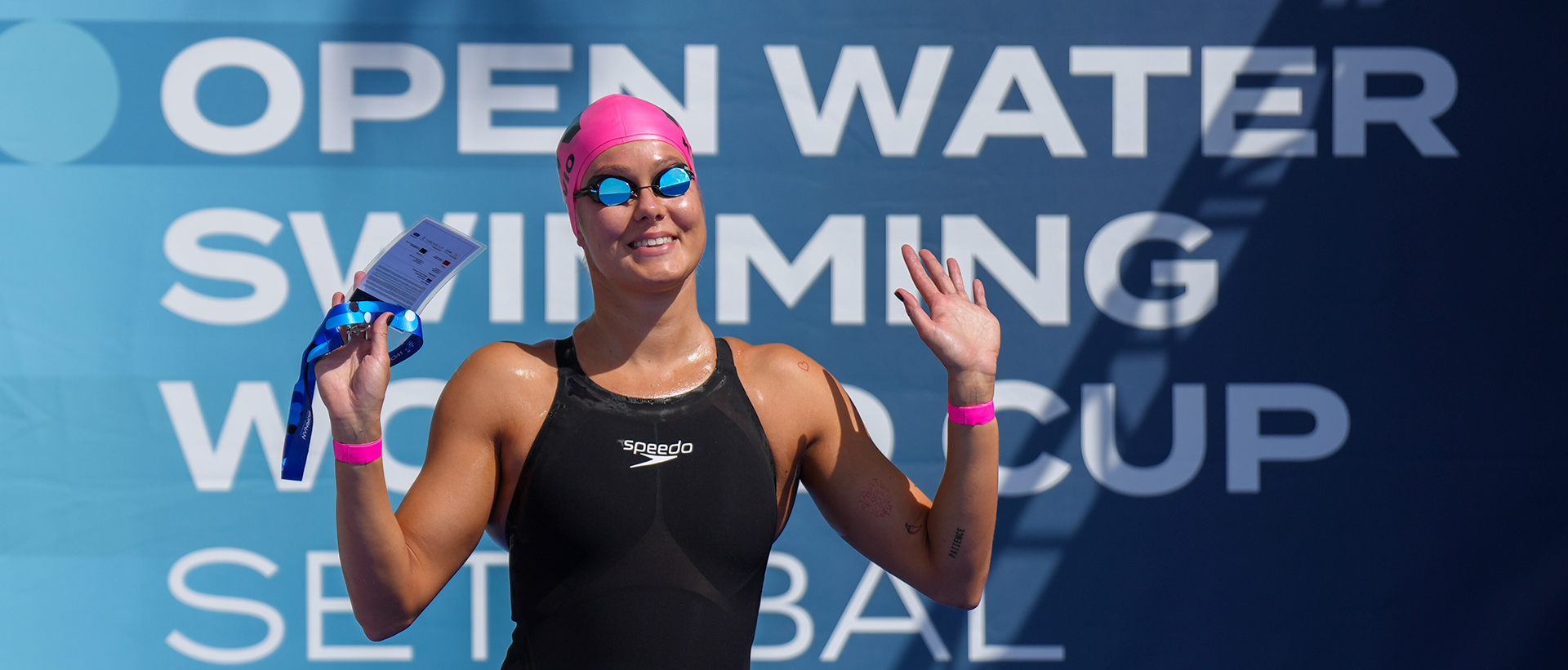
Antti’s coaching philosophy centers on technical mastery and tactical intelligence. He notes that Louna’s high-intensity sessions are designed to mimic race conditions—swimming at an anaerobic threshold for long durations, followed by sharp, explosive bursts. "We focus on ensuring that with perfect technique, she can sustain that threshold for the entire race while having the capacity to change pace," he adds.
From the Pool to the Open Ocean
Kasvio’s journey to the top was not a straight line. Though she began swimming at age three, it was not until she was ten that her competitive spirit truly ignited after a breakthrough win in a local 25-meter school race. By 17, she was already a Junior European Championship medalist and an adult-level European Championship finalist in pool swimming.
However, a difficult year marred by illness led her to a pivotal realization. Her father suggested she try an open water race in Raasepori. Despite the cold and rain, she finished second overall against both men and women. "I was hooked," she recalls. "The competition in open water is more interesting. It’s a completely different dimension of swimming."
The transition from the predictable environment of a pool to the chaotic reality of open water has been her greatest challenge. "In the pool, you control your own pace," she explains. "In open water, you have to start with the main pack. The drafting is massive—if you get left behind, you’re not catching up. But drafting isn’t easy; the sea is rough, and you don’t always see well."
She describes the physical nature of the sport with surprising calm. "You might be shoulder-to-shoulder with 80 swimmers. You have to hold your ground, but it’s more important to be calm than aggressive. Aggression raises your lactic acid and breaks your technique."
The Logistics of Excellence
The Kasvio family functions as a tight-knit unit: Louna swims, Antti coaches, and her mother, Hanna, manages the complex logistics and administrative side of their operations. "The standards are high for all of us," Hanna Kasvio notes. "We spend over a third of the year abroad. The amount of coordination required is significant."
One of the biggest hurdles for Finnish swimmers is the lack of exclusive access to training facilities. "To train for marathon swimming properly, you need a lane for two hours, twice a day, entirely to yourself," Hanna explains. "In municipal pools, that’s not always possible. Our international competitors often have access to private facilities or reserved lanes around the clock."
Despite this disadvantage, Louna has maintained world-class form. Her 2025 season included winning the overall Junior World Cup and placing 19th at the senior World Championships. This summer, she secured an 8th-place finish in the 10km and a 10th-place finish in the 5km at the European Championships.
Implications: The Road to the Podium
The sport of open water swimming is one that favors maturity; international medalists typically hit their peak between the ages of 24 and 25. At 20, Kasvio is perfectly positioned for the next Olympic cycle. She is no longer just a "promising talent"—she is a contender.
Her induction into the Next Generation Team Finland program, a Finnish Olympic Committee initiative, highlights her potential. The program provides over 10,000 euros in support, including expert services and resources designed to bridge the gap between national and global elite status.
When asked about the monotony of her training, Kasvio is pragmatic. "The hardest days are the early mornings in the dark, during a Finnish autumn, heading to the pool at six in the morning," she admits. "But it’s easy to get through those mornings because I know the hard work will be rewarded."
Her approach is defined by stability. She does not look for shortcuts or "hacks." Instead, she relies on a consistent, professional preparation that leaves nothing to chance. "If I’m not sick or injured, I always deliver a good performance," she says. "I’ve prepared well and I keep a good feel for the water. Success is just a natural consequence."
As she looks toward the future, her goal is clear: she wants to maximize her potential. "I don’t want a break from swimming; there will be time for that later in life. Right now, I am living my dream, and I intend to see exactly how far this path can take me."
For Louna Kasvio, the water is not just a medium for sport—it is a canvas upon which she is writing a legacy that is entirely, and unmistakably, her own.