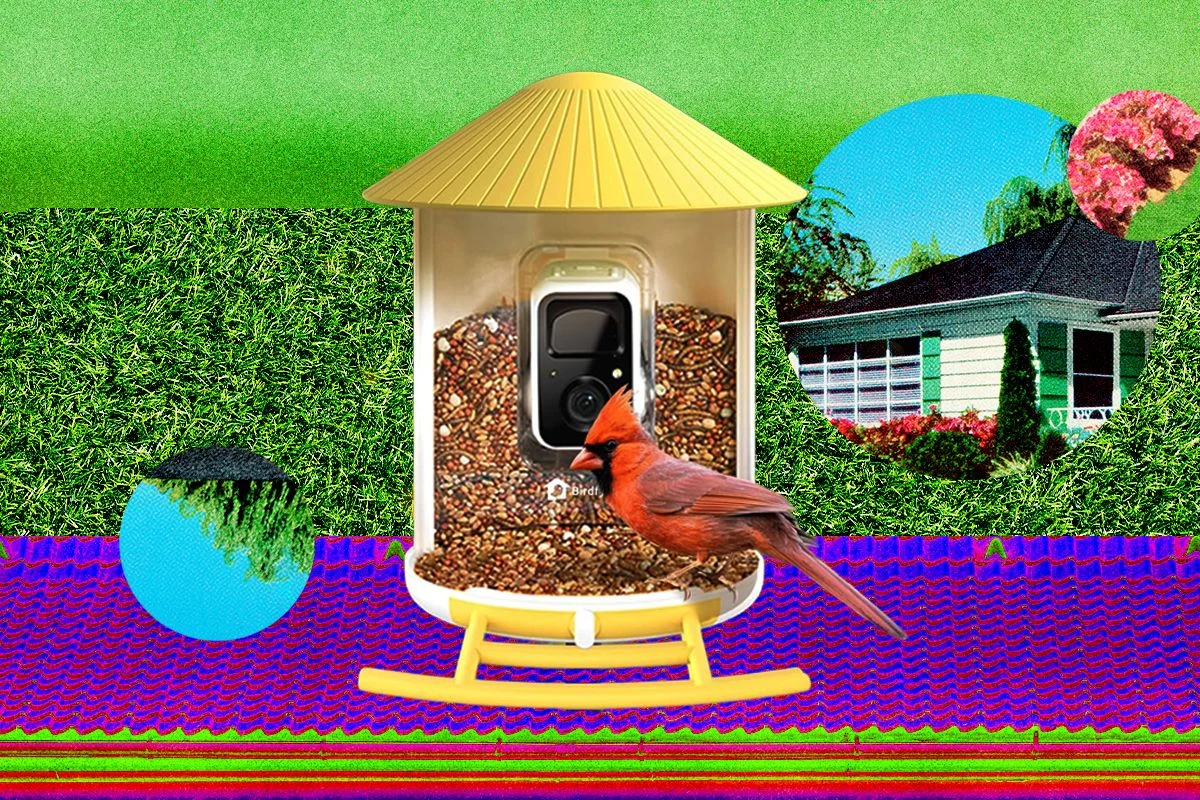
You have likely seen them on social media: crisp, high-definition close-ups of a vibrant Northern Cardinal or a curious Downy Woodpecker, captured not by a professional wildlife photographer, but by a consumer-grade device sitting in someone’s backyard. Smart bird feeders—essentially cameras integrated into food dispensers—have surged in popularity, promising to turn casual birdwatching into a gamified, interactive experience. But behind the polished marketing photos and the promise of AI-powered identification lies a more complex reality. Are these devices, which often cost upwards of $100, actually durable? How do they handle the inevitable onslaught of local wildlife, particularly squirrels? And, perhaps most importantly, is the "smart" experience worth the recurring cost of subscription fees?
After two years of rigorous, real-world testing in a variety of conditions—ranging from blistering heat to heavy snow—I have evaluated the most popular models on the market. From the original Netvue Birdfy Lite to the cutting-edge Birdbuddy Pro, I have analyzed the software, the hardware, and the reality of backyard birding in the digital age.
The Evolution of Backyard Tech: A Brief Chronology
The rise of the smart bird feeder can be traced back to the late 2010s, but it wasn’t until 2022 that these devices moved from niche hobbyist gear to mass-market consumer electronics. When we first tested the Netvue Birdfy in 2022, it received a modest 6/10 rating. The technology was nascent: the AI was frequently confused, the apps were prone to crashing, and the price tags were prohibitively high.
By 2024 and 2025, the market matured rapidly. We saw the introduction of dual-camera systems, integrated solar roofs, and significantly more sophisticated bird-identification algorithms. In June 2026, the landscape shifted again with the introduction of new hardware from brands like ChirpCam and Wansview, and the highly anticipated release of the Birdbuddy 2. Today, the industry is no longer just about "taking a photo"; it is about building a digital library, sharing "stories" of your local avian visitors, and, unfortunately, navigating an increasingly common pay-to-play subscription model.
Essential Considerations for Potential Buyers
Before you invest in a smart feeder, it is critical to look beyond the camera resolution. After testing dozens of models for a minimum of four weeks each, I have identified four pillars of the smart feeder experience:
1. The Subscription Trap
Most smart bird feeders are loss-leaders for their respective companies. They sell the hardware at a competitive price, but the truly "smart" features—such as extended cloud storage, AI identification history, and high-bitrate video—are often locked behind a monthly or annual paywall. If a feeder costs less than $100, you should assume that your user experience will be significantly degraded unless you pay for a subscription. Always check if the AI identification is a local feature or a cloud-based service that requires a recurring fee.
2. Mounting and Durability
Smart feeders are inherently heavier than traditional plastic feeders because they contain batteries, circuit boards, and glass lenses. If you live in an area with active squirrels, pole mounting is non-negotiable. Using the "5-7-9 rule"—at least 5 feet high, 7 feet from structures, and 9 feet from jump points—is your best defense. Avoid tree mounting, as squirrels find it too easy to access the hardware and chew through power cables.
3. Wi-Fi Limitations
The vast majority of these devices operate on the 2.4-GHz Wi-Fi band. While 5-GHz is faster, 2.4-GHz is superior for outdoor use because it penetrates walls, trees, and foliage more effectively. Unless your router is located directly inside the wall adjacent to your feeder, you likely want a 2.4-GHz connection for better range.
4. Software Quality
An app is the bridge between you and the bird. A poorly designed app, like that of the FeatherSnap Scout, can make the process of checking your daily visitors a chore rather than a joy. Look for apps that offer clear notifications, easy sharing, and the ability to distinguish between a bird and a false positive (like a swaying branch).

Product Reviews: The Best in Class
The Best Overall: Netvue Birdfy Lite
The Netvue Birdfy Lite remains the most balanced choice for the average backyard birder. It is reliable, easy to set up, and offers a massive 155-degree field of view, which helps capture the whole bird rather than just a close-up of a beak. While the 1080p camera isn’t the highest resolution on the list, it is more than sufficient for social media sharing. Its IP65-rated construction ensures it stands up to the elements, and it is frequently discounted, making it a high-value entry point.
The Best High-Resolution Option: Camojojo Hibird Pro
If you are a photographer at heart, the Hibird Pro is the winner. It features 4K Ultra HD video and, crucially, supports both 2.4-GHz and 5-GHz Wi-Fi bands—a rarity in this space. While the app is slightly less refined than Birdfy’s, the hardware is robust. The inclusion of a 128-GB SD card also means you don’t necessarily need to pay for cloud storage to save your footage.
The Best Hummingbird Experience: Birdbuddy Pro Smart Solar Hummingbird Feeder
Hummingbird feeders are notoriously difficult to clean, but Birdbuddy has engineered this model with a removable base that makes maintenance simple. The app is a standout, offering "fun" features like digital holiday cards and the ability to dress your birds in virtual accessories. It is feature-rich, well-designed, and keeps its charge remarkably well through the built-in solar roof.
Official Manufacturer Perspectives and AI Accuracy
Manufacturers emphasize that their AI models are trained on millions of images, yet in my testing, the accuracy often fluctuates based on geography. Most AI systems are trained on datasets that favor common East Coast species. If you live on the West Coast or in a rural mountain region, be prepared for your "Western Tanager" to be misidentified as a common sparrow.
Regarding hardware, the trend is clearly toward "Solar-Integrated" designs. Companies have heard the user complaints about auxiliary solar panels—which are prone to breakage and cable chewing—and are moving toward solar roofs. This is a massive improvement for long-term reliability.
Implications for the Future of Birding
The rise of the smart feeder has created a new class of "citizen scientist." By collecting thousands of hours of data, these feeders provide a unique window into local migration patterns and population health. However, there is a clear trade-off: the more we rely on these devices, the more we become tethered to proprietary software ecosystems.
As we move toward 2027, the focus is likely to shift from "can we see the bird?" to "can we understand the bird better?" We are already seeing the integration of ChatGPT-like "bird experts" in apps like the Hibird. While these tools can provide quick facts, they lack the nuance of professional ornithological databases like the Cornell Lab’s All About Birds.
Final Verdict: Is It For You?
If you want to feel closer to nature without leaving your living room, a smart bird feeder is an investment that pays off in daily, bite-sized entertainment. For most users, the Netvue Birdfy Lite offers the best intersection of price, reliability, and functionality. If you want the sharpest images and are willing to handle a heavier, more complex device, the Camojojo Hibird Pro is the superior choice.
However, keep your expectations in check: these are outdoor electronics. They will require cleaning, they will deal with moisture, and they will, at some point, likely face the curiosity of a squirrel. When you buy a smart feeder, you are buying a camera system, a piece of garden furniture, and a software subscription. Treat it as such, and you will find it to be a rewarding addition to your backyard.