[CITY, COUNTRY] – October 19, 2026 – The highly anticipated Coastal Rowing Beach Sprints competition has commenced under exceptionally challenging conditions, with Finnish athletes Joel Naukkarinen and the mixed double crew of Eeva Karppinen and Joel Naukkarinen demonstrating remarkable skill and resilience to secure their places in the crucial knock-out rounds. Originally slated for Sunday, October 18, the start of the competition was postponed by a full day due to severe storms and powerful waves that rendered the course unsafe for competition. When racing finally got underway on Monday, October 19, athletes were met with continued adversity in the form of irregular, breaking waves that tested their mettle, leading to numerous capsizes and an unpredictable environment.
Despite the tumultuous waters, the Finnish contingent showed impressive determination. Joel Naukkarinen delivered a standout performance in the Men’s Single (CM1x), securing qualification with a stellar second-round time trial. He then teamed up with Eeva Karppinen in the Mixed Double (CMix2x), where their combined efforts also saw them through to the next stage. While Tiia-Maria Rauttola put in a valiant effort in the Women’s Single (CW1x), the formidable conditions ultimately proved too challenging for her to advance. The revised schedule, a direct consequence of the weather disruption, now sees both the Men’s Single and Mixed Double knock-out rounds and medal races compressed into a single, high-stakes day on Tuesday, October 20, promising intense action as athletes vie for podium finishes.
Chronology: A Stormy Start to the Beach Sprints
The build-up to the Coastal Rowing Beach Sprints was fraught with anticipation, but nature had other plans for the opening day.
Initial Anticipation and Weather Disruption
The international rowing community had eagerly awaited the commencement of the Beach Sprints on Sunday, October 18. This modern, dynamic discipline, known for its thrilling head-to-head format and integration of land-based running, promised a spectacle of athleticism and strategic prowess. However, the coastal region was gripped by an unyielding storm, characterized by gale-force winds and towering waves that transformed the racecourse into a hazardous arena. Event organizers, prioritizing the safety and well-being of all competitors, officials, and support staff, made the difficult but necessary decision to postpone the start of the competition by 24 hours. This immediate shift in schedule sent ripples through the teams, forcing last-minute adjustments to training routines, logistics, and mental preparations. The delay underscored the inherent unpredictability of coastal sports and the paramount importance of safety in extreme marine environments.
Monday’s Challenging Start
When the competition eventually began on Monday, October 19, the weather had moderated slightly but remained far from ideal. The powerful swells had subsided only marginally, leaving behind a volatile sea state defined by "irregularly breaking waves." These unpredictable surges of water presented a significant challenge, making it exceedingly difficult for rowers to maintain control, rhythm, and direction. The reports of "numerous capsizes" painted a vivid picture of the treacherous conditions, highlighting the raw power of the ocean and the extreme demands placed upon the athletes. Competitors had to not only contend with their rivals but also constantly battle the elements, adapting their technique on the fly to avoid being swamped or overturned. This opening day served as a brutal testament to the specialized skills required for coastal rowing, where adaptability and sheer grit are as crucial as strength and endurance.
The Time Trial Gauntlet
The format of the Beach Sprints dictates a rigorous qualification process, beginning with time trials designed to whittle down the field. In each boat class, competitors first participate in a preliminary time trial. The eight fastest crews from this initial round earn a direct pass to the highly competitive knock-out stages. For those who don’t make the cut in the first attempt, a second time trial offers a crucial lifeline. From this second opportunity, another eight fastest crews are selected, completing the roster of 16 boats that advance to the head-to-head elimination rounds. This two-tiered qualification system ensures that only the most consistent and agile crews proceed, especially vital in conditions where a single mistake can prove costly. The pressure on athletes to perform under these circumstances, knowing that every stroke and every second counts, is immense, transforming the time trials into a dramatic prelude to the main event.
Supporting Data: Finnish Performance in the Spotlight
Despite the arduous conditions, the Finnish team demonstrated remarkable tenacity, with two of its three entries successfully navigating the time trials to earn their places in the knock-out rounds.
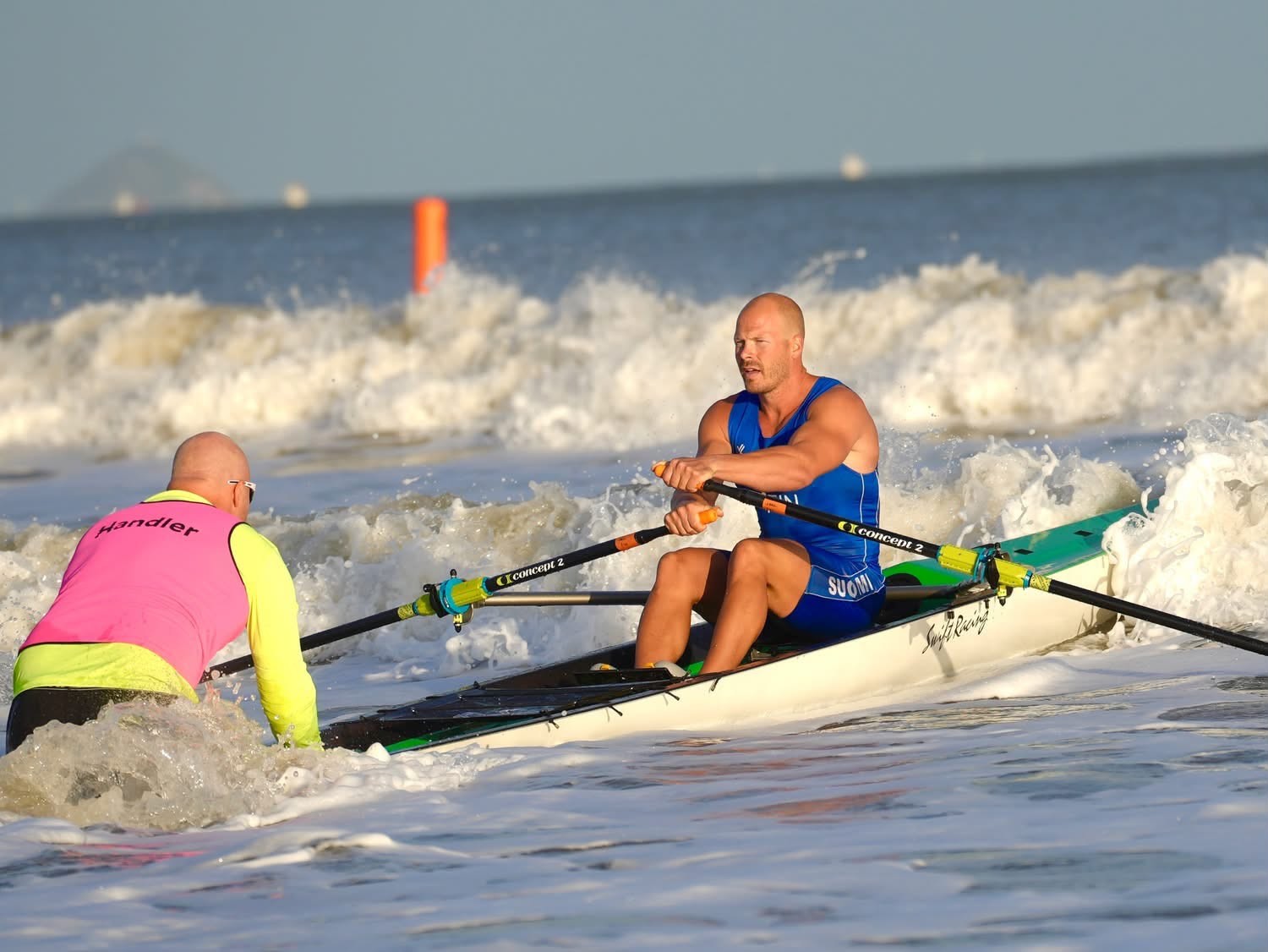
Joel Naukkarinen – A Stellar Solo Effort in Men’s Single
Joel Naukkarinen emerged as a beacon of Finnish strength and skill in the Men’s Single (CM1x) category. His journey through the time trials was a testament to his competitive spirit and ability to perform under pressure.
In the first time trial, Naukkarinen clocked a time of 2 minutes and 46.43 seconds, placing him 12th in a highly competitive field. While a respectable showing, it wasn’t enough to secure a direct qualification spot among the top eight. This meant he had to return for the second time trial, where the stakes were even higher.
However, it was in the second time trial that Naukkarinen truly shone. Despite the continued challenging conditions, he pushed himself to deliver an exceptional performance, finishing with a time of 2 minutes and 57.01 seconds. This remarkable effort earned him the 2nd position in that round, trailing the leader by an incredibly narrow margin of just 0.29 seconds. This razor-thin difference underscores his elite-level performance and his ability to find an extra gear when it mattered most. His second-round success secured his progression to the knock-out rounds, a significant achievement given the caliber of international competition and the adverse environment. Naukkarinen’s calculated risk and execution in the second time trial showcased not only his physical prowess but also his mental fortitude, setting a strong precedent for his upcoming races.
Karppinen and Naukkarinen – Synchronized Success in Mixed Double
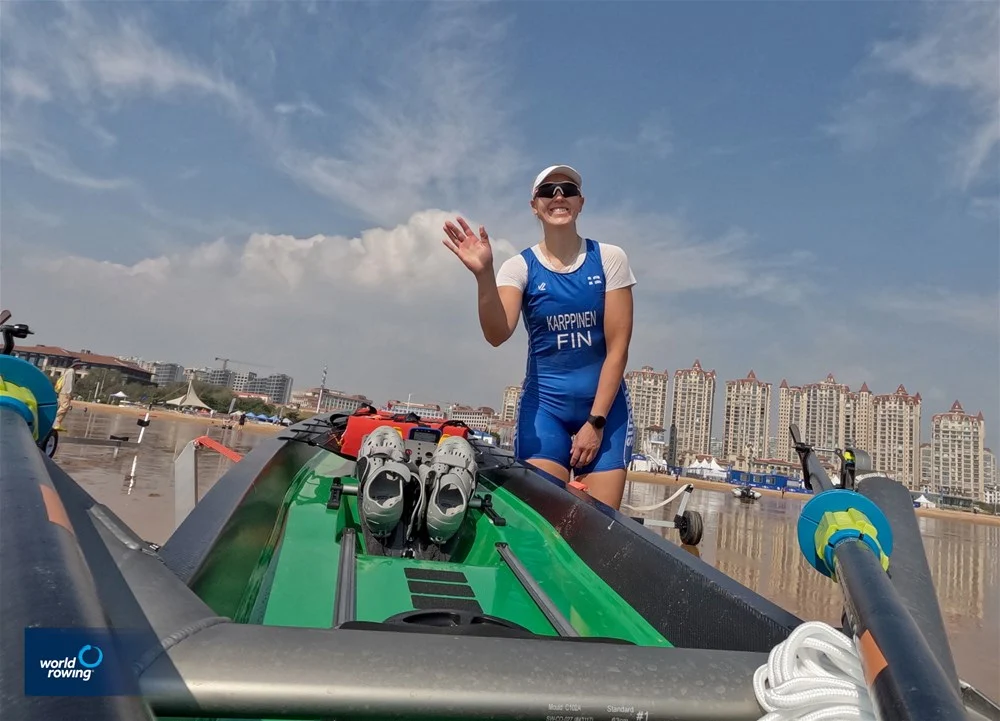
The Finnish hopes also rested on the shoulders of the dynamic duo, Eeva Karppinen and Joel Naukkarinen, competing in the Mixed Double (CMix2x). Their combined efforts proved effective in navigating the challenging course and securing their advancement.
In their first time trial, the pair recorded a time of 2 minutes and 53.80 seconds, placing them 13th. Similar to Naukkarinen’s solo effort, this result necessitated a second attempt to qualify for the knock-out stages.
Demonstrating excellent teamwork and an improved understanding of the demanding conditions, Karppinen and Naukkarinen delivered a stronger performance in the second time trial. They completed the course in 2 minutes and 49.55 seconds, securing a commendable 4th place in that round. This improvement in their time, coupled with their higher placement, was sufficient to earn them one of the coveted spots in the knock-out rounds. Their success in the mixed double highlights the importance of synergy and effective communication in coastal rowing, especially when battling against both formidable opponents and a turbulent sea. Their qualification sets them up for an exciting run in the elimination stages, with the potential to challenge for medals.
Tiia-Maria Rauttola – A Valiant Effort in Women’s Single
Tiia-Maria Rauttola represented Finland in the Women’s Single (CW1x) category, facing the same daunting conditions as her teammates. Despite her best efforts, the competitive field and the unforgiving waters proved too difficult to overcome on this occasion.

Rauttola completed her first time trial in 3 minutes and 19.18 seconds, placing 18th. In her second time trial, she finished with a time of 3 minutes and 57.66 seconds, again placing 18th. While Rauttola did not secure a spot in the knock-out rounds, her participation in such a challenging international event provides invaluable experience. Competing against the world’s best in these demanding conditions is a significant learning opportunity that will undoubtedly contribute to her development as a coastal rower. Her courage and determination in facing the elements are commendable, and her presence underscores Finland’s commitment to competitive coastal rowing.
Understanding Coastal Rowing Beach Sprint: A Hybrid Discipline
To fully appreciate the performances of these athletes, it’s essential to understand the unique nature of Coastal Rowing Beach Sprints, a discipline that stands apart from traditional rowing and even its endurance counterpart within coastal rowing.
Distinction from Coastal Rowing Endurance:
Last week’s coastal rowing endurance races covered a challenging 6-kilometer course, characterized by a mass start from the beach where all boats launched simultaneously. These races are primarily tests of stamina, navigation over longer distances, and the ability to maintain a consistent pace in open water.
The Thrill of Beach Sprint:
Beach Sprints, however, introduce a dynamic, multi-faceted challenge. It’s a 500-meter race, but it’s far more than just rowing. The competition pits two boat crews directly against each other on a short, intense course, making it highly engaging for spectators. The format is a true test of versatility and explosive power, combining three distinct phases:
- The Beach Start (Running): The race begins with rowers sprinting from a designated starting line on the beach towards their waiting boats. This requires speed, agility, and a quick transition from running to getting into the boat.
- The Coastal Course (Rowing): Once in their boats, crews race approximately 250 meters out to sea, navigating around a buoy, and then returning to the shore. This phase demands exceptional boat handling skills, especially in turbulent waters, as crews must quickly turn around the buoy and maintain course amidst waves. The 500-meter distance is short, making every stroke count for power and precision.
- The Beach Finish (Running): Upon reaching the shore, one designated rower from each crew must quickly exit the boat and sprint across a finish line on the sand. This final dash can often decide the outcome of a tightly contested race, adding another layer of physical and strategic demand.
Why Beach Sprints are Demanding:
This hybrid format makes Beach Sprints incredibly demanding. Athletes need to possess not only the powerful rowing technique of traditional rowers but also the explosive speed and agility of sprinters. The rapid transitions between running and rowing, coupled with the unpredictable nature of coastal waters, require supreme adaptability, mental toughness, and a high level of technical proficiency. The head-to-head nature of the knock-out rounds amplifies the excitement, creating direct confrontations where strategy, quick decision-making, and raw speed are paramount. This thrilling blend of disciplines is what makes Coastal Rowing Beach Sprints a captivating and rapidly growing segment of the sport, often cited as a strong candidate for future Olympic inclusion due to its spectator appeal.
Official Responses: Navigating the Storm
The unprecedented weather conditions necessitated swift and decisive action from event organizers, who emphasized athlete safety as their foremost priority.
Event Organizers and Safety Protocols
Speaking on the conditions, an official spokesperson for the event organizing committee stated, "The decision to postpone Sunday’s races was not taken lightly, but the safety of our athletes is absolutely non-negotiable. The stormy seas and powerful swells presented an unacceptable risk, and we commend all teams for their understanding and cooperation."
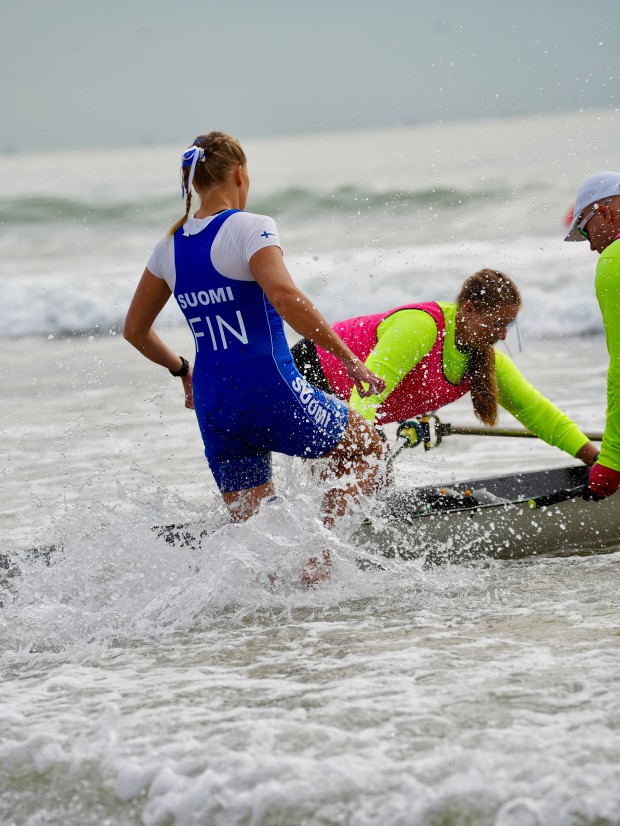
The organizing committee detailed the rigorous safety protocols implemented for Monday’s restart. "Even with the slight improvement, Monday’s conditions remained extremely challenging. Our safety teams, including rescue boats and medical personnel, were strategically positioned along the course, ready to respond instantly to any capsizes or incidents. We continuously monitored wind speeds and wave heights, making real-time assessments to ensure the races could proceed as safely as possible," the spokesperson added. "The resilience shown by all competitors, especially those who experienced capsizes and quickly righted their boats to continue, is truly inspiring. It speaks volumes about the spirit of coastal rowing." The organizers also acknowledged the logistical complexities introduced by the revised schedule, stating that all efforts were being made to ensure fair competition and timely communication for all participants.
Athlete Reactions
Following their successful qualification, the Finnish rowers shared their thoughts on the grueling first day of competition.
Joel Naukkarinen, clearly focused but visibly pleased with his performance, commented, "The conditions out there were brutal, probably some of the toughest I’ve ever raced in. Those breaking waves were incredibly unpredictable, and it was a constant fight to stay upright and keep the boat moving straight. I knew I had to really dig deep in that second time trial for the single, and I’m thrilled to have made it through. It shows that our training for these challenging waters has paid off."
Eeva Karppinen, reflecting on their mixed double performance, added, "It was definitely a team effort today. Communication was key, especially around the buoy turn with the waves crashing. Joel and I had to be perfectly in sync. We’re happy to have qualified, and now our focus shifts entirely to tomorrow’s knock-out rounds. The compressed schedule means we need to recover fast and be ready for another intense day."
While Tiia-Maria Rauttola did not advance, she remained positive about the experience. "It was incredibly tough out there, much more challenging than I anticipated. Every stroke was a battle. I gave it my all, and even though I didn’t qualify, the experience of racing in these conditions against such strong international competition is invaluable. I’ve learned so much, and it will definitely make me a stronger rower in the future." Her reflections highlighted the steep learning curve inherent in coastal rowing and the character-building aspect of competing in extreme environments.
Implications: High Stakes and Future Prospects
The tumultuous start to the Coastal Rowing Beach Sprints has significant implications for both the immediate outcome of the competition and the broader trajectory of Finnish coastal rowing.
Revised Schedule and High Stakes
The weather-induced schedule change has created a compressed and intense competition window. Crucially, the Mixed Double (CMix2x) knock-out rounds and medal races, originally planned for Wednesday, October 21, have been brought forward to Tuesday, October 20. This means that both Joel Naukkarinen’s Men’s Single events (knock-outs and final) and his Mixed Double events (knock-outs and medal races with Eeva Karppinen) will now take place on the same day.
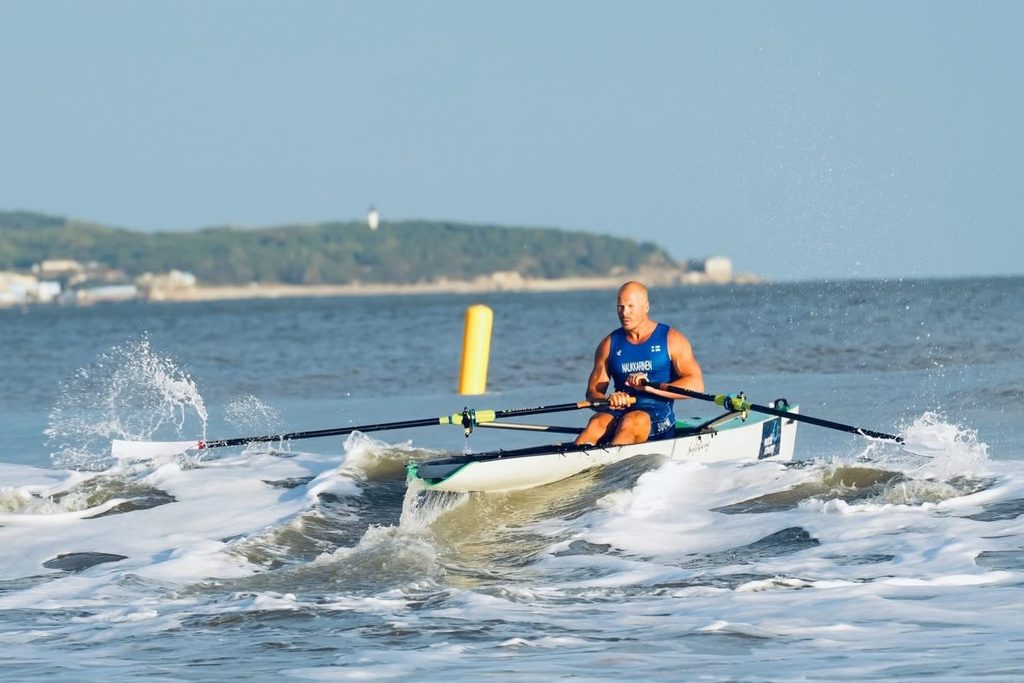
This accelerated timeline places an immense physical and mental burden on Naukkarinen. Competing in multiple high-intensity races in a single day, especially after the exhausting conditions of the time trials, will demand exceptional stamina, rapid recovery, and unwavering focus. For the mixed double, reaching the medal races on the same day as their knock-outs means less recovery time and potentially more pressure to perform consistently under fatigue. The stakes are incredibly high, as these races will determine the medalists, adding a layer of drama to an already unpredictable event. Organizers will need to manage the flow of races meticulously to ensure fairness, while athletes will rely on their peak physical conditioning and mental resilience to navigate this demanding schedule.
Looking Ahead: Finnish Hopes for Medals
With Joel Naukkarinen qualified in two boat classes, Finnish hopes for medals are now squarely focused on Tuesday’s races. Naukkarinen’s impressive performance in the Men’s Single time trial suggests he is a strong contender, capable of challenging for a podium finish. His ability to perform under extreme pressure, as evidenced by his second time trial result, will be crucial in the head-to-head knock-out format where every race is a do-or-die situation.
Similarly, the Karppinen-Naukkarinen mixed double has shown excellent synergy and improved speed, making them a formidable pairing. Their ability to adapt and perform better in the second time trial bodes well for their chances in the elimination rounds. Securing a medal in either or both of these categories would be a monumental achievement for Finnish rowing, further cementing their presence on the international coastal rowing stage and inspiring a new generation of athletes back home. The pressure will be on, but the Finnish team has already demonstrated their ability to thrive when the going gets tough.
The Growing Popularity of Coastal Rowing
Beyond the immediate competition, events like these highlight the burgeoning appeal of coastal rowing, particularly the Beach Sprints format. Its dynamic nature, combining speed, endurance, and technical skill with the raw spectacle of battling the elements, makes it highly attractive to both participants and spectators. The dramatic starts and finishes on the beach, coupled with the unpredictable nature of open water racing, provide a unique and exciting experience that contrasts sharply with the more traditional, often calmer waters of flatwater rowing.
The International Olympic Committee (IOC) has recognized this potential, with coastal rowing being a strong candidate for inclusion in future Olympic Games, possibly as early as the Los Angeles 2028 Olympics. The thrilling head-to-head sprint format is particularly appealing for its television-friendly, fast-paced action. Events like the current Beach Sprints serve as powerful showcases for the sport’s excitement and accessibility, drawing new athletes and fans into the fold. The challenging conditions witnessed in this competition only further underscore the resilience and adventurous spirit that define coastal rowing, reinforcing its position as one of the most exciting and fastest-growing disciplines in the world of water sports. As the competition progresses, the performances of athletes like the Finns will not only shape their own legacies but also contribute to the global narrative of this captivating sport.