Eeva Karppinen Secures Dramatic World Championship Bronze in Coastal Rowing After Astounding Comeback
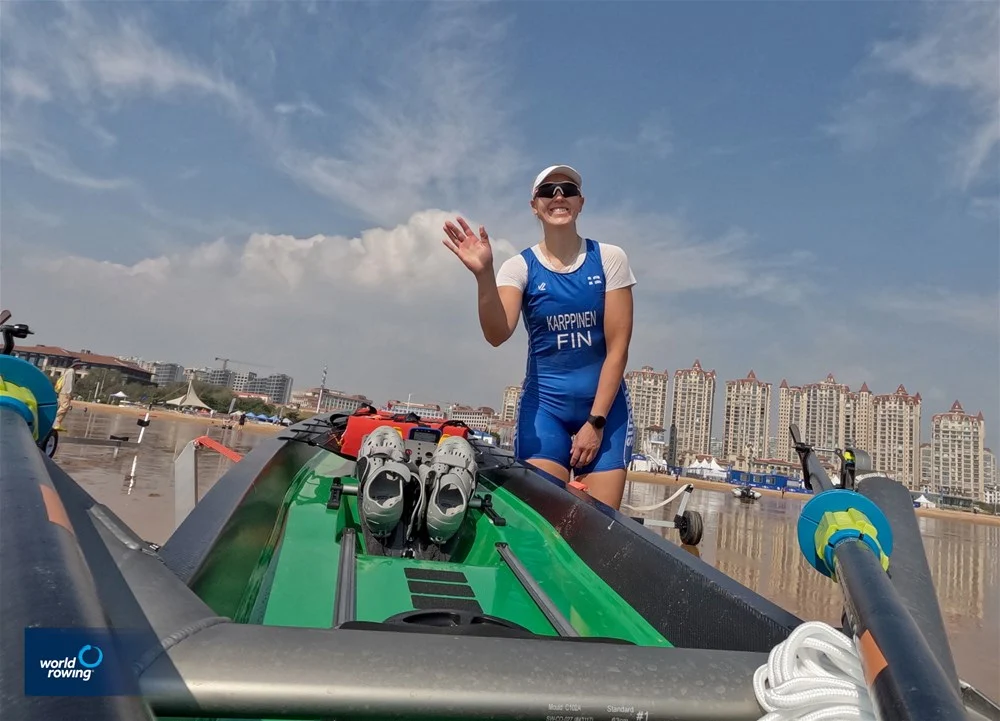
QINGDAO, CHINA – October 13, 2026 – Finnish rower Eeva Karppinen delivered a performance for the ages today at the World Rowing Coastal Championships in Qingdao, China, clinching a bronze medal in the women’s solo event (CW1x) after a stunning recovery from a significant early race error. Her resilience and unwavering determination saw her battle back from 11th place to secure a coveted spot on the podium, marking another significant achievement in her already illustrious career.
The six-kilometre A-final was fraught with drama from its earliest moments, providing spectators with a true test of nerve, skill, and sheer grit. Karppinen’s bronze medal, achieved with a time of 32:40.65, positions her firmly among the elite of international coastal rowing and underscores Finland’s growing prowess in this demanding discipline.
The Race: A Rollercoaster of Emotions
The highly anticipated women’s solo A-final began with promising intensity, as Eeva Karppinen immediately established herself among the frontrunners. Displaying the strong start that has become her hallmark, she quickly moved into contention, battling fiercely alongside American Christine Cavallo. Both athletes demonstrated exceptional power and tactical awareness in the initial stages, seemingly setting the pace for what promised to be a thrilling contest.
The Fateful First Buoy
However, the race took an unexpected and dramatic turn just as the leading boats approached the first turning buoy. In a moment of high-stakes navigation, both Karppinen and Cavallo, while vying for the optimal line, inadvertently rounded the buoy on the wrong side. This error, a common but costly mistake in the intricate world of coastal rowing, necessitated an immediate and mandatory correction. According to race regulations, competitors must navigate turning buoys on a specified side; failure to do so results in a penalty that requires the rower to backtrack and correctly round the marker.
The incident was captured vividly on the race broadcast, showing the momentary confusion and the rapid adjustments made by both athletes. For Karppinen, this meant losing crucial seconds as she had to halt her forward momentum, pivot her boat, and re-approach the buoy from the correct angle. The immediate consequence was a precipitous drop down the leaderboard, from a podium contention position to a disheartening 11th place. At the 1,000-metre mark, she found herself trailing the leaders by a significant 24.70 seconds, a deficit that in many other rowing disciplines would be insurmountable.
The Monumental Comeback
What followed was nothing short of extraordinary. Instead of succumbing to the setback, Karppinen channelled her frustration into a renewed burst of power and focus. The broadcast and on-site observers noted her relentless pursuit, stroke after stroke, as she began to systematically reel in her competitors. The open water conditions, often unpredictable with waves and currents, became both her adversary and, ultimately, her ally as she expertly navigated the course, leveraging her experience and physical conditioning.
Her comeback was a masterclass in race management under pressure. She meticulously chipped away at the time gap, overtaking one boat after another. Each stroke was a testament to her mental fortitude, turning a potential disaster into a display of heroic resilience. As the race progressed, the gap to the medal positions steadily narrowed, and by the final kilometres, Karppinen had propelled herself back into the fiercely contested medal hunt. Her dramatic surge culminated in a sprint finish that saw her secure the bronze medal, a mere 38.56 seconds behind the eventual winner, but a testament to an unparalleled recovery.
Karppinen’s Post-Race Reflection
Reflecting on the tumultuous start from Qingdao, Karppinen remained remarkably composed, highlighting her satisfaction with the outcome despite the early challenge. "The start went well, but at the first buoy, another boat pushed mine so that my bow turned to the wrong side of the buoy," she recounted. "I’m satisfied that I fought my way to bronze. Now I’m looking forward to the double race." Her words encapsulate the spirit of a true competitor – acknowledging the difficulty but focusing on the triumph of overcoming adversity. This perspective not only showcases her mental strength but also sets the stage for her upcoming events, indicating her readiness to tackle new challenges.
Understanding Coastal Rowing: A Test of Skill and Strategy
Coastal rowing is distinct from its flatwater counterpart, demanding a unique blend of physical endurance, technical prowess, and tactical intelligence. Competitors navigate challenging open water courses, often contending with unpredictable waves, currents, and wind, which adds an entirely different dimension to the sport. The courses are typically marked by a series of buoys, which rowers must navigate in a specific sequence and direction.
Navigating the Open Water
Unlike the linear, predictable nature of flatwater regattas, coastal rowing requires constant vigilance and adaptability. Rowers must make real-time decisions regarding wave patterns, wind shifts, and the optimal line to take around buoys. These races are often longer than traditional rowing events, ranging from 4 to 6 kilometres for championship distances, further testing the athletes’ stamina and ability to maintain focus over extended periods in dynamic conditions. The boats themselves are designed for stability and durability in rougher waters, differing significantly from the sleek, delicate shells used in Olympic-style flatwater rowing.
The Crucial Role of Buoys
The turning buoys are not merely markers; they are strategic points where races can be won or lost. Competitors receive detailed race instructions outlining the correct side from which each buoy must be rounded. An error, such as the one made by Karppinen and Cavallo, requires immediate correction, often costing anywhere from 10 to 30 seconds, depending on the boat’s speed and the severity of the misjudgment. This adds a navigational and strategic layer that is absent in flatwater rowing, where the course is typically a straight line with fixed lanes. The ability to make quick, accurate decisions under pressure, combined with precise boat handling around these markers, is a defining characteristic of successful coastal rowers. Karppinen’s ability to not only correct her error but also to regain such significant ground highlights her exceptional skill in this demanding aspect of the sport.
A Season of Unprecedented Success
Karppinen’s bronze medal in Qingdao is not an isolated triumph but the latest in a string of remarkable performances that have defined her 2026 season and built upon previous successes. Her consistent podium finishes underscore her status as one of the world’s leading coastal rowers.
Consistent Podium Finishes
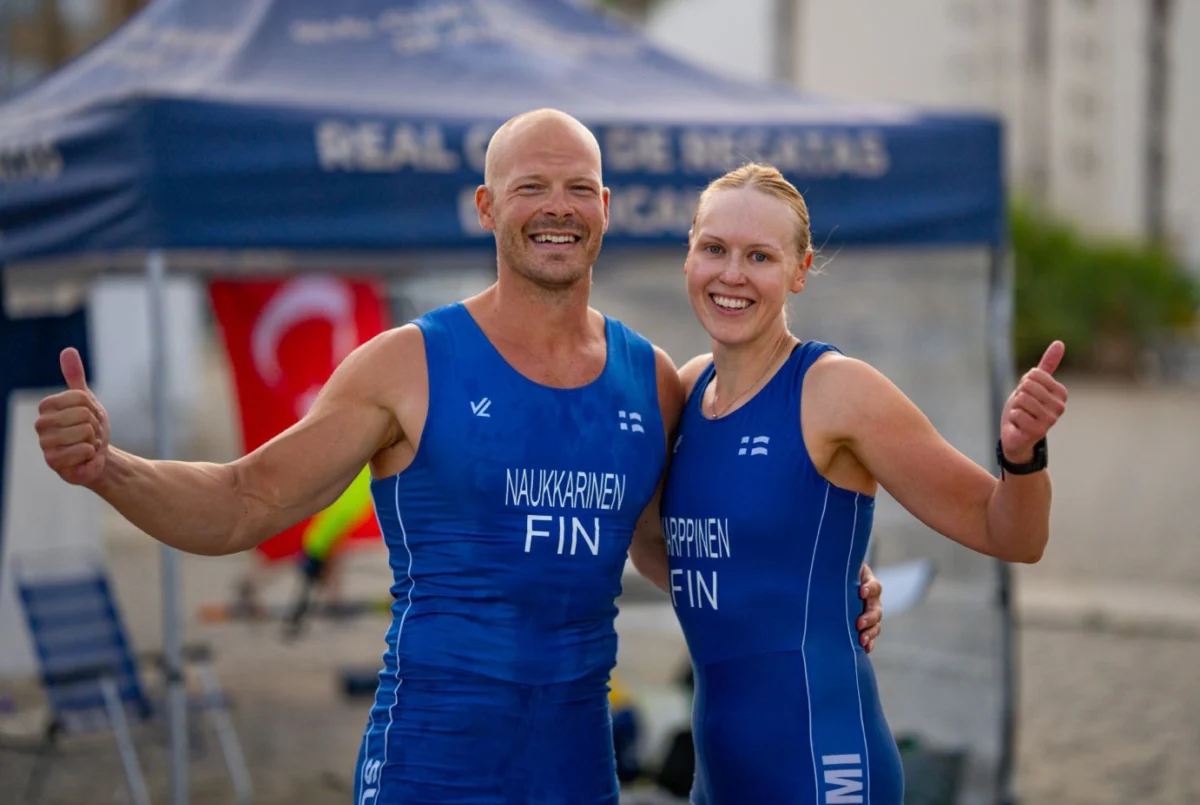
The Finnish rower’s journey to this World Championship bronze has been paved with numerous accolades. She previously demonstrated her calibre by securing a bronze medal at the 2024 World Rowing Coastal Championships, proving her consistent ability to perform at the highest level. The current season has been particularly fruitful: in September 2026, she earned another bronze medal at the European Rowing Coastal Championships held in La Línea, Spain. This European success was further compounded by a gold medal in the mixed double sculls event at the same championships, where she partnered with fellow Finnish rower Joel Naukkarinen, showcasing her versatility and strength across different boat classes.
These achievements collectively paint a picture of an athlete at the peak of her powers, demonstrating not only raw strength and endurance but also the tactical acumen required to excel in coastal rowing. Her ability to consistently deliver medal-winning performances in highly competitive international fields speaks volumes about her training regimen, mental toughness, and dedication to the sport.
The Finnish Coastal Rowing Powerhouse
Karppinen’s success, coupled with strong performances from other Finnish athletes, signals a burgeoning force in the global coastal rowing scene. The Finnish Rowing Federation has clearly invested in and fostered talent in this discipline, reaping rewards on the international stage. This sustained success is crucial as coastal rowing gains prominence and potentially moves towards Olympic inclusion, positioning Finland as a nation to watch in future Games.
The Global Stage: Qingdao 2026 Results
The 2026 World Rowing Coastal Championships in Qingdao have brought together the world’s best coastal rowers, showcasing intense competition across all categories. The women’s solo A-final was a testament to the high standard of athleticism and navigation present in the sport.
Women’s Solo Podium
The gold medal in the women’s solo event was claimed by American Audrianna Boersen, who delivered a commanding performance to finish with a time of 32:02.09. Great Britain’s Bass Andre secured the silver medal, crossing the finish line in 32:07.60. Eeva Karppinen’s heroic effort earned her the bronze with a time of 32:40.65, solidifying her place among the top three elite female coastal rowers globally. The margins between the medallists highlight the intensity and competitive nature of the final, with every second meticulously fought for.
Finnish Contingent’s Strong Showing
Beyond Karppinen’s bronze, the Finnish team demonstrated a strong presence throughout the women’s solo events. Tiia-Maria Rauttola also competed in the A-final, securing a commendable tenth place with a time of 33:58.52. Her top-ten finish further underscores the depth of talent within the Finnish national team.
In the women’s solo B-final, which took place on Monday, October 12, Tiia Ronkainen finished with an overall ranking of 19th in the championships, while Anni Keisanen secured the 21st position. These results indicate a robust and competitive contingent from Finland, with multiple athletes performing at a high level on the world stage. Their participation and strong showings contribute significantly to Finland’s growing reputation in coastal rowing, providing valuable experience and pushing the national standard higher.
Federation’s Perspective and Future Hopes
The Finnish Rowing Federation expressed immense pride in Eeva Karppinen’s performance, highlighting her incredible resilience and mental fortitude.
Praise for Resilience
A spokesperson for the Finnish Rowing Federation commented, "Eeva’s performance today was nothing short of heroic. To make such a significant error early in a World Championship final and then to fight back to a bronze medal position demonstrates an extraordinary level of mental toughness and physical conditioning. This is precisely the kind of grit and determination we aim to cultivate in our athletes. Her ability to stay focused and execute her race plan under immense pressure is truly inspiring and a testament to her dedication."
The Federation also acknowledged the broader significance of her medal, particularly in the context of coastal rowing’s potential future. "Eeva’s consistent success, including this bronze, significantly raises the profile of Finnish rowing on the international stage. As coastal rowing continues its journey towards potential inclusion in the Olympic Games, performances like Eeva’s are invaluable in showcasing our nation’s capabilities and our athletes’ potential to contend for future Olympic medals."
Looking Ahead: Mixed Doubles and Beyond
The Federation spokesperson added, "We are incredibly proud of Eeva, not just for this medal, but for her entire season. Her accomplishments, including the European gold in mixed doubles with Joel Naukkarinen, highlight her versatility. We are now eagerly anticipating the mixed double race, where she and Joel have already shown their formidable partnership by winning their heat. Their synergy on the water is remarkable, and we have high hopes for their performance."
The Road Ahead: Mixed Double and Beach Sprints
The World Rowing Coastal Championships in Qingdao are far from over for the Finnish contingent. The competition continues today, Tuesday, October 13, with more exciting finals on the horizon.
Joel Naukkarinen, Karppinen’s European Championship mixed double partner, is scheduled to compete in the men’s solo A-final at 8:45 AM Finnish time. Following this, the highly anticipated mixed double A-final will see Karppinen and Naukkarinen team up once again at 10:15 AM Finnish time. The Finnish duo has already demonstrated their formidable synergy, having convincingly won their preliminary heat on Monday with a time of 17:18.53, making them strong contenders for another medal. Their combined experience and proven success in this boat class set the stage for what promises to be another thrilling performance.
Looking further ahead, Qingdao will also host the World Rowing Beach Sprint Championships next week. This shorter, more explosive format of coastal rowing combines a beach start, a sprint row around buoys, and a beach finish, further testing the athletes’ power and agility. The presence of both championships in the same location underscores the diverse and dynamic nature of coastal rowing and its growing appeal.
Relive the Drama: Race Replay Available
For those who wish to witness the incredible comeback firsthand, a full replay of the race is available on the World Rowing YouTube channel. Viewers can experience the drama of the women’s solo final, with the critical moment of Karppinen and Cavallo missing the first turning buoy occurring approximately 4 minutes and 20 seconds after the start. This allows for a comprehensive appreciation of the challenges faced and the sheer determination displayed by Karppinen to fight her way back onto the podium.
Source of Images: Detlev Seyb / MyRowingPhoto.com, World Rowing.