Main Facts: A Global Exchange of Expertise
In November 2024, the Whitewater Rescue Institute (WRI) embarked on a mission to northwestern India, marking a significant milestone in international outdoor safety education. WRI instructors Ben Schmidt and Sam Johnston traveled to the banks of the sacred Ganga (Ganges) River to deliver a comprehensive swiftwater rescue and instructor-training program to the professional guide team at Aquaterra Adventures.
Aquaterra Adventures, a preeminent name in India’s outdoor industry, has spent decades pioneering river and trekking expeditions across the subcontinent’s rugged landscapes. This collaboration was designed to harmonize WRI’s rigorous safety curriculum with the indigenous expertise of local guides. The expedition served as a dual-purpose endeavor: first, to establish a standardized framework for swiftwater risk management on the Ganga, and second, to undertake a high-stakes descent of the Brahmaputra River, one of the most challenging whitewater environments on the planet.
Chronology: From the Missoula Foothills to the Himalayan Rapids
Phase I: The Gateway to the Ganga
The journey began in Missoula, Montana, with the WRI team traversing the globe to reach Dehradun. Upon arrival, the instructors were met with the sensory intensity of northern India—bustling markets, the vibrant chaos of urban transit, and the profound cultural shift that defines the region.
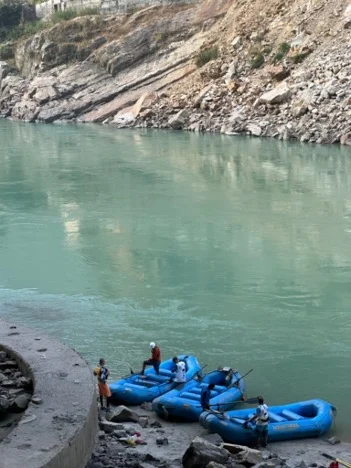
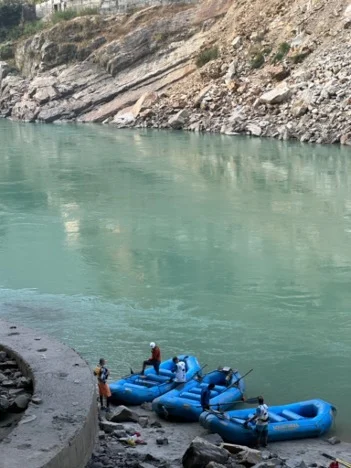
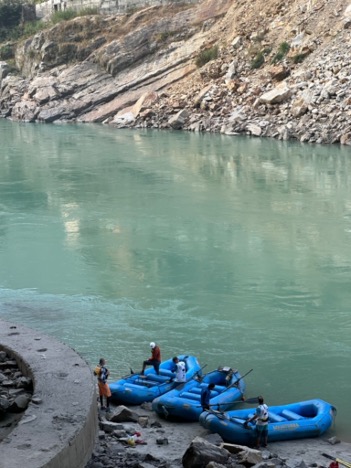
Traveling north to the town of Rishikesh, the instructors reached the headquarters of Aquaterra Adventures at Atali Ganga. The basecamp, situated in the heart of the Ganga valley, provided a dramatic backdrop for the training. Surrounded by towering trees and the constant, turquoise flow of the river, the team spent ten days engaged in intensive field training. The curriculum focused on universal river safety, emphasizing the critical importance of upstream and downstream scouting, comprehensive emergency planning, and the psychological readiness required for professional river guiding.

Phase II: Training on the Sacred Waters
The training sessions were characterized by a mutual exchange of knowledge. While Schmidt and Johnston provided the structured WRI protocols, they were met with an equally impressive level of skill from the local guides. Many of these professionals grew up on the tributaries of the Ganga, possessing a deep, intuitive understanding of the water that can only be honed through a lifetime of experience.
The training covered:

- Aggressive and Defensive Swimming: Techniques for navigating turbulent hydraulics.
- Throwbag Deployment: Precision rescue maneuvers for stranded paddlers.
- Inflow and Entrapment Management: Strategic responses to high-pressure rescue scenarios.
- Risk Mitigation Strategy: Standardizing safety communication during large-scale expeditions.
Phase III: The Brahmaputra Expedition
Following the conclusion of the Ganga workshops, the WRI team, supported by Aquaterra owner Vaibhav Kala, transitioned to the remote northeastern frontier to take on the Brahmaputra. The logistics of this phase were substantial, requiring a flight to Dibrugarh and a grueling two-day drive into the interior of Arunachal Pradesh.
The Brahmaputra descent is widely considered the "Everest of river rafting." The team navigated rapids characterized by 30-foot wave faces, massive lateral currents, and river speeds exceeding 20 miles per hour. Under the leadership of veteran guide Rana, who was completing his 23rd descent of the river, the team relied on precise timing and sheer physical endurance to navigate the water’s raw, unpredictable power.

Supporting Data: The Anatomy of a High-Stakes Environment
The efficacy of the training was put to the test during the Brahmaputra descent, where environmental variables presented constant challenges.
- River Dynamics: The Brahmaputra is a high-volume river system. The combination of immense water mass and steep gradients creates hydraulics that require not just physical strength, but a sophisticated understanding of water reading.
- Logistical Complexity: Operating in Arunachal Pradesh requires navigating limited infrastructure. The success of the expedition was contingent upon the meticulous planning of Aquaterra’s logistics team, which ensured that food safety, medical access, and transport were secured in regions where external support is essentially non-existent.
- Equipment Reliability: The WRI curriculum placed heavy emphasis on the maintenance of technical rescue gear. In the heat and humidity of the Indian jungle, gear degradation is a significant factor, making the maintenance protocols taught during the training sessions vital for long-term safety.
Official Perspectives and Cultural Exchange
The collaboration between WRI and Aquaterra Adventures transcends the technical aspects of rescue training; it represents a cultural bridge in the outdoor community.

"The guides’ passion to learn and master these techniques was truly inspiring," noted Sam Johnston in his field notes. "Their knowledge, river skills, and experience were humbling. It stands to figure that guides who grow up near the biggest mountains in the world and run some of the biggest whitewater develop world-class skills."
Vaibhav Kala, owner of Aquaterra, underscored the importance of this exchange. By hosting international experts, Aquaterra continues to push the envelope for safety standards in India’s burgeoning adventure tourism market. The camaraderie built around the evening campfires—fueled by shared stories of the river and a common respect for the landscape—served as the glue that held the mission together. The integration of local traditions, such as the foraging for unique, flavorful river beetles with local community members, enriched the experience, reminding the WRI team that river-running is as much about human connection as it is about navigating current.

Implications: The Future of Swiftwater Safety in India
The implications of the November 2024 expedition are twofold:
1. Elevating Local Safety Standards
By training a cohort of Indian guides to WRI standards, the instructors have effectively decentralized the knowledge base. These guides are now equipped to act as safety leaders, mentoring newer generations of paddlers and ensuring that the professional standard of river guiding in India continues to rise. The goal is to move beyond "learning" and into "passing it on," creating a self-sustaining cycle of safety education.

2. Redefining the "Stewardship" Model
The journey served as a profound reflection on the responsibility of river professionals. The WRI/Aquaterra partnership demonstrates that being a guide is more than a commercial endeavor; it is a duty to protect the wild spaces and the individuals who enter them.
As Schmidt and Johnston concluded, the ultimate takeaway from the journey was the realization that conquering the river is a misnomer. Instead, the river acts as a mirror, forcing the paddler to confront their own limitations, fears, and strengths. The partnership has set a precedent for future international collaborations in the outdoor industry, proving that when diverse perspectives on risk management converge, the result is a safer, more connected global community of water enthusiasts.

Looking forward, the WRI expects this partnership to serve as a blueprint for future initiatives. As the demand for adventure travel in India grows, the foundation laid on the banks of the Ganga and the Brahmaputra will ensure that safety remains the cornerstone of the experience. The story of this expedition is not just one of navigating rapids, but of navigating the currents of change in global outdoor education—a story that, like the rivers themselves, continues to flow toward new horizons.