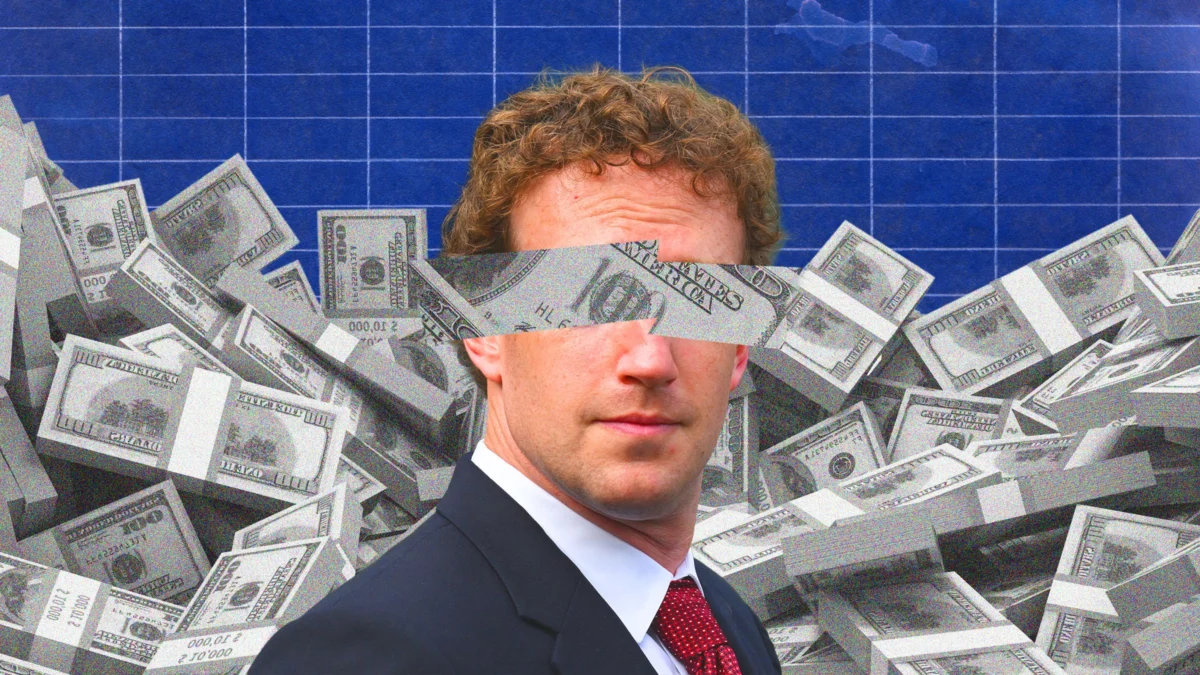
In the high-stakes theater of American corporate litigation, few companies have occupied the defendant’s chair as consistently—or as controversially—as Meta. Earlier this week, the tech giant was slapped with a staggering $25 billion fine by a New Mexico judge, a penalty stemming from consumer protection violations linked to the long-shadowed Cambridge Analytica scandal.
While the headline figure is objectively astronomical, it prompts a cynical but necessary question: In an era where Meta commands a market capitalization of $1.7 trillion, is this "punishment" merely a line item in a quarterly budget? For critics, legal scholars, and observers at WIRED, the ruling represents a critical juncture in the accountability of Big Tech. Yet, whether it functions as a genuine deterrent or simply the "cost of doing business" remains the central tension of the case.
The New Mexico Ruling: A Deep Dive into the Facts
The recent $25 billion penalty is the culmination of a lawsuit filed in 2021. The state of New Mexico alleged that Meta flagrantly violated the state’s Unfair Practices Act by deceiving its user base regarding data privacy protocols. The trial, which concluded with a jury verdict in favor of the state this past September, unearthed a treasure trove of internal documentation that had remained obscured since the 2018 Cambridge Analytica fallout.
The fine, while reduced from an original requested range of $35 to $45 billion, remains the largest single penalty ever levied against the company. Despite the magnitude of the number, the fiscal impact on Meta’s bottom line is tempered by the company’s massive cash reserves and current market positioning. When viewed through the lens of pure corporate finance, the fine acts more as a persistent irritant than an existential threat.
A Chronology of Legal Attrition
To understand the current state of Meta’s legal woes, one must look at the cumulative effect of the last several years. The company is currently navigating a multi-front war involving state attorneys general, federal regulators, and private citizens.
- 2018-2021: The aftermath of the Cambridge Analytica scandal creates a foundational layer of distrust and ongoing discovery, providing the evidentiary backbone for the recent New Mexico ruling.
- Early 2026 (Child Safety): A jury ordered Meta to pay $375 million for violations related to child safety policies in New Mexico. This was followed by a second-phase ruling of $567 million, signaling the state’s aggressive stance toward the company.
- August 2026: A landmark settlement with the majority of US states concluded a federal case regarding addictive app features. Meta agreed to pay between $17 and $18 billion over a ten-year period.
- Ongoing (Mental Health): In a Los Angeles County superior court, Meta was found liable for damages related to a user’s mental health decline, citing addictive design features. The company was ordered to pay the lion’s share of a $6 million award.
This accumulation of litigation suggests that the legal environment has shifted. Meta is no longer just fighting occasional high-profile cases; it is battling a constant, grinding war of attrition.
The "Cost of Doing Business" Argument
Financial analysts have long noted that massive fines often fail to change corporate behavior if the profit generated by the behavior outweighs the penalties. Meta’s valuation, hovering near $1.7 trillion, serves as a protective layer. Even if the court had enforced the maximum theoretical penalty—a staggering $219 billion based on the $5,000-per-violation limit for 43 million instances—Meta would likely have survived, albeit with a significant dent in its balance sheet.
The stock market’s reaction to these rulings has been muted, often overshadowed by broader macroeconomic concerns, such as the company’s massive capital expenditure on artificial intelligence and fluctuations in AI-sector growth. As long as Meta continues to deliver on earnings, the "legal tax" appears to be factored into the company’s risk profile by investors.
Official Responses: A Clash of Perspectives
Meta’s leadership has been characteristically combative regarding these rulings. C.J. Mahoney, Meta’s chief legal officer, issued a statement following the $25 billion ruling that signaled an intent to fight the decision through every available appellate channel.
"This ruling, and the Attorney General’s approach to enforcement, makes it all but impossible to do business in the state of New Mexico," Mahoney stated. He further characterized the suit as a "tax on speech," arguing that the court is attempting to dictate the boundaries of online expression. This defense highlights Meta’s strategy of framing regulatory oversight as an infringement on constitutional rights, a narrative they have maintained since the inception of their content moderation debates.
Conversely, legal teams representing the states, such as Corban Rhodes of DiCello Levitt, argue that the goal is not to "tax speech" but to expose systemic failures. Rhodes emphasizes the importance of the evidence brought to light, including a 2018 email from then-COO Sheryl Sandberg. In the internal communication, Sandberg acknowledged the catastrophic scale of the company’s data exposure: "The single biggest issue we face… is that there were a MILLION developers with access to the data. We are going to have many, many, many more moments like this."
The Turning Point: Why This Time Might Be Different
While monetary fines may not topple a trillion-dollar company, legal experts suggest that a "death by a thousand cuts" approach is beginning to yield structural changes.
1. The Erosion of Indemnification
Professor Brian Quinn of Boston College Law School suggests that the real danger to Meta lies not in the fines, but in the potential for shareholder revolts regarding the protection of individual executives. Currently, Meta indemnifies its officers for legal costs, treating them as protected actors acting in "good faith." However, as the same facts appear in lawsuit after lawsuit, shareholders may eventually demand that the company stop shielding those responsible for repeated regulatory failures. If directors lose their indemnification, the personal risk of leading Meta becomes untenable.
2. The Insurance Gap
Perhaps the most significant development is the changing stance of the insurance industry. In March 2026, a Delaware judge ruled that insurers do not have a duty to defend Meta against the thousands of lawsuits it faces. If insurance companies begin to view Meta as an "uninsurable" risk, or if they start to dictate design and development protocols as a prerequisite for coverage, they could become the de facto regulators of the company’s AI and data practices.
3. Public and Internal Sentiment
The "perception problem" is compounding. Beyond the courtroom, Meta is facing pressure from its own workforce, which has become increasingly vocal about internal policies. When combined with public protests and the constant scrutiny of jury trials, the company’s brand equity—the intangible asset that drives user retention and advertiser trust—is slowly being eroded.
The Road Ahead: AI and the Future of Regulation
As the dust settles on the social media era, both regulators and the courts are turning their gaze toward the next frontier: Artificial Intelligence. Corban Rhodes and other legal experts anticipate that the next wave of litigation will pivot from data privacy and addictive design to the ethical deployment of AI.
The legal landscape is often criticized for being behind the curve, responding to yesterday’s technology with today’s laws. However, the sheer volume of evidence collected in the New Mexico and federal cases provides a blueprint for future litigation. The lesson Meta has learned—and which it may be forced to live by—is that while individual fines may be manageable, the public disclosure of internal corporate dysfunction is not.
For now, Meta remains a financial juggernaut, seemingly immune to the bite of multi-billion dollar penalties. But as the mechanisms of corporate governance, insurance, and shareholder liability begin to tighten, the question is no longer whether Meta can afford the fines, but whether it can afford the ongoing erosion of its institutional legitimacy. The $25 billion penalty may not be the blow that brings the company down, but it is certainly the loudest warning yet that the era of unfettered, consequence-free expansion is coming to a close.