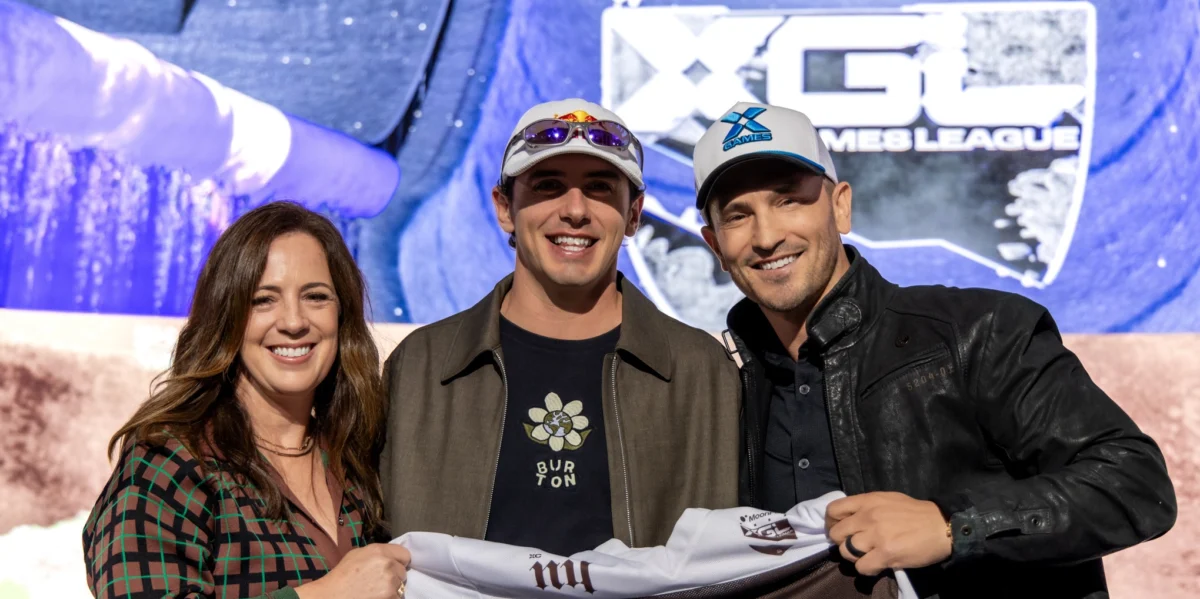
LOS ANGELES — The landscape of action sports shifted fundamentally on the evening of September 16, 2026. Inside the state-of-the-art Cosm Los Angeles, beneath a massive, immersive LED dome, the inaugural MoonPay X Games League (XGL) Winter Draft signaled the end of the "standalone event" era and the birth of a global, team-based franchise model.
With over 500 industry leaders, athletes, and fans watching, four newly minted clubs—XC Golden State, XC New York, XC Park City, and XC Whistler—selected their rosters, officially tethering the world’s most elite ski and snowboard athletes to a structured, season-long championship narrative.
The Main Facts: Defining the XGL Structure
The XGL is not merely a rebranding; it is an evolution of the X Games’ 30-year legacy. Moving beyond the traditional format of individual athletes chasing isolated medals, the league introduces a sophisticated team-based architecture.
Each of the four clubs consists of 10 athletes—five men and five women—ensuring a co-ed competitive environment that mirrors the sport’s gender parity. These rosters were built over five intense rounds of drafting, drawing from a pool of 40 of the world’s most decorated winter sports stars.
The stakes have been raised significantly: points are now accrued throughout a three-stop tour, culminating in the crowning of a league champion. This model provides fans with a continuous, season-long narrative arc, mirroring the engagement strategies of traditional major league sports while preserving the creative, individual progression that has defined the X Games since their inception in the mid-90s.
The Chronology: A Night of Strategic Selection
The draft event at Cosm Los Angeles was designed to feel like a high-stakes professional sports ceremony. The drama unfolded in real-time, broadcast to a global audience via the ESPN App, The Roku Sports Channel, YouTube, and Kick.
The First Round: Setting the Tone
The evening began with a clear statement of intent. Jonny Moseley, General Manager of XC Golden State, wasted no time, selecting four-time X Games medalist and global superstar Eileen Gu with the first overall pick. Gu’s selection by her "hometown" club set a standard for the caliber of talent the league aims to capture.
The selections that followed highlighted the tactical nature of the draft:
- Pick 2 (XC New York): General Manager Dave Sypniewski selected the legendary Mark McMorris, a perennial icon of snowboarding, to anchor the East Coast squad.
- Pick 3 (XC Park City): Sharalee "Haze" Hazen, balancing her responsibilities as the GM for both the Summer and Winter clubs, selected the dynamic Yiming Su, emphasizing technical prowess and global appeal.
- Pick 4 (XC Whistler): Ryan Stutt closed out the first round by picking Megan Oldham, making her the first-ever draft pick for the Canadian-based XC Whistler.
The Roster Build
Over the subsequent four rounds, the GMs navigated a diverse talent pool. The draft featured athletes ranging from 14-year-old phenom Patti Zhou to 32-year-old veterans like McMorris and Scotty James. With 14 countries represented, the XGL has effectively internationalized the concept of the "home team," creating a competitive environment that transcends borders.
Supporting Data: The 2027 Winter Season Roadmap
The transition from the draft floor to the snow is fast-approaching. The 2027 XGL Winter Season is set to be a grueling test of consistency, endurance, and team strategy.
The 2027 Competition Schedule:
- Aspen, Colorado (January 29–31): The league kicks off at the historic Buttermilk Mountain, the spiritual home of winter action sports.
- Calgary, Alberta, Canada (February 19–21): The tour moves north, testing the teams in the heart of the Canadian Rockies.
- Ruka, Finland (April 9–11): The championship finale, bringing the spectacle to Europe to determine the inaugural XGL Winter Champions.
The scoring system is designed to reward depth. Because each club fields 10 athletes, a team’s performance depends on the aggregate success of its entire roster rather than the heroics of a single star. This structure introduces "consequences"—if a team’s top athlete fails to podium, their teammates’ performances become the difference between a championship title and a runner-up finish.
Official Responses: Voices of the League
The reaction from the athletes and leadership has been one of profound optimism regarding the growth of the sport.
Eileen Gu, speaking shortly after her selection, expressed the weight of the moment: "I just wanted to say how excited and honored and grateful I am to be the first overall pick of the X Games League. Thank you so much to XC Golden State. I’m really excited to make something super magical happen this season. I think this league is going to be so big for our industry, for our sport, and my dream of bringing freeskiing to more people will be realized one step at a time."
Jeremy Bloom, CEO of X Games and a visionary behind the XGL model, emphasized the departure from the past: "For nearly 30 years, Winter X Games has created iconic individual moments. Tonight, we added something entirely new: consequences across a season. We’re taking a brand people have loved for decades and giving fans something they’ve never had before: teams to follow, a season to track, and a championship to fight for."
Implications: The Financial and Cultural Shift
The launch of the XGL is not merely a change in format; it is a fundamental shift in the economics of action sports.
Professionalization and Athlete Compensation
Historically, action sports athletes relied heavily on individual sponsorships and single-event prize purses. The XGL model introduces a franchise-based salary structure and performance bonuses linked to team success. This provides a more stable financial foundation for the athletes, allowing them to focus on progression and training without the "boom-or-bust" pressure of a single contest weekend.
Fan Engagement and Global Reach
By aligning athletes with specific "clubs" (Golden State, New York, Park City, Whistler), the XGL is attempting to foster regional loyalty. Fans in the New York area now have a direct investment in the success of the XC New York roster. This geographic anchoring is a staple of traditional leagues like the NBA or NFL and is a bold experiment in a sport traditionally defined by individual cults of personality.
The Role of Technology
The use of Cosm Los Angeles for the draft is a testament to the league’s focus on the "fan experience." By utilizing 8K LED immersive technology, the XGL is positioning itself as a leader in digital-first sports presentation. This, combined with the multi-platform streaming approach (Roku, YouTube, Kick, ESPN), ensures the league remains accessible to a younger, digital-native demographic that is increasingly abandoning linear cable.
Looking Ahead: A New Horizon for Action Sports
As the 2027 season approaches, the pressure is now on the General Managers and their 10-athlete rosters to forge chemistry. The draft was only the beginning; the real test will occur on the slopestyle courses and halfpipes of Aspen, Calgary, and Ruka.
The MoonPay X Games League has successfully bridged the gap between the rebellious, DIY roots of snowboarding and skiing and the structured, commercialized reality of modern professional sports. For the athletes, the fans, and the stakeholders, the mission is clear: to elevate the sport to a global stage where every run, every trick, and every point contributes to a legacy.
With the rosters locked and the schedule set, the countdown to January 29 has officially begun. The industry is watching to see if this team-based, season-long structure will indeed bring freeskiing and snowboarding to the mass-market audience that the X Games has pursued for three decades. If the excitement at the Cosm draft is any indication, the XGL is not just ready for the winter—it is ready to redefine it.