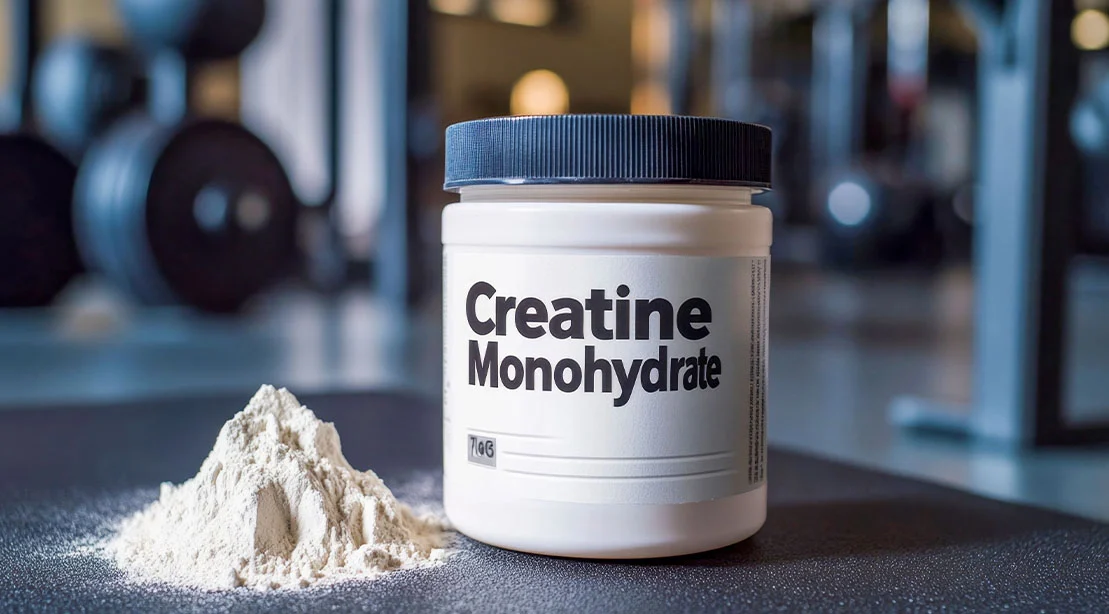
Creatine monohydrate has been a bedrock of the sports nutrition industry for decades. It is the perennial survivor of the supplement world—having outlasted countless "next big things," proprietary blends, and aggressive marketing campaigns. Cheap, heavily researched, and undeniably effective when paired with resistance training, it has earned its status as a staple in gym bags globally.
However, in the age of viral social media clips and click-driven journalism, "effective" is often not enough. Recently, the internet has been abuzz with a bold, almost provocative narrative: you can skip the gym, keep the creatine, and still build significant muscle. It is a siren song for the sedentary, echoing the famous quip by bodybuilding legend Ronnie Coleman: "Everybody wants to be a bodybuilder, but nobody wants to lift no heavy-ass weights."
But does this new research actually provide a shortcut, or are we witnessing a classic case of data misinterpretation? A recent study from Texas A&M University, published in the Journal of the International Society of Sports Nutrition (ISSN), has sparked this debate. While the institution and the organization behind the study are highly respected, the interpretation of the findings requires a scalpel, not a sledgehammer.
The Study: Anatomy of the Experiment
To understand the headlines, we must look at the methodology. Researchers at Texas A&M recruited 73 sedentary adults, aged 45 to 65, for a 12-week intervention. Of the initial cohort, 64 participants successfully completed the trial.
The participants were divided into two primary behavioral groups: those who followed an exercise-and-diet program and those who did not. Within these groups, individuals were randomized to receive either 10 grams of creatine monohydrate daily or a placebo.
The results were, at first glance, startling. The sedentary group taking creatine gained approximately 2.4 pounds of "lean tissue" as measured by DXA (Dual-energy X-ray Absorptiometry) scans. The placebo group, conversely, showed no such gain. Furthermore, the creatine-supplemented group demonstrated improvements in specific strength tests, despite having performed no formal exercise.
The "Lean Tissue" Fallacy
To the casual observer, 2.4 pounds of lean tissue sounds like a significant transformation. However, in exercise physiology, "lean tissue" is a technical term that is often misunderstood by the public.
The DXA scan is an industry-standard tool for measuring body composition, but it is not a perfect arbiter of muscle hypertrophy. It measures the density of body mass, and it cannot distinguish between high-quality, contractile muscle protein and the water held within muscle cells.
Creatine is an osmotically active substance; it draws water into the muscle cells. This hydration effect is one of its primary mechanisms for performance enhancement. In the early stages of supplementation, a significant portion of "lean mass gain" is often attributable to intracellular fluid retention rather than new protein synthesis. Because the study did not isolate body water changes, we cannot definitively state that the 2.4-pound increase consisted of new muscle fibers. The "gain" may well be a manifestation of the supplement doing exactly what it is designed to do: hydrating the muscle.
Chronology of the Debate: From Peer Review to Viral Misinformation
The trajectory of this information follows a predictable pattern seen in modern sports science reporting:
- August Publication: The study is released in the Journal of the International Society of Sports Nutrition, a reputable, peer-reviewed outlet.
- Scientific Nuance: Within the paper, authors include the necessary caveats regarding small sample sizes, the distinction between fluid retention and hypertrophy, and the exploratory nature of the cognitive and metabolic data.
- The "Clickbait" Phase: As the study makes the rounds this fall, secondary sources strip away the limitations. Headlines emerge suggesting that "Creatine Builds Muscle Without Exercise," effectively ignoring the study’s own context.
- Public Misconception: A wave of fitness enthusiasts and sedentary individuals begin to view creatine as a pharmacological alternative to physical labor, rather than an ergogenic aid for it.
Small Sample Sizes and Methodological Limitations
When analyzing scientific data, context is king. The "no-exercise" cohort in this study consisted of only thirteen creatine users and thirteen placebo users. While this is not statistically "worthless," it is a far cry from a large-scale clinical trial that could definitively change medical guidelines.
Furthermore, the study design utilized a self-selection process for the exercise intervention. Participants chose whether or not to join the training program, which introduces potential selection bias. In a true, fully randomized controlled trial, the researchers would assign the activity level. Because the participants were not randomized into the "exercise" vs. "no-exercise" buckets, comparisons between these two groups must be viewed with skepticism.
It is also worth noting that the researchers tested a wide variety of outcomes, including memory, blood lipids, and blood-sugar markers. While these exploratory findings are promising, they are currently preliminary. In scientific parlance, "exploratory" is a polite way of saying, "We found something interesting, but we need to replicate this in a much larger group before we draw any conclusions."
Financial Transparency: The Funding Factor
A critical component of academic integrity is the disclosure of funding and potential conflicts of interest. In this instance, the study was supported by a foundation gift. Crucially, a commercial creatine manufacturer provided the supplements and covered the cost of a laboratory assay, and the senior researcher disclosed a position on that company’s scientific advisory board.
Does this invalidate the science? Not necessarily. It is common for industry to fund research into their own products, and reputable journals require these disclosures to ensure transparency. However, for the consumer, it is a reminder that the study was conducted within an ecosystem that benefits from the popularization of creatine. Readers should always check the "Conflict of Interest" section of any study before allowing its findings to influence their health decisions.
The Real-World Implications: Why the Gym Still Wins
Despite the buzz, the study’s findings regarding the "exercise group" are the most robust. Those who combined resistance and aerobic training three times a week with a calorie-restricted diet saw even greater benefits: nearly three pounds of lean tissue gain and superior performance improvements compared to the sedentary group.
The data does not suggest that creatine replaces the squat rack; rather, it suggests that creatine is a powerful tool to enhance the results of the work you are already doing. If you want the metabolic, cognitive, and physical benefits of training, you must still do the training.
Furthermore, the dosage used in the study—10 grams daily—is significantly higher than the standard 3- to 5-gram "maintenance" dose recommended for most athletes. Increasing the dose without a corresponding increase in training volume may simply lead to faster saturation of muscle stores, or potentially gastrointestinal distress in sensitive individuals.
Conclusion: A Supplement, Not a Savior
Creatine monohydrate remains one of the most well-supported supplements in the history of human performance. It is safe, effective, and cost-efficient. However, it is not "magic dust."
If you are a healthy individual looking to optimize your body composition, the roadmap remains the same: prioritize resistance training, maintain a balanced diet, and use creatine to support your performance and recovery. If you are sedentary, creatine might provide a modest boost to your baseline, but it will not replicate the profound health benefits of a consistent exercise regimen.
Before beginning any high-dose supplementation, particularly if you have underlying concerns regarding kidney function or other medical conditions, a consultation with a physician is essential. The latest data from Texas A&M is a fascinating piece of the puzzle, but it does not change the fundamental truth of the gym: if you want the gains, you have to do the heavy lifting.