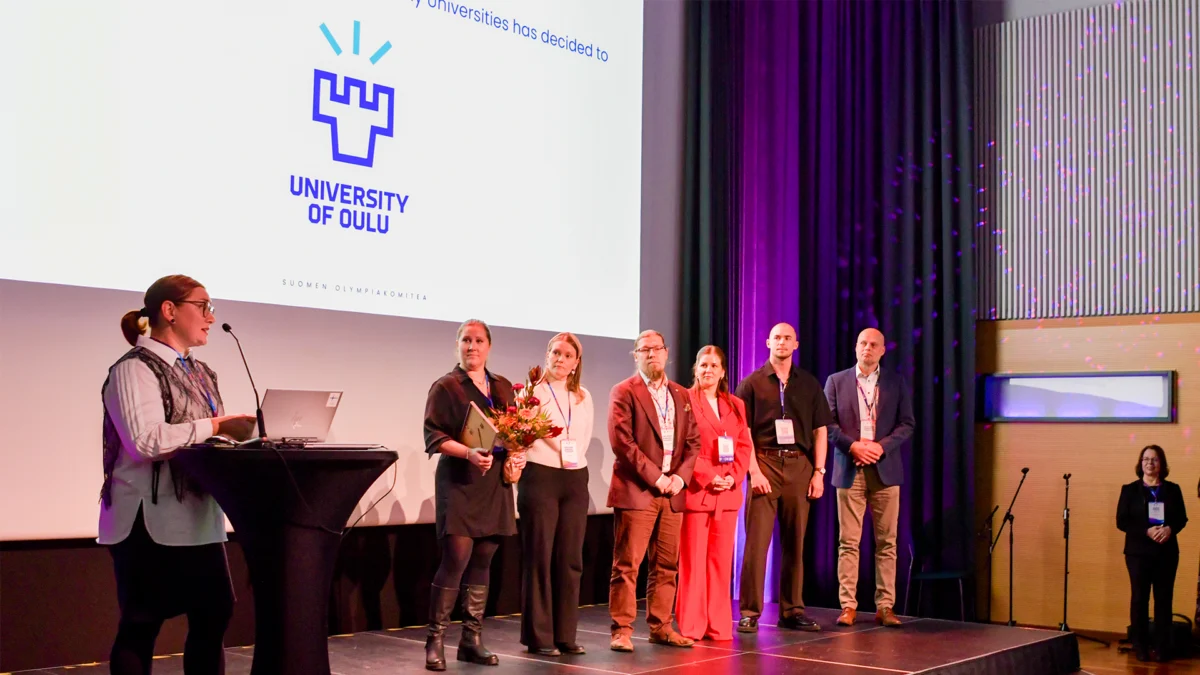
OULU, Finland – In a significant milestone for Finnish academic and athletic synergy, the University of Oulu has officially been awarded the "Elite Athlete-Friendly Higher Education" quality label. The recognition was formally conferred on October 6, 2026, during the National Dual-Career Seminar held in Oulu. This achievement marks the University of Oulu as the 18th higher education institution in Finland to successfully pass the rigorous national audit process, cementing its role as a premier destination for students who refuse to choose between world-class academics and competitive sports excellence.
Main Facts: The Intersection of Excellence
The audit, known by the Finnish acronym HUMKK, is a comprehensive evaluation designed to ensure that universities provide the necessary infrastructure to support student-athletes. The accreditation signifies that the University of Oulu has met 23 distinct quality criteria across six critical domains. These range from individual study counseling and flexible scheduling to the recognition of prior learning gained through athletic achievement and seamless institutional cooperation with regional sports academies.
By obtaining this status, the University of Oulu joins an elite network of institutions committed to the "dual-career" model—a pedagogical and organizational framework that facilitates the pursuit of a university degree while maintaining a professional or semi-professional sports career.
A Chronology of the Audit Journey
The path to this certification was neither short nor superficial. It was a multi-year effort that began with a self-assessment phase, followed by a collaborative audit process involving faculty, administration, and, crucially, the athletes themselves.
- 2024–2025 (Preparation Phase): The University of Oulu initiated an internal review of its existing support systems. During this period, the university identified gaps in communication between academic departments and the athletic training centers.
- Autumn 2025 (Pilot Implementation): Recognizing the need for personalized support, the Faculty of Medicine launched a pioneering pilot program. In this initiative, a dedicated liaison was appointed to act as a personal tutor for twenty student-athletes, providing a single point of contact for navigating the demands of medical studies alongside high-performance training.
- Early 2026 (Audit Execution): A national audit team, appointed by the steering group for elite athlete-friendly higher education, conducted an on-site review. The team scrutinized the university’s administrative policies and interviewed stakeholders.
- October 6, 2026 (Formal Recognition): The culmination of the process took place at the National Dual-Career Seminar in Oulu, where the university was officially presented with the quality label.
Supporting Data: Why the Model Works
The effectiveness of the University of Oulu’s approach lies in its structural integration. The audit team highlighted the university’s "student-centered guidance service package" as a standout strength. At the core of this package is the enhanced personal teacher model, which ensures that athletes are not treated as exceptions to the rule, but as students with specific, manageable requirements.
The university’s long-standing cooperation with the Oulu Region Sports Academy (Ouluseutu Urheiluakatemia) serves as the backbone of this success. This partnership is characterized by established structures and regular, institutionalized interaction, which prevents the "siloing" of information. Instead, academic staff and sports coaches share a common understanding of the student’s overall workload, preventing burnout and ensuring that academic progress is not sacrificed during intense competitive seasons.
Official Responses and Stakeholder Insights
The Administrative Perspective
Johanna Flyktman, Quality Specialist at the University of Oulu, views the process as a transformative experience for the institution.
"The HUMKK audit process significantly strengthened the commitment of our university leadership to support the reconciliation of studies and sports careers," Flyktman remarked during the award ceremony. "It also substantially increased the awareness of our staff regarding the practical tools available to support these students. We didn’t just wait for the audit to end; we implemented development measures throughout the process. The active involvement of the student-athletes themselves ensured that our policies are not just theoretical, but actually work in the daily life of an athlete."
Flyktman emphasized that the audit was not merely a box-ticking exercise, but a strategic move to create a foundation for long-term development.
The Student-Athlete Voice
For those living the dual-career reality, the changes are tangible. Toni Keränen, a javelin thrower and Business Studies student at the University of Oulu, played a key role in the process by providing the perspective of the athlete.
"The HUMKK project provided a wonderful platform for athletes to participate and share their experiences," Keränen said. "These events offered a unique opportunity to hear how my peers handle similar challenges and to reflect on my own situation. I believe this has been incredibly helpful for many, not just for their current studies, but as preparation for the future. Beyond the academics, I can already see that the process has fostered a greater sense of community among the athletes at the university."
Implications: A National Movement
The implications of the University of Oulu receiving this label extend far beyond the campus borders. The national goal of the "Elite Athlete-Friendly Higher Education" initiative is to standardize the support systems across the country, ensuring that a student-athlete moving from a vocational secondary school to a university does not experience a "cliff" in support.
1. Removing Barriers to Entry
One of the primary goals of the quality label is to smooth the transition from the second-degree level (upper secondary school) to higher education. Often, the transition to university is where most student-athletes drop out, citing the rigidity of academic schedules. By standardizing these processes, the University of Oulu is helping to retain talent within the Finnish education system.
2. Recognition of Competence
A key component of the new quality standard is the recognition of skills learned through sport. Leadership, resilience, time management, and team dynamics—skills honed on the track or in the gym—are increasingly being formally recognized as transferable skills within the academic record. This adds value to the athlete’s CV and aids in their eventual transition to the workforce post-graduation.
3. A Blueprint for Future Universities
The University of Oulu’s success serves as a blueprint for other institutions. The success of the medical faculty’s pilot program, where one mentor oversees twenty athletes, provides a scalable model that other universities can adopt. It proves that personalized care does not require an impossible administrative burden, but rather a dedicated, well-structured liaison system.
Looking Forward: The Path Ahead
While the University of Oulu has achieved this prestigious recognition, both Flyktman and the administration stress that this is not an end state. The "quality label" is a living status; it requires continuous assessment and improvement.
As sports evolve, so too must the academic support structures. Future developments at the University of Oulu are expected to include expanded digital learning opportunities that allow athletes to participate in seminars while training at international camps, and the further integration of mental health support, which is increasingly recognized as a critical component of the dual-career athlete’s success.
By aligning its institutional mission with the aspirations of its student-athletes, the University of Oulu has set a standard that benefits not only the individual, but the broader Finnish society. The message is clear: intellectual and athletic pursuit are not mutually exclusive, provided the academic environment is built to sustain both. As the university continues to refine these practices, it stands as a testament to the idea that with the right support, the sky is the limit for those willing to pursue excellence in all its forms.