For the modern angler, a motor on a fishing kayak is far more than a tool for speed; it is a fundamental shift in strategy. While the image of a silent paddler gliding through misty waters is romantic, the reality of modern fishing often involves battling stiff winds, navigating against relentless currents, and reaching remote honey holes miles from the launch. In these scenarios, a motor isn’t a luxury—it is an energy-saving asset that preserves your physical stamina for the only part of the day that truly matters: the cast.
However, the transition from paddle to power is fraught with pitfalls. Not every kayak marketed as "motor-ready" offers a seamless experience. Some platforms are stable enough to support a trolling motor but are so heavy they become impossible to transport solo. Others feature plush seating that masks poor battery placement, or sleek aesthetics that crumble under the weight of a full rigging—tackle crates, rod holders, fish finders, and anchor systems.

Main Facts: The Anatomy of a Motorized Setup
To successfully integrate a motor into your kayak fishing routine, one must view the boat as a system rather than a vessel. The goal is to maximize "on-water efficiency," where the motor serves to extend your range and improve your precision.
The Power Paradigm
Most anglers opt for electric trolling motors over gas outboards. Electric motors offer silent operation, precise low-speed control, and significantly lower maintenance requirements. When selecting a motor, the focus must shift to battery management. A 12-volt lithium-ion battery is the industry standard for its high power-to-weight ratio, though the "Amp-Hour" (Ah) rating should be carefully calculated based on your average outing duration.
The Load Capacity Myth
A critical error many novices make is ignoring the "all-in" weight. A kayak might have a capacity rating of 400 pounds, but once you add the boat’s base weight, the motor, the battery, the seat, your own body weight, and 50 pounds of gear, you may find yourself sitting dangerously low in the water. Always calculate your "rigged weight" before finalizing a purchase.
Chronology of the Modern Motorized Kayak
The evolution of the fishing kayak has moved in distinct phases over the last decade:
- The Primitive Era (Pre-2010): Anglers were forced to DIY their setups, often using heavy-duty duct tape and wooden mounts to attach trolling motors to recreational kayaks. It was dangerous, inefficient, and often resulted in flooded electronics.
- The Integration Wave (2010–2018): Manufacturers began designing kayaks with dedicated "Flex Pods" or stern mounts. This era focused on structural reinforcement to handle the torque of electric motors.
- The Systemic Design Era (2019–Present): Companies now treat the motor as an integral part of the boat’s geometry. Modern kayaks are designed with dedicated cable channels, protected transducer scuppers, and optimized center-of-gravity placement for heavy batteries.
Top Fishing Trolling Motor Kayaks
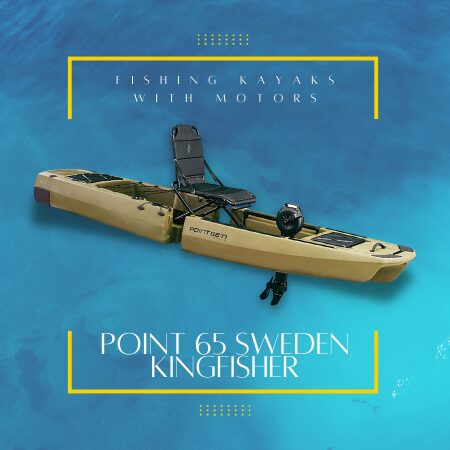
1. Point 65 Sweden Kingfisher: The Modular Marvel
The Kingfisher stands alone due to its patented modular "Snap-Tap" technology.
- The Advantage: It breaks into two manageable sections. For the apartment dweller or the angler with a compact car, this eliminates the need for expensive roof rack systems or heavy-duty trailers.
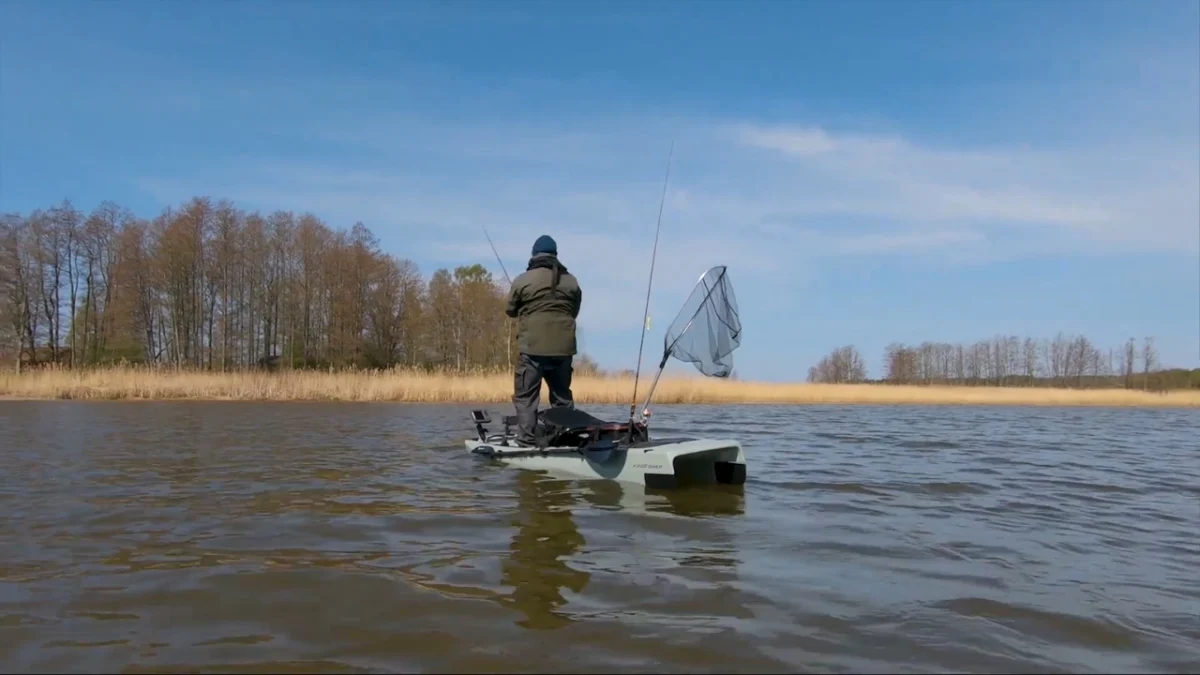
- Performance: Its trimaran hull provides exceptional secondary stability, allowing for confident standing.
- The Caveat: With a solo capacity of approximately 287 pounds, it is designed for the minimalist angler. It is not recommended for those hauling extensive heavy electronics or massive battery banks.
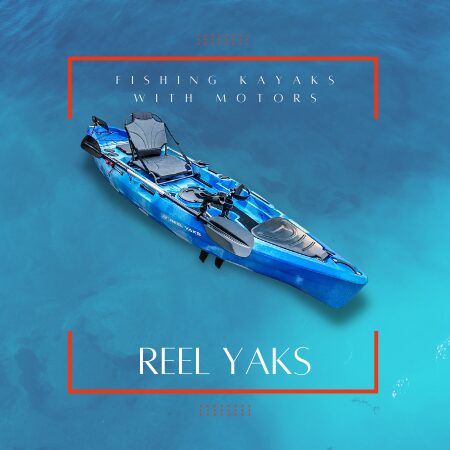
2. Reel Yaks: The Efficiency Specialist
Reel Yaks caters to the angler who prioritizes hands-free control.
- The Advantage: The W-shaped hull design is specifically engineered for stability in shallow, calm, or weed-choked waters. It is a highly maneuverable platform that excels in "spot-locking" along bank structures.
- Performance: It features a breathable, elevated frame seat that prevents the dreaded "soggy bottom" syndrome, essential for five-to-eight-hour sessions.
- The Caveat: Because of the wide hull, you trade top-end speed for deck stability. It is a workhorse for lakes, not an offshore racer.
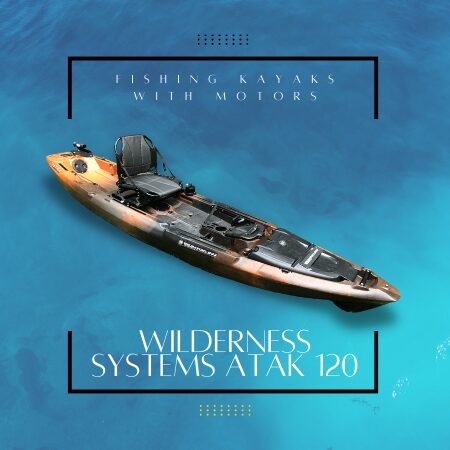
3. Wilderness Systems ATAK 120: The Tactical Powerhouse
The ATAK (Advanced Tactical Angling Kayak) 120 is widely considered the gold standard for professional-grade rigs.
- The Advantage: It offers a massive, open deck plan. The "Flex Pod" system allows for the seamless installation of fish-finder transducers and motor drives without drilling into the hull.
- Performance: With a 400-pound capacity, it is built to handle the weight of heavy-duty deep-cycle batteries and redundant gear systems.
- The Caveat: At 86 pounds (unrigged), this is a heavy vessel. It requires a high-quality cart and a well-planned logistics strategy for solo loading.
Supporting Data: Factors to Consider
| Feature | Low-Weight/Compact | Heavy-Duty/Professional |
|---|---|---|
| Transport | Modular/Easy | Requires Cart/Trailer |
| Stability | Moderate | Extreme (Stand-up ready) |
| Capacity | 250–300 lbs | 400+ lbs |
| Ideal Water | Small Lakes/Ponds | Large Reservoirs/Bays |
When choosing your setup, consider the Primary vs. Secondary Stability ratio. Primary stability is your "at rest" feel—how steady the boat is when you are sitting. Secondary stability is how the boat behaves when you are fighting a large fish or reaching for a net. A wider hull (35+ inches) offers better primary stability, while a rounded or tri-hull design often offers better secondary stability in choppy water.
Official Industry Standards and Legal Implications
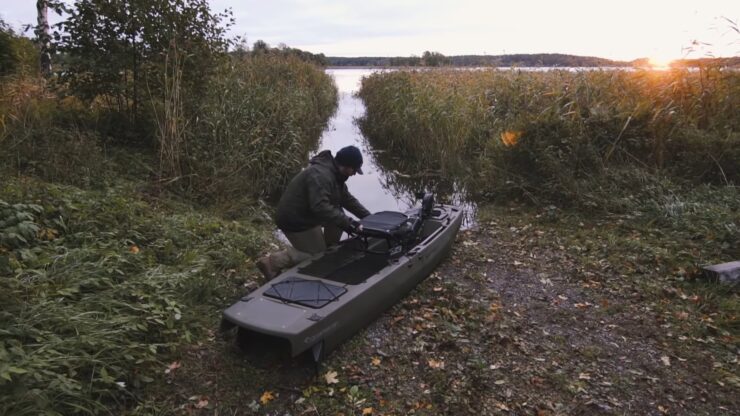
Adding a motor to a kayak changes your legal status in the eyes of most maritime authorities.
- Registration: In many jurisdictions, once a motor (even a 12-volt trolling motor) is attached, the kayak is no longer classified as a "vessel propelled by oars or paddles." You may be required to register the boat, display hull numbers, and carry specific safety gear (such as a whistle, life jacket, and navigation lights).
- Safety Protocols: Always check your local Department of Natural Resources (DNR) or equivalent website. Failure to comply can result in significant fines. Furthermore, always ensure your battery is housed in a waterproof, acid-proof battery box and secured with high-tension straps to prevent shifting in the event of a capsize.
Implications for the Future of Kayak Fishing
The trajectory of the industry points toward "Integrated Intelligence." We are seeing the rise of GPS-enabled motors that allow for "anchor mode," where the motor automatically corrects for wind and current to keep the kayak in a fixed position. This technology, once reserved for $50,000 bass boats, is becoming increasingly accessible to the kayak market.
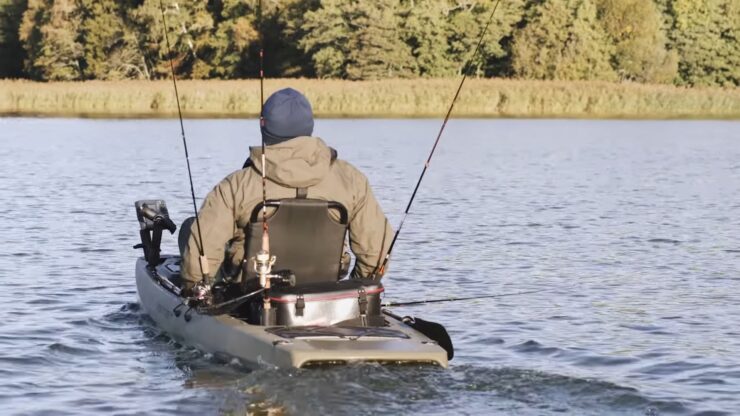
However, the implication of this advancement is increased complexity. As we add more technology, we add more points of failure. The most successful anglers are those who treat their kayak as a "minimum viable product"—only adding the gear that provides a tangible return on investment. If a motor makes your setup so heavy that you hesitate to load it onto your car, you have defeated the purpose of the kayak.
Conclusion
The "best" fishing kayak is not found in a brochure; it is found at the intersection of your physical capabilities, your storage constraints, and your local fishing environment.
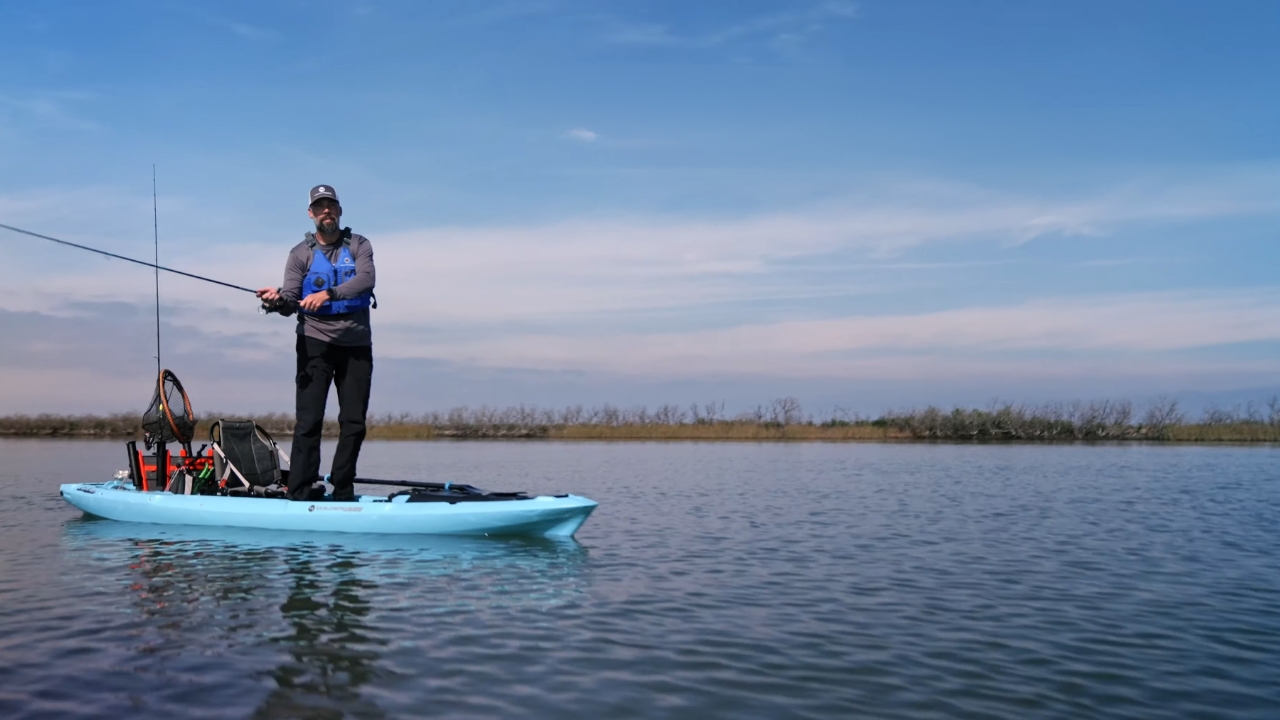
If you value portability above all, the Point 65 Sweden Kingfisher remains the leader. If you require a stable, shallow-water platform for lake fishing, the Reel Yaks design is highly effective. If you are building a serious, long-term tournament or deep-water rig, the Wilderness Systems ATAK 120 is the industry benchmark for a reason.
Before you finalize your purchase, perform a "dry run." If you cannot lift the boat, secure the battery, and attach the motor in your driveway within 15 minutes, you may find yourself leaving the gear at home. A motorized kayak should be an extension of your fishing intuition—not a project that keeps you from the water. Test your setup in shallow, protected water, monitor your battery drain, and prioritize safety above all else. Your best day on the water is waiting; make sure your boat is ready to take you there.