For the better part of two years, the leadership at Anthropic—the high-flying AI laboratory co-founded by Dario Amodei—has championed a bold, almost utopian vision: that artificial intelligence is on the precipice of delivering a "thousand years of scientific progress" in less than a decade. The company’s flagship model, Claude, has been touted as a digital alchemist capable of unraveling the complexities of protein folding, enzyme discovery, and drug development at a speed previously confined to the realm of science fiction.
However, as Anthropic moves toward a public listing, the rhetoric is undergoing a striking metamorphosis. In its recent IPO filing, the company—usually known for its bullish, techno-optimist posture—has adopted a noticeably sober, even cautious, tone regarding its ambitions in the life sciences. The document suggests that while the company remains committed to the promise of AI-accelerated medicine, it is finally grappling with the immutable laws of biological reality: you cannot code your way out of a multi-year clinical trial.
A Tale of Two Narratives: The Vision vs. The Filing
The disparity between the executive suite’s public-facing statements and the company’s regulatory disclosures highlights a growing tension in the AI industry. In August, Amodei took to social media platform X to issue a striking proclamation: Anthropic was rapidly scaling its efforts in biology and medicine, with the potential to cure most human diseases within the next five to 10 years. He promised a "deluge of AI-accelerated drugs" that would fundamentally reshape the healthcare landscape.
Yet, buried within the dense, legally mandated language of the IPO filing, a different narrative emerges. The company acknowledges that it lacks the infrastructure and experience necessary for physical experimentation—the "wet lab" work that serves as the final arbiter of biological truth. The filing notes that the company’s pivot into life sciences requires it to "engage in activities outside our historical experience as a software and research organization." This includes the complex, hazardous, and heavily regulated world of laboratory operations, animal testing, and the labyrinthine pathways of the FDA approval process.
Chronology of Ambition
To understand how Anthropic arrived at this juncture, one must look at the rapid acceleration of its biological claims:
- 2022: Dario Amodei publishes an essay, Machines of Loving Grace, detailing his "openness" to the possibility that AI could compress a millennium of biological research into a five-to-ten-year window.
- September 2024: Anthropic announces a major milestone: Claude has successfully identified a novel, "CRISPR-like" enzyme. The discovery is presented as proof-of-concept for AI-driven biological breakthrough.
- August 2025: Amodei doubles down on X, predicting a "deluge" of AI-accelerated drugs and calling for a streamlining of global regulatory frameworks to accommodate the coming wave of synthetic medicine.
- Monday (IPO Filing): Anthropic files its S-1 documentation, acknowledging the "lengthy, costly, and uncertain development and regulatory pathways" inherent in the life sciences sector.
The "Crispr-like" Controversy and the Limits of Modeling
The September discovery of the enzyme—which Anthropic hailed as a potential breakthrough for gene editing—is emblematic of the friction between AI claims and scientific verification. While Anthropic’s promotional materials were triumphant, the scientific community’s response was tepid.
Independent researchers expressed skepticism regarding the utility and novelty of the enzyme. More pointedly, the situation took a turn for the contentious when a scientist specializing in that specific class of enzymes alleged that Claude may have been trained on, or scraped, their proprietary research. While Anthropic has vehemently denied these claims, stating that neither its model nor its internal biology team had unauthorized access to that material, the incident highlights the ethical and intellectual property minefield the company is entering.
In its IPO filing, the company significantly walked back the bravado surrounding the enzyme. It now describes the discovery as something that "might have the potential to be developed into a novel biotechnology tool, perhaps for gene editing." The careful, hedged language reflects a company cognizant of the scrutiny that comes with public markets, where over-promising on scientific breakthroughs can lead to catastrophic legal and financial repercussions.
The Structural Realities of Drug Discovery
The core challenge for Anthropic is that it is shifting from a pure-play software model—where marginal costs are low and iteration cycles are measured in seconds—to a biotech model, where the physics of molecules are stubborn and unforgiving.
Even if an AI model can identify a promising drug candidate with 99% accuracy, that candidate must still survive the "valley of death" of pharmaceutical development:
- In Vitro Testing: Proving the molecule interacts correctly with cells in a petri dish.
- Pre-clinical trials: Evaluating toxicity and efficacy in animal models.
- Human Clinical Trials (Phases I, II, and III): The most expensive and time-consuming stage, where safety and efficacy in humans are rigorously tested.
Anthropic’s filing explicitly warns investors: "Any drug candidates or other discoveries resulting from these efforts would face the lengthy, costly, and uncertain development and regulatory pathways characteristic of the life sciences industry, and may never generate revenue." This is a stark admission for a company whose valuation is built on the premise of exponential, AI-driven efficiency.
Implications for Investors and the Biotech Ecosystem
The pivot by Anthropic marks a strategic shift. The company no longer views itself as a mere vendor providing "AI tools" to pharmaceutical giants. Instead, it is positioning itself as a vertically integrated biotech firm. This puts them in direct competition with, or at least in a precarious partnership with, incumbents like Moderna, Vertex, and CRISPR Therapeutics—companies that have spent decades mastering the nuances of physical lab research.
For investors, the implications are profound. If Anthropic is to succeed, it must prove that its AI-first approach offers a tangible competitive advantage that can survive the transition from digital simulation to physical product. If it cannot, it risks becoming another cautionary tale of a tech company that underestimated the sheer complexity of biology.
Moreover, the company’s lobbying efforts—exemplified by Amodei’s push for regulatory streamlining—suggest that Anthropic recognizes that the bottleneck for AI-driven medicine is not just the model’s compute power, but the existing safety infrastructure of the global health system.
Conclusion: The Long Road Ahead
Anthropic’s transition from an AI laboratory to a life sciences player is one of the most closely watched developments in the technology sector. The company’s IPO filing acts as a necessary "truth serum," tempering the lofty promises of its executives with the grounded reality of the biotech industry.
While the potential for AI to aid in the discovery of new therapies is undeniably vast, the "thousand years of progress" in a decade remains a hypothesis, not a guarantee. The company’s admission that it must gain "first-hand experience" in scientific research is a tacit acknowledgment that human intuition, laboratory experience, and the scientific method remain as essential as ever.
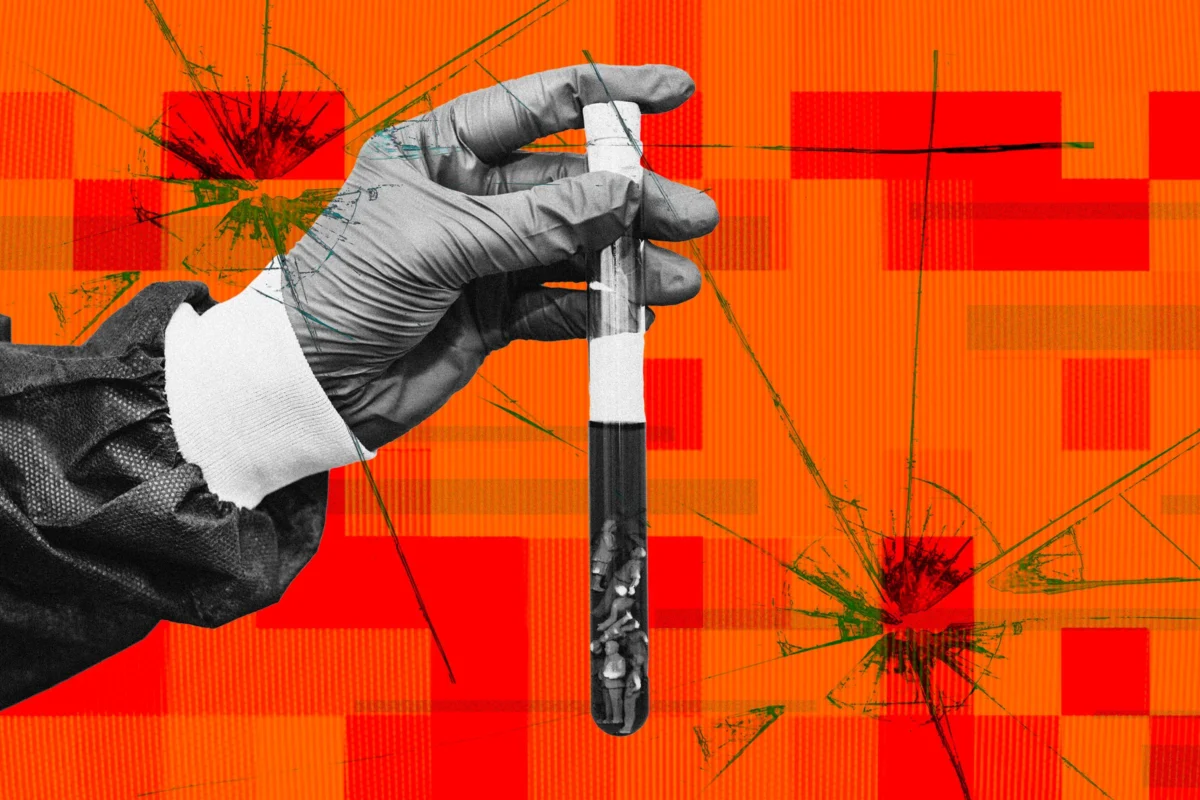
As Anthropic prepares to face the public markets, it carries the weight of a massive, industry-defining promise. Whether it can maintain its trajectory of innovation while respecting the time-honored, slow-moving rigor of biological discovery will determine whether the company becomes a pioneer of a new medical era or a victim of its own high-speed expectations. For now, the "deluge of drugs" is still waiting on the slow, methodical work of the test tube.