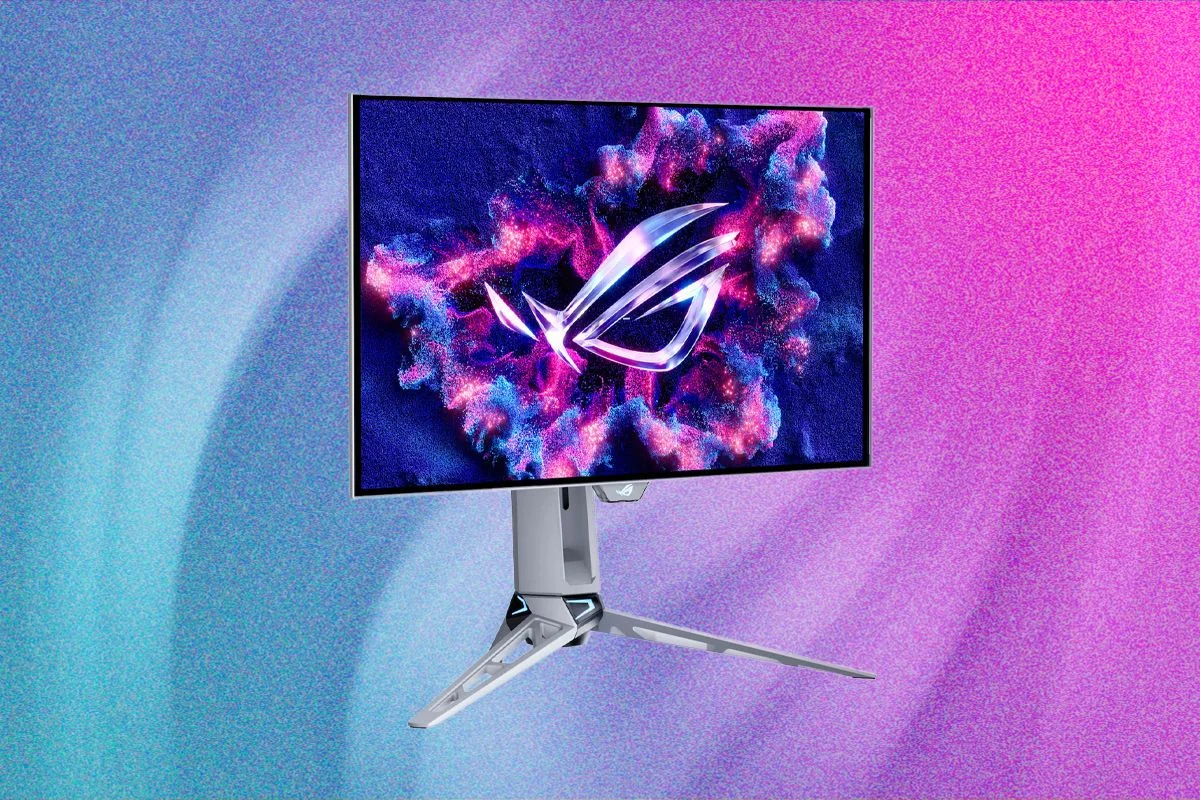
In the rapidly evolving landscape of high-performance gaming displays, the pursuit of the "perfect" monitor has long been a tug-of-war between resolution, refresh rate, and color accuracy. With the release of the Asus ROG Swift PG27UCWM, the industry has reached a significant milestone. By successfully migrating the sophisticated tandem RGB Stripe OLED technology into a compact 27-inch form factor, Asus is challenging the limitations of previous-generation displays. However, as with any high-end peripheral, the monitor’s brilliance is balanced by specific design choices that will polarize potential buyers.
Main Facts: The Anatomy of a High-End Display
The Asus ROG Swift PG27UCWM is a 26.5-inch OLED gaming monitor that aims to bridge the gap between competitive eSports responsiveness and cinematic HDR immersion. At its heart lies a native 4K (3840 x 2160) tandem RGB Stripe OLED panel.
Unlike earlier OLED monitors that relied on non-standard sub-pixel arrangements—which frequently resulted in "fringing" or text blurriness—the PG27UCWM utilizes a conventional RGB layout. This change effectively solves one of the most enduring criticisms of the OLED category: text clarity. With a pixel density of approximately 165 pixels per inch (PPI), the display offers the crispness required for professional productivity work alongside its primary gaming function.
In terms of color, the monitor covers 94 percent of the DCI-P3 gamut and 89 percent of the AdobeRGB spectrum. While these figures are mathematically modest when compared to the 98 percent and 95 percent peaks reached by some specialized QD-OLED competitors, the PG27UCWM employs "color volume" technology—the ability of a display to maintain color accuracy at peak brightness—to ensure that the image remains punchy and impactful even in high-contrast scenes.
Chronology: The Evolution of OLED Clarity
The journey to the PG27UCWM is part of a larger trend in display technology that began in earnest around 2023. Early 34-inch ultra-wide monitors, such as the Alienware AW3426DW, were the first to demonstrate that OLEDs could move beyond the sub-pixel layout issues that plagued early generations. These "5th-Gen" panels prioritized structural integrity and pixel alignment.
For a long time, the 27-inch segment remained stuck on older panel designs that struggled with text rendering and brightness limitations. The introduction of the PG27UCWM represents the "trickle-down" effect of high-end panel manufacturing. By shrinking the technology used in those initial 34-inch pioneers down to the industry-standard 27-inch size, Asus has finally provided a viable upgrade path for users who prefer a traditional aspect ratio over ultra-wide formats. Throughout 2025 and into early 2026, manufacturers have been racing to integrate these high-density panels, with the PG27UCWM serving as one of the most polished iterations to date.
Supporting Data: HDR and Motion Performance
When evaluating a monitor at this price point, HDR performance is the primary differentiator. Testing confirms that the PG27UCWM peaks at approximately 800 nits of brightness. While this falls short of the theoretical 1,000-nit "gold standard" achieved by only the most expensive professional panels, it places the Asus firmly in the top tier of gaming monitors.

Crucially, the monitor supports Dolby Vision HDR, a feature rarely seen in the 27-inch gaming space. This support allows for dynamic metadata processing, ensuring that the monitor can extract the maximum possible detail from high-dynamic-range content.
Motion and Refresh Rates
The PG27UCWM offers a dual-mode feature that caters to two distinct demographics:
- 4K Mode: Provides a native 3840 x 2160 resolution at a 240 Hz refresh rate, ideal for cinematic, high-fidelity gaming.
- 1080p Mode: Allows users to drop the resolution in exchange for a blistering 480 Hz refresh rate, targeting professional-grade competitive eSports titles where frames per second (FPS) take precedence over pixel density.
This flexibility puts the monitor in direct competition with the Acer Predator X27 X1 and the MSI MPG 32URXW, both of which offer similar performance metrics. When measured against entry-level OLEDs—such as the Alienware AW2726DM, which often struggles to output more than 400 nits in HDR—the PG27UCWM offers a vastly more immersive visual experience.
The Glossy Debate: An Industry Dividing Line
Perhaps the most contentious design choice in the PG27UCWM is its finish. The panel utilizes an ultra-glossy coating. From a technical standpoint, this is a calculated decision: gloss surfaces allow light to pass through without the diffusion caused by matte coatings, resulting in deeper blacks and higher perceived contrast.
However, this comes at a functional cost. The monitor acts effectively as a mirror in brightly lit rooms. If your workspace is near a window or positioned under harsh overhead lighting, the reflections will be significant. While "OLED purists" often argue that the loss of contrast caused by anti-glare matte treatments is a non-starter, others find the reflection of their own face and room environment to be a major distraction. Prospective buyers must audit their own lighting conditions before committing to this hardware; there is no "correct" answer, only a trade-off between absolute image purity and environmental flexibility.
Implications: The Future of Desktop Displays
The release of the Asus ROG Swift PG27UCWM carries several implications for the display market:
- The Death of Sub-pixel Fringing: With the adoption of standard RGB layouts in 27-inch OLEDs, the primary argument against using an OLED monitor for daily office work or programming has been neutralized. The clarity provided by the 165 PPI density is, by all accounts, excellent.
- The Maturation of HDR Gaming: As monitors like the PG27UCWM normalize 800-nit brightness and Dolby Vision support, the threshold for what constitutes a "good" HDR experience has risen. Manufacturers can no longer rely on mere contrast; they must now provide the color volume and peak luminance necessary to truly justify the HDR badge.
- Price Sensitivity: With similar performance available in the Acer and MSI lineups, the market is becoming crowded. The implication is that while the PG27UCWM is a high-tier product, Asus will need to lean heavily on its brand prestige, build quality, and OSD (On-Screen Display) features to maintain market share against aggressive pricing from competitors.
Conclusion
The Asus ROG Swift PG27UCWM is a triumph of engineering that successfully brings the clarity and speed of high-end, large-format OLEDs into a compact, 27-inch package. It provides an exceptional experience for gamers and power users alike, particularly those who work in controlled lighting environments. While its glossy finish and competitive pricing landscape present hurdles for the average consumer, its ability to render text with precision and deliver HDR content with genuine impact makes it one of the most compelling displays of the year. For those who can manage the reflections, the PG27UCWM is not just a monitor—it is a visual benchmark for the 2026 display era.