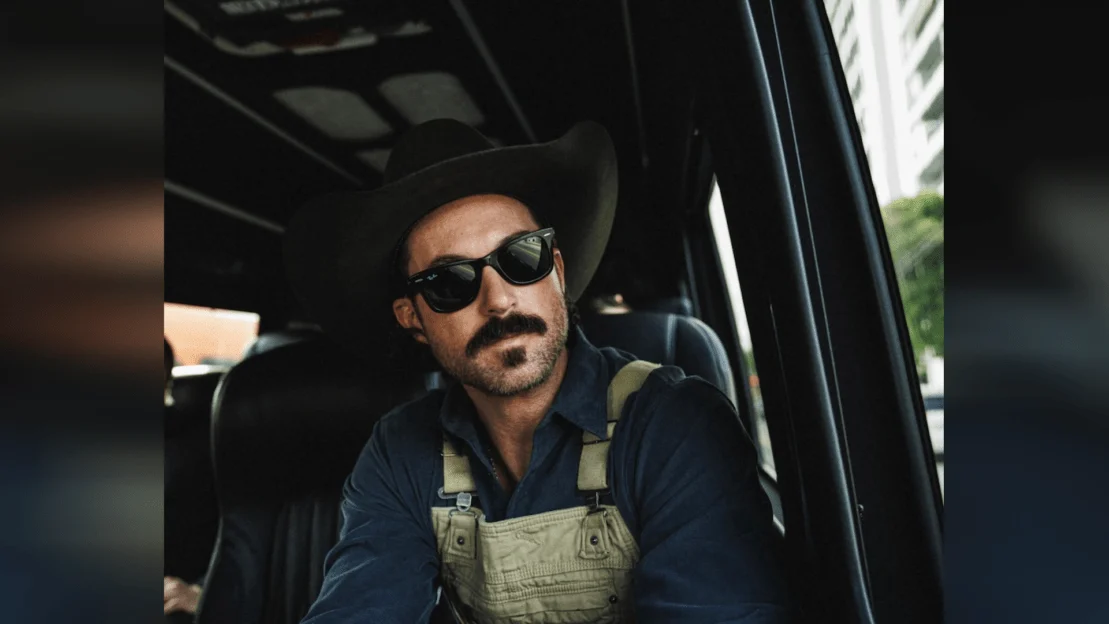
For Riley Green, the concept of "slowing down" is little more than a theoretical exercise. As the country music powerhouse navigates the middle of his 2026 Cowboy As It Gets tour, the sheer velocity of his career trajectory suggests a man operating at maximum capacity. Fresh off a string of sold-out performances in Australia and currently dominating the North American circuit, Green’s professional life is a masterclass in multitasking. Yet, even as he pivots between recording studios, film sets, and massive arenas, he remains committed to a physical regimen that has made him the gold standard for fitness in the modern country music landscape.
Main Facts: A Career in Full Bloom
Riley Green is no longer just a musician; he is an enterprise. His recent accomplishments speak to an artist who has transcended the typical boundaries of the genre. Following the June success of his No. 1 hit "Change My Mind," Green has shifted his focus to the highly anticipated September 18 release of his new album, That’s Just Me.
The expansion of his portfolio is equally impressive. Beyond the music, Green has officially entered the world of prestige television, wrapping his first major acting role on Taylor Sheridan’s Marshals. This, paired with a high-profile co-hosting gig at the CMA Fest and a newly minted role as a coach on NBC’s The Voice, underscores his status as a multi-hyphenate star. Despite this "Swiftian" level of productivity, Green maintains the physique of a college athlete, a feat he attributes to a rigid, albeit adaptable, set of priorities.
Chronology of a Relentless Work Ethic
To understand Green’s current state, one must look at the foundation of his work ethic, which was forged on the gridiron long before he ever picked up a guitar. A former quarterback at Jacksonville State, Green carried the discipline of a collegiate athlete into the music industry.
- Early Career: Transitioning from football to songwriting, Green spent years working in construction, a period he credits for his enduring physical toughness. "When I did construction work, I was sore every day," Green recalls. "There wasn’t a day that I woke up and something didn’t hurt."
- The Pandemic Shift: During the global pause caused by COVID-19, Green invested heavily in a home gym, creating a private space that would eventually serve as the prototype for his current touring setup.
- Recent Milestones: 2026 has been a year of rapid expansion. Between international touring, the filming of Marshals, and the promotional cycle for That’s Just Me, Green has had to innovate his fitness routine to survive the grueling travel demands of a cross-country headliner.
- The Future: With 24 more MLB stadiums on his "bucket list" to hit home runs in, Green is already planning his athletic endeavors well into the future, viewing each tour stop as an opportunity to test his physical limits.
Supporting Data: The Science of the "Traveling Gym"
The logistical challenge of maintaining a six-pack while living on a tour bus is significant. For many, the "touring lifestyle" is a recipe for physical decline, but Green has effectively bypassed this by bringing his environment with him. He now utilizes a custom-outfitted trailer, towed behind his tour buses, which functions as a mobile gym.
"Having a gym on-site just makes it that much easier to go," Green explains. "I feel like 90% of the battle for me is motivation. So if I’ve got something that’s here and it’s easy and convenient for me, I’m probably gonna work out."
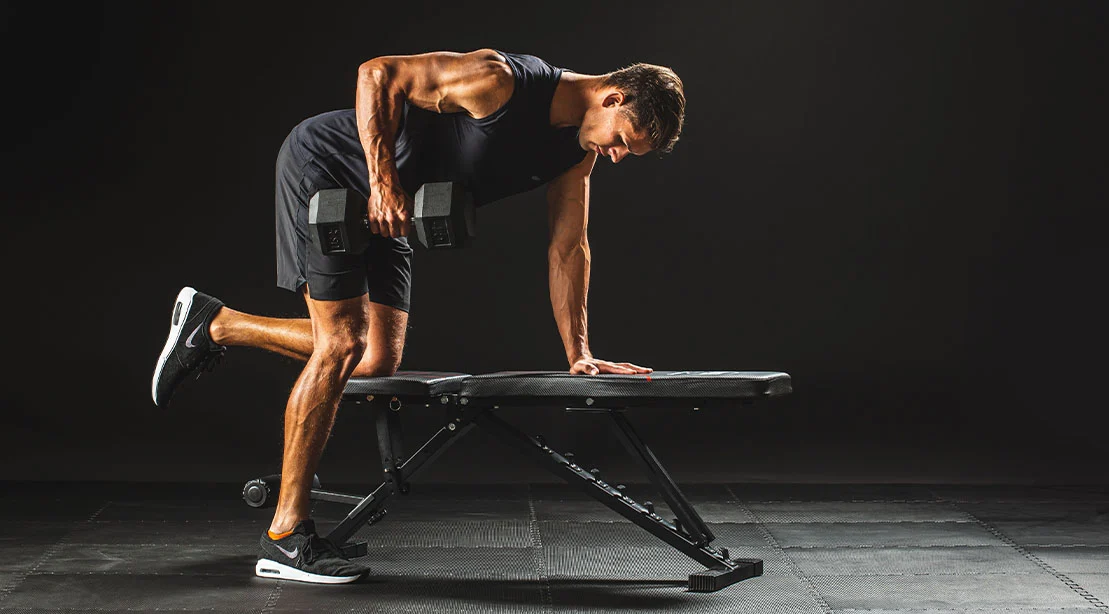
His training methodology favors efficiency over ego. Rather than attempting to move massive amounts of weight for a single repetition, he focuses on high-intensity circuit training. For example, a chest session might involve a rapid-fire rotation of flat, incline, and decline bench work, followed immediately by flies and dips. This 30-to-45-minute window is designed to maximize heart rate and muscle engagement, ensuring he remains stage-ready without requiring hours of downtime.
Official Responses: The Philosophy of "Fixing the Body"
At 37, Green is acutely aware of the "wear and tear" that follows a life of high-impact sports and labor-intensive work. He speaks candidly about the reality of his physical state—the lingering effects of two shoulder separations from his football days and the morning ritual of addressing fluid in his knees.
"It sounds like an old person when I get up—popping and cracking and all that," he admits. However, his approach to these hurdles is characteristic of his self-reliant nature: "I’ve always kind of been the guy that, when something’s wrong with my body, I feel like I’m the one that can fix it."
To combat the lower-back pain associated with long hours on a bus mattress and years of neglecting core-specific training, Green has integrated a 20-minute core circuit into his daily routine. This includes hanging leg raises, weighted leg lifts, and bicycle crunches. This pivot toward functional strength, combined with a newfound dedication to pre-show stretching, has proven to be a game-changer. "Spending a little more time stretching before a workout and after is probably the biggest game changer for me," he notes.
Implications: The Intersection of Art and Athletics
The implications of Green’s lifestyle extend far beyond his own personal health. By landing back-to-back solo-written No. 1 singles—a feat not seen since Taylor Swift—Green has demonstrated that his "DIY" philosophy applies to his songwriting as much as it does to his fitness. He believes that by consistently "putting in the work," the results are inevitable.
His entry into acting represents a significant evolution. While he admits that working on a set with a full crew was intimidating, he found a mentor in fellow artist-turned-actor Luke Grimes. "Acting probably made me more nervous than anything I’ve done in a while," Green says. "There’s so many people on a set that are there relying on me to do my job correctly before they can leave."
Ultimately, Riley Green represents a new archetype of the country star: one who is as concerned with the mechanics of his craft as he is with the quality of his art. Whether he is launching a deep ball on The Pat McAfee Show, hitting a home run in an MLB stadium, or stepping into a recording booth to lay down tracks for his next record, Green is a man who treats his life as a high-stakes competition.
As he looks toward the remainder of 2026, the strategy remains clear. He will continue to balance his, at times, conflicting passions—golfing when he can, lifting when he must, and writing songs whenever the inspiration hits. With his mobile gym in tow and his core strengthened against the inevitable pains of age, Green shows no signs of hitting the brakes.
"As long as I’m working out fairly consistently, I’m going to be in decent shape," he says. "I just gotta keep finding ways to do it with everything else going on." In a world where many artists struggle to keep up with the pace of their own success, Riley Green has turned the grind into his greatest asset. He is not just living his best life; he is engineering it, one set and one song at a time.