
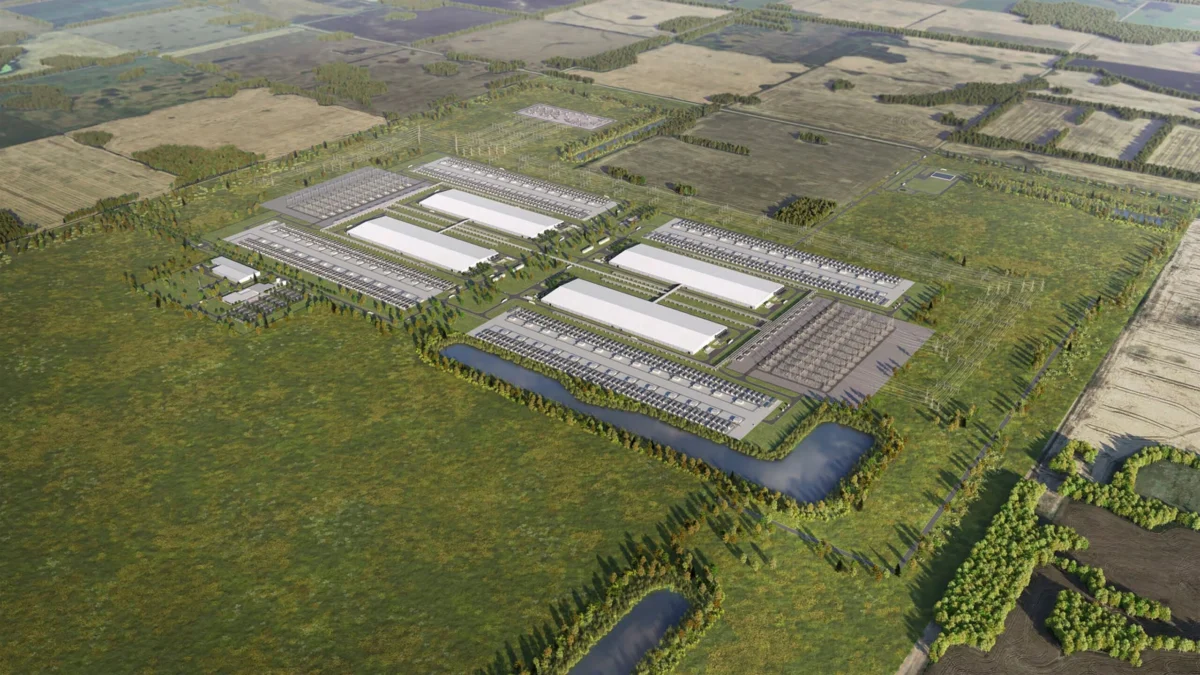
STURGEON COUNTY, ALTA. – In a move that signals a seismic shift in Canada’s technological landscape, Meta—the parent company of Facebook and Instagram—has officially announced its intention to construct its inaugural Canadian artificial intelligence data centre. The $13-billion-plus facility will be situated in the heart of Sturgeon County, Alberta, marking the largest project of its kind outside of the United States.
The announcement, made on July 10, 2026, serves as a cornerstone for Alberta’s rapidly evolving industrial sector, positioning the province as a pivotal node in the global AI infrastructure race.
The Scope of the Project: A Colossal Undertaking
The sheer scale of the proposed facility is difficult to quantify for the layperson. Spanning nearly 270,000 square metres, the campus will consume a massive one gigawatt of electricity. To put this in perspective, that is roughly 70 percent of the total power capacity required to run the entire city of Edmonton. Physically, the footprint of the facility is so expansive that it could accommodate 33 Canadian Football League (CFL) fields.
The facility will be powered by a dedicated natural gas-fired plant, developed by a consortium including the Calgary-based energy giant Pembina Pipeline Ltd. This power-generation strategy is not merely a logistical choice but a necessity; Alberta’s current electrical grid lacks the surplus capacity to absorb such an immense load without compromising service for existing residential and industrial consumers.
Chronology: How the Deal Came to Life
The road to this announcement was paved with months of quiet negotiation and a deliberate provincial policy shift.
- Late 2024: Alberta’s Minister of Technology and Innovation, Nate Glubish, unveils an ambitious provincial roadmap, stating the government’s target of attracting $100 billion in data centre investment over the next five years.
- Early 2026: Recognizing the complexity of navigating regulatory hurdles, the province establishes a specialized "concierge" service to assist global "hyperscalers" in streamlining project approvals.
- Early 2026 (Ongoing): The Alberta Utilities Commission (AUC) reviews other proposed data centre projects, rejecting some—such as the controversial Olds facility—due to deficiencies in infrastructure planning and proximity to residential zones.
- Early July 2026: Pembina Pipeline, in partnership with Morgan Stanley Infrastructure Partners and Kineticor Asset Management, announces the "Greenlight Electricity Centre," a 932-megawatt power project in Sturgeon County. At this stage, the identity of the primary customer remains undisclosed.
- July 10, 2026: Meta officially confirms its partnership with the consortium, solidifying Sturgeon County as the site for its flagship Canadian AI campus, with operations projected to begin toward the end of 2030.
Supporting Data: Economic and Environmental Metrics
The economic impact of the project is projected to be profound. The Alberta government estimates that the construction phase will generate 3,000 jobs, with 300 permanent, high-skilled positions required once the facility is fully operational. Beyond direct employment, the province expects an annual influx of $250 million in fiscal benefits through royalties, taxes, and municipal levies.
To address growing public scrutiny regarding the environmental footprint of AI infrastructure—specifically water consumption—Meta has committed to a "closed-loop" liquid cooling system. According to the company, this system utilizes dry cooling, which significantly reduces water intake. Meta representatives have stated that the facility’s annual operational water usage will be lower than that of a single local golf course or a 50-acre canola farm, framing the project as a model for sustainable industrial design. Additionally, Meta has pledged $60 million toward local infrastructure upgrades, focusing on road networks and water system enhancements in Sturgeon County.
Official Responses: Balancing Growth and Oversight
The reception from political leaders has been overwhelmingly positive, emphasizing the "design-led" approach Alberta has taken to attract tech investment.
"We didn’t do it by accident," Minister Nate Glubish said during a news conference. "We did it by design… We wanted to be smartest to ensure that we had a fair, reasonable, clear regulatory framework so that anybody who wants to build a data centre here knows exactly what to expect."
Premier Danielle Smith echoed these sentiments, noting that the choice of Sturgeon County was intentional. Unlike other proposed sites that have faced backlash for encroaching on residential areas, Sturgeon County is already an established industrial hub, home to existing refineries and petrochemical facilities. "I look at the different issues that have been raised in different communities," Smith remarked. "We took those seriously, and I believe that this particular project answered all of those."
Local leadership has also embraced the arrival of the tech giant. Sturgeon County Mayor Alanna Hnatiw characterized the development as a turning point for the region. "Sturgeon County is becoming an important part of Canada’s emerging AI and power corridor," Hnatiw stated. "I am so pleased that Meta has embraced the environmental standards in our designated industrial zone."
Implications and Industry Backlash
Despite the enthusiasm from government officials, the project has drawn sharp criticism from environmental advocates. Keith Stewart, a senior energy strategist with Greenpeace Canada, has called for a formal moratorium on the development of "megadata centres."
Stewart argued that these projects are driven by corporate interests at the expense of public resources. "We’re seeing these kinds of promises made by AI data centre proponents around the world," Stewart said. "But the reality is that these are billionaires trying to steal our water and pollute the air so they can double our electricity while taking away our jobs."
The controversy touches on a broader, global debate regarding the hidden costs of AI. While the industry touts "net-zero" goals, the immediate, massive demand for electricity and the reliance on natural gas plants—even if modern and efficient—complicates Canada’s long-term climate targets. Furthermore, the reliance on proprietary power plants creates a "siloed" infrastructure model where private companies effectively build their own utility networks, raising questions about the future of energy equity in the province.
The Path Forward
As Meta prepares to break ground, the project will serve as the litmus test for Alberta’s data centre strategy. With at least 60 other proponents currently in discussions with the province’s concierge team, the success or failure of the Sturgeon County facility will likely determine whether Alberta becomes the Silicon Valley of the North or a cautionary tale of industrial overreach.
For the residents of Sturgeon County, the coming years will be defined by the transformation of their landscape. The project promises to integrate the region into the global digital economy, but it also carries the weight of high expectations. As the world watches, Alberta is betting that the synergy between traditional energy expertise and cutting-edge artificial intelligence will secure its economic future for generations to come.
Whether the environmental safeguards will hold up under the massive operational demands of an AI-driven future remains the critical question, one that will be answered not by political press releases, but by the performance of the facility once it powers on in 2030.