The World Water Council (WWC), the preeminent international platform for water-related discourse, has officially inaugurated its new cohort of Youth Delegates for the forthcoming mandate. This strategic appointment marks a significant milestone in the organization’s ongoing commitment to intergenerational equity, aiming to integrate the dynamism and innovative thinking of young leaders into the highest levels of global water governance.
Selected from a record-breaking pool of over 2,000 applicants, these four individuals represent the pinnacle of youth-led activism, academic research, and technical proficiency in the water sector. As the global community faces mounting pressures—ranging from climate-induced water scarcity to the complexities of transboundary water management—these delegates are poised to serve as critical bridges between youth constituencies and the architects of international policy.
The Selection Process: A Global Call to Action
Chronology of the 2024 Selection Cycle
The selection process for this mandate was designed to be rigorous, inclusive, and highly competitive. The timeline unfolded as follows:
- Q1 2024: The Global Call: The WWC opened the application window, soliciting interest from young professionals, researchers, and changemakers worldwide. The outreach strategy leveraged regional networks to ensure representation from the Global South and North alike.
- Q2 2024: The Review Phase: An internal committee meticulously screened over 2,000 applications. The evaluation criteria focused on demonstrated leadership, thematic expertise in water resources, and a proven track record of advocacy.
- Q3 2024: Finalist Vetting: Shortlisted candidates underwent comprehensive interviews, where they were evaluated on their ability to articulate policy solutions and their potential to mobilize youth communities within their respective regions.
- Q4 2024: The Appointment: The official announcement of the four regional delegates, marking the commencement of their two-year advocacy and governance term.
The volume of applicants—a 30% increase from the previous cycle—serves as a barometer for the growing "water consciousness" among Gen Z and Millennial cohorts. It underscores a shift where water is no longer viewed merely as a technical utility, but as a fundamental human right and a core pillar of geopolitical stability.
Meet the Delegates: Profiles in Leadership
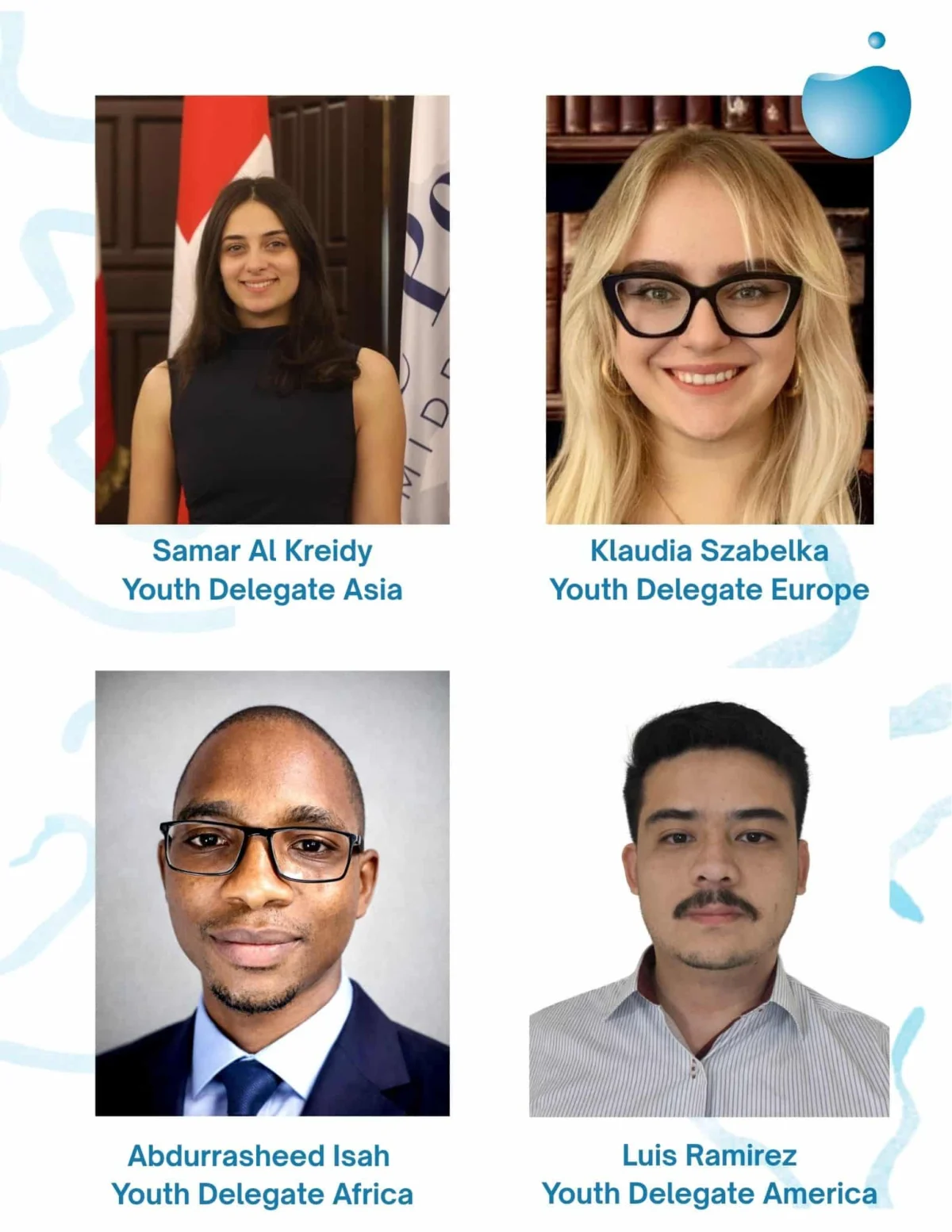
The WWC has appointed four delegates, each representing a distinct geographic and professional perspective, ensuring that the council’s agenda remains informed by diverse lived realities.
Asia: Samar Al Kreidy (Lebanon)
Samar Al Kreidy is a scholar-practitioner whose work sits at the intersection of international relations and water diplomacy. Currently pursuing a PhD, she balances her academic rigor with her role as the Regional Communications and Advocacy Officer at Blue Peace Middle East. Her expertise lies in navigating the complex geopolitical landscape of the Middle East, where water management is inextricably linked to regional peace and security. Her participation in forums like Stockholm World Water Week has cemented her reputation as a formidable advocate for cross-border cooperation.
The Americas: Luis Enrique Ramírez (Mexico)
Representing the Americas, Luis Enrique Ramírez brings a critical engineering perspective to the Council. As a civil engineer, he views infrastructure as the physical manifestation of policy. His work focuses on the technical challenges of hydraulic systems and environmental resilience. By bridging the gap between high-level engineering blueprints and the immediate needs of communities, Ramírez aims to champion infrastructure projects that are not only sustainable but also socially equitable.
Europe: Klaudia Szabelka (Poland)
Klaudia Szabelka represents the intersection of law, economics, and environmental justice. Currently completing dual PhDs at the University of Glasgow, her research is pivotal to understanding the regulatory frameworks that govern water reuse and distribution. Szabelka advocates for a shift in policy, arguing that equitable water governance requires moving beyond traditional regulation toward frameworks that prioritize power-sharing and transparent decision-making.
Africa: Abdulrasheed Isah Abubakr (Nigeria)
Abdulrasheed Isah Abubakr brings a background in software engineering and sustainable development. His work with the UNDP and the Nigerian government provides him with a unique vantage point on the "ground-truth" of water security projects. Abubakr is a vocal critic of performative youth inclusion, insisting that young people must be granted decision-making power rather than merely being invited as observers to high-level summits.
Supporting Data: Why Youth Inclusion Matters
The necessity of this initiative is backed by significant data regarding the demographic shifts in water management. According to UN-Water reports, over 40% of the global population is projected to live in areas of severe water stress by 2050. The youth of today will be the primary stewards of these resources during the most critical years of climate adaptation.
- Economic Impact: Young entrepreneurs are leading the "Blue Economy," with startups focusing on AI-driven leak detection, desalination efficiency, and precision irrigation.
- Policy Gaps: Current governance structures often suffer from a "participation deficit," where youth engagement is relegated to side-events. The WWC Youth Delegate program is a direct intervention to dismantle this barrier, moving youth into the core decision-making sessions of the World Water Forum.
- Research Output: Academic interest in water policy among graduate students has surged by 15% annually since 2020, signaling that the next generation of civil servants and policy analysts is heavily focused on environmental sustainability.
Official Responses and Strategic Intent
In a formal statement, the leadership of the World Water Council highlighted the strategic importance of this new mandate. "We are not just adding names to a roster; we are adding expertise to our governance," stated a Council spokesperson. "These delegates are tasked with bringing ‘dissenting’ and ‘innovative’ perspectives to the table. We need to challenge the status quo if we are to solve the water crisis."
The delegates themselves have expressed a unified vision. During the onboarding phase, the consensus was clear: the era of symbolic youth representation is over. As Klaudia Szabelka noted, "The policy discussions of today are the legacy of tomorrow. If young people are not in the room when those policies are drafted, we are effectively being excluded from our own future."
Implications for Global Governance
The appointment of these delegates carries significant implications for the future of international water diplomacy.
1. Shift from Tokenism to Agency
The WWC’s initiative signals a broader movement within international NGOs to formalize youth leadership. By providing these delegates with a platform to address the WWC Board of Governors, the Council is institutionalizing youth influence. This could set a precedent for other global bodies to adopt similar structures, moving away from "consultative status" toward "active partnership."
2. Bridging the Technical-Political Divide
By pairing engineers like Ramírez with political scientists like Al Kreidy and Szabelka, the WWC is creating an interdisciplinary think-tank. The goal is to produce policy recommendations that are technically feasible and politically palatable.
3. Regional Focus, Global Impact
The regional distribution of the delegates ensures that the Council remains attuned to hyper-local water issues—such as the specific irrigation challenges in Nigeria or the transboundary water disputes in the Levant—while maintaining a global oversight lens. This dual approach is essential for achieving the UN Sustainable Development Goal 6 (SDG 6): Clean Water and Sanitation for all.
Conclusion: The Path Ahead
The mandate for these four Youth Delegates is expansive. Over the coming years, they will be expected to organize regional summits, draft policy white papers, and facilitate intergenerational dialogues that challenge established water bureaucracies.
As the world approaches the mid-century mark, the complexity of water management will only increase. The World Water Council, through this appointment, has signaled its belief that the solutions to the most intractable water problems lie not in the past, but in the hands of a generation that views water as the ultimate connector of humanity.
As Abdulrasheed Isah Abubakr poignantly remarked during the announcement, "We are the generation of the solution. We are not just waiting for the future; we are building the pipes, the policies, and the peace that will sustain it."
The global water community now watches with anticipation as these four leaders begin their tenure, tasked with the monumental challenge of ensuring that water remains a source of life and cooperation, rather than a catalyst for conflict.