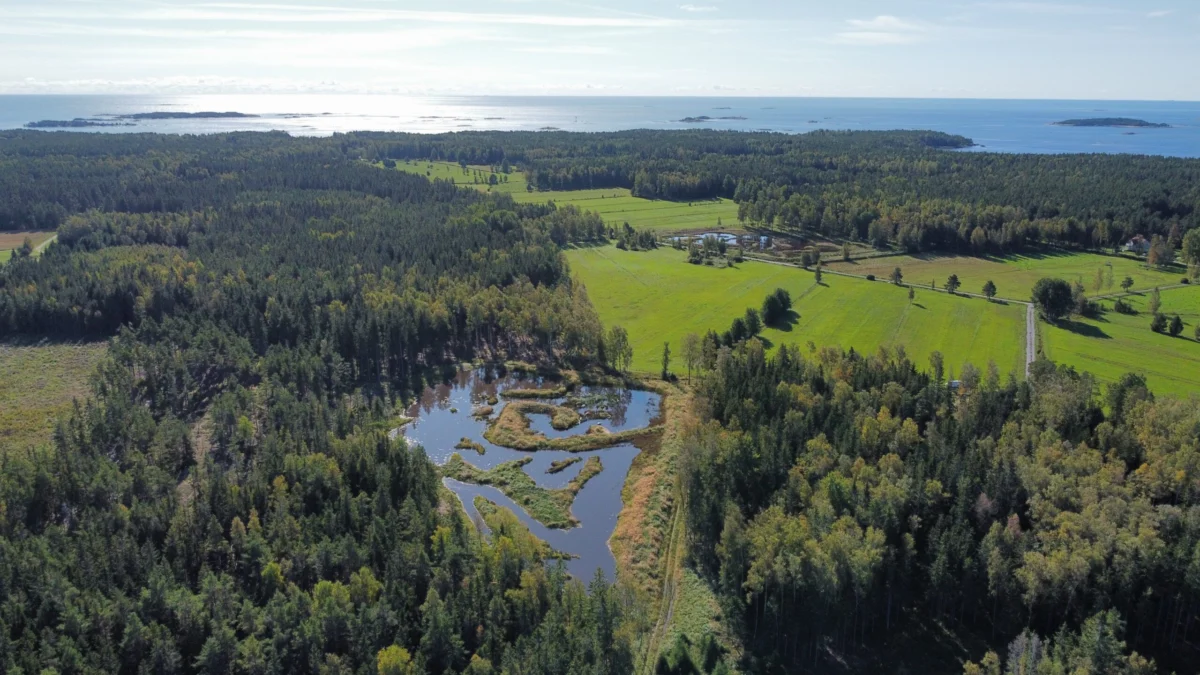
In Finland, a nation defined by its vast forests, pristine lakes, and extensive peatlands, the state of the natural environment has reached a critical juncture. Despite decades of conservation efforts and the establishment of numerous protected areas, biodiversity is in a steep decline. Current data indicates that one in nine species in Finland is threatened, and nearly every second habitat type faces an uncertain future.
As the debate surrounding the European Union’s Nature Restoration Law intensifies, many myths and misconceptions have surfaced regarding the efficacy and economic viability of restoration. Far from being a mere bureaucratic burden or a tool for greenwashing, ecological restoration is a strategic necessity for climate resilience, economic stability, and long-term environmental health.
The Myth of Passive Recovery: Why Active Intervention is Required
A common argument against active restoration is that nature is self-healing and that human intervention is unnecessary—or even harmful. While it is true that nature possesses a remarkable capacity for recovery, the current pace of degradation far outstrips natural regeneration rates.
In environments heavily modified by industrial forestry and intensive land use, waiting for "passive restoration" is a luxury we cannot afford. In forests, for example, structural changes that allow for biodiversity—such as the accumulation of decaying wood and the development of old-growth characteristics—can take centuries to emerge naturally. By the time these processes reach a state of equilibrium, the species currently dependent on those habitats may already be locally extinct. Active restoration accelerates these processes, providing a lifeline to endangered species that lack the time to wait for the slow turning of ecological cycles.
Economic Implications: The Cost of Inaction
Critics frequently cite the high upfront costs of restoration projects as a barrier to implementation. However, this perspective overlooks the catastrophic financial consequences of further environmental collapse.
A recent report by Sitra, the Finnish Innovation Fund, provides a stark counter-narrative: the economic benefits of restoring forest ecosystems are estimated to be 2.3 times higher than the costs involved. When we restore peatlands and small waterways, we are not just "fixing the landscape"; we are investing in flood mitigation, water purification, and climate adaptation.
In an era of increasing climate instability, diverse ecosystems act as an insurance policy. Healthy forests and wetlands buffer against extreme weather, protect agricultural yields, and provide natural water filtration that saves millions in infrastructure costs. Failing to act now will inevitably shift the financial burden onto future generations, who will face the exponentially higher costs of repairing degraded, non-functional ecosystems.
Debunking the Regional Economic Myth
Another persistent claim is that restoration is a "metropolitan project" that benefits only urban planners in Helsinki, while leaving rural provinces empty-handed. This is a misunderstanding of the logistical reality of conservation work.
Restoration is a decentralized activity. It requires boots on the ground across the entire country, creating a diverse range of jobs in local communities. The workforce includes local foresters, excavation machine operators, and agricultural entrepreneurs who manage traditional landscapes like meadows and pastures.
Furthermore, as the market for "nature values" matures, we are seeing the emergence of new economic models. Private investment in restoration is growing, and with it, a demand for local experts who can perform nature inventories, technical engineering for water protection, and the management of restored lands. This is not a drain on regional resources; it is an opportunity to diversify the bioeconomy beyond traditional timber and food production, tapping into the rising commercial value of health-promoting nature services and sustainable, nature-based products.
Long-term Sustainability and Stewardship
Some argue that restoration is a "one-off" effort that provides no long-term employment. On the contrary, many habitats require ongoing management to maintain their ecological integrity.

For instance, wetlands must be periodically cleared of sediment to maintain their function as nutrient traps. Traditional environments, such as semi-natural grasslands, require regular grazing or mowing to prevent them from becoming overgrown. By transitioning from a model of "one-time compensation" to long-term payment for ecosystem services, we can create sustainable livelihoods for landowners. As the quality of a restored forest or meadow improves over time, the landowner should be rewarded for the increasing biodiversity value they provide, creating a cycle of continuous, high-quality stewardship.
The Principle of Fair Distribution: Who Pays?
The question of who bears the cost of restoration is perhaps the most sensitive aspect of the debate. WWF Finland and other conservation organizations advocate for a "polluter pays" principle. The costs should not fall solely on the shoulders of private landowners.
Instead, the financial burden should be distributed throughout the value chain. Industries that benefit from natural resources, and ultimately the consumers who purchase these products, should contribute to the restoration of the environments from which those resources were extracted.
Existing programs—such as the Helmi, Sotka, and Ahti programs—demonstrate that co-funding models between the state and private actors are not only possible but effective. These programs have allowed for significant progress without forcing landowners to bear the full brunt of the financial load, while simultaneously delivering the benefits of improved water quality and soil health back to the farms and forests themselves.
Addressing the "Climate Change" Argument
A common dismissal of restoration is that it is "pointless" because climate change will fundamentally alter the landscape anyway. This is a dangerous fallacy.
While climate change is a powerful driver of ecosystem shifts, a biologically diverse and healthy environment is significantly more resilient to these changes. A forest composed of a single, uniform species is highly susceptible to pests—such as the spruce bark beetle, which thrives in drought-stressed, homogeneous plantations. By restoring structural diversity and encouraging mixed-species forests, we can hedge against these risks. Restoration does not aim to recreate a static, prehistoric past; it aims to ensure that ecological processes—such as pollination, pest control, and water regulation—remain functional in a changing future.
The Contradiction of Simultaneous Destruction
One of the most valid criticisms in the current discourse is that restoration efforts are undermined by ongoing, contradictory land-use practices. It is paradoxical to restore 20,000 hectares of peatlands through the Helmi program while allowing the drainage of new, pristine peatlands elsewhere.
The restoration agenda must be accompanied by the dismantling of environmentally harmful subsidies. If the goal is a healthy, functioning biosphere, the legislative framework must be consistent. We cannot continue to treat nature as an infinite resource to be extracted on one side of the fence while attempting to "fix" it on the other.
Conclusion: A New Economic and Environmental Paradigm
The transition to a nature-positive economy requires us to change how we value the land. Restoration is not an obstacle to prosperity; it is the foundation of it. By integrating nature into our economic decisions, we can move away from the destructive patterns of the past and toward a future where human activity and ecological health are mutually reinforcing.
The path forward involves:
- Scaling up private and public funding for nature-based solutions.
- Implementing fair compensation models for landowners that reward long-term biodiversity outcomes.
- Harmonizing national policy to ensure that new industrial developments do not undo the hard-won gains of restoration.
As the climate changes, the value of a functioning ecosystem will only grow. Finland has the potential to lead this transition, proving that the protection of biodiversity and economic growth are not mutually exclusive, but rather, two sides of the same coin.