In the high-stakes world of outdoor gear, marketing materials often lean heavily on the technical specifications of textiles. Consumers are frequently swayed by promises of "10,000mm hydrostatic head" ratings, proprietary DWR (Durable Water Repellent) finishes, or the legendary durability of high-denier Cordura or ultra-light Dyneema Composite Fabrics. However, the disconnect between laboratory fabric testing and real-world field performance remains one of the most misunderstood aspects of gear procurement.
A backpack is more than the sum of its fabric panels; it is an engineered system of seams, zippers, roll-top closures, hydration ports, and structural attachment points. As any seasoned thru-hiker can attest, a pack constructed from the most waterproof fabric on earth will fail if the seams are not sealed or if the closure system acts as a funnel rather than a barrier. This article explores a practical, repeatable methodology for assessing how these systems hold up under pressure, moving beyond marketing jargon to evaluate the true water-resistance profile of modern backpacking gear.
The Illusion of "Waterproof" Gear
To understand the necessity of rigorous testing, one must first dismantle the myth of the "waterproof backpack." In the industry, the term "waterproof" is frequently misapplied to products that are, at best, highly water-resistant.
The Anatomy of Failure
Even when a manufacturer utilizes top-tier waterproof laminates, the integrity of the packbag is compromised by its own construction. Water ingress rarely occurs through the center of a fabric panel; instead, it finds the path of least resistance:
- Stitch Holes: Every needle puncture creates a potential capillary path for water to travel into the pack’s interior.
- Zippers: Unless utilizing specialized aquaguard or sealed-tooth designs, zippers are high-risk zones.
- Stress Points: Areas where shoulder straps or hip belts attach to the pack body are subject to constant tension, which can stretch seams and widen stitch holes over time.
- Closures: Roll-top systems, while effective, can fail if the folds are not perfectly aligned or if the material is too stiff to create a tight seal.
The industry standard of "waterproof fabric" is, therefore, a misleading metric if the consumer ignores the "system-level" failure points.
Methodology: The Domestic Shower Stress Test
The objective of the proposed testing protocol is not to simulate a Himalayan monsoon or a 72-hour deluge in the Pacific Northwest. Instead, it is designed as a controlled, reproducible screening tool to identify structural weaknesses in a pack’s design.
The Protocol
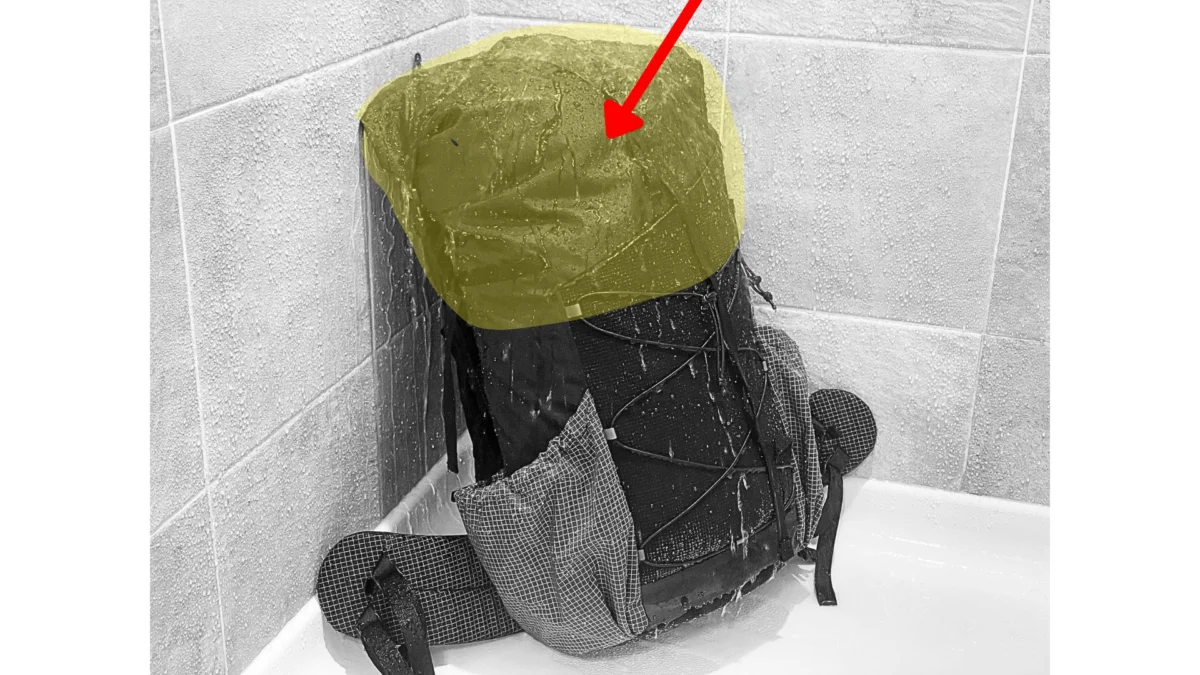
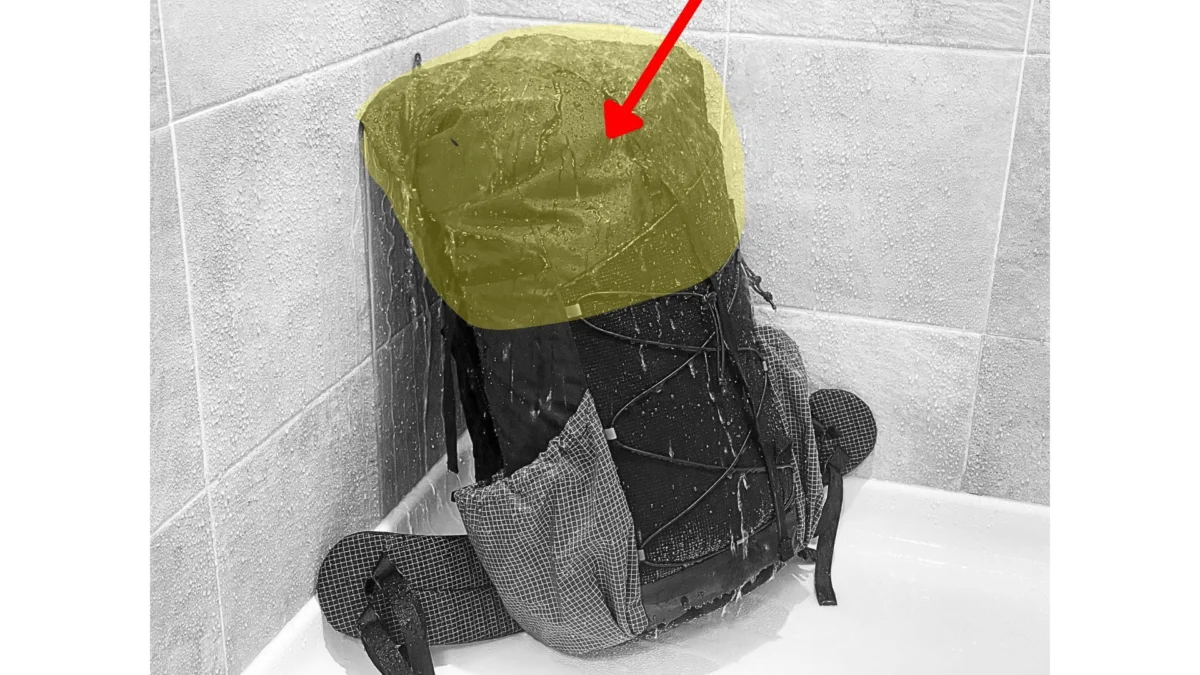
The test requires only a standard household shower, a fully packed backpack, and a cotton "witness" material.
- Preparation: The pack is loaded with a standard volume of non-water-sensitive material (to mimic the displacement of a real trip).
- The Witness Layer: A clean, dry cotton pillowcase is placed inside the main compartment of the pack, positioned specifically against the areas suspected of leakage (e.g., along the seams or near the lid).
- The Exposure: The pack is placed in the shower stall. A consistent, moderate-to-high intensity spray is directed at the pack for exactly 30 minutes.
- The Evaluation: After the exposure, the pack is removed, the exterior is wiped dry, and the internal pillowcase is examined for moisture spots.
Why This Method Works
This test removes the variables of wind-driven rain, body heat, and condensation, which often cloud the results of field testing. By controlling the intensity and duration of the water exposure, researchers can isolate the pack’s design flaws. If the pillowcase is damp after 30 minutes of controlled spray, the pack will almost certainly fail during a sustained backcountry storm.
Chronology of Gear Evolution and Testing Standards
The evolution of backpack materials has moved from heavy-duty waxed cotton canvases to lightweight, high-tensile synthetics. Throughout this timeline, testing has struggled to keep pace with innovation.
- 1970s–1980s: Focus was primarily on heavy-duty fabrics. Testing was largely anecdotal, relying on "real-world" experience rather than controlled ingress metrics.
- 1990s–2000s: The rise of technical laminates brought hydrostatic head testing to the forefront. However, testing remained focused on the fabric, not the finished product.
- 2010s–Present: The "Ultralight" revolution pushed the boundaries of material science. As packs became lighter, the reliance on seam sealing and specialized construction became paramount, necessitating new ways to verify performance.
The current "Shower Test" model represents a shift toward "consumer-centric" verification. It acknowledges that the end-user does not have a laboratory, but they do have a shower, a sink, or a garden hose. This democratization of testing allows for a more transparent relationship between the manufacturer’s claims and the user’s reality.
Supporting Data: Understanding Ingress Points
In controlled trials, the distribution of water ingress follows predictable patterns. Analyzing where the water enters provides critical feedback for both designers and hikers.
| Component | Risk Level | Common Failure Mode |
|---|---|---|
| Main Seams | High | Unsealed stitching or low-quality seam tape. |
| Hydration Port | Medium | Large gaps around the tube opening. |
| Roll-top Closure | Low | Improper folding or lack of a stiffener strip. |
| Zippered Pockets | Very High | Direct water entry through zipper teeth. |
Data collected from these tests indicates that most "leaks" are not catastrophic failures but rather "seepage" that accumulates over time. For example, a single, poorly sealed seam might allow only a few milliliters of water in 30 minutes—an amount that might go unnoticed in a short walk but could ruin a down sleeping bag during an overnight trip.
Official Industry Responses and Perspectives
When presented with this screening methodology, representatives from major outdoor gear manufacturers generally emphasize the distinction between "waterproof" and "weather-resistant."
"Most of our packs are designed to be weather-resistant, not submersible," says a lead product developer for a major North American backpacking brand. "We utilize DWR treatments and high-denier fabrics to ensure the pack can handle a moderate rain. For anything more, we always recommend the use of an internal pack liner, such as a trash compactor bag or a specialized dry sack. We view the pack as a primary shell, but the internal organization should always assume that water might eventually find a way in."
This perspective underscores a growing industry trend: the move toward modular water management. Rather than attempting to make a complex, zippered, multi-pocketed backpack 100% waterproof—which adds weight and manufacturing complexity—manufacturers are increasingly focusing on durable, lightweight external materials while advising users to protect their sensitive gear internally.
Implications for the Modern Backpacker
The implications of this testing methodology are significant for both the industry and the end-user.
For the Consumer
- Manage Expectations: Understanding that a pack is not a dry bag changes how one packs. It necessitates the use of internal waterproof organizers.
- Proactive Maintenance: If a test reveals a leaky seam, the consumer can proactively apply seam sealer or add a rain cover, rather than discovering the failure during a remote trip.
- Informed Purchasing: By performing these tests, gear enthusiasts can share data, creating a community-driven database of product performance that is far more accurate than manufacturer-provided specs.
For the Designer
The "Shower Test" serves as a brutal diagnostic tool. Designers who utilize this method during the prototyping phase can identify structural flaws before moving to mass production. It forces a conversation about whether a design choice (like an elaborate pocket configuration) is worth the risk of water ingress, or if a simpler, more streamlined design would provide better overall protection.
The Future of "Weatherproofing"
As we move forward, the industry is likely to see a split. We will see "dry-bag style" packs, which utilize radio-frequency (RF) welded seams and waterproof zippers to achieve true waterproof status, and "traditional" packs, which rely on DWR and external rain covers. The controlled shower test will remain the essential tool for determining which category a pack truly belongs to.
Ultimately, the goal of this testing is not to shame manufacturers for producing packs that leak. It is to foster a culture of transparency and competence. When the consumer understands the limitations of their equipment, they are safer, more prepared, and more capable of enjoying the backcountry, regardless of what the forecast predicts.
By taking the time to test our gear—using simple, accessible methods—we transform from passive consumers into informed practitioners of the outdoors. The shower test is more than a simple household chore; it is a vital step in ensuring that the next time you find yourself caught in a sudden downpour, your gear is the last thing you have to worry about.