For millions of homeowners, the swimming pool is the quintessential backyard sanctuary—a place to cool off, entertain, and relax. However, the dream of the backyard oasis often hits a harsh reality: maintenance. Whether you are battling the relentless Texas heat or the seasonal shedding of local foliage, the labor-intensive chore of scrubbing tiles and scooping debris can transform a luxury into a liability.
As a veteran pool owner and a professional technology reviewer with four years of hands-on experience, I have spent hundreds of hours evaluating the evolution of pool care. The shift away from archaic pressure-side systems toward sophisticated, battery-powered robotics is not merely a convenience—it is a revolution in home maintenance.
Main Facts: The Shift to Cordless Innovation
The pool cleaning industry has undergone a seismic shift. For decades, the gold standard was the pressure-side cleaner, a tethered device that relied on external pump pressure and snaked through the pool with a tangle of hoses. While these remain functional, the modern market has pivoted toward autonomous, cordless electronic robots.
These new-age devices represent a move toward "set it and forget it" maintenance. By eliminating the heavy power cables and external hoses, these robots offer an unencumbered swimming experience. They are designed to map the pool’s geometry, scrub the waterline, and filter microscopic debris with surgical precision. The current crop of top-tier cleaners—led by innovators like Beatbot and iGarden—leverages artificial intelligence, massive lithium-ion battery capacities, and wireless charging to redefine what it means to own a pool.

Chronology of a Cleaning Revolution
The evolution of pool cleaning has followed a distinct trajectory, mirroring the broader trends in smart home technology:
- The 1980s (The Era of Hoses): The market was dominated by hydraulic, pressure-side cleaners. These were reliable but required constant oversight, and the floating hoses were an aesthetic and functional eyesore.
- The Early 2000s (The Corded Robotic Shift): The introduction of electrical, corded robots allowed for better suction and scrubbing power. However, they were still tethered to a wall outlet, creating a logistical headache for users with large deck layouts.
- 2020–2024 (The Cordless Transition): Lithium-ion battery technology matured sufficiently to power high-torque motors underwater. This period saw the launch of the first viable, high-performance battery-powered bots, significantly reducing the "chore factor."
- 2025–2026 (The AI Integration): Recent updates, including the latest Beatbot and iGarden models, have introduced onboard computer vision. These robots no longer move randomly; they calculate paths, identify specific debris clusters, and optimize their own battery consumption.
Supporting Data and Performance Metrics
In my testing, which takes place in an L-shaped, 468-square-foot in-ground pool, performance is measured by both organic accumulation and synthetic "leaf tests." The data reveals a clear hierarchy:
The Top-Tier: Beatbot AquaSense 2 Ultra
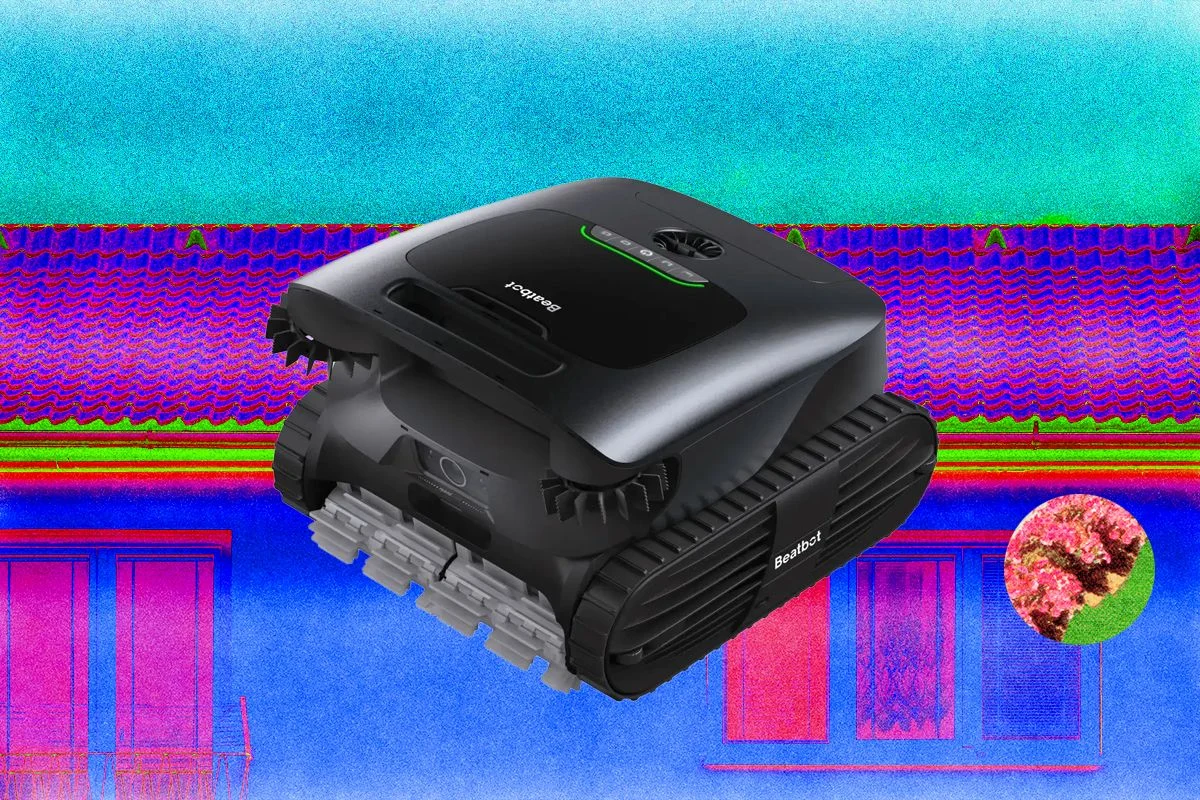
Retailing at approximately $3,000, this is the current heavyweight champion. With a six-hour runtime and AI-powered debris detection, it handles floors, walls, and the waterline with near-perfect efficiency. It is heavy—weighing 29 pounds—but it returns to the surface upon completion, allowing for easy retrieval.
The Battery Titan: iGarden M1-AI 90
For users who value longevity over all else, the iGarden M1-AI 90 stands out. Featuring a massive 12,500 mAh battery, it can run for up to nine hours in floor-only mode. Its "racecar-inspired" design is a departure from the industrial aesthetic of its competitors, and it is capable of staying in the pool for up to three weeks on a single schedule.

The Value Contender: Dreame Z1 Pro
Once priced at $1,499, this unit has seen a dramatic price correction to $499. While it is slower than the luxury models, its ability to graphically map the pool in an app and its magnetic, plug-free charging make it an exceptional entry-level choice that punches well above its current price point.
Official Responses and Industry Insights
Industry experts emphasize that the move toward robotics is driven by the rising cost of professional pool services. While a robot does not replace the need for chemical balancing, it drastically reduces the physical labor required to keep a pool functional.
Regarding safety, a common concern persists: the danger of lithium-ion batteries in water. Manufacturers have responded by utilizing hermetically sealed, multi-layered waterproof enclosures. According to industry safety reports, the risk of a battery-powered pool robot is statistically comparable to that of a smartphone or a cordless vacuum. As long as the integrity of the chassis is maintained, these devices are considered safe for residential use.
Implications for the Future of Home Maintenance
The move toward autonomous pool care has several implications for the average homeowner:

- Lowering the Barrier to Entry: With budget-friendly options like the Dreame Z1 Pro, pool ownership is becoming more manageable for those who cannot afford or do not want a weekly pool service.
- Resource Efficiency: Robotic cleaners are significantly more energy-efficient than traditional suction-side cleaners, which require the main pool pump to run at high speeds for hours. By localized filtering, these robots save on electricity and reduce wear and tear on the primary pool pump.
- The "Smart Pool" Ecosystem: We are moving toward a future where the pool robot communicates with the pool’s filtration and chemical-dosing systems. Imagine a system that detects a drop in water quality via the robot’s sensors and automatically triggers a chemical adjustment. We are currently in the early stages of this integration.
Frequently Asked Questions
Is it really better to go cordless?
While corded robots offer "infinite" power, the convenience of a cordless unit cannot be overstated. The lack of a tangled, 70-foot hose trailing across your deck is a major improvement. For 95% of residential pools, the current battery capacities are more than sufficient.
How do I choose between a skimmer and a vacuum robot?
If your pool is surrounded by trees and you face a constant barrage of floating leaves, a dedicated skimmer like the Beatbot iSkim Ultra is essential. However, if your primary issue is sediment, algae on the floor, or waterline scum, you need a full-featured vacuum robot.
How long do these robots last?
With proper care—specifically rinsing the filters and ensuring the charging contacts are clean—a high-end robot should last 3–5 years. However, as with any battery-operated device, the battery capacity will naturally degrade over time, which is why modular, easily serviced units are becoming the preferred choice.
Does a robot eliminate the need for a pool guy?
It eliminates the need for a "pool cleaner," but not necessarily a "pool technician." You will still need to test your water chemistry, balance pH, and manage chlorine or salt levels. However, by handling the daily scrubbing and vacuuming, the robot makes the remaining maintenance tasks much faster and more straightforward.

Conclusion: Investing in Time
The transition to robotic pool cleaning is not just about keeping your water clear; it is about reclaiming your weekends. Whether you opt for the feature-packed $3,000 Beatbot AquaSense 2 Ultra or the highly capable $499 Dreame Z1 Pro, the technology has reached a point where the performance justifies the cost. By automating the most tedious aspect of pool maintenance, these devices allow owners to spend less time on the deck with a skimmer and more time enjoying the water. As AI and battery technology continue to advance, the "pool boy" of the future is not a person—it is a small, autonomous robot patrolling your pool floor.