For those who treat the outdoors not as a destination but as a lifestyle, the gear on your hip is an extension of your own hand. Whether you are maintaining a homestead, navigating the rugged terrain of the backcountry, or simply tackling the mundane repairs that arise during a long summer, a reliable fixed-blade knife is the quintessential companion. Since May, I have been testing the Reiff Knives F3, a blade that promises to bridge the gap between heavy-duty bushcraft capability and refined, everyday utility.
Main Facts: The Anatomy of the F3
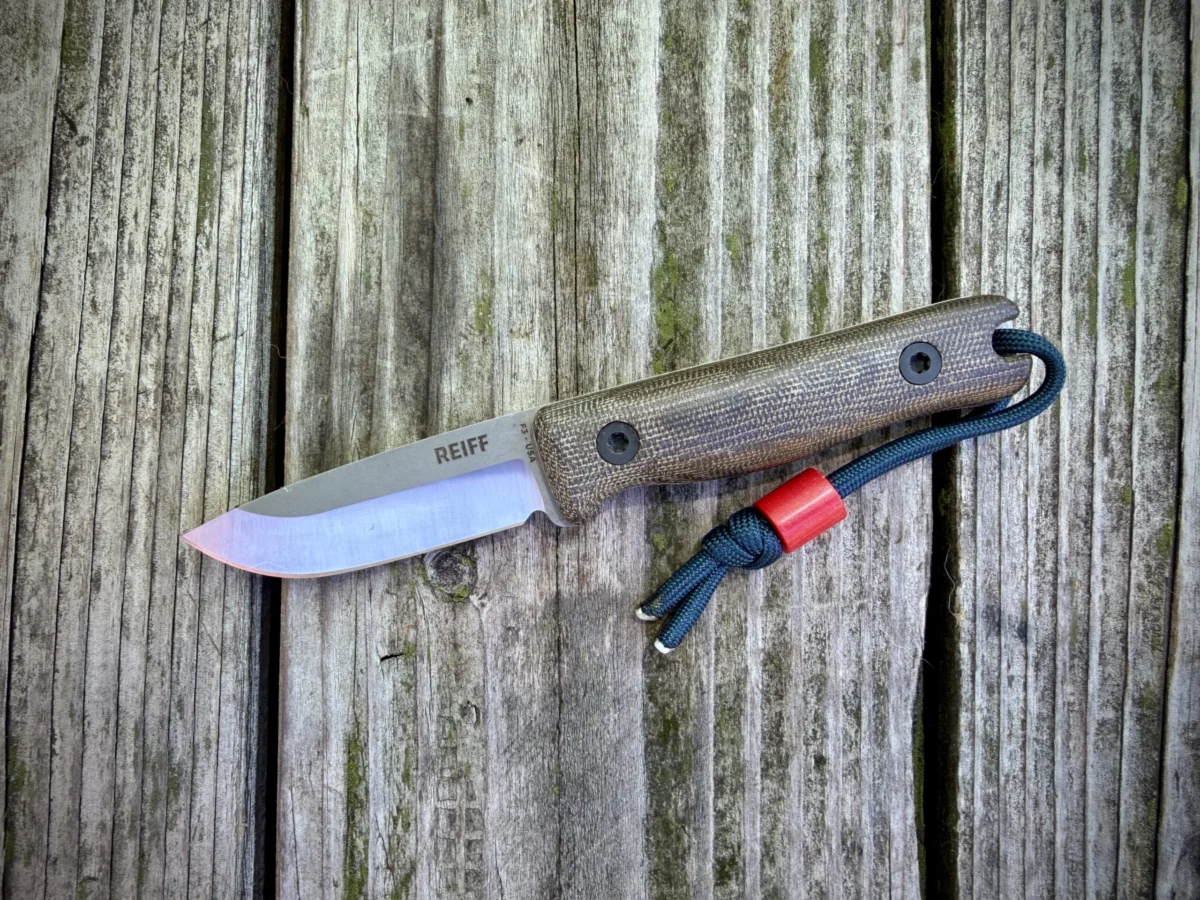
The Reiff Knives F3 is a testament to the "less is more" philosophy. Measuring a total length of 6.7 inches, this knife avoids the cumbersome footprint of larger survival tools while retaining the structural integrity of a professional-grade implement.
The core of the F3 is its full-tang construction, forged from premium MagnaCut steel. This high-performance, powder-metallurgy steel is currently the gold standard in the knife industry, prized for its extraordinary balance of corrosion resistance, edge retention, and toughness. The blade features a drop-point profile complemented by a saber grind—a design choice that favors strength, allowing the spine to maintain thickness deeper toward the edge than a hollow or full-flat grind would.
The handle is composed of Micarta scales, known for providing a sure, tactile grip even when wet or soiled. At a mere 3.6 ounces (increasing to 5.6 ounces with its Kydex sheath), the F3 is designed to be carried all day without fatigue, making it an ideal candidate for anyone who values accessibility and efficiency.

Chronology: A Season of Use
My testing period with the F3 began in early May, a transition point in the New England landscape. As the snow receded and the work of summer began—pruning fruit trees, repairing fences, and prepping for garden season—I put the F3 through an exhaustive, real-world gauntlet.
- Late Spring (May): The initial phase focused on utility. The F3 was used primarily for garden maintenance, clearing light brush, and performing delicate tasks like grafting apple trees. Its precision allowed for surgical cuts that larger blades would have botched.
- Early Summer (June): The knife became a permanent fixture on my hip. From hiking trails to off-roading excursions, the F3 proved its worth as a primary tool. The only time the knife left my side was during a brief excursion to a Black Crowes concert, marking the only "knife-free" day in months.
- Mid-Summer (July): As the heat intensified, the benefits of the F3’s compact size became even more apparent. Larger, heavier knives tend to become burdens in the summer; the F3, however, remained unobtrusive and ready for any task, from food prep to cutting rope and cordage.
Supporting Data: Why the F3 Stands Out
While Reiff Knives labels much of its F-Series as "bushcraft" gear, they consciously position the F3 as a "general utility" knife. This distinction is vital. Many bushcraft knives are oversized, designed for heavy wood processing that the average user may only encounter sporadically.
The F3, by contrast, targets the sweet spot of utility. Its saber grind is positioned about one-third of the way down the blade, which keeps the edge stable under torque. During testing, the F3 handled slicing, drawing, and even moderate splitting with the authority of a much larger knife, yet it never felt like overkill for smaller, fine-motor tasks.
Furthermore, the "two-tone" finish—featuring stonewashed flats and polished grinds—is more than aesthetic. In the field, this finish prevents organic matter like tree sap, mud, or moisture from adhering to the blade, significantly reducing the amount of maintenance required after a long day of work. The corrosion resistance of the MagnaCut steel, combined with this finish, means that even in humid or wet environments, the blade remains pristine.

Official Positioning and Design Philosophy
Reiff Knives has built its reputation on the idea that a tool should be as rugged as the environment it serves. The F3 represents a shift toward a more modern, EDC-focused (Everyday Carry) approach.
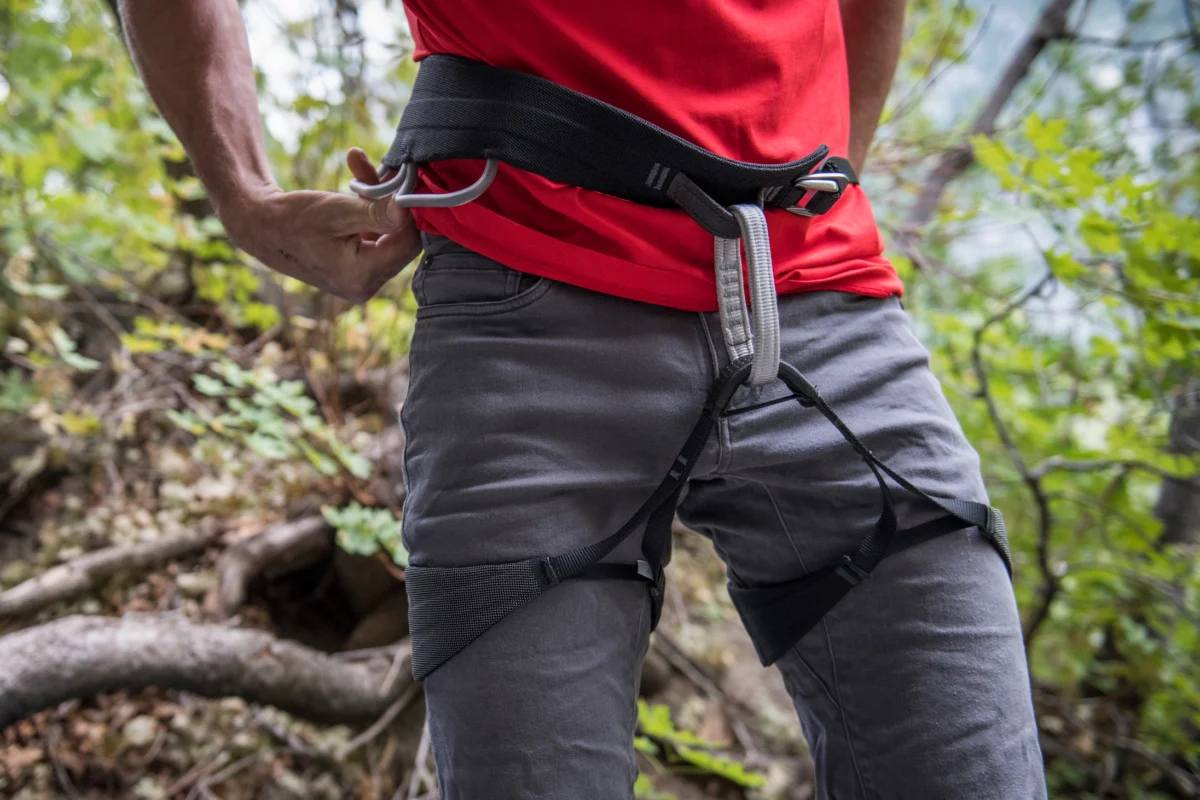
The inclusion of a molded Kydex sheath offers versatility, though seasoned users often prefer custom configurations. For my own setup, I opted to use a drop-leg attachment, which lowers the sheath on the belt. This adjustment is crucial for hikers or those wearing packs, as it prevents the knife from interfering with a hip belt or lumbar support. The ability to easily mount and dismount the sheath from a belt is a critical feature for those who need to shed gear quickly without removing their entire belt setup.
The handle ergonomics deserve specific mention. Despite the compact frame, the F3 allows for a full four-finger grip. For those with larger hands, the geometry is specifically engineered to provide a sense of security and control, preventing the slip-and-cut accidents that often plague smaller, poorly designed EDC blades.
Implications: The Verdict
So, who is the F3 for?

The Reiff Knives F3 is, at its heart, a tool for the "functional minimalist." It is for the person who values high-end materials but has little interest in the vanity of "tactical" gear. It is for the farmer, the hiker, the arborist, and the weekend tinkerer who needs a knife that is ready the moment it is pulled from the sheath.
The Economic Case: At $265, the F3 is an investment. However, when evaluating the cost-per-use over years of reliable service, it becomes clear that this is a value-driven purchase. You are not just paying for steel; you are paying for the peace of mind that comes with a tool that will not fail you. Given the edge retention of the MagnaCut steel, the maintenance intervals are incredibly long. I anticipate, based on my current usage, that this knife will require only a light hone every few months, even with daily professional use.
The Cultural Context: There is a nostalgia factor to the F3. It reminds one of the classic pocket knives our grandfathers carried—tools that were simple, sharp, and always working. While those older knives lacked the modern advancements of MagnaCut or Kydex, the philosophy remains the same: a knife is not a decoration; it is an instrument of labor.
Final Assessment
In the current market, where "over-built" often translates to "over-weighted," the Reiff Knives F3 is a breath of fresh air. It is a masterclass in proportion and performance. Whether you are a dedicated bushcrafter who needs a secondary precision blade, or an urban professional looking for a reliable outdoor companion, the F3 delivers.

It is "old reliable" for the modern age. It is a knife that respects the user’s time by requiring minimal care and maximum output. As we move through the peak of the summer, a time when our hands are busiest and our ambitions for outdoor projects are at their highest, the F3 stands as the ideal partner. If you are looking for a belt knife that balances the line between the woods and the workshop, the F3 is, without a doubt, the tool to beat.